Aperçu en situation
 Partager
 Partager
 Détails

 Télécharger
 Articles similaires
 Radiographie
 Voir le diaporama
 Statistiques
Preparation for the Funeral
 Oil
Oil- WallArt
- Romanticism
 1869
1869- 19th Century
 49.0 x 80.0 cm
 Afficher la suite
Reproduction à l'huile faite à la main
Huile sur toile peinte à la main, avec cadre et dimensions personnalisés, réalisée sur commande par nos artistes. ( Passer au format impression Passer au format image numérique)




P118B $10

P118H $10

P118W $10

P438Z $10

P508JH $12

P508YH $12

P805H $10

P805Z $10

P919BZ $10

P919G $10

P919XJ $10

P959ZH $10

P968JZ $12

W106C $8

W218G $10

W218JH $8

W218Y $10

W307PJ $10

W316G $10

W316PJ $8

W316Y $10

W398PJ $8

W4111J $10

W500HY $15

W500JH $15

W692G $12

W849H $8

W940BG $15

W953PJ $8




Choisissez parmi nos formats prédéfinis qui respectent les proportions originales de l’œuvre.

Vous pouvez saisir vos propres dimensions pour l'adapter à un cadre ou à un espace spécifique. Si la taille sélectionnée ne correspond pas aux proportions de l'image d'origine, nous recadrerons l'œuvre ou prolongerons la peinture avec des éléments peints à la main supplémentaires. Une maquette numérique vous sera envoyée pour approbation avant le début de la production.
Veuillez noter que l'aperçu à l'écran ne reflète pas le recadrage ou l'extension réels. Seule la maquette montrera fidèlement la composition finale.
Bien que des tailles personnalisées soient disponibles, nous vous recommandons de sélectionner une dimension dans la liste prédéfinie afin de préserver les proportions d'origine.
Après la commande, l’équipe OriginalUniqueArt.com contactera le client par e-mail pour recueillir ses instructions et lui fournira une maquette d’aperçu
Livraison dans le monde entier () en 3 à 4 semaines au lieu des 5 semaines habituelles. (19 septembre). Aucun compromis sur la qualité.

Livraison express gratuite dans le monde entier

Toile de lin de haute qualité

Assurance transport complète

Garantie de remboursement des droits de douane

Garantie de fidélité des couleurs

Garantie de retour de 100 jours (uniquement en cas de défaut)

Garantie de remboursement à 100%

Tarifs dégressifs sur quantité
 L'option verre n'est disponible que pour les dimensions inférieures à 110 cm.

Preparation for the Funeral
Technique de reproduction
Format de la reproduction
-


Prix total final
$ 300
A Moment Frozen in Twilight: The Somber Resonance of Cézanne’s Vision
In the quiet, shadowed corners of art history, few works possess the haunting stillness found in Paul Cézanne's 1869 masterpiece, "Preparation for the Funeral." This is not merely a depiction of three figures gathered in a dimly lit room; it is an evocative embodiment of Romanticism’s deepest preoccupation with emotion, mortality, and the weight of contemplation. Created during a formative period of Cézanne’s life—a time defined by intense experimentation as he grappled with the burgeoning light of Impressionism—the painting stands as a profound testament to his commitment to capturing more than just visual reality. He sought to paint how a moment felt, freezing a sense of grief and remembrance in a way that continues to captivate the modern soul.
The atmosphere of the piece is one of heavy, palpable silence. As the viewer enters this space, they are met with a monochrome palette dominated by somber shades of grey and black. This deliberate stylistic choice strips away the distractions of vibrant color, forcing an intimate confrontation with the subject's gravity. The room feels thick with memory, where the very air seems to vibrate with a latent, mournful energy. For collectors and decorators alike, this painting offers a profound sense of depth, making it a centerpiece that commands attention through its quiet, psychological intensity rather than through loud or garish displays.
The Architecture of Grief: Technique and Composition
Cézanne’s approach to the canvas in this work reveals a revolutionary departure from traditional academic standards. Eschewing the shimmering, ephemeral surfaces favored by his Impressionist contemporaries, he instead embraced a more tactile and structural language. He employed thick impasto brushstrokes, layering paint with a physical deliberate force that creates textured surfaces. This technique does not just represent objects; it gives them a sculptural presence, making the grief within the room feel as tangible as the canvas itself.
The composition further challenges the viewer's perception of space. Cézanne avoids traditional linear perspective, opting instead to flatten the scene and present figures and objects as geometric forms. This fragmentation reflects a deeper exploration of subjective experience—a way of breaking down reality to find its essential truth. The arrangement of the three seated figures creates a balanced yet tension-filled triangle, drawing the eye through the gloom. For those looking to integrate such a piece into an interior design scheme, its structural integrity and monochromatic elegance allow it to anchor a room, providing a sophisticated focal point that complements both minimalist and classical aesthetics.
Symbolic Vessels and Eternal Reflections
Beyond the figures themselves, the painting is rich with symbolic weight, particularly in the subtle placement of everyday objects. The two bowls positioned within the scene serve as much more than mere household items; they act as vessels of sorrow, metaphorically holding not just liquid, but the heavy accumulation of memories and unspoken emotions. Their strategic placement guides the viewer's gaze across the darkened landscape of the room, connecting the human subjects to the inanimate objects that witness their mourning.
A single cup, tucked near the top right corner, adds a final note of quietude to the composition. Every element in "Preparation for the Funeral" is a deliberate part of a larger narrative regarding the cycle of life and the permanence of loss. To own a reproduction of this work is to possess a fragment of art history's most transformative era—a bridge between the emotional depth of Romanticism and the structural revolution of Post-Impressionism. It is an invitation to pause, to reflect, and to find beauty in the profound stillness of the human condition.
Biographie de l'artiste
jeune vie et influences
paul cézanne, peintre français post-impressionniste, est né le 19 janvier 1839 à Aix-en-Provence, en France. Sa jeune vie a été marquée par un fort attachement à sa famille, dont l'entreprise bancaire lui assurait une sécurité financière. Cela lui a permis de se consacrer à ses aspirations artistiques sans être entravé par des soucis financiers. les nabis, néo-impressionnisme et symbolisme ont influencé le travail de Cézanne au début, qui se caractérisait par son accent sur les formes géométriques et une palette de couleurs limitée. Son intérêt pour les œuvres de paul gauguin et georges seurat a renforcé son style post-impressionniste.style artistique et techniques
L'utilisation innovante de Cézanne des plans de couleurs et de petits coups de pinceau répétitifs a créé des champs complexes qui exprimaient son étude approfondie des sujets. Son approche souvent exploratoire de l'art a conduit au développement d'une nouvelle langue picturale, mettant l'accent sur la structure sous-jacente des objets dans une composition.- caractéristiques principales :
- formes géométriques et façonnage
- palette de couleurs réduite
- importance de l'essence constructive du monde physique
- perspective multiple et simultanéité
- œuvres influentes :
- le plan d'eau de Jas de Bouffan (1880)
- portrait d’Émile Zola (1866)
- forêt (1892)
- musées présentant l'œuvre de Cézanne :
- le musée Marmottan Monet à Paris, en France
- le musée des beaux-arts à Houston, aux États-Unis
héritage et impact
Le travail pionnier de Cézanne en post-impressionnisme a ouvert la voie à divers mouvements avant-gardistes, notamment le cubisme, le fauvisme et le surréalisme. Son influence se retrouve dans les œuvres de pablo picasso, henri matisse et georges braque. L'héritage de Cézanne continue d’inspirer les artistes et les amateurs d’art, consolidant ainsi sa place en tant que figure centrale de l’histoire de l’art moderne.- mouvements artistiques connexes :
- consultez les œuvres de Cézanne :
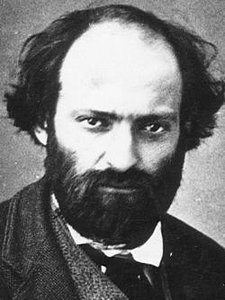
Paul Cézanne
1839 - 1906 , France
En bref
- Artistes Influents:
- Paul Gauguin
- Georges Seurat
- Date De Décès: 22 octobre 1906
- Date De Naissance: 19 janvier 1839
- Influences Artistiques:
- Pablo Picasso
- Henri Matisse
- Georges Braque
- Lieu De Naissance: Aix-en-Provence, France
- Mouvement Artistique: Post-impressionnisme
- Nationalité: Français
- Nom Complet: Paul Cézanne
- Œuvres Notables:
- Le Plan d'eau à Jas de Bouffan
- Portrait d’Émile Zola
- Forêt
- Mont Sainte-Victoire
Articles similaires

Blancs Sublimes : Les 10 Chefs-d'œuvre de la Peinture Révélés par
Plongez dans l'univers fascinant des 10 plus beaux tableaux blancs de l'histoire de l'art ! Découvrez Monet, Whistler, Kandinsky et d'autres maîtres. Inspirez votre décoration intérieure avec : reproductions de qualité muséale en ligne.

The Enduring Legacy of Oil on Canvas: Technique, History & Aesthetic Impact
Explore the rich history & techniques of oil painting – from Renaissance masters to Impressionism. Discover pigments, layering methods, and why this timeless medium endures. Expert insights for artists & art enthusiasts.

Paul Cézanne : Les 25 Œuvres Maîtresses d'un Génie Révolutionnaire | OriginalUniqueArt
Plongez dans l'univers de Paul Cézanne avec les 25 œuvres incontournables du maître post-impressionniste. Découvrez l'histoire, la technique et l'émotion derrière ses tableaux iconiques comme 'Les Baigneuses' ou 'Mont Sainte-Victoire'. Reproductions d'art haute qualité sur OriginalUniqueArt.com.

Les 10 Chefs-d'œuvre Noirs : Peintures Célèbres et Décoration d'Intérieur
Plongez dans l'univers fascinant des 10 plus beaux tableaux noirs de l'histoire de l'art. Découvrez les secrets de Goya, Manet, Rothko et autres maîtres. Inspirez votre décoration intérieure avec !

L'Art du Noir et Blanc : L'Élégance Intemporelle pour Transformer vos Souvenirs en Chefs-d'œuvre Éternels
Sublimez votre intérieur avec l'élégance du noir et blanc. OriginalUniqueArt transforme vos souvenirs en chefs-d'œuvre à l'huile peints à la main par nos maîtres. Découvrez l'art du clair-obscur et créez un héritage intemporel grâce à notre savoir-faire d'exception et notre expertise unique.