Text size

() ·

A painting made for you, by hand

Flowers in a Blue Vase

Reproduction à l'huile faite à la main

Huile sur toile peinte à la main, avec cadre et dimensions personnalisés, réalisée sur commande par nos artistes. ( Passer au format impression Passer au format numérique)

Description de la pièce

Admirez « Fleurs dans un vase bleu » de Paul Cézanne : une œuvre emblématique du mouvement post-impressionniste, caractérisée par des couleurs vives et des coups de pinceau expressifs.

Biographie de l'artiste

Explorez l'art révolutionnaire de Paul Cézanne (1839-1906), un maître du post-impressionnisme qui a relié l'impressionnisme et le cubisme. Découvrez ses formes géométriques, ses coups de pinceau uniques, ses natures mortes et son impact durable sur l'art moderne. #Cézanne #PostImpressionnisme

from ·

Chapter 1

How large should it be?

Slide to change the size; the picture on the left shows the frame at its real width. The proportions of the original are kept.

Format standard
sur mesure
CM
INCH

Choisissez parmi nos formats prédéfinis qui respectent les proportions originales de l’œuvre.

largeur
hauteur

Saisissez la largeur et la hauteur souhaitées, pour s'adapter à votre cadre ou à votre mur. Cette œuvre est peinte à la main ; ainsi, pour un format de forme différente, l'artiste peut peindre un peu plus autour du tableau ou réduire légèrement les bords — c'est vous qui choisissez. Nous vous envoyons une maquette numérique pour approbation avant que la peinture ne commence. L'image présentée sur cette page ne reflète pas le résultat réel — seule la maquette le fait.

Chapter 2

How should it arrive?

Choose the edges of the stretched canvas

Choose your frame

Corner sample of the WhiteWrap canvas edge finish, stretched on bois massif bars
White €1
Corner sample of the BlurSideWrap canvas edge finish, stretched on bois massif bars
Blurside €1
Corner sample of the ExtendedWrap canvas edge finish, stretched on bois massif bars
Extended €1
Corner sample of the P118B picture frame: polystyrène moulé, 5 cm wide and 3 cm thick
P118B €10
Corner sample of the P118H picture frame: polystyrène moulé, 5 cm wide and 3 cm thick
P118H €10
Corner sample of the P118W picture frame: polystyrène moulé, 5 cm wide and 3 cm thick
P118W €10
Corner sample of the P438Z picture frame: polystyrène moulé, 5.5 cm wide and 3.5 cm thick
P438Z €10
Corner sample of the P508JH picture frame: polystyrène moulé, 7 cm wide and 3.5 cm thick
P508JH €12
Corner sample of the P508YH picture frame: polystyrène moulé, 7 cm wide and 3.5 cm thick
P508YH €12
Corner sample of the P805H picture frame: polystyrène moulé, 5 cm wide and 3.5 cm thick
P805H €10
Corner sample of the P805Z picture frame: polystyrène moulé, 5 cm wide and 3.5 cm thick
P805Z €10
Corner sample of the P919BZ picture frame: polystyrène moulé, 7 cm wide and 3.5 cm thick
P919BZ €10
Corner sample of the P919G picture frame: polystyrène moulé, 7 cm wide and 3.5 cm thick
P919G €10
Corner sample of the P919XJ picture frame: polystyrène moulé, 7 cm wide and 3.5 cm thick
P919XJ €10
Corner sample of the P959ZH picture frame: polystyrène moulé, 5 cm wide and 3 cm thick
P959ZH €10
Corner sample of the P968JZ picture frame: polystyrène moulé, 6 cm wide and 4 cm thick
P968JZ €12
Corner sample of the W106C picture frame: bois massif, 5 cm wide and 3 cm thick
W106C €8
Corner sample of the W218G picture frame: bois massif, 5 cm wide and 3 cm thick
W218G €10
Corner sample of the W218JH picture frame: bois massif, 5 cm wide and 3 cm thick
W218JH €8
Corner sample of the W218Y picture frame: bois massif, 5 cm wide and 3 cm thick
W218Y €10
Corner sample of the W307PJ picture frame: bois massif, 6 cm wide and 3 cm thick
W307PJ €10
Corner sample of the W316G picture frame: bois massif, 6 cm wide and 3 cm thick
W316G €10
Corner sample of the W316PJ picture frame: bois massif, 6 cm wide and 3 cm thick
W316PJ €8
Corner sample of the W316Y picture frame: bois massif, 6 cm wide and 3 cm thick
W316Y €10
Corner sample of the W398PJ picture frame: bois massif, 5 cm wide and 3 cm thick
W398PJ €8
Corner sample of the W4111J picture frame: bois massif, 6.5 cm wide and 3.5 cm thick
W4111J €10
Corner sample of the W500HY picture frame: bois massif, 7 cm wide and 5 cm thick
W500HY €15
Corner sample of the W500JH picture frame: bois massif, 7 cm wide and 5 cm thick
W500JH €15
Corner sample of the W692G picture frame: bois massif, 8 cm wide and 4 cm thick
W692G €12
Corner sample of the W849H picture frame: bois massif, 5 cm wide and 3 cm thick
W849H €8
Corner sample of the W940BG picture frame: bois massif, 7.5 cm wide and 4.5 cm thick
W940BG €15
Corner sample of the W953PJ picture frame: bois massif, 6 cm wide and 3.5 cm thick
W953PJ €8
Corner sample of the H24-GOLD picture frame: bois sculpté et apprêté au gesso, 10 cm wide and 6 cm thick
H24-GOLD €30
Corner sample of the H24-SILVER picture frame: bois sculpté et apprêté au gesso, 10 cm wide and 6 cm thick
H24-SILVER €30
Corner sample of the H36-GOLD picture frame: bois sculpté et apprêté au gesso, 15 cm wide and 6.5 cm thick
H36-GOLD €45
Corner sample of the H36-SILVER picture frame: bois sculpté et apprêté au gesso, 15 cm wide and 6.5 cm thick
H36-SILVER €45
Aperçu du cadre
Sous cadre

Moulding: . Overall size with the frame: .

Chapter 3

Who paints it, and should anything change?

Examples of what can be changed: Replace face with customer photo; Add pet (e.g., replace cat with dog); Include hidden message in background; Change background landscape or elements.
After order, OriginalUniqueArt.com team will email client for instructions and provide a mockup preview

Livraison dans le monde entier () en 3 à 4 semaines au lieu des 5 semaines habituelles. (2 novembre). Aucun compromis sur la qualité.

Chapter 4

The finishing touches

A nameplate, as in a museum?

Détails de la plaque en bronze gravée

This elegant plaque features the artist's name and the title of the artwork, finely engraved for a timeless presentation.

It is made from bronze with a refined, elegant finish. The text is precisely laser-engraved for a sharp and permanent result. Measuring 9x2 cm, the plaque is compact yet easy to read. It's built to be durable and scratch-resistant, offering a professional, museum-quality look. Mounting is simple thanks to the included adhesive backing.

Détails de la plaque en acrylique transparent

The plaque includes essential engraved details such as the artist's name, the title of the artwork, the date it was created, the type of media used-like oil on canvas or watercolor-a brief description of the piece, and a QR code that links to the complete artwork information.

It is crafted from clear acrylic, offering a sleek, modern appearance. The text is UV-engraved in black to ensure strong visual contrast. With a size of 10x15 cm, it ensures optimal readability. It comes equipped with two metal hooks for secure wall mounting. The plaque is designed to be weather-resistant, making it suitable for various environments, and it includes interactive features that work seamlessly with smartphone scanning.

Détails de la plaque en acrylique noir

This elegant plaque includes engraved information such as the artist's name, the title of the artwork, the date it was created, the type of media used (like oil on canvas or watercolor), a short description of the artwork, and a QR code for quick access to more information.

The plaque itself is made from refined black acrylic with a premium finish. The text is laser-engraved in white for high contrast and readability. Its size is 10x15 cm, designed to be easy to read. It comes with two metal hooks for professional mounting. The design is sleek and fits any interior style. It is also weather-resistant and durable, with built-in digital integration for mobile compatibility.

A protective varnish?

When do you need it?

Chapter 5

Your painting, as you ordered it

Flowers in a Blue Vase

Technique de reproduction

Format de la reproduction

-

Artiste de prestige

Plus de détails, de finesse et un temps de production accru

-

Cadre de reproduction

-

-

Pour les œuvres ou reproductions dont un côté mesure plus de 105 cm (environ 41 pouces), le cadre sera expédié sous forme de kit démonté. Cette méthode garantit une livraison sécurisée et prévient tout dommage pendant le transport.

Assemblage professionnel requis - ce produit n'est pas destiné au bricolage (DIY).
Le kit doit être assemblé et la toile tendue par un encadreur professionnel expérimenté, en utilisant de la colle à bois (non fournie), une pince à tendre la toile et des serre-joints pour maintenir les traverses d'équerre pendant le séchage de la colle. Un assemblage incorrect ou une tension inégale de la toile peut endommager l'œuvre de manière irréversible et n'est pas couvert par notre garantie.

  • Toutes les baguettes en bois massif sont incluses, découpées avec précision à la taille requise.

  • À assembler avec les vis fournies, ainsi qu'avec de la colle à bois pour les assemblages d'angles (non fournie), à prévoir par votre encadreur.

  • L'utilisation d'outils professionnels est requise et non incluse : une pince à tendre la toile (tendeur) et des serre-joints pour maintenir les baguettes bien d'équerre pendant le séchage de la colle.

Important :
L'assemblage des angles nécessite de la colle à bois, les barres doivent être maintenues avec des serre-joints jusqu'au séchage complet de la colle, et le tendage de la toile sur le châssis assemblé nécessite une pince à tendre la toile. Aucun de ces éléments n'est inclus dans le kit. Veuillez consulter un encadreur professionnel expérimenté avant de commander ce format.

Cartel

-

-

Vernis de protection

Vernis brillant (intensifie les couleurs, protège de la lumière et de l'humidité)

-

Personnaliser mon œuvre

Exemples de personnalisation : remplacer le visage par une photo du client ; ajouter un animal de compagnie (par exemple, remplacer un chat par un chien) ; inclure un message caché en arrière-plan ; modifier le paysage ou les éléments d'arrière-plan.

-

Livraison urgente

Livraison dans le monde entier () en 3 à 4 semaines au lieu des 5 semaines habituelles. (2 novembre). Aucune concession sur la qualité.

-

Livraison express

Livraison dans le monde entier () sous 5 semaines. (9 novembre).

Inclus

Prix total

€ 267

Prix total € 267

L'option verre n'est disponible que pour les dimensions inférieures à 110 cm.

Included with every order

  • Livraison express gratuite dans le monde entier

  • Toile de lin de qualité supérieure
  • Assurance transport complète
  • Garantie de remboursement des droits de douane
  • Garantie de fidélité des couleurs
  • Politique de retour de 100 jours (uniquement en cas de défaut)
  • Garantie de remboursement à 100%
  • Offre de tarifs dégressifs

The Painting and Its Artist

Paul Cézanne, a French painter, is renowned for his pivotal role in the transition from 19th-century Impressionism to early 20th-century Cubism. His work, characterized by repetitive brushstrokes and an emphasis on structure, laid the groundwork for avant-garde movements. “Flowers in a Blue Vase,” created in 1875, is one of his notable works that exemplify his unique style. It’s considered a cornerstone of Post-Impressionism—a movement born from dissatisfaction with Impressionist aesthetics and seeking to explore deeper artistic concepts. Cézanne's fascination with capturing the essence of nature rather than merely its fleeting appearance profoundly influenced subsequent generations of artists.

Artistic Style and Technique

This painting is a quintessential example of Post-Impressionism, a movement that emerged as a reaction against the naturalistic depiction of light and color in Impressionist art. Cézanne’s use of planes of color and small brushstrokes creates complex fields, giving the painting a dynamic and expressive quality. Unlike Impressionists who aimed to reproduce visual sensations, Cézanne prioritized conveying underlying forms and spatial relationships—a technique that anticipates Cubism's fragmentation of perspective. The artist meticulously builds up layers of pigment, creating textured surfaces that invite contemplation and revealing the sculptor’s influence on his approach to painting. Notice how Cézanne renders the vase and flowers not as they appear to the eye but as he perceives them structurally—a deliberate departure from Impressionistic conventions.

Historical Context

In 1875, when “Flowers in a Blue Vase” was painted, Cézanne was still developing his style. His early works were influenced by Romanticism and Realism, but he soon moved towards a more innovative approach. He spent considerable time studying the effects of light on surfaces—particularly in Aix-en-Provence—and experimenting with different compositional arrangements. This painting reflects his intense study of subjects and his emphasis on the underlying structure of objects. Cézanne’s artistic vision coincided with a period of intellectual ferment, marked by discussions about art history and aesthetics. He was part of a circle of artists who debated the merits of traditional versus experimental approaches to representation—a dialogue that would shape the course of modern art.

Reception and Legacy

Initially, Cézanne's work was met with incomprehension and ridicule. Critics dismissed it as clumsy and lacking in finesse, arguing that it betrayed Cézanne’s ambition to transcend Impressionism. However, fellow artists like Camille Pissarro and art dealer Ambroise Vollard recognized his genius. They championed Cézanne’s vision of art—one rooted in observation and structural analysis—and defended him against the prevailing critical opinion. The first solo exhibition of his works in 1895 at Vollard's gallery marked a turning point in his career, attracting considerable attention from collectors and establishing Cézanne as a significant figure in the artistic landscape. Henri Matisse and Pablo Picasso acknowledged Cézanne as “the father of us all,” recognizing his profound influence on their own stylistic developments. His legacy continues to inspire artists today who strive for originality and depth—a testament to Cézanne’s enduring contribution to art history.

Current Location and Significance

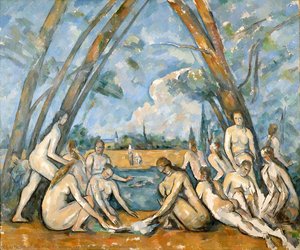
“Flowers in a Blue Vase” is housed at the The State Hermitage Museum in Russia, a testament to its enduring importance. This painting—along with others by Cézanne—represents a pivotal moment in the evolution of Western art and embodies the spirit of experimentation that characterizes the transition from Impressionism to Cubism. For those interested in exploring more of Cézanne’s works, Paul Cézanne: Flowers in a Blue Vase and Paul Cézanne: Still Life with Curtain and Flowered Pitcher are available at OriginalUniqueArt. These hand-made oil painting reproductions offer a unique opportunity to own a piece of art history.
  • Post-Impressionism Art Movement: A predominantly French movement that developed roughly between 1886 and 1905, characterized by a reaction against Impressionists’ concern for the naturalistic depiction of light and color. Learn more about Post-Impressionism.
  • Paul Cézanne's Biography: A French painter who introduced new modes of representation and influenced avant-garde artistic movements. Read more about Paul Cézanne on Wikipedia.
  • History of Art: The history of art focuses on objects made by humans for various purposes, with a primary emphasis on their aesthetic visual form. Explore the History of Art on Wikipedia.

This article provides an in-depth look at “Flowers in a Blue Vase” by Paul Cézanne, highlighting its significance within the Post-Impressionist movement and its enduring influence on modern art. Photo Description: The image is a painting of a vase filled with flowers in various colors. The vase is blue and sits on a table. There are several different types of flowers in the vase, including red ones. The painting is done in an impressionistic style, which gives it a lively and colorful appearance. The artist's name is Paul Cezanne, who was known for his Post-Impressionist paintings. This particular painting is titled “Flowers in a Blue Vase” and was created in 1875. It is currently housed at the State Hermitage Museum in Russia. Size: Unknown Date: 1875

Questions et réponses

Comment le médium et le mouvement se conjuguent-ils dans « Flowers in a Blue Vase » ?

Dans « Flowers in a Blue Vase », la technique du Huile sur toile rencontre le mouvement Post-Impressionism.

Quelle est la technique utilisée pour «Flowers in a Blue Vase» de Paul Cézanne ?

«Flowers in a Blue Vase» de Paul Cézanne est réalisé en Huile sur toile. Les reproductions visent à restituer l'aspect de cette technique.

Les couleurs de « Flowers in a Blue Vase » paraissent-elles vives ou douces ?

Les couleurs de «Flowers in a Blue Vase» de Paul Cézanne présentent une intensité Vif.

More about this painting

Aperçu en situation Visualiser en RA Passer au format impression Passer au format numérique Envoyer
Détails de l'œuvre Guide Ajouter aux favoris Télécharger l'image Articles similaires Radiographie Diaporama Q&A Statistiques

In numbers

  • 1875the year it was painted
  • 29frames to choose from
  • standard sizes, in its own proportions
  • 5weeks to paint and deliver it
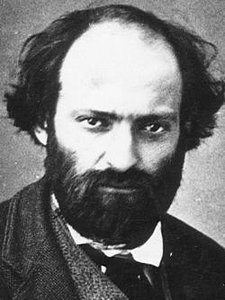
Paul Cézanne

Paul Cézanne

1839 - 1906, France

Quick facts about Paul Cézanne

  • Artistes Influents:
    • Paul Gauguin
    • Georges Seurat
  • Date De Décès: 22 octobre 1906
  • Date De Naissance: 19 janvier 1839
  • Influences Artistiques:
    • Pablo Picasso
    • Henri Matisse
    • Georges Braque
  • Lieu De Naissance: Aix-en-Provence, France
  • Mouvement Artistique: Post-impressionnisme
  • Nationalité: Français
  • Nom Complet: Paul Cézanne
  • Œuvres Notables:
    • Le Plan d'eau à Jas de Bouffan
    • Portrait d’Émile Zola
    • Forêt
    • Mont Sainte-Victoire

Biographie de l'artiste

jeune vie et influences

paul cézanne, peintre français post-impressionniste, est né le 19 janvier 1839 à Aix-en-Provence, en France. Sa jeune vie a été marquée par un fort attachement à sa famille, dont l'entreprise bancaire lui assurait une sécurité financière. Cela lui a permis de se consacrer à ses aspirations artistiques sans être entravé par des soucis financiers. les nabis, néo-impressionnisme et symbolisme ont influencé le travail de Cézanne au début, qui se caractérisait par son accent sur les formes géométriques et une palette de couleurs limitée. Son intérêt pour les œuvres de paul gauguin et georges seurat a renforcé son style post-impressionniste.

style artistique et techniques

L'utilisation innovante de Cézanne des plans de couleurs et de petits coups de pinceau répétitifs a créé des champs complexes qui exprimaient son étude approfondie des sujets. Son approche souvent exploratoire de l'art a conduit au développement d'une nouvelle langue picturale, mettant l'accent sur la structure sous-jacente des objets dans une composition.

héritage et impact

Le travail pionnier de Cézanne en post-impressionnisme a ouvert la voie à divers mouvements avant-gardistes, notamment le cubisme, le fauvisme et le surréalisme. Son influence se retrouve dans les œuvres de pablo picasso, henri matisse et georges braque. L'héritage de Cézanne continue d’inspirer les artistes et les amateurs d’art, consolidant ainsi sa place en tant que figure centrale de l’histoire de l’art moderne.

Informations clés

  • Location: État Hermitage Musée
  • Subject or theme: Floral still life
  • Artist: Paul Cézanne
  • Artistic style: Expressionism
  • Movement: Post-Impressionism
  • Title: Flowers in a Blue Vase

Quiz d'art

Chaque question ne comporte qu'une seule bonne réponse.

Question 1:
Quel mouvement artistique est associé à cette œuvre ?
Question 2:
L'artiste Cézanne est connu pour son approche particulière de la représentation des objets. Comment décrit-on cette approche ?
Question 3:
Dans quel contexte historique Cézanne peint-il "Flowers in a Blue Vase" ?
Question 4:
Quel matériau Cézanne utilise-t-il pour créer cette œuvre ?
Question 5:
Pourquoi cette œuvre est considérée comme une œuvre importante dans l'histoire de l'art ?