

 Aperçu en situation
 Partager
 Partager
 Détails
 Guide imprimable

 Télécharger
 Articles similaires
 Radiographie
 Voir le diaporama
 Statistiques
Respect
 Huile sur toile
- Art mural
- Venetian Renaissance
 194.0 x 186.0 cm
 Afficher la suite
Giclées et impressions d'art
Impressions giclées ou sur toile de qualité musée, avec une production rapide et des finitions au choix. ( Acheter la peinture faite à la main Passer au format image numérique)




P118B €10

P118H €10

P118W €10

P438Z €10

P508JH €12

P508YH €12

P805H €10

P805Z €10

P919BZ €10

P919G €10

P919XJ €10

P959ZH €10

P968JZ €12

W106C €8

W218G €10

W218JH €8

W218Y €10

W307PJ €10

W316G €10

W316PJ €8

W316Y €10

W398PJ €8

W4111J €10

W500HY €15

W500JH €15

W692G €12

W849H €8

W940BG €15

W953PJ €8




Choisissez parmi nos formats prédéfinis qui respectent les proportions originales de l’œuvre.

Saisissez la largeur et la hauteur souhaitées pour qu'elles s'adaptent à votre cadre ou à votre mur. Une impression ne peut être que découpée, elle ne peut jamais être agrandie au-delà de l'image originale ; ainsi, un format de forme différente entraînera la perte d'une partie de l'image. Nous vous envoyons une maquette numérique pour approbation avant toute impression. L'image présentée sur cette page ne montre pas le recadrage réel — seule la maquette le permet.
Livraison dans le monde entier () en 2 semaines au lieu des 4/5 semaines habituelles. (21 octobre)

Livraison express gratuite dans le monde entier

Toile de lin de haute qualité

Assurance transport complète

Garantie de remboursement des droits de douane

Garantie de fidélité des couleurs

Garantie de retour de 100 jours (uniquement en cas de défaut)

Garantie de remboursement à 100%

Tarifs dégressifs sur quantité
 L'option verre n'est disponible que pour les dimensions inférieures à 110 cm.

Respect
Giclées et impressions d'art
Format de la reproduction
-


Prix total final
€ 70
Respect: A Venetian Vision of Love and Reverence
The painting “Respect” by Paolo Veronese stands as an emblem of Venetian Renaissance grandeur—a testament to meticulous detail, masterful composition, and opulent color palettes that continue to enthrall audiences today. Created around 1570, this monumental oil on canvas piece measuring 186 x 194 cm resides within the National Gallery’s collection in London, offering visitors a privileged glimpse into Veronese's artistic prowess and the cultural values of his era.A Narrative Embodied in Color
More than just a depiction of figures, “Respect” unfolds as an allegory—a complex narrative exploring themes of love, fidelity, and admiration. Veronese’s deliberate choice of hues—primarily rich reds, deep blues, and shimmering golds—isn't merely decorative; it serves to heighten the emotional impact of the scene and underscore its symbolic significance. The artist skillfully employs chiaroscuro, manipulating light and shadow to sculpt forms and guide the viewer’s gaze across the canvas, creating a palpable sense of intimacy within this expansive composition.Symbolism Woven into Detail
The painting's iconography is laden with references to humanist ideals prevalent during the Renaissance. At its core lies the depiction of a man and woman engaged in an unspoken exchange—a visual representation of reverence and admiration. Cupid, positioned prominently in the center, playfully tugs at the man’s robe, symbolizing temptation, yet he resists the allure, demonstrating respect for his companion's tranquility. The woman, reclining on a bed adorned with crimson drapery, embodies feminine grace and purity, while the infant nestled beside her symbolizes innocence and divine blessing. These figures are not merely characters; they embody abstract concepts—love, fidelity, and virtue—reflecting the intellectual currents of the time.Technical Mastery: Veronese's Venetian Legacy
Veronese’s technique is characterized by an unparalleled command of color and texture. He achieves remarkable luminosity through meticulous layering of glazes—thin coats of translucent paint that fuse together to create depth and vibrancy. The artist’s brushstrokes are confident yet refined, capturing the subtle nuances of form and conveying a sense of movement within the static tableau. Influenced by Titian's mastery of color and Raphael's harmonious compositions, Veronese forged his own distinctive style—one rooted in classical ideals but infused with Venetian exuberance. The monumental scale of “Respect” exemplifies Veronese’s ambition to create works that would inspire awe and elevate the viewer’s experience.Historical Context: Prague Castle and Renaissance Ideals
“Respect” was commissioned for Prague Castle by Rudolf II, Holy Roman Emperor—a pivotal figure in European art history who championed humanist scholarship and artistic innovation. Its presence within the castle underscores Veronese's role as a leading artist of his time—one whose work reflected the intellectual ferment of the Renaissance and engaged with pressing moral questions. The painting’s meticulous detail and symbolic richness speak to the broader cultural preoccupation with portraying idealized human figures and exploring profound philosophical concepts—a legacy that continues to resonate with art lovers today.- Artist: Paolo Veronese
- Date: Circa 1570
- Medium: Oil on Canvas
- Location: National Gallery, London
Questions et réponses
Quelle taille est suggérée pour "Respect" dans un(e) Salon ?
L'association recommandée pour «Respect» de Paolo Veronese : une impression de Grand format dans un(e) Salon.
De quel pays provient l'œuvre Venetian Renaissance « Respect » ?
«Respect» relie le mouvement Venetian Renaissance à Italie par le biais du lieu de naissance de son créateur.
Comment la palette de «Respect» de Paolo Veronese est-elle décrite ?
La palette de «Respect» de Paolo Veronese est décrite comme étant Tons terreux. Il s'agit d'une description concise des couleurs de l'œuvre.
Biographie de l'artiste
Un Visionnaire Vénitien : La Vie et l'Art de Paolo Veronese
Paolo Caliari, connu du monde entier sous le nom de Paolo Veronese, a émergé du paysage artistique vibrant de la Venise du XVIe siècle en tant que maître de la couleur, de la composition et du spectacle opulent. Né à Vérone en 1528, fils d'un tailleur de pierre, sa jeunesse fut imprégnée de la richesse visuelle de son environnement : l'architecture classique, les formes sculptées et les idéaux humanistes bourgeonnants qui caractérisaient la région. Sa formation initiale auprès d'Antonio Badile et de Giovanni Francesco Caroto lui assura une base solide dans les techniques traditionnelles, mais c'est son installation à Venise dans les années 1550 qui embrasa véritablement son génie artistique. La cité elle-même devint sa muse, ses marchés animés, ses grands palais et ses voies navigables scintillantes dictant l'échelle et le drame de son œuvre. Il absorba rapidement les influences des maîtres vénitiens établis comme Titien, dont la maîtrise de la couleur impacta profondément la palette de Veronese, tout en forgeant un style distinct caractérisé par un sens inégalé de la théâtralité et de la grandeur.Le Peintre des Festins et des Grands Récits
La réputation de Veronese repose sur ses peintures monumentales, particulièrement celles illustrant des festins somptueux et des scènes bibliques transformées en déploiements éblouissants de la vie vénitienne. Les Noces de Cana, achevé en 1563 pour le monastère bénédictin de San Giorgio Maggiore, témoigne de son immense talent. Cette toile colossale n'est pas une simple illustration du miracle ; c'est un panorama vibrant de la société du XVIe siècle, foisonnant de personnages élégamment vêtus, de musiciens et de détails architecturaux rendus avec une précision à couper le souffle. Le tableau ne raconte pas seulement ce qui se passa à Cana, mais comment cela aurait pu paraître s'il s'était déroulé à Venise à l'époque de Veronese. De même, Le Festin chez Lévi, initialement intitulé La Cène, provoqua la controverse auprès de l'Inquisition en raison de l'inclusion de figures contemporaines et d'une atmosphère apparemment irrévérencieuse. Veronese défendit sa liberté artistique, affirmant que les peintres étaient en droit de jouir de la même liberté créative que les poètes et les bouffons — une déclaration audacieuse reflétant sa conviction que l'art possède le pouvoir d'interpréter et de réimaginer les récits sacrés. Ces œuvres n'étaient pas de simples représentations religieuses ; elles étaient des célébrations de la vie, de la richesse et de la splendeur de Venise elle-même. Il ne s'intéressait pas à une spiritualité austère, mais plutôt à capturer la joie et l'abondance de l'existence.Influences et Développement Artistique
Bien que l'influence du colorisme de Titien sur Veronese soit indéniable, son développement artistique fut le fruit d'une interaction complexe entre diverses influences. La précision architecturale qu'il insuffla à ses compositions doit beaucoup à la tradition classique prévalente à Vérone durant ses années de formation, notamment aux travaux d'architectes tels que Michele Sanmicheli. Il absorba également des éléments des maîtres de l'Italie centrale comme Raphaël et le Parmesan, visibles dans les lignes gracieux et les arrangements harmonieux de ses peintures. Cependant, Veronese ne se contenta pas d'imiter ces influences ; il les synthétisa en un style proprement vénitien, caractérisé par un usage dramatique de la lumière, des palettes de couleurs vibrantes et une attention méticuleuse aux détails. Il excellait dans la création d'illusions d'espace et de profondeur, employant des techniques de perspective pour attirer le spectateur au cœur de ses scènes élaborées. Sa maîtrise de la peinture à l'huile lui permit d'atteindre une luminosité et une richesse de texture inégalées. Il dirigea également un vaste atelier, avec les contributions de son frère Benedetto et de ses fils Gabriele et Carlo, assurant ainsi la pérennité de son style bien après sa mort en 1588.Héritage et Importance Historique
L'impact de Paolo Veronese s'étend bien au-delà du domaine de l'art de la Renaissance. Son œuvre a résonné à travers les siècles, inspirant des artistes de diverses disciplines. Ses compositions dramatiques et ses schémas colorés vibrants ont été cités comme influences allant de la peinture baroque au cinéma moderne — trouvant même des échos dans l'esthétique visuelle des Spaghetti Westerns. Il faisait partie du « grand trio » des peintres vénitiens — aux côtés de Titien et du Tintoret — chacun contribuant de manière unique à l'héritage artistique de la ville, pourtant Veronese se distingue souvent par son exubérance pure et sa célébration des plaisirs terrestres. Ses peintures continuent de captiver le public par leur grandeur et leur spectacle, offrant un aperçu du monde opulent de la Venise du XVIe siècle.- Il a redéfini la peinture historique en l'imprégnant de vie contemporaine.
- Son usage de la couleur demeure une source d'influence pour les artistes d'aujourd'hui.
- Son œuvre incarne l'esprit de l'humanisme de la Renaissance et la célébration de la beauté terrestre.

Paolo Veronese
1528 - 1588 , Italie
En bref
- Artistic Movement Or Style: Renaissance, Mannerisme
- Artists Or Movements Influenced By This Artist:
- Raphael
- Parmigianino
- Artists Who Influenced This Artist:
- Antonio Badile
- Giovanni Francesco Caroto
- Titian
- Date Of Birth: 1528
- Full Name: Paolo Caliari
- Nationality: Italien
- Notable Artworks:
- Les Noces de Cana
- Le Festin chez Lévi
- Place Of Birth: Verona, Italie
Articles connexes

Les 10 Œuvres d'Art les Plus Romantiques : Émotion, Histoire & Décor
Plongez dans l'émotion avec les 10 œuvres d'art romantiques les plus célèbres : Turner, Delacroix, Klimt… Découvrez leur histoire et trouvez l'inspiration déco. Reproductions de qualité musée sur

Venetian Renaissance: The Mastery of Color, Light, and the Art of Colorito
Explore the luminous mastery of the Venetian Renaissance. Discover how masters like Titian and Giorgione revolutionized art through colorito, light, and atmosphere. An expert guide to the golden age of Italian painting for collectors and enthusiasts.
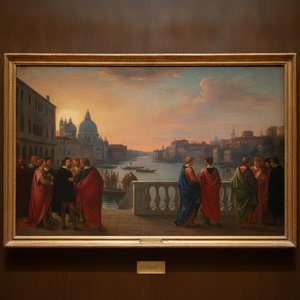
The Venetian Renaissance: A Masterclass in Colorito, Light, and the Birth of Atmospheric Brilliance
Explore the breathtaking mastery of the Venetian Renaissance. Discover how legends like Titian revolutionized art through Colorito, capturing the luminous light and vibrant pigments of the Venetian lagoon in a visual journey of unparalleled color and texture.
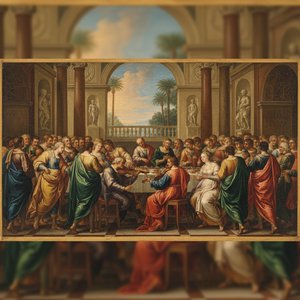
Paolo Veronese: A Renaissance Master of Color, Composition, and Venetian Splendor
Explore the vibrant world of Paolo Veronese, a Renaissance master renowned for his opulent compositions, masterful use of color, and dramatic Venetian scenes. Discover key artworks & legacy.

Jacopo Tintoretto : Les 25 Chefs-d'œuvre du Maître Vénitien | OriginalUniqueArt
Plongez dans l'univers dramatique de Jacopo Tintoretto ! Découvrez les 25 œuvres incontournables du maître vénitien, ses techniques uniques et son style baroque. Reproductions de qualité muséale sur OriginalUniqueArt.com.


