Aperçu en situation
 Envoyer
 Partager
 Détails de l'œuvre

 Télécharger
 Articles similaires
 Radiographie
 Diaporama
 Stats
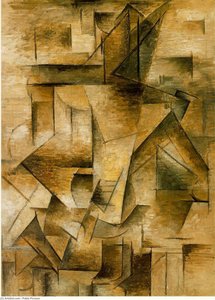
StatsLe peintre et son modèle 7


 Lire la suite
Giclées et impressions d'art
Impressions giclées ou sur toile de qualité musée, avec une production rapide et des finitions au choix. ( Commander la reproduction peinte à la main Switch to Digital Image)




P118B $10

P118H $10

P118W $10

P438Z $10

P508JH $12

P508YH $12

P805H $10

P805Z $10

P919BZ $10

P919G $10

P919XJ $10

P959ZH $10

P968JZ $12

W106C $8

W218G $10

W218JH $8

W218Y $10

W307PJ $10

W316G $10

W316PJ $8

W316Y $10

W398PJ $8

W4111J $10

W500HY $15

W500JH $15

W692G $12

W849H $8

W940BG $15

W953PJ $8




Choisissez parmi nos formats prédéfinis qui respectent les proportions originales de l’œuvre.

Vous pouvez saisir vos propres dimensions pour vous adapter à un cadre ou à un espace spécifique. Si la taille sélectionnée ne correspond pas aux proportions de l'image originale, nous recadrerons l'œuvre ou étendrons l'image avec une bordure en miroir ou une couleur unie. Une maquette numérique vous sera envoyée pour approbation avant le début de la production.
Veuillez noter que l'aperçu à l'écran ne reflète pas le recadrage ou l'extension réelle. Seule la maquette montrera avec précision la composition finale.
Bien que des tailles personnalisées soient disponibles, nous vous recommandons de choisir une dimension dans la liste prédéfinie afin de préserver les proportions originales.
Livraison dans le monde entier () en 2 semaines au lieu des 4/5 semaines habituelles. (8 septembre)

Livraison express gratuite dans le monde entier

Toile de lin de qualité supérieure

Assurance transport complète

Garantie de remboursement des droits de douane

Garantie de fidélité des couleurs

Politique de retour de 100 jours (uniquement en cas de défaut)

Garantie de remboursement à 100%

Offre de tarifs dégressifs
 L'option verre n'est disponible que pour les dimensions inférieures à 110 cm.

Le peintre et son modèle 7
Giclées et impressions d'art
Format de la reproduction
-


Prix total
$ 80
A Moment Suspended: Exploring Picasso’s Intimate Vision
Pablo Ruiz Picasso, a name that resonates through the annals of art history, was born in Málaga, Spain, in 1881—a nation poised on the cusp of profound change. His life, spanning nearly a century, became an extraordinary mirror reflecting this transformation, a relentless exploration of form, perspective, and the very essence of human experience. From his earliest artistic training under his father José Ruiz y Blasco, a painter himself, Picasso displayed a precocious talent that quickly surpassed even his mentor’s abilities. This early mastery wasn't merely technical; it hinted at an insatiable curiosity and a willingness to challenge convention—qualities destined to define his entire career. The family’s subsequent moves to A Coruña and then Barcelona proved pivotal, immersing the young artist in vibrant cultural environments where he honed his skills and began to forge hiDeconstructing Reality: Style & Technique
- Cubist Foundations: The artwork is deeply rooted in the Cubist movement, characterized by its fragmentation of form and multiple perspectives. Picasso doesn’t present a single viewpoint but rather constructs an image from various angles simultaneously, challenging traditional notions of representation.
- Geometric Abstraction: Notice how figures and objects are broken down into geometric shapes – cubes, rectangles, and triangles – emphasizing their underlying structure over realistic detail. This abstraction isn’t about distortion; it's about revealing a more complete understanding of the subject by showing all sides at once.
- Textural Richness: Picasso masterfully employs impasto—thickly applied paint—creating a tactile surface and adding depth to the composition. Visible brushstrokes contribute to the dynamism and energy of the piece, inviting viewers to engage with the physicality of the artwork.
- Color & Atmosphere: A cool palette dominated by blues, greens, and yellows evokes a sense of introspection and perhaps even melancholy. The swirling background creates a vortex-like effect, adding to the painting’s emotional intensity and suggesting a world in constant flux.
The Artist & His Muse: Subject & Symbolism
- A Recurring Theme: The motif of the painter and his model was one Picasso revisited throughout his career. It represents not only a personal subject but also a meditation on the artistic process itself – the gaze, the act of creation, and the power dynamics inherent in the relationship.
- Intimate Encounter: The figures are engaged in an intimate scene, though the fragmented forms prevent a straightforward reading. This ambiguity invites viewers to project their own interpretations onto the work, fostering a personal connection with the artwork.
- Symbolic Objects: Elements like the pipe and bowl hint at themes of leisure, contemplation, and perhaps even artistic inspiration. These objects aren’t merely props; they contribute to the overall narrative and add layers of meaning.
- Fernande Olivier? Scholars suggest the model may be Fernande Olivier, one of Picasso’s early muses and lovers. Her presence would imbue the work with a personal history and emotional resonance.
Historical Context & Artistic Legacy
- A Turning Point: Painted around 1914, this artwork exists at an interesting juncture in Picasso’s career. While deeply influenced by Cubism, it also hints at a shift towards more classical forms that would emerge after World War I.
- Picasso's Innovation: As a leading figure of 20th-century art, Picasso revolutionized painting and sculpture. His exploration of form, perspective, and subject matter continues to inspire artists today.
- Influence & Inspiration: Picasso’s work challenged conventional artistic norms and paved the way for countless subsequent movements, including Surrealism and Abstract Expressionism.
- His relentless pursuit of new modes of expression cemented his place as one of history's most influential artists.
Emotional Resonance & Interior Design
This painting isn’t simply a visual experience; it evokes a range of emotions – introspection, mystery, and a sense of underlying tension. Its complex composition and muted color palette make it a striking focal point for any interior space. It would complement modern or contemporary décor, adding a touch of intellectual sophistication and artistic depth. A high-quality reproduction allows you to bring the power and beauty of Picasso’s vision into your home or office, sparking conversation and inspiring creativity. Photo Description: --Overall Impression-- The artwork is a Cubist-inspired painting depicting two figures – a man and a woman – engaged in an intimate scene. The composition is fragmented and geometric, characteristic of the Cubist style, with elements presented from multiple viewpoints simultaneously. The background is a swirling vortex of blues, greens, and yellows, creating a sense of dynamism and unease. The figures are rendered with simplified forms and bold outlines, emphasizing their shapes over realistic representation. There’s a strong emphasis on texture through visible brushstrokes and layering of paint. Materials used appear to be oil paints on canvas. The painting's composition utilizes a triangular arrangement with the figures forming the base and the swirling background acting as the apex. Lines are angular and fragmented, reflecting the Cubist aesthetic. Shapes are predominantly geometric – cubes, rectangles, and triangles dominate the forms of the subjects and the environment. Texture is created through impasto techniques, where thick layers of paint are applied, adding a tactile quality to the artwork. The lighting is soft and even, minimizing harsh shadows and contributing to the overall dreamlike atmosphere. Perspective is deliberately distorted, flattening the space and challenging traditional notions of depth. The color palette primarily consists of blues, greens, yellows, and browns, creating a cool yet somewhat unsettling mood. The use of contrasting colors – particularly between the figures and the background – adds visual interest and emphasizes their isolation within the chaotic environment. Size: Unknown Date: UnknownBiographie de l'artiste
Pablo Picasso: Un Artiste Révolutionnaire
La Jeunesse et la Formation (1881-1904)
- Né le 25 octobre 1881 à Málaga, en Espagne, Pablo Ruiz y Picasso a démontré un talent artistique dès son plus jeune âge.
- Son père, José Ruiz y Blasco, était professeur d'art et lui a fourni une formation précoce. On raconte que les premiers mots de Picasso étaient “piz, piz” – tentant de dire ‘crayola’.
- Picasso a rapidement dépassé les capacités de son père, montrant un talent remarquable pour des représentations naturalistes.
- La famille a déménagé à A Coruña et plus tard à Barcelone après la tragique mort de sa sœur.
- À Barcelone, il a fréquenté l’École des Beaux-Arts mais s'est souvent heurté aux instructions académiques traditionnelles. Il a brièvement étudié à l’Académie Royale des Beaux-Arts de Saint-Ferdinand à Madrid, trouvant cela étouffant et préférant étudier les maîtres comme Velázquez et Goya indépendamment.
La Période Bleue et Rose (1901-1906)
- La Période Bleue (environ 1901-1904) se caractérise par des peintures sombres dominées par des teintes de bleu et turquoise.
- Ces œuvres dépeignent souvent des figures marginalisées – mendiants, aveugles, prostituées – reflétant la mélancolie et le commentaire social. Des exemples clés incluent La Vie (1903) et Le Vieux Guitariste (1903-1904).
- Après cela, la Période Rose (1904-1906) a émergé avec des tons plus chauds – roses, oranges et rouges.
- Cette période reflète une vision plus optimiste, représentant souvent des artistes de cirque, des harlequins et des acrobates. La Famille de Saltimbanques (1905) en est un exemple.
Les Années Révolutionnaires : Cubisme et au-delà (1907-1919)
- 1907 a marqué un moment décisif avec Les Demoiselles d'Avignon, influencé par la sculpture ibérique et les masques africains. Ce tableau a brisé la perspective traditionnelle, ouvrant la voie au Cubisme.
- Travaillant en étroite collaboration avec Georges Braque, Picasso a cofondé le Cubisme, modifiant fondamentalement la façon dont les artistes représentaient la réalité.
- Cubisme Analytique (1909-1912) présentait des formes fragmentées, des couleurs atténuées et une dissection des objets en formes géométriques.
- Cubisme Synthétique (1912-1919) incorporait des éléments de collage – clippings de journaux, chutes de tissu – pour créer des surfaces texturées et de nouvelles couches visuelles.
Néo-classicisme et Surréalisme (Années 1920 - Années 1930)
- Les années 1920 ont vu Picasso explorer des styles néoclassiques avec des figures monumentales soulignant les formes classiques.
- Il a également été impliqué dans le mouvement surréaliste, sans pour autant s'aligner pleinement sur ses principes. Son œuvre mélangeait des styles antérieurs à des images surréalistes et des perspectives déformées.
Années de la Fin et Héritage (1940-1973)
- Pendant la Seconde Guerre mondiale, Picasso est resté en France, produisant des déclarations anti-guerre puissantes comme Guernica (1937), une réponse viscérale au bombardement de Guernica pendant la guerre civile espagnole.
- Guernica est devenu un symbole durable des horreurs de la guerre et reste l'une de ses œuvres les plus célébrées.
- Tout au long des années 1950 et 1960, Picasso a continué à expérimenter avec divers médiums – céramique, sculpture, gravure – démontrant une versatilité remarquable.
- Il s'est marié à Jacqueline Roque en 1961. Il est décédé le 8 avril 1973 à Mougins, en France.
Influences et Importance Historique
- Le développement artistique de Picasso a été façonné par les maîtres espagnols comme Velázquez et Goya, la sculpture ibérique, l'art africain et Henri Matisse.
- Son impact sur l’art du XXe siècle est immeasurable. Il a cofondé le Cubisme, a pionnier le collage et la sculpture construite, et a constamment remis en question les conventions artistiques.
- L’expérimentation incessante de Picasso a redéfini l'art moderne et continue d'inspirer les artistes aujourd'hui.
- Sa production abondante – estimée à plus de 50 000 œuvres – consolide sa position en tant que l'un des artistes les plus importants et les plus influents de l’histoire.

Pablo Picasso
1881 - 1973 , Espagne
L'essentiel de l'artiste
- Artistes Influents:
- Velázquez
- Goya
- Henri Matisse
- Date De Décès: 8 avril 1973
- Date De Naissance: 25 octobre 1881
- Influences Artistiques:
- Cubisme
- Surréalisme
- Lieu De Naissance: Málaga, Espagne
- Nationalité: Espagnole
- Nom Complet: Pablo Ruiz y Picasso
- Oeuvres Notables:
- Les Demoiselles d'Avignon
- Guernica
- La Vie
- Le Vieux Guitariste
- Famille de Saltimbanques
- Style Artistique: Cubisme, Surréalisme
Articles connexes

The Allure of Azure: Exploring the Symbolic & Aesthetic Depths of Blue in Art History
Explore the rich history of blue in art! Discover its symbolism, from ancient pigments to modern masterpieces by Kandinsky & Seurat. Uncover the psychological impact and cultural meanings behind this captivating hue.
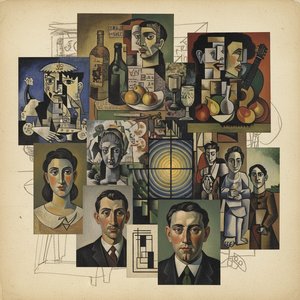
Les 10 Chefs-d'œuvre Cubistes Révolutionnaires : Art, Décor & Histoire
Plongez au cœur du cubisme avec les 10 œuvres révolutionnaires de Picasso, Braque et Gris. Découvrez l'histoire, les techniques et l'impact de ce mouvement artistique majeur. Reproductions d'art de qualité musée sur OriginalUniqueArt.com !

Les 10 Chefs-d'œuvre Dominés par le Bleu Ardoise : Art, Histoire & Décor
Plongez dans l'univers fascinant des 10 plus beaux tableaux dominés par le bleu ardoise. Découvrez l'histoire, les artistes et les techniques de ces chefs-d'œuvre impressionnistes et contemporains. Inspirez votre décoration intérieure avec !
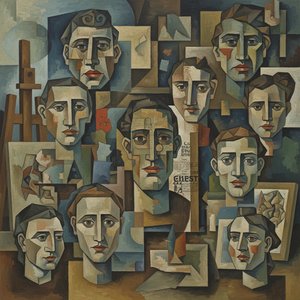
Les 10 Chefs-d'œuvre du Portrait Cubiste : Artistes & Décor Intérieur
Plongez au cœur du cubisme avec les 10 portraits emblématiques de Picasso, Braque et Gris. Découvrez l'histoire, la technique & l'impact de ces chefs-d'œuvre. Reproductions d'art de qualité musée sur OriginalUniqueArt.com !
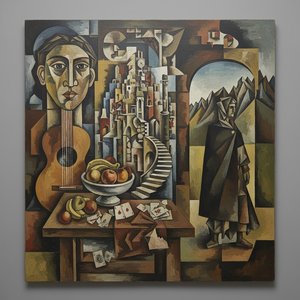
Cubisme : 10 Chefs-d'œuvre Révolutionnaires à Redécouvrir | OriginalUniqueArt
Plongez au cœur du cubisme avec OriginalUniqueArt ! Découvrez 10 chefs-d'œuvre révolutionnaires de Picasso, Braque et autres artistes majeurs. Explorez l'histoire, les techniques et les couleurs vibrantes de ce mouvement artistique unique. Retrouvez ces œuvres en reproduction sur OriginalUniqueArt.com.