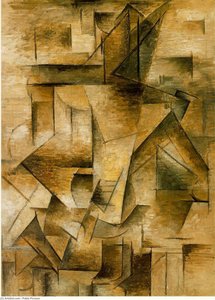
Aperçu en situation
 Partager
 Partager
 Détails

 Télécharger
 Articles similaires
 Radiographie
 Voir le diaporama
 Statistiques
Le chapeau de paille avec feuilles bleues
 Huile sur toile
- Art mural
- Surrealist Movement
 1936
1936- Renaissance
 61.0 x 50.0 cm
 Afficher la suite
Giclées et impressions d'art
Impressions giclées ou sur toile de qualité musée, avec une production rapide et des finitions au choix. ( Acheter la peinture faite à la main Passer au format image numérique)




P118B $10

P118H $10

P118W $10

P438Z $10

P508JH $12

P508YH $12

P805H $10

P805Z $10

P919BZ $10

P919G $10

P919XJ $10

P959ZH $10

P968JZ $12

W106C $8

W218G $10

W218JH $8

W218Y $10

W307PJ $10

W316G $10

W316PJ $8

W316Y $10

W398PJ $8

W4111J $10

W500HY $15

W500JH $15

W692G $12

W849H $8

W940BG $15

W953PJ $8




Choisissez parmi nos formats prédéfinis qui respectent les proportions originales de l’œuvre.

Vous pouvez saisir vos propres dimensions pour vous adapter à un cadre ou à un espace spécifique. Si la taille sélectionnée ne correspond pas aux proportions de l'image originale, nous recadrerons l'œuvre ou étendrons l'image avec une bordure en miroir ou une couleur unie. Une maquette numérique vous sera envoyée pour approbation avant le début de la production.
Veuillez noter que l'aperçu à l'écran ne reflète pas le recadrage ou l'extension réelle. Seule la maquette montrera avec précision la composition finale.
Bien que des tailles personnalisées soient disponibles, nous vous recommandons de choisir une dimension dans la liste prédéfinie afin de préserver les proportions originales.
Livraison dans le monde entier () en 2 semaines au lieu des 4/5 semaines habituelles. (13 septembre)

Livraison express gratuite dans le monde entier

Toile de lin de haute qualité

Assurance transport complète

Garantie de remboursement des droits de douane

Garantie de fidélité des couleurs

Garantie de retour de 100 jours (uniquement en cas de défaut)

Garantie de remboursement à 100%

Tarifs dégressifs sur quantité
 L'option verre n'est disponible que pour les dimensions inférieures à 110 cm.

Le chapeau de paille avec feuilles bleues
Giclées et impressions d'art
Format de la reproduction
-


Prix total final
$ 80
Woman in a Straw Hat
“CITE>Woman in a Straw Hat” exemplifies Picasso’s experimental approach to portraiture, blending geometric and organic shapes to deconstruct conventional representations of human form. The subject, presumably Olga, is depicted with a highly stylized face divided into contrasting colors, notably green and white planes that bisect the visage. The eyes are circular and abstract, set in an off-kilter alignment that enhances the disorienting effect of the piece. The straw hat, rendered in shades of purple, rests atop the subject’s head, contributing to the overall surreal quality of the painting. The background is minimalist, employing a gradation of blues that allows the figure to stand prominently in the compositional space. A subtle manipulation of light and shadow on the figure's garment suggests volume, adding depth to the otherwise flat appearance of the work. This artwork encapsulates Picasso’s revolutionary approach to portrait art, challenging the viewer’s perception and expectation of reality. The painting belongs to Surrealism, a cultural movement that began in the early 1920s, emphasizing the subconscious mind. Picasso's fascination with dreams, sexuality, religion, science, and personal relationships fueled this artistic exploration. His public support for the Francoist regime, commercial activities, and the quality and authenticity of some of his late works have been controversial. Despite these debates, his life and work were an important influence on other Surrealists, pop art, popular culture, and contemporary artists. “CITE>Woman in a Straw Hat” is part of the broader surrealist movement that sought to unlock the creative potential of the unconscious mind. This piece, along with others by Picasso, has been pivotal in shaping modern art. The surrealism movement, characterized by its dream-like imagery and unconventional juxtapositions, continues to inspire artists today. Picasso’s journey into Surrealism was influenced by his desire to break free from academic conventions and explore new artistic territories. He deliberately rejected traditional techniques of representation, opting for abstraction and distortion—methods that would become hallmarks of Cubism and Surrealism alike. This deliberate departure from realism wasn't merely stylistic; it represented a profound philosophical shift toward accepting the irrational and embracing the unpredictable aspects of human experience. The artist’s meticulous attention to detail—the precise placement of the eyes, the subtle shading on the garment—contrasts sharply with the overall flatness of the composition. This juxtaposition creates tension and invites contemplation about how Picasso intended to convey emotion and psychological complexity through his unconventional visual language. The use of color is equally significant: the vibrant purple of the hat juxtaposed against the cool blues of the background generates a dynamic interplay that reinforces the painting’s surreal atmosphere. The Museo Cantini in Marseilles houses a remarkable collection of modern art from the first half of the twentieth century, offering visitors an unparalleled opportunity to immerse themselves in the artistic innovations of this era. Picasso's influence extends far beyond his own paintings; it permeates countless subsequent artworks and continues to inspire artists globally. Furthermore, Picasso’s legacy is cemented by institutions like Perls Galleries in New York City, which championed French masters during its heyday—Braque, Picasso and Calder—demonstrating the enduring power of artistic vision and patronage. The Museo Picasso showcases a comprehensive overview of Picasso's oeuvre, allowing viewers to appreciate his evolution as an artist throughout his prolific career. The painting’s impact on art history is undeniable. It established a precedent for challenging conventional notions of beauty and representation, paving the way for subsequent movements like Abstract Expressionism and Pop Art. “Woman in a Straw Hat” remains a testament to Picasso's genius—a masterpiece that continues to captivate audiences with its unsettling blend of form and color and its profound exploration of human psychology.- Surrealism: A cultural movement that began in the early 1920s, emphasizing the subconscious mind.
- Pablo Picasso: A Spanish artist known for his pioneering work in Cubism and Surrealism.
- Musée Cantini: A museum in Marseilles, France, specializing in modern art from the first half of the twentieth century.
- Pablo Picasso on Wikipedia
- Guernica: A large 1937 oil painting by Spanish artist Pablo Picasso. It is one of his best-known works, regarded by many art critics as the most moving and powerful anti-war painting in history.
- Les Demoiselles d'Avignon: Painted in 1907, Les Demoiselles d’Avignon is considered Picasso’s breakthrough work and a pivotal moment in the development of Cubism.
Additional Research
The painting’s influence extends beyond its aesthetic qualities—it embodies Picasso's unwavering commitment to artistic innovation and his willingness to confront societal issues through his art. Its enduring appeal speaks to the universal human desire for beauty, emotion, and intellectual stimulation. Exploring Picasso’s broader artistic output provides a richer understanding of his contribution to modern art history.Size & Date
“Woman in a Straw Hat” measures 61 x 50 cm and was created in 1936, marking a significant juncture in Picasso’s artistic trajectory—a moment when he decisively embraced Surrealism and redefined the boundaries of visual representation.Biographie de l'artiste
Pablo Picasso: Un Artiste Révolutionnaire
La Jeunesse et la Formation (1881-1904)
- Né le 25 octobre 1881 à Málaga, en Espagne, Pablo Ruiz y Picasso a démontré un talent artistique dès son plus jeune âge.
- Son père, José Ruiz y Blasco, était professeur d'art et lui a fourni une formation précoce. On raconte que les premiers mots de Picasso étaient “piz, piz” – tentant de dire ‘crayola’.
- Picasso a rapidement dépassé les capacités de son père, montrant un talent remarquable pour des représentations naturalistes.
- La famille a déménagé à A Coruña et plus tard à Barcelone après la tragique mort de sa sœur.
- À Barcelone, il a fréquenté l’École des Beaux-Arts mais s'est souvent heurté aux instructions académiques traditionnelles. Il a brièvement étudié à l’Académie Royale des Beaux-Arts de Saint-Ferdinand à Madrid, trouvant cela étouffant et préférant étudier les maîtres comme Velázquez et Goya indépendamment.
La Période Bleue et Rose (1901-1906)
- La Période Bleue (environ 1901-1904) se caractérise par des peintures sombres dominées par des teintes de bleu et turquoise.
- Ces œuvres dépeignent souvent des figures marginalisées – mendiants, aveugles, prostituées – reflétant la mélancolie et le commentaire social. Des exemples clés incluent La Vie (1903) et Le Vieux Guitariste (1903-1904).
- Après cela, la Période Rose (1904-1906) a émergé avec des tons plus chauds – roses, oranges et rouges.
- Cette période reflète une vision plus optimiste, représentant souvent des artistes de cirque, des harlequins et des acrobates. La Famille de Saltimbanques (1905) en est un exemple.
Les Années Révolutionnaires : Cubisme et au-delà (1907-1919)
- 1907 a marqué un moment décisif avec Les Demoiselles d'Avignon, influencé par la sculpture ibérique et les masques africains. Ce tableau a brisé la perspective traditionnelle, ouvrant la voie au Cubisme.
- Travaillant en étroite collaboration avec Georges Braque, Picasso a cofondé le Cubisme, modifiant fondamentalement la façon dont les artistes représentaient la réalité.
- Cubisme Analytique (1909-1912) présentait des formes fragmentées, des couleurs atténuées et une dissection des objets en formes géométriques.
- Cubisme Synthétique (1912-1919) incorporait des éléments de collage – clippings de journaux, chutes de tissu – pour créer des surfaces texturées et de nouvelles couches visuelles.
Néo-classicisme et Surréalisme (Années 1920 - Années 1930)
- Les années 1920 ont vu Picasso explorer des styles néoclassiques avec des figures monumentales soulignant les formes classiques.
- Il a également été impliqué dans le mouvement surréaliste, sans pour autant s'aligner pleinement sur ses principes. Son œuvre mélangeait des styles antérieurs à des images surréalistes et des perspectives déformées.
Années de la Fin et Héritage (1940-1973)
- Pendant la Seconde Guerre mondiale, Picasso est resté en France, produisant des déclarations anti-guerre puissantes comme Guernica (1937), une réponse viscérale au bombardement de Guernica pendant la guerre civile espagnole.
- Guernica est devenu un symbole durable des horreurs de la guerre et reste l'une de ses œuvres les plus célébrées.
- Tout au long des années 1950 et 1960, Picasso a continué à expérimenter avec divers médiums – céramique, sculpture, gravure – démontrant une versatilité remarquable.
- Il s'est marié à Jacqueline Roque en 1961. Il est décédé le 8 avril 1973 à Mougins, en France.
Influences et Importance Historique
- Le développement artistique de Picasso a été façonné par les maîtres espagnols comme Velázquez et Goya, la sculpture ibérique, l'art africain et Henri Matisse.
- Son impact sur l’art du XXe siècle est immeasurable. Il a cofondé le Cubisme, a pionnier le collage et la sculpture construite, et a constamment remis en question les conventions artistiques.
- L’expérimentation incessante de Picasso a redéfini l'art moderne et continue d'inspirer les artistes aujourd'hui.
- Sa production abondante – estimée à plus de 50 000 œuvres – consolide sa position en tant que l'un des artistes les plus importants et les plus influents de l’histoire.

Pablo Picasso
1881 - 1973 , Espagne
En bref
- Artistes Influents:
- Velázquez
- Goya
- Henri Matisse
- Date De Décès: 8 avril 1973
- Date De Naissance: 25 octobre 1881
- Influences Artistiques:
- Cubisme
- Surréalisme
- Lieu De Naissance: Málaga, Espagne
- Nationalité: Espagnole
- Nom Complet: Pablo Ruiz y Picasso
- Oeuvres Notables:
- Les Demoiselles d'Avignon
- Guernica
- La Vie
- Le Vieux Guitariste
- Famille de Saltimbanques
- Style Artistique: Cubisme, Surréalisme
Articles similaires
Cubisme : 10 Chefs-d'œuvre Révolutionnaires à Redécouvrir | OriginalUniqueArt
Plongez au cœur du cubisme avec OriginalUniqueArt ! Découvrez 10 chefs-d'œuvre révolutionnaires de Picasso, Braque et autres artistes majeurs. Explorez l'histoire, les techniques et les couleurs vibrantes de ce mouvement artistique unique. Retrouvez ces œuvres en reproduction sur OriginalUniqueArt.com.
Les 10 Chefs-d'œuvre du Portrait Cubiste : Artistes & Décor Intérieur
Plongez au cœur du cubisme avec les 10 portraits emblématiques de Picasso, Braque et Gris. Découvrez l'histoire, la technique & l'impact de ces chefs-d'œuvre. Reproductions d'art de qualité musée sur OriginalUniqueArt.com !

Pablo Picasso : Révolution cubiste, symbolisme et héritage durable
Explorez la révolution cubiste de Picasso et Braque avec OriginalUniqueArt. Découvrez l'histoire, les techniques et l'impact durable de ce mouvement artistique majeur. Guide pour collectionneurs passionnés.
Mastering Cubism: An Essential Guide to the Revolutionary Artworks of Pablo Picasso
Explore the profound evolution of Cubism through an expert analysis of Pablo Picasso's revolutionary works. From Analytical to Synthetic Cubism, discover the techniques that redefined modern art and learn how to curate these iconic masterpieces for your private collection.
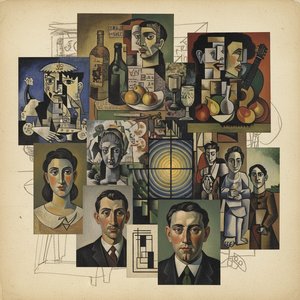
Les 10 Chefs-d'œuvre Cubistes Révolutionnaires : Art, Décor & Histoire
Plongez au cœur du cubisme avec les 10 œuvres révolutionnaires de Picasso, Braque et Gris. Découvrez l'histoire, les techniques et l'impact de ce mouvement artistique majeur. Reproductions d'art de qualité musée sur OriginalUniqueArt.com !