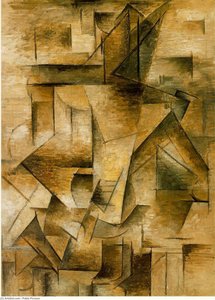
Aperçu en situation
 Envoyer
 Partager
 Détails de l'œuvre
 Guide
Guide

 Télécharger l'image
 Articles similaires
 Radiographie
 Diaporama
 Statistiques
Femme Couchée
 Huile sur toile
- Art mural
- Surrealism
 1929
1929- Moderne
 46.0 x 61.0 cm
 Lire la suite
L’œuvre d'art présentée sur cette page est protégée par le droit d'auteur, ce qui signifie que nous ne pouvons légalement créer ou vendre de reproduction identique. Cette protection est appliquée en vertu d'accords internationaux tels que la Convention de Berne et par les lois nationales, notamment celles énoncées par le Loi américaine sur le droit d'auteur - Titre 17.
Cette méthode est pleinement conforme aux réglementations sur le droit d'auteur car elle ne repose pas sur la copie ou la duplication de l'œuvre protégée. Il s'agit plutôt d'une réinterprétation créative — une nouvelle peinture qui s'inspire de l'original sans pour autant lui être identique.
Giclées et impressions d'art
Impressions giclées ou sur toile de qualité musée, avec une production rapide et des finitions au choix. ( Commander la reproduction peinte à la main Passer au format numérique)




P118B €10

P118H €10

P118W €10

P438Z €10

P508JH €12

P508YH €12

P805H €10

P805Z €10

P919BZ €10

P919G €10

P919XJ €10

P959ZH €10

P968JZ €12

W106C €8

W218G €10

W218JH €8

W218Y €10

W307PJ €10

W316G €10

W316PJ €8

W316Y €10

W398PJ €8

W4111J €10

W500HY €15

W500JH €15

W692G €12

W849H €8

W940BG €15

W953PJ €8




Choisissez parmi nos formats prédéfinis qui respectent les proportions originales de l’œuvre.

Saisissez la largeur et la hauteur souhaitées pour qu'elles s'adaptent à votre cadre ou à votre mur. Une impression peut être recadrée, mais jamais agrandie au-delà de l'image originale ; ainsi, un format de forme différente entraînera la perte d'une partie de l'image. Nous vous envoyons une maquette numérique pour approbation avant toute impression. L'image présentée sur cette page ne montre pas le recadrage réel — seule la maquette le permet.
Livraison dans le monde entier () en 2 semaines au lieu des 4/5 semaines habituelles. (26 octobre)

Livraison express gratuite dans le monde entier

Toile de lin de qualité supérieure

Assurance transport complète

Garantie de remboursement des droits de douane

Garantie de fidélité des couleurs

Politique de retour de 100 jours (uniquement en cas de défaut)

Garantie de remboursement à 100%

Offre de tarifs dégressifs
 L'option verre n'est disponible que pour les dimensions inférieures à 110 cm.

Femme Couchée
Giclées et impressions d'art
Format de la reproduction
-


Prix total
€ 70
Reclining Woman : Unveiling the Surrealist Dream of Pablo Picasso
Pablo Picasso’s Reclining Woman, painted in 1929, isn't merely a portrait; it’s an invitation into the subconscious, a meticulously crafted tableau vivant where reality and dream intertwine. Measuring just 46 x 61 cm, this oil on canvas work embodies the heart of Surrealism – a movement that sought to liberate art from the constraints of rational thought, tapping instead into the realm of dreams, desires, and the hidden depths of the human psyche. The painting immediately captivates with its unsettling yet profoundly peaceful atmosphere, inviting viewers to contemplate the quiet drama unfolding within a seemingly ordinary bedroom.
At first glance, the scene appears straightforward: a woman, draped in repose on her side, occupies a simple space. However, Picasso’s genius lies in his masterful manipulation of perspective and juxtaposition. The room itself is rendered with an almost photographic precision – a bed adorned with a vibrant red blanket, a chair positioned strategically near the left edge, a dining table hinting at domesticity, and two vases adding splashes of color to the composition. Yet, these familiar objects are presented in a deliberately skewed manner, creating a sense of disorientation and subtly challenging our perception of space and time. The woman’s relaxed posture, almost suggesting sleep or meditation, further contributes to this dreamlike quality, blurring the lines between wakefulness and slumber.
The Roots of Surrealism and Picasso's Artistic Journey
To fully appreciate Reclining Woman, it’s crucial to understand its context within the broader artistic landscape. Emerging in the early 1920s, Surrealism was a radical reaction against the prevailing rationalism of the time. Artists like André Breton and Max Ernst sought to unlock the creative potential of the unconscious mind, drawing inspiration from Freudian psychoanalysis and exploring themes of sexuality, anxiety, and the irrational. Picasso, already a revolutionary figure in art with his pioneering work in Cubism, was deeply influenced by these ideas. While he had previously focused on geometric fragmentation – as seen in works like Les Demoiselles d’Avignon, – Reclining Woman marks a significant shift towards the dreamlike imagery and symbolic language of Surrealism. This transition reflects Picasso's own evolving artistic interests and his desire to explore new avenues for self-expression.
Symbolic Layers and Artistic Techniques
Beyond its immediate visual appeal, Reclining Woman is rich in symbolic meaning. The red blanket, a potent color associated with passion, vitality, and even danger, dominates the scene, drawing attention to the woman’s form. The presence of everyday objects – the bed, chair, table, vases – suggests themes of domesticity, comfort, and perhaps even isolation. The positioning of these elements within the room is deliberately ambiguous, creating a sense of unease and inviting viewers to project their own interpretations onto the scene. Picasso's masterful use of brushstrokes—bold, expressive, and often impastoed—adds texture and dynamism to the canvas, further enhancing the painting’s emotional impact. The vibrant colors, carefully chosen for their symbolic resonance, contribute to the overall surrealist atmosphere.
A Legacy of Innovation and Inspiration
Reclining Woman stands as a pivotal work in Picasso's oeuvre and a cornerstone of Surrealist art. Its exploration of the subconscious, its unsettling juxtapositions, and its masterful use of color and form have resonated with audiences for decades. Picasso’s innovative approach paved the way for subsequent generations of artists, including Salvador Dalí and René Magritte, who continued to push the boundaries of artistic expression. The painting's influence extends beyond the realm of fine art, inspiring designers, filmmakers, and creatives across various disciplines. Reproductions of this captivating artwork offer a unique opportunity to bring Picasso’s surrealist vision into your home or studio, serving as a constant source of inspiration and contemplation.
For more detailed information on Surrealism and Picasso's artistic journey, we invite you to explore our resources at Top 5 Famous Surrealism Paintings of All Time and Reclining Woman on OriginalUniqueArt.com.
Questions et réponses
Quelle est la situation du droit d'auteur pour «Femme Couchée» de Pablo Picasso ?
Le statut du droit d'auteur de « Femme Couchée » - toujours protégé par le droit d'auteur - découle du décès de l'artiste en 1973.
Quel format et quelle orientation sont recommandés pour l'impression de « Femme Couchée » ?
Pour « Femme Couchée », la configuration d'impression recommandée est un format Grand format avec une orientation Paysage.
Quel âge avait Pablo Picasso lors de la création de « Femme Couchée » ?
Pablo Picasso a réalisé « Femme Couchée » à l'âge de 48. L'artiste est né en 1881 et l'œuvre date de 1929.
Biographie de l'artiste
Pablo Picasso: Un Artiste Révolutionnaire
La Jeunesse et la Formation (1881-1904)
- Né le 25 octobre 1881 à Málaga, en Espagne, Pablo Ruiz y Picasso a démontré un talent artistique dès son plus jeune âge.
- Son père, José Ruiz y Blasco, était professeur d'art et lui a fourni une formation précoce. On raconte que les premiers mots de Picasso étaient “piz, piz” – tentant de dire ‘crayola’.
- Picasso a rapidement dépassé les capacités de son père, montrant un talent remarquable pour des représentations naturalistes.
- La famille a déménagé à A Coruña et plus tard à Barcelone après la tragique mort de sa sœur.
- À Barcelone, il a fréquenté l’École des Beaux-Arts mais s'est souvent heurté aux instructions académiques traditionnelles. Il a brièvement étudié à l’Académie Royale des Beaux-Arts de Saint-Ferdinand à Madrid, trouvant cela étouffant et préférant étudier les maîtres comme Velázquez et Goya indépendamment.
La Période Bleue et Rose (1901-1906)
- La Période Bleue (environ 1901-1904) se caractérise par des peintures sombres dominées par des teintes de bleu et turquoise.
- Ces œuvres dépeignent souvent des figures marginalisées – mendiants, aveugles, prostituées – reflétant la mélancolie et le commentaire social. Des exemples clés incluent La Vie (1903) et Le Vieux Guitariste (1903-1904).
- Après cela, la Période Rose (1904-1906) a émergé avec des tons plus chauds – roses, oranges et rouges.
- Cette période reflète une vision plus optimiste, représentant souvent des artistes de cirque, des harlequins et des acrobates. La Famille de Saltimbanques (1905) en est un exemple.
Les Années Révolutionnaires : Cubisme et au-delà (1907-1919)
- 1907 a marqué un moment décisif avec Les Demoiselles d'Avignon, influencé par la sculpture ibérique et les masques africains. Ce tableau a brisé la perspective traditionnelle, ouvrant la voie au Cubisme.
- Travaillant en étroite collaboration avec Georges Braque, Picasso a cofondé le Cubisme, modifiant fondamentalement la façon dont les artistes représentaient la réalité.
- Cubisme Analytique (1909-1912) présentait des formes fragmentées, des couleurs atténuées et une dissection des objets en formes géométriques.
- Cubisme Synthétique (1912-1919) incorporait des éléments de collage – clippings de journaux, chutes de tissu – pour créer des surfaces texturées et de nouvelles couches visuelles.
Néo-classicisme et Surréalisme (Années 1920 - Années 1930)
- Les années 1920 ont vu Picasso explorer des styles néoclassiques avec des figures monumentales soulignant les formes classiques.
- Il a également été impliqué dans le mouvement surréaliste, sans pour autant s'aligner pleinement sur ses principes. Son œuvre mélangeait des styles antérieurs à des images surréalistes et des perspectives déformées.
Années de la Fin et Héritage (1940-1973)
- Pendant la Seconde Guerre mondiale, Picasso est resté en France, produisant des déclarations anti-guerre puissantes comme Guernica (1937), une réponse viscérale au bombardement de Guernica pendant la guerre civile espagnole.
- Guernica est devenu un symbole durable des horreurs de la guerre et reste l'une de ses œuvres les plus célébrées.
- Tout au long des années 1950 et 1960, Picasso a continué à expérimenter avec divers médiums – céramique, sculpture, gravure – démontrant une versatilité remarquable.
- Il s'est marié à Jacqueline Roque en 1961. Il est décédé le 8 avril 1973 à Mougins, en France.
Influences et Importance Historique
- Le développement artistique de Picasso a été façonné par les maîtres espagnols comme Velázquez et Goya, la sculpture ibérique, l'art africain et Henri Matisse.
- Son impact sur l’art du XXe siècle est immeasurable. Il a cofondé le Cubisme, a pionnier le collage et la sculpture construite, et a constamment remis en question les conventions artistiques.
- L’expérimentation incessante de Picasso a redéfini l'art moderne et continue d'inspirer les artistes aujourd'hui.
- Sa production abondante – estimée à plus de 50 000 œuvres – consolide sa position en tant que l'un des artistes les plus importants et les plus influents de l’histoire.

Pablo Picasso
1881 - 1973 , Espagne
L'essentiel de l'artiste
- Artistes Influents:
- Velázquez
- Goya
- Henri Matisse
- Date De Décès: 8 avril 1973
- Date De Naissance: 25 octobre 1881
- Influences Artistiques:
- Cubisme
- Surréalisme
- Lieu De Naissance: Málaga, Espagne
- Nationalité: Espagnole
- Nom Complet: Pablo Ruiz y Picasso
- Oeuvres Notables:
- Les Demoiselles d'Avignon
- Guernica
- La Vie
- Le Vieux Guitariste
- Famille de Saltimbanques
- Style Artistique: Cubisme, Surréalisme
Articles connexes
Les 10 Chefs-d'œuvre du Portrait Cubiste : Artistes & Décor Intérieur
Plongez au cœur du cubisme avec les 10 portraits emblématiques de Picasso, Braque et Gris. Découvrez l'histoire, la technique & l'impact de ces chefs-d'œuvre. Reproductions d'art de qualité musée sur OriginalUniqueArt.com !
Cubisme : 10 Chefs-d'œuvre Révolutionnaires à Redécouvrir | OriginalUniqueArt
Plongez au cœur du cubisme avec OriginalUniqueArt ! Découvrez 10 chefs-d'œuvre révolutionnaires de Picasso, Braque et autres artistes majeurs. Explorez l'histoire, les techniques et les couleurs vibrantes de ce mouvement artistique unique. Retrouvez ces œuvres en reproduction sur OriginalUniqueArt.com.
Les 10 Chefs-d'œuvre Cubistes Révolutionnaires : Art, Décor & Histoire
Plongez au cœur du cubisme avec les 10 œuvres révolutionnaires de Picasso, Braque et Gris. Découvrez l'histoire, les techniques et l'impact de ce mouvement artistique majeur. Reproductions d'art de qualité musée sur OriginalUniqueArt.com !

Pablo Picasso : Révolution cubiste, symbolisme et héritage durable
Explorez la révolution cubiste de Picasso et Braque avec OriginalUniqueArt. Découvrez l'histoire, les techniques et l'impact durable de ce mouvement artistique majeur. Guide pour collectionneurs passionnés.
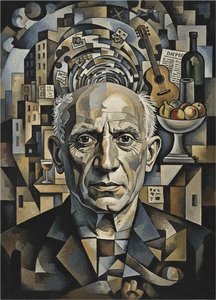
Mastering Cubism: An Essential Guide to the Revolutionary Artworks of Pablo Picasso
Explore the profound evolution of Cubism through an expert analysis of Pablo Picasso's revolutionary works. From Analytical to Synthetic Cubism, discover the techniques that redefined modern art and learn how to curate these iconic masterpieces for your private collection.