

 Aperçu en situation
 Envoyer
 Partager
 Détails de l'œuvre
 Guide
Guide

 Télécharger l'image
 Articles similaires
 Radiographie
 Diaporama
 Q&A
Q&A Statistiques
Marischka Mit Maske
 Tempera
- WallArt
- German Expressionism
 1919
1919- Modern
 67.0 x 96.0 cm
 Musée Folkwang
 Lire la suite
Giclées et impressions d'art
Impressions giclées ou sur toile de qualité musée, avec une production rapide et des finitions au choix. ( Commander la reproduction peinte à la main Passer au format numérique)




P118B €10

P118H €10

P118W €10

P438Z €10

P508JH €12

P508YH €12

P805H €10

P805Z €10

P919BZ €10

P919G €10

P919XJ €10

P959ZH €10

P968JZ €12

W106C €8

W218G €10

W218JH €8

W218Y €10

W307PJ €10

W316G €10

W316PJ €8

W316Y €10

W398PJ €8

W4111J €10

W500HY €15

W500JH €15

W692G €12

W849H €8

W940BG €15

W953PJ €8




Choisissez parmi nos formats prédéfinis qui respectent les proportions originales de l’œuvre.

Saisissez la largeur et la hauteur souhaitées pour qu'elles s'adaptent à votre cadre ou à votre mur. Une impression peut être recadrée, mais jamais agrandie au-delà de l'image originale ; ainsi, un format de forme différente entraînera la perte d'une partie de l'image. Nous vous envoyons une maquette numérique pour approbation avant toute impression. L'image présentée sur cette page ne montre pas le recadrage réel — seule la maquette le permet.
Livraison dans le monde entier () en 2 semaines au lieu des 4/5 semaines habituelles. (30 octobre)

Livraison express gratuite dans le monde entier

Toile de lin de qualité supérieure

Assurance transport complète

Garantie de remboursement des droits de douane

Garantie de fidélité des couleurs

Politique de retour de 100 jours (uniquement en cas de défaut)

Garantie de remboursement à 100%

Offre de tarifs dégressifs
 L'option verre n'est disponible que pour les dimensions inférieures à 110 cm.

Marischka Mit Maske
Giclées et impressions d'art
Format de la reproduction
-


Prix total
€ 71
A Symphony of Color and Emotion in Expressionist Landscape
In the quiet, evocative realm of German Expressionism, few works capture the delicate tension between visibility and concealment as poignantly as Otto Mueller’s “Marischka Mit Maske.” Completed in 1919, this masterpiece serves as a profound window into the soul of an era defined by post-war reconstruction and deep psychological introspection. The painting presents us with a striking central figure—a woman with short hair, her arms crossed in a gesture that oscillates between quiet contemplation and a subtle, defensive tension. She stands before another presence, a figure partially obscured by a mask, creating an immediate sense of mystery. This interplay of the seen and the unseen invites the viewer to look beyond the surface, much like the movement itself sought to peel back the layers of bourgeois reality to reveal the raw, unvarnished truth of human emotion.
The composition is masterfully balanced, utilizing a horizon line that dominates the upper reaches of the canvas to evoke a sense of vastness. Behind the central subjects, a landscape unfolds in a palette of muted yellows and greens—colors that reflect Mueller’s deep fascination with the distilled forms of Egyptian art. This deliberate simplification of nature allows the emotional weight of the figures to take center stage. The use of distemper on raw linen lends the piece a unique, matte texture, contributing to an atmosphere that feels both earthy and ethereal. There is no unnecessary detail here; instead, Mueller employs bold contours and simplified shapes to create a harmony that resonates with the viewer long after the first glance.
The Symbolism of Identity and the Expressionist Spirit
To understand “Marischka Mit Maske,” one must understand the spirit of Die Brücke, the influential group of artists to which Mueller belonged. The mask in this painting is far more than a mere prop; it is a recurring motif in Mueller’s oeuvre, acting as a powerful symbol for the fluidity of identity and the masks we wear in society. In the wake of World War I, an era marked by profound disillusionment, the concept of concealment held significant weight. The mask represents the boundary between the private self and the public persona, suggesting that much of our true essence remains hidden behind a carefully constructed facade. This theme of introspection is mirrored in the woman’s gaze, which seems to search for meaning within the enigmatic presence before her.
Mueller’s technique avoids the fleeting light-play of Impressionism, opting instead for a more permanent, structural approach to color. By utilizing earthy hues and simplified forms, he achieves a sense of Expressionist harmony—a state where the distortion of reality serves to heighten the emotional truth. For the collector or the interior designer, this artwork offers a sophisticated balance of tranquility and intrigue. It possesses a rhythmic quality that can anchor a room, providing a focal point that is both intellectually stimulating and aesthetically soothing. The painting does not merely decorate a space; it breathes life into it, offering a contemplative presence that rewards deep observation.
A Timeless Addition to the Modern Collection
For those seeking to curate a collection of high-quality reproductions, “Marischka Mit Maske” stands as an exemplary choice. It embodies the historical significance of the German Expressionist movement while maintaining a contemporary aesthetic appeal through its clean lines and evocative color palette. The artwork’s ability to evoke both serenity and a lingering sense of unease makes it a versatile piece for various design contexts, from minimalist modern galleries to richly textured, classical interiors. Owning a reproduction of this caliber allows one to participate in the legacy of Otto Mueller—a wanderer whose art sought the eternal unity between the human spirit and the natural world.
Questions et réponses
Quelle atmosphère «Marischka Mit Maske» de Otto Mueller apporte-t-il à un intérieur ?
Avec son atmosphère Romantic, « Marischka Mit Maske » est idéal pour une Living Room.
Comment puis-je prévisualiser une reproduction de «Marischka Mit Maske» de Otto Mueller ?
Un aperçu de «Marischka Mit Maske» de Otto Mueller est disponible sur la page Aperçu en situation de l'œuvre.
Quelles sont les couleurs dominantes de «Marischka Mit Maske» de Otto Mueller ?
L'identité chromatique de «Marischka Mit Maske» de Otto Mueller : une palette Earthy, dominée par le Sap Green (#536256).
Biographie de l'artiste
**Premières années et formation**
Otto Müller, peintre et graveur allemand, est né le 16 octobre 1874 à Liebau (aujourd'hui Lubawka, powiat Kamienna Góra), Silésie, Pologne. Entre 1890 et 1892, il a suivi une formation en lithographie à Görlitz et Breslau. De 1894 à 1896, Müller a étudié à l’Académie des beaux-arts de Dresde et a poursuivi ses études à Munich à partir de 1898.**Évolution artistique et expressionnisme**
Les premières œuvres de Müller ont été influencées par l'impressionnisme, le Jugendstil et le symbolisme. Cependant, après s’être installé à Berlin en 1908, son style est devenu plus expressionniste. Durant cette période, il a côtoyé des figures notables telles que Wilhelm Lehmbruck, Rainer Maria Rilke et Erich Heckel. En 1910, Müller a rejoint le groupe « Die Brücke » basé à Dresde, un moment décisif dans son parcours expressionniste.**Œuvres notables et style**
Les peintures de Müller présentent souvent l'unité des humains et de la nature, caractérisées par une simplification harmonieuse de la forme, de la couleur et des contours. Ses œuvres notables incluent :- Des paysages inspirés de « La Nuit étoilée »
- Des nus expressifs et des femmes romani (tsiganes), ce qui lui a valu le surnom de "Gypsy Müller"
- L'utilisation de tempera sur une toile grossière pour obtenir un fini mat
- Un graveur prolifique avec presque toutes ses gravures étant des lithographies, ainsi que quelques bois-gravures et eaux-fortes.
**Héritage et impact d’après-guerre**
Müller a combattu comme soldat allemand en France et en Russie pendant la Première Guerre mondiale. Après la guerre, il est devenu professeur à l'Akademie der bildenden Künste de Breslau jusqu'à sa mort le 24 septembre 1930. En 1937, les nazis ont saisi 357 de ses œuvres dans des musées allemands, les jugeant comme étant de "l’art dégénéré".**Style et influences**
Le style unique de Müller se caractérise par une palette de couleurs douces et terreuses, souvent utilisées avec la technique de la tempera sur toile grossière. Ses sujets incluent des nus expressifs, des portraits de femmes romani et des paysages harmonieux qui reflètent son intérêt pour l'unité entre l'homme et la nature. Il a été influencé par le Jugendstil dans ses premières années, mais s’est tourné vers l’expressionnisme après avoir rejoint « Die Brücke », adoptant une simplification formelle et une expressivité émotionnelle distinctives. Son travail témoigne d'une sensibilité particulière à la culture romani, capturant leur beauté et leur dignité avec respect et empathie.
Otto Mueller
1874 - 1930 , Pologne
L'essentiel de l'artiste
- Artistes Influents:
- Wilhelm Lehmbruck
- Rainer Maria Rilke
- Erich Heckel
- Date De Décès: 24 septembre 1930
- Date De Naissance: 16 octobre 1874
- Lieu De Naissance: Liebau, Pologne
- Mouvement Artistique: Expressionnisme
- Nationalité: Allemand
- Nom Complet: Otto Mueller
- Oeuvres Notables:
- Paysages inspirés de La Nuit étoilée
- Nus expressifs et femmes romani
Articles connexes

Expressionnisme Allemand : 10 Chefs-d'œuvre Révolutionnaires à Découvrir | OriginalUniqueArt
Plongez au cœur de l'Expressionnisme Allemand avec OriginalUniqueArt. Découvrez 10 chefs-d'œuvre de Kandinsky, Munch et Kirchner. Explorez l'histoire, les couleurs et l'émotion derrière ces tableaux iconiques. Reproductions de qualité muséale disponibles sur OriginalUniqueArt.com
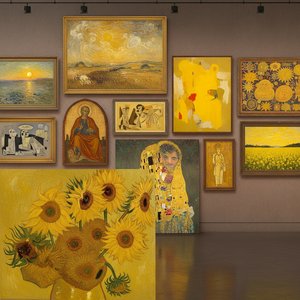
Top 10 des Tableaux Célèbres Dominés par le Jaune Chrome : Art & Décor
Plongez dans le monde vibrant du jaune chrome à travers 10 tableaux célèbres ! Découvrez l'histoire de Van Gogh, Monet et d'autres maîtres impressionnistes. Trouvez l'inspiration déco et achetez des reproductions d'art de qualité muséale sur OriginalUniqueArt.com.

Unmasking Emotion: A Journey Through the Raw Power and Visceral Beauty of German Expressionism
Explore the raw emotional power of German Expressionism. From Kirchner to Die Brücke, discover how artists used distortion and vibrant color to unmask the human psyche. A deep dive into art history for the discerning collector and enthusiast.
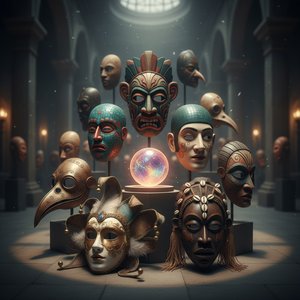
Unveiling the Mystery: A Journey Through the World's Most Iconic Mask Artworks
Embark on a profound journey through the world's most iconic mask artworks. Explore the spiritual depth, intricate craftsmanship, and rich cultural heritage of global traditions, from Chhau to Gomira, in this expert-led exploration of ancestral artistry and symbolic beauty.
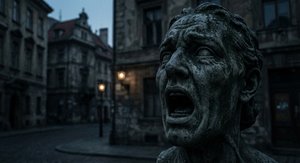
Le Cri Viscéral d'une Nation : Exploration de l'Émotion et de la Distortion dans l'Expressionnisme Allemand
Explorez l'Expressionnisme allemand avec OriginalUniqueArt : Kirchner, Die Brücke, Der Blaue Reiter… Analyse approfondie des chefs-d'œuvre et de leur impact émotionnel. Reproductions de haute qualité disponibles.

