Aperçu en situation
 Partager
 Partager
 Détails

 Télécharger
 Articles similaires
 Radiographie
 Voir le diaporama
 Statistiques
The Finding of Moses
 Oil On Canvas
- WallArt
- Baroque Painting
 1630
1630- Early Modern
 257.0 x 301.0 cm
 National Gallery
 Afficher la suite
Giclées et impressions d'art
Impressions giclées ou sur toile de qualité musée, avec une production rapide et des finitions au choix. ( Acheter la peinture faite à la main Passer au format image numérique)




P118B $10

P118H $10

P118W $10

P438Z $10

P508JH $12

P508YH $12

P805H $10

P805Z $10

P919BZ $10

P919G $10

P919XJ $10

P959ZH $10

P968JZ $12

W106C $8

W218G $10

W218JH $8

W218Y $10

W307PJ $10

W316G $10

W316PJ $8

W316Y $10

W398PJ $8

W4111J $10

W500HY $15

W500JH $15

W692G $12

W849H $8

W940BG $15

W953PJ $8




Choisissez parmi nos formats prédéfinis qui respectent les proportions originales de l’œuvre.

Vous pouvez saisir vos propres dimensions pour vous adapter à un cadre ou à un espace spécifique. Si la taille sélectionnée ne correspond pas aux proportions de l'image originale, nous recadrerons l'œuvre ou étendrons l'image avec une bordure en miroir ou une couleur unie. Une maquette numérique vous sera envoyée pour approbation avant le début de la production.
Veuillez noter que l'aperçu à l'écran ne reflète pas le recadrage ou l'extension réelle. Seule la maquette montrera avec précision la composition finale.
Bien que des tailles personnalisées soient disponibles, nous vous recommandons de choisir une dimension dans la liste prédéfinie afin de préserver les proportions originales.
Livraison dans le monde entier () en 2 semaines au lieu des 4/5 semaines habituelles. (18 septembre)

Livraison express gratuite dans le monde entier

Toile de lin de haute qualité

Assurance transport complète

Garantie de remboursement des droits de douane

Garantie de fidélité des couleurs

Garantie de retour de 100 jours (uniquement en cas de défaut)

Garantie de remboursement à 100%

Tarifs dégressifs sur quantité
 L'option verre n'est disponible que pour les dimensions inférieures à 110 cm.

The Finding of Moses
Giclées et impressions d'art
Format de la reproduction
-


Prix total final
$ 80
A Divine Encounter in the Bulrushes
In the heart of the early seventeenth century, a period defined by the dramatic tension between light and shadow, Orazio Gentileschi captured a moment of profound destiny. The Finding of Moses is far more than a mere depiction of a biblical event; it is a breathtaking window into a world where the miraculous intersects with the earthly. The canvas brings to life that pivotal instant from the Book of Exodus, where the infant Moses, hidden away by his mother to escape Pharaoh’s decree, is discovered amidst the swaying reeds of the Nile. As the eye wanders through the composition, one is immediately struck by the monumental scale and the palpable sense of a world held in breathless anticipation.
The scene unfolds with a group of figures gathered around a small basket, their faces illuminated by a light that feels both natural and divine. There is an intimate, nurturing atmosphere present as women—some standing in regal grace, others kneeling in humble reverence—interact with the child. This gathering serves as a testament to human compassion, illustrating how a moment of potential tragedy is transformed into one of celebration and care. For the discerning collector or interior designer, this piece offers a profound narrative of protection and the unexpected arrival of hope.
The Mastery of Light and Baroque Grandeur
Gentileschi’s command over chiaroscuro—the dramatic interplay between light and dark—is nothing short of masterful. Drawing deeply from the revolutionary influence of Caravaggio, the artist employs a technique known as tenebrism to heighten the emotional intensity of the scene. A luminous yellow gown worn by Pharaoh's daughter dominates the central visual space, acting as a beacon that draws the viewer’s gaze upward toward an idealized depiction of royal splendor. This brilliance is contrasted sharply against deep, enveloping shadows that shroud the figures in the lower periphery, emphasizing their humility and the secrecy of the infant's survival.
Beyond the dramatic lighting, the artist’s dedication to texture and anatomical accuracy provides a sense of profound realism. One can almost feel the smooth sheen of the fine fabrics, the delicate folds of heavy drapery, and the organic textures of the riverbank surroundings. The brushstrokes are confident yet refined, achieving a rare balance between dynamic movement and a sacred stillness. This technical virtuosity ensures that the painting remains a captivating focal point in any high-end setting, offering a sophisticated layer of visual interest and historical depth.
A Legacy of Royal Patronage and Symbolism
The historical weight of this masterpiece is as significant as its aesthetic beauty. Completed around 1630, the work was commissioned by King Charles I for his wife, Queen Henrietta Maria. This was a deeply personal gesture intended to celebrate the birth of their son and to solidify royal legitimacy through biblical parallel. Consequently, the painting functions as an emblem of divine grace and the continuity of lineage. Every element within the frame is layered with deliberate meaning: the basket represents both the vulnerability of life and the strength of concealment; the watchful gaze of Miriam embodies unwavering faith; and the presence of the Queen's daughter symbolizes a royal authority tempered by profound compassion.
For those seeking to adorn a space with art that inspires contemplation, The Finding of Moses offers an unparalleled emotional resonance. It is a symphony of color, light, and sacred storytelling that transcends time. Whether placed in a grand gallery or a curated private study, this reproduction serves as a powerful reminder of the beauty found in moments of divine intervention and the enduring strength of human devotion.
Biographie de l'artiste
Premières années et formation
- Né : Toscane, Italie (1563)
- Décédé : 1639
- Orazio Gentileschi a commencé sa carrière à Rome, peignant dans un style maniériste. Une grande partie de ses premiers travaux consistait à peindre des figures au sein de schémas décoratifs créés par d'autres artistes.
- Il s’est formé auprès du peintre ombrien, Cola dell'Amata.
- Gentileschi a également été influencé par le travail de Francesco da Sangallo, un architecte et sculpteur important de l'époque.
Style artistique et influences
- Son style se caractérisait par des couleurs vives et des compositions dramatiques.
- Il a été influencé par Caravaggio après 1600, adoptant un style plus naturaliste.
- Les peintures de Gentileschi comportaient souvent des scènes bibliques et des thèmes mythologiques.
- Influences clés : Maniérisme, Caravage
Œuvres majeures et réalisations
- "Danaé" : Considérée comme l'une de ses œuvres les plus importantes, mettant en valeur son talent pour capturer l'essence des histoires mythologiques.
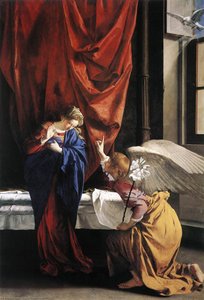
- "L’Annonciation" : Exposée à la Galleria Borghese à Rome.
- "La Vierge Marie" : Également exposée à la Galleria Borghese à Rome.
- Ses fresques et mosaïques pour des églises telles que Santa Maria Maggiore et San Giovanni Laterano témoignent de sa maîtrise de la peinture décorative à grande échelle.
Développement et évolution
- Il a initialement travaillé dans un style maniériste, intégrant progressivement des éléments du naturalisme de Caravage.
- Il a développé une version plus douce et plus raffinée du style dramatique de Caravage, caractérisée par une palette plus claire et des détails précis.
- Ses œuvres ultérieures présentent un style élégant et de cour, reflétant son mécénat aux cours de Marie de' Medici à Paris et de Charles Ier à Londres.
Signification historique et héritage
- L’utilisation par Gentileschi de couleurs vives et de compositions dramatiques a influencé le développement de l’art baroque.
- Il fut l’un des premiers praticiens du caravagisme en Angleterre, ce qui eut un impact significatif sur le paysage artistique local.
- Sa fille, Artemisia Gentileschi, est devenue une artiste renommée à part entière, perpétuant son héritage et développant davantage la tradition artistique familiale.
- Ses œuvres se trouvent dans des musées et galeries de premier plan du monde entier, notamment à la Galerie degli Uffizi à Florence et à la Galerie dell'Accademia à Venise.

Orazio Gentileschi
1563 - 1639 , Italie
En bref
- Artistes Influents:
- Cola dell’Amata
- Caravaggio
- Date De Décès: 7 février 1639
- Date De Naissance: Juillet 1563 (baptisé)
- Influences Artistiques:
- Caravage
- Guido Reni
- Lieu De Naissance: Toscane, Italie
- Mouvement Artistique: Baroque
- Nationalité: Italienne
- Nom Complet: Orazio Gentileschi
- Oeuvres Notables:
- Danaé
- L'Annonciation
- La Vierge Marie
Articles similaires

Beyond the Shadows: The Powerful Legacies of Artemisia Gentileschi and Berthe Morisot
Explore the profound legacies of Artemisia Gentileschi and Berthe Morisot. Discover how these female masters redefined the Baroque and Impressionist eras through dramatic chiaroscuro and luminous light in this expert art-history guide for collectors and enthusiasts.

The Dramatic Flourish: Exploring the Baroque Movement's Enduring Legacy in Art History
Explore the dramatic world of Baroque art! Discover iconic artists like Caravaggio & Rubens, defining techniques, and its lasting impact on art history. Expert insights for collectors & enthusiasts at OriginalUniqueArt.

Le Drame Baroque : L'Art qui Apporte la Splendeur dans Votre Intérieur
Plongez dans l'univers somptueux du baroque ! Découvrez son histoire, comment l'intégrer à votre intérieur et les œuvres incontournables. : reproductions d'art de qualité supérieure.

Les 10 Chefs-d'œuvre Baroques qui ont Révolutionné l'Art |
Plongez au cœur du baroque avec les 10 chefs-d'œuvre de Caravaggio, Rembrandt et Rubens. Découvrez l'histoire fascinante de ces artistes et leurs tableaux célèbres. Reproductions d'art de qualité muséale sur – Explorez la collection !
Baroque : Les 10 Chefs-d'œuvre qui ont Révolutionné la Peinture | OriginalUniqueArt
Plongez au cœur de la peinture baroque avec OriginalUniqueArt ! Découvrez les 10 chefs-d'œuvre incontournables de Caravaggio, Rembrandt et Rubens. Histoire, techniques & émotions : trouvez l'inspiration déco et achetez des reproductions d'art de qualité muséale sur OriginalUniqueArt.com