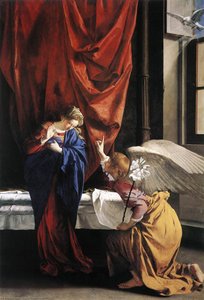
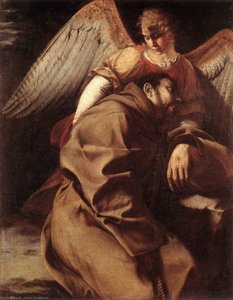
Aperçu en situation
 Partager
 Partager
 Détails
 Guide imprimable

 Télécharger
 Articles similaires
 Radiographie
 Voir le diaporama
 Statistiques
Lot and His Daughters
 Acrylic On Canvas
- WallArt
- Baroque Painting
 1622
1622 164.0 x 193.0 cm
 Musées d'État de Berlin
 Afficher la suite
Giclées et impressions d'art
Impressions giclées ou sur toile de qualité musée, avec une production rapide et des finitions au choix. ( Acheter la peinture faite à la main Passer au format image numérique)




P118B $10

P118H $10

P118W $10

P438Z $10

P508JH $12

P508YH $12

P805H $10

P805Z $10

P919BZ $10

P919G $10

P919XJ $10

P959ZH $10

P968JZ $12

W106C $8

W218G $10

W218JH $8

W218Y $10

W307PJ $10

W316G $10

W316PJ $8

W316Y $10

W398PJ $8

W4111J $10

W500HY $15

W500JH $15

W692G $12

W849H $8

W940BG $15

W953PJ $8




Choisissez parmi nos formats prédéfinis qui respectent les proportions originales de l’œuvre.

Vous pouvez saisir vos propres dimensions pour vous adapter à un cadre ou à un espace spécifique. Si la taille sélectionnée ne correspond pas aux proportions de l'image originale, nous recadrerons l'œuvre ou étendrons l'image avec une bordure en miroir ou une couleur unie. Une maquette numérique vous sera envoyée pour approbation avant le début de la production.
Veuillez noter que l'aperçu à l'écran ne reflète pas le recadrage ou l'extension réelle. Seule la maquette montrera avec précision la composition finale.
Bien que des tailles personnalisées soient disponibles, nous vous recommandons de choisir une dimension dans la liste prédéfinie afin de préserver les proportions originales.
Livraison dans le monde entier () en 2 semaines au lieu des 4/5 semaines habituelles. (25 septembre)

Livraison express gratuite dans le monde entier

Toile de lin de haute qualité

Assurance transport complète

Garantie de remboursement des droits de douane

Garantie de fidélité des couleurs

Garantie de retour de 100 jours (uniquement en cas de défaut)

Garantie de remboursement à 100%

Tarifs dégressifs sur quantité
 L'option verre n'est disponible que pour les dimensions inférieures à 110 cm.

Lot and His Daughters
Giclées et impressions d'art
Format de la reproduction
-


Prix total final
$ 80
Orazio Gentileschi’s “Lot and His Daughters”: A Descent Into Shadow and Hope
“Lot and His Daughters,” painted in 1622 by the Florentine artist Orazio Gentileschi, is not merely a biblical depiction; it's a profound meditation on survival, transgression, and the unsettling beauty of human resilience. This monumental canvas, now residing within the Getty Museum’s collection in Los Angeles, immediately commands attention with its dramatic chiaroscuro – a masterful deployment of light and shadow that plunges the scene into an atmosphere both terrifying and strangely alluring. The painting captures a pivotal moment from Genesis: Lot, fleeing the destruction of Sodom and Gomorrah, offers his two daughters as a desperate measure to perpetuate their lineage in a world consumed by divine wrath.
Gentileschi’s style at this period represents a fascinating synthesis of influences. He inherited the meticulous detail and compositional rigor from his father, Orazio Lomi, who had been trained under Cola dell'Amata and Francesco da Sangallo. However, Gentileschi embraced the revolutionary naturalism championed by Caravaggio, adopting his penchant for painting directly from life, eschewing idealized forms in favor of a raw, almost brutal realism. This is evident in the faces of Lot’s daughters – not delicate beauties, but young women hardened by circumstance and bearing an unsettling intensity. Their postures are subtly suggestive, hinting at the desperate measures they've undertaken without resorting to overt sensuality.
The Composition: A Dance of Darkness and Revelation
The composition itself is a carefully orchestrated drama. The foreground is dominated by the three women – Lot’s daughters – huddled together on the ground, their backs turned towards the viewer, creating an immediate sense of intimacy and vulnerability. Their shared predicament binds them in a silent pact. Behind them, shrouded in shadow, stands Lot, his face etched with despair and resignation. Crucially, the eye is drawn to the distant horizon where the fiery devastation of Sodom and Gomorrah – rendered in vibrant reds and oranges – serves as a constant, terrifying reminder of their perilous situation. The use of tenebrism, characteristic of Caravaggio’s style, intensifies this sense of drama, highlighting key figures while plunging the rest of the scene into darkness.
The artist skillfully employs atmospheric perspective to create depth and distance. The distant city is rendered in muted tones, emphasizing its remoteness and the overwhelming scale of the impending catastrophe. The subtle variations in color and texture – from the rough earth beneath the women’s feet to the shimmering heat haze above the ruined cities – contribute to a remarkably convincing sense of realism. Gentileschi's attention to detail extends to the smallest elements, such as the folds of their clothing and the expressions on their faces, further enhancing the painting’s emotional impact.
Symbolism and Interpretation: Incest, Survival, and Divine Judgment
“Lot and His Daughters” is laden with symbolic meaning. The offering of the daughters represents a desperate attempt to defy divine judgment – a primal act of survival rooted in the instinct to perpetuate one’s lineage. The subsequent incestuous union, though unsettling, becomes a potent symbol of humanity's tenacity in the face of annihilation. It speaks to the lengths to which people will go to ensure their species continues, even at the cost of violating moral boundaries.
However, the painting is not simply a tale of transgression. The distant flames of Sodom and Gomorrah serve as a constant reminder of divine wrath – a judgment that underscores the wickedness of the cities and highlights the precariousness of human existence. The painting’s enduring power lies in its ability to grapple with complex themes of morality, survival, and the consequences of sin. It's a haunting meditation on humanity's capacity for both destruction and resilience.
A Legacy of Baroque Drama
Orazio Gentileschi’s “Lot and His Daughters” stands as a testament to his artistic skill and his mastery of the Baroque style. It exemplifies the period’s fascination with dramatic lighting, intense emotion, and complex narratives. The painting's influence can be seen in subsequent works by artists such as Artemisia Gentileschi, who further developed the themes of female strength and resilience within the context of biblical stories. Today, “Lot and His Daughters” continues to captivate viewers with its powerful imagery and profound exploration of human nature – a timeless masterpiece that speaks to our deepest fears and aspirations.
Biographie de l'artiste
Premières années et formation
- Né : Toscane, Italie (1563)
- Décédé : 1639
- Orazio Gentileschi a commencé sa carrière à Rome, peignant dans un style maniériste. Une grande partie de ses premiers travaux consistait à peindre des figures au sein de schémas décoratifs créés par d'autres artistes.
- Il s’est formé auprès du peintre ombrien, Cola dell'Amata.
- Gentileschi a également été influencé par le travail de Francesco da Sangallo, un architecte et sculpteur important de l'époque.
Style artistique et influences
- Son style se caractérisait par des couleurs vives et des compositions dramatiques.
- Il a été influencé par Caravaggio après 1600, adoptant un style plus naturaliste.
- Les peintures de Gentileschi comportaient souvent des scènes bibliques et des thèmes mythologiques.
- Influences clés : Maniérisme, Caravage
Œuvres majeures et réalisations
- "Danaé" : Considérée comme l'une de ses œuvres les plus importantes, mettant en valeur son talent pour capturer l'essence des histoires mythologiques.
- "L’Annonciation" : Exposée à la Galleria Borghese à Rome.
- "La Vierge Marie" : Également exposée à la Galleria Borghese à Rome.
- Ses fresques et mosaïques pour des églises telles que Santa Maria Maggiore et San Giovanni Laterano témoignent de sa maîtrise de la peinture décorative à grande échelle.
Développement et évolution
- Il a initialement travaillé dans un style maniériste, intégrant progressivement des éléments du naturalisme de Caravage.
- Il a développé une version plus douce et plus raffinée du style dramatique de Caravage, caractérisée par une palette plus claire et des détails précis.
- Ses œuvres ultérieures présentent un style élégant et de cour, reflétant son mécénat aux cours de Marie de' Medici à Paris et de Charles Ier à Londres.
Signification historique et héritage
- L’utilisation par Gentileschi de couleurs vives et de compositions dramatiques a influencé le développement de l’art baroque.
- Il fut l’un des premiers praticiens du caravagisme en Angleterre, ce qui eut un impact significatif sur le paysage artistique local.
- Sa fille, Artemisia Gentileschi, est devenue une artiste renommée à part entière, perpétuant son héritage et développant davantage la tradition artistique familiale.
- Ses œuvres se trouvent dans des musées et galeries de premier plan du monde entier, notamment à la Galerie degli Uffizi à Florence et à la Galerie dell'Accademia à Venise.

Orazio Gentileschi
1563 - 1639 , Italie
En bref
- Artistes Influents:
- Cola dell’Amata
- Caravaggio
- Date De Décès: 7 février 1639
- Date De Naissance: Juillet 1563 (baptisé)
- Influences Artistiques:
- Caravage
- Guido Reni
- Lieu De Naissance: Toscane, Italie
- Mouvement Artistique: Baroque
- Nationalité: Italienne
- Nom Complet: Orazio Gentileschi
- Oeuvres Notables:
- Danaé
- L'Annonciation
- La Vierge Marie
Articles similaires
Cecco del Caravaggio: Rediscovering the Shadowy Genius of Francesco Buoneri
Explore the captivating world of Cecco del Caravaggio (Francesco Buoneri), a pivotal Baroque artist. Discover his dramatic realism, mysterious life, and lasting legacy with OriginalUniqueArt's expert analysis.
Baroque : Les 10 Chefs-d'œuvre qui ont Révolutionné la Peinture | OriginalUniqueArt
Plongez au cœur de la peinture baroque avec OriginalUniqueArt ! Découvrez les 10 chefs-d'œuvre incontournables de Caravaggio, Rembrandt et Rubens. Histoire, techniques & émotions : trouvez l'inspiration déco et achetez des reproductions d'art de qualité muséale sur OriginalUniqueArt.com
Illuminating Faith: Biblical Narrative & Artistic Expression Through the Ages
Explore the rich history of biblical art from Giotto to the Renaissance masters with OriginalUniqueArt. Discover symbolism, techniques & enduring legacies. Museum-quality reproductions & expert insights.

Caravage : Réalisme révolutionnaire, lumière et ombre d'une condition humaine
Explorez l'œuvre révolutionnaire de Caravage : réalisme saisissant, maîtrise du clair-obscur et impact durable sur l'art baroque. Analyse approfondie et héritage artistique.

Beyond the Shadows: The Powerful Legacies of Artemisia Gentileschi and Berthe Morisot
Explore the profound legacies of Artemisia Gentileschi and Berthe Morisot. Discover how these female masters redefined the Baroque and Impressionist eras through dramatic chiaroscuro and luminous light in this expert art-history guide for collectors and enthusiasts.