Aperçu en situation
 Envoyer
 Partager
 Détails de l'œuvre

 Télécharger
 Articles similaires
 Radiographie
 Diaporama
Danae
 Oil On Canvas
- WallArt
- Baroque
 1621
1621 161.0 x 227.0 cm
 Musée J. Paul Getty
 Lire la suite
Giclées et impressions d'art
Impressions giclées ou sur toile de qualité musée, avec une production rapide et des finitions au choix. ( Commander la reproduction peinte à la main Acheter l'image haute résolution)




P118B $10

P118H $10

P118W $10

P438Z $10

P508JH $12

P508YH $12

P805H $10

P805Z $10

P919BZ $10

P919G $10

P919XJ $10

P959ZH $10

P968JZ $12

W106C $8

W218G $10

W218JH $8

W218Y $10

W307PJ $10

W316G $10

W316PJ $8

W316Y $10

W398PJ $8

W4111J $10

W500HY $15

W500JH $15

W692G $12

W849H $8

W940BG $15

W953PJ $8




Choisissez parmi nos formats prédéfinis qui respectent les proportions originales de l’œuvre.

Vous pouvez saisir vos propres dimensions pour vous adapter à un cadre ou à un espace spécifique. Si la taille sélectionnée ne correspond pas aux proportions de l'image originale, nous recadrerons l'œuvre ou étendrons l'image avec une bordure en miroir ou une couleur unie. Une maquette numérique vous sera envoyée pour approbation avant le début de la production.
Veuillez noter que l'aperçu à l'écran ne reflète pas le recadrage ou l'extension réelle. Seule la maquette montrera avec précision la composition finale.
Bien que des tailles personnalisées soient disponibles, nous vous recommandons de choisir une dimension dans la liste prédéfinie afin de préserver les proportions originales.
Livraison dans le monde entier () en 2 semaines au lieu des 4/5 semaines habituelles. (3 septembre)

Livraison express gratuite dans le monde entier

Toile de lin de qualité supérieure

Assurance transport complète

Garantie de remboursement des droits de douane

Garantie de fidélité des couleurs

Politique de retour de 60 jours (uniquement en cas de défaut)

Garantie de remboursement à 100%

Offre de tarifs dégressifs
 L'option verre n'est disponible que pour les dimensions inférieures à 110 cm.

Danae
Giclées et impressions d'art
Format de la reproduction
-


Prix total
$ 80
Danaë by Orazio Gentileschi: A Baroque Embrace of Myth and Divine Intervention
Orazio Gentileschi’s 1623 painting, *Danaë*, is more than just a depiction of a classical myth; it's a profound meditation on fate, beauty, and the transformative power of divine grace. Housed within the J. Paul Getty Museum in Los Angeles, this oil-on-canvas masterpiece stands as a testament to Gentileschi’s mastery of Baroque technique and his ability to infuse historical narrative with deeply felt emotion. The painting immediately captivates with its dramatic lighting – a hallmark of Caravaggio's influence – which sculpts the figures and creates an atmosphere of both vulnerability and opulent splendor.
At the heart of the composition lies Danaë, a young woman lying on her bed, draped in a sheer veil that hints at both modesty and impending revelation. Her arms are outstretched, a gesture simultaneously of surrender and anticipation. Above her, a cascade of golden coins – representing Zeus’s divine intervention – rains down upon the mattress, transforming the scene into a shimmering tableau of mythic birth. The artist skillfully renders the texture of the fabric, the weight of the gold, and the delicate curve of Danaë's body, demonstrating an exceptional command of form and detail. Notice how Gentileschi avoids idealization; Danaë is not a goddess but a mortal woman caught in the throes of a miraculous event.
The Myth Unveiled: A Story of Divine Desire
The narrative depicted is rooted in Greek mythology, recounting the story of Danaë, daughter of King Aegyptus and the sea nymph Calliope. Faced with unwanted suitors, Aegyptus sought to protect his daughter by imprisoning her in a tower. Zeus, disguised as a shower of golden rain, descended into the tower and impregnated Danaë, resulting in the birth of Perseus, the legendary hero. The painting captures this pivotal moment – not the act of conception itself, but its immediate aftermath: the arrival of divine grace and the promise of a new life.
The symbolism is layered and rich. The golden rain isn’t merely a visual spectacle; it represents Zeus's power and his ability to transcend mortal boundaries. Danaë’s pose – vulnerable yet receptive – speaks to her acceptance of this extraordinary destiny. The presence of Eros, the god of love, pulling aside the curtain symbolizes the initiating force behind the divine intervention, highlighting the role of desire and fate in shaping human experience.
Baroque Drama: Light, Shadow, and Movement
Gentileschi’s technical skill is evident throughout *Danaë*. He masterfully employs chiaroscuro – the dramatic contrast between light and shadow – to create a sense of depth and movement. The golden light emanating from the coins illuminates Danaë's face and body, while the surrounding areas remain shrouded in darkness, intensifying the drama of the scene. The artist’s brushwork is loose and expressive, conveying a feeling of immediacy and dynamism. Observe how he captures the swirling motion of the falling gold, creating an almost palpable sense of energy.
Furthermore, Gentileschi's use of color is particularly noteworthy. The rich hues of red, gold, and blue create a vibrant and luxurious atmosphere, reflecting the opulence associated with the gods. The subtle variations in tone contribute to the painting’s overall visual harmony, drawing the viewer’s eye through the composition.
A Legacy of Female Strength: Artemisia's Connection
Interestingly, *Danaë* is believed to be a reworking of an earlier painting by Gentileschi’s daughter, Artemisia Gentileschi, who also depicted the same subject. This suggests a close artistic relationship and a shared interest in exploring themes of female agency and divine intervention within a mythological context. Artemisia's own work often featured strong, independent women confronting adversity with courage and resilience – qualities that resonate powerfully in *Danaë*. Studying both paintings offers valuable insights into the evolving artistic sensibilities of the Gentileschi family and their contribution to the Baroque movement.
Today, *Danaë* remains a captivating masterpiece, inviting viewers to contemplate the complexities of myth, beauty, and the enduring power of divine grace. It’s a painting that speaks not only to the grandeur of ancient Greece but also to the timeless human experience of desire, fate, and transformation.
Biographie de l'artiste
Premières années et formation
- Né : Toscane, Italie (1563)
- Décédé : 1639
- Orazio Gentileschi a commencé sa carrière à Rome, peignant dans un style maniériste. Une grande partie de ses premiers travaux consistait à peindre des figures au sein de schémas décoratifs créés par d'autres artistes.
- Il s’est formé auprès du peintre ombrien, Cola dell'Amata.
- Gentileschi a également été influencé par le travail de Francesco da Sangallo, un architecte et sculpteur important de l'époque.
Style artistique et influences
- Son style se caractérisait par des couleurs vives et des compositions dramatiques.
- Il a été influencé par Caravaggio après 1600, adoptant un style plus naturaliste.
- Les peintures de Gentileschi comportaient souvent des scènes bibliques et des thèmes mythologiques.
- Influences clés : Maniérisme, Caravage
Œuvres majeures et réalisations
- "Danaé" : Considérée comme l'une de ses œuvres les plus importantes, mettant en valeur son talent pour capturer l'essence des histoires mythologiques.
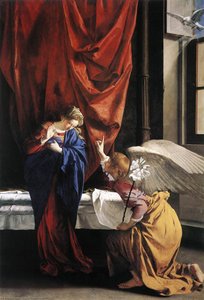
- "L’Annonciation" : Exposée à la Galleria Borghese à Rome.
- "La Vierge Marie" : Également exposée à la Galleria Borghese à Rome.
- Ses fresques et mosaïques pour des églises telles que Santa Maria Maggiore et San Giovanni Laterano témoignent de sa maîtrise de la peinture décorative à grande échelle.
Développement et évolution
- Il a initialement travaillé dans un style maniériste, intégrant progressivement des éléments du naturalisme de Caravage.
- Il a développé une version plus douce et plus raffinée du style dramatique de Caravage, caractérisée par une palette plus claire et des détails précis.
- Ses œuvres ultérieures présentent un style élégant et de cour, reflétant son mécénat aux cours de Marie de' Medici à Paris et de Charles Ier à Londres.
Signification historique et héritage
- L’utilisation par Gentileschi de couleurs vives et de compositions dramatiques a influencé le développement de l’art baroque.
- Il fut l’un des premiers praticiens du caravagisme en Angleterre, ce qui eut un impact significatif sur le paysage artistique local.
- Sa fille, Artemisia Gentileschi, est devenue une artiste renommée à part entière, perpétuant son héritage et développant davantage la tradition artistique familiale.
- Ses œuvres se trouvent dans des musées et galeries de premier plan du monde entier, notamment à la Galerie degli Uffizi à Florence et à la Galerie dell'Accademia à Venise.

Orazio Gentileschi
1563 - 1639 , Italie
L'essentiel de l'artiste
- Artistes Influents:
- Cola dell’Amata
- Caravaggio
- Date De Décès: 7 février 1639
- Date De Naissance: Juillet 1563 (baptisé)
- Influences Artistiques:
- Caravage
- Guido Reni
- Lieu De Naissance: Toscane, Italie
- Mouvement Artistique: Baroque
- Nationalité: Italienne
- Nom Complet: Orazio Gentileschi
- Oeuvres Notables:
- Danaé
- L'Annonciation
- La Vierge Marie
Articles connexes

Drama and Light: A Definitive Guide to the Italian Baroque Masterpieces and the Revolution of Chiaroscuro
Explore the dramatic world of Italian Baroque art. Discover how masters like Caravaggio used chiaroscuro and tenebrism to revolutionize painting through light, shadow, and profound realism. A definitive guide for history lovers and art collectors.

Les 10 Chefs-d'œuvre Baroques qui ont Révolutionné l'Art |
Plongez au cœur du baroque avec les 10 chefs-d'œuvre de Caravaggio, Rembrandt et Rubens. Découvrez l'histoire fascinante de ces artistes et leurs tableaux célèbres. Reproductions d'art de qualité muséale sur – Explorez la collection !

Le Drame Baroque : L'Art qui Apporte la Splendeur dans Votre Intérieur
Plongez dans l'univers somptueux du baroque ! Découvrez son histoire, comment l'intégrer à votre intérieur et les œuvres incontournables. : reproductions d'art de qualité supérieure.

Italian Baroque Unlocked: High-Drama Art That Hits Hard
Dive into the high-drama world of Italian Baroque art. Discover how chiaroscuro, intense emotion, and theatrical lighting redefined aesthetics. Explore the visceral power of the Counter-Reformation through a modern lens with expert insights from OriginalUniqueArt.com.

The Visceral Stage: Exploring Dramatic Narratives & Emotional Intensity in Baroque Art
Explore the dramatic world of Baroque art! Discover iconic masters like Caravaggio & Rembrandt, their techniques, and the movement's lasting impact. Expert insights for collectors & enthusiasts at OriginalUniqueArt.