

 Aperçu en situation
 Envoyer
 Partager
 Détails de l'œuvre
 Guide
Guide

 Télécharger l'image
 Articles similaires
 Radiographie
 Diaporama
 Q&A
Q&A Statistiques
Wirbelwerk
 Contemporary Installation
 2013
2013- Contemporary
 811.0 x 813.0 cm
 Lenbachhaus
 Lire la suite
L’œuvre d'art présentée sur cette page est protégée par le droit d'auteur, ce qui signifie que nous ne pouvons légalement créer ou vendre de reproduction identique. Cette protection est appliquée en vertu d'accords internationaux tels que la Convention de Berne et par les lois nationales, notamment celles énoncées par le Loi américaine sur le droit d'auteur - Titre 17.
Cette méthode est pleinement conforme aux réglementations sur le droit d'auteur car elle ne repose pas sur la copie ou la duplication de l'œuvre protégée. Il s'agit plutôt d'une réinterprétation créative — une nouvelle peinture qui s'inspire de l'original sans pour autant lui être identique.
Giclées et impressions d'art
Impressions giclées ou sur toile de qualité musée, avec une production rapide et des finitions au choix. ( Commander la reproduction peinte à la main Passer au format numérique)




P118B €10

P118H €10

P118W €10

P438Z €10

P508JH €12

P508YH €12

P805H €10

P805Z €10

P919BZ €10

P919G €10

P919XJ €10

P959ZH €10

P968JZ €12

W106C €8

W218G €10

W218JH €8

W218Y €10

W307PJ €10

W316G €10

W316PJ €8

W316Y €10

W398PJ €8

W4111J €10

W500HY €15

W500JH €15

W692G €12

W849H €8

W940BG €15

W953PJ €8




Choisissez parmi nos formats prédéfinis qui respectent les proportions originales de l’œuvre.

Saisissez la largeur et la hauteur souhaitées pour qu'elles s'adaptent à votre cadre ou à votre mur. Une impression peut être recadrée, mais jamais agrandie au-delà de l'image originale ; ainsi, un format de forme différente entraînera la perte d'une partie de l'image. Nous vous envoyons une maquette numérique pour approbation avant toute impression. L'image présentée sur cette page ne montre pas le recadrage réel — seule la maquette le permet.
Livraison dans le monde entier () en 2 semaines au lieu des 4/5 semaines habituelles. (30 octobre)

Livraison express gratuite dans le monde entier

Toile de lin de qualité supérieure

Assurance transport complète

Garantie de remboursement des droits de douane

Garantie de fidélité des couleurs

Politique de retour de 100 jours (uniquement en cas de défaut)

Garantie de remboursement à 100%

Offre de tarifs dégressifs
 L'option verre n'est disponible que pour les dimensions inférieures à 110 cm.

Wirbelwerk
Giclées et impressions d'art
Format de la reproduction
-


Prix total
€ 71
Wirbelwerk: A Dance of Light and Geometry by Ólafur Eliasson
Ólafur Eliasson’s “Wirbelwerk,” created in 2012 for the Lenbachhaus museum in Munich, isn't merely a sculpture; it’s an orchestrated experience. This monumental installation immediately captivates with its sheer scale – spanning over eight meters in diameter and descending nearly nine meters below – yet manages to feel remarkably intimate as visitors are drawn into its swirling embrace. The work is a testament to Eliasson’s signature approach: a masterful blend of science, perception, and the evocative power of light and space. It's an invitation to reconsider our relationship with the world around us, prompting a moment of quiet contemplation amidst the bustle of a museum setting.
At its core, “Wirbelwerk” is built upon a complex system of polished metal tubes – hundreds of them – meticulously arranged in opposing spirals. These aren’t simply lines; they are conduits for light, each tube subtly tinted with color, creating an iridescent shimmer as it catches the ambient illumination. Interwoven within this metallic framework are hand-blown coloured glass triangles, strategically positioned to refract and scatter light further, adding layers of complexity and visual richness. The entire structure is bathed in a carefully calibrated internal lighting system, shifting and evolving throughout the day, mirroring the natural rhythms of sunlight and shadow.
The Language of Motion: Vortexes and Perception
Eliasson’s fascination with movement – particularly the dynamic forms of vortexes and spirals – is central to “Wirbelwerk.” He draws inspiration from phenomena observed in nature, such as the swirling patterns of water currents or the graceful rotation of schools of fish. The installation subtly mimics these natural movements, creating an illusion of perpetual motion that engages the viewer’s sense of spatial awareness. The geometry itself—the precise spirals and intersecting lines—references principles of Gestalt psychology, demonstrating how our brains actively interpret visual information to create a cohesive whole. It's not just about seeing; it’s about *feeling* the movement within the space.
A Dialogue with Light and Space
The brilliance of “Wirbelwerk” lies in its interaction with the surrounding environment. The installation is designed to respond dynamically to changes in light, casting shifting patterns of color and shadow onto the museum’s walls and floors. This creates a constantly evolving visual landscape, transforming the space into an immersive experience. Eliasson deliberately blurs the boundaries between art and architecture, turning the entire atrium into a single, unified artwork. The work invites viewers to become active participants in this dynamic interplay of light and form, altering their perception of the room with each movement.
Symbolism and Emotional Resonance
Beyond its technical sophistication, “Wirbelwerk” carries a subtle symbolic weight. The swirling forms evoke notions of transformation, fluidity, and interconnectedness – mirroring the cyclical nature of life itself. The installation’s scale encourages a sense of awe and wonder, prompting viewers to momentarily step outside their everyday concerns and embrace a more expansive perspective. It's a reminder of our inherent connection to the natural world, and a celebration of the beauty and complexity that surrounds us. The piece ultimately leaves one with a feeling of quiet contemplation, a lingering awareness of the intricate dance between light, space, and perception.
Questions et réponses
À quelle période historique appartient «Wirbelwerk» de Ólafur Elíasson ?
«Wirbelwerk» appartient à l'époque Contemporary.
Que représente «Wirbelwerk» de Ólafur Elíasson, et quelle atmosphère s'en dégage ?
«Wirbelwerk» met en scène glass sculpture, vortex, perception, installation, light, spiral, munich, et l'atmosphère qui s'en dégage est Calm.
Les couleurs de "Wirbelwerk" sont-elles vives ou plutôt atténuées ?
La couleur de « Wirbelwerk » présente une saturation de Subtle Color et une intensité de Balanced.
Biographie de l'artiste
Ólafur Elíasson : Une Biographie
Jeunesse et Formation
- Né à Copenhague, au Danemark, en 1967, d'parents islandais, Elías Hjörleifsson et Ingibjörg Olafsdottir.
- A passé ses années formatrices en naviguant entre deux identités culturelles : danoise et islandaise.
- Montra un potentiel artistique précoce avec sa première exposition solo à l'âge de 15 ans.
- Étudie à l'Académie Royale des Beaux-Arts du Danemark de 1989 à 1995, une période cruciale pour développer son approche conceptuelle.
Développement Artistique et Influences
- L’œuvre d’Elíasson a évolué des premiers dessins de paysages aux installations à grande échelle explorant la perception, la lumière et les phénomènes naturels.
- Influencé par la phénoménologie et la psychologie de Gestalt, se concentrant sur la façon dont les spectateurs expérimentent l'espace et la réalité.
- La collaboration avec l’architecte Einar Thorsteinn a eu un impact significatif sur ses œuvres géométriques et ses conceptions spatiales.
- Inspiré par des artistes tels que Robert Irwin et James Turrell, qui manipulent également la perception à travers la lumière et l'espace.
Thèmes Clés et Style Artistique
- Les thèmes centraux comprennent la relation entre les humains et la nature, les environnements artificiels par rapport aux naturels, et l’expérience subjective de la réalité.
- Son style est caractérisé par des installations à grande échelle qui incorporent souvent des matériaux élémentaires tels que la lumière, l'eau, l'air et les miroirs.
- Les expériences immersives sont une caractéristique de son œuvre, invitant les spectateurs à participer activement et à remettre en question leur environnement.
- Mélange fréquemment l’art avec la recherche scientifique, explorant des concepts tirés de la physique, de l'optique et de la météorologie.
Réalisations Majeures et Œuvres Notables
- Représenté le Danemark au 50e Biennale de Venise en 2003, gagnant une reconnaissance internationale.
- “The Weather Project” (2003) à la Turbine Hall du Tate Modern – une installation monumentale créant un soleil et un ciel artificiels, devenant l'une de ses œuvres les plus emblématiques.
- A conçu le pavillon Serpentine Gallery en 2007, présentant des conceptions architecturales innovantes.
- A créé “New York City Waterfalls” (2008), transformant le front de mer de Manhattan avec des cascades.
- Co-fondé Studio Other Spaces avec Sebastian Behmann, étendant sa pratique à l'architecture et aux interventions urbaines.
- A conçu la Harpa Concert Hall à Reykjavik, en Islande – un établissement architectural emblématique.
Signification Historique et Héritage
- Elíasson est considéré comme l’un des artistes contemporains les plus influents d'aujourd'hui.
- Son œuvre remet en question les notions traditionnelles de l'art en brouillant les frontières entre les disciplines – l'art, la science, l'architecture et l'environnementalisme.
- Il a suscité des discussions importantes sur le changement climatique, la durabilité et notre relation avec le monde naturel.
- Continue à repousser les limites de la pratique artistique grâce à des installations innovantes, des projets architecturaux et des interventions publiques.
- Professeur actuellement à l'Université des Arts de Berlin, cultivant les générations futures d'artistes et de penseurs.

Ólafur Elíasson
1967 - , Danemark
L'essentiel de l'artiste
- Artistic Movement Or Style: Installation Art
- Artists Or Movements Influenced By This Artist: ['Light and Space']
- Artists Who Influenced This Artist:
- Robert Irwin
- James Turrell
- Date Of Birth: 5 février 1967
- Full Name: Ólafur Elíasson
- Nationality: Danois-islandais
- Notable Artworks:
- The Weather Project
- Serpentine Gallery Pavilion 2007
- New York City Waterfalls
- Place Of Birth: Copenhague, Danemark
Articles connexes

Les 10 Chefs-d'œuvre en Bronze qui ont Révolutionné l'Art : Collection OriginalUniqueArt
Plongez dans l'univers fascinant des 10 chefs-d'œuvre en bronze qui ont marqué l'histoire de l'art. Découvrez Rodin, Degas et les secrets de ces sculptures iconiques. Reproductions d'art exceptionnelles sur OriginalUniqueArt.com – Explorez la collection !

The Enduring Form: Exploring Themes & Techniques in Sculpture Across Historical Periods
Explore the rich history of sculpture from ancient masterpieces to contemporary innovations. Discover key techniques, influential artists & investment potential for discerning art collectors.
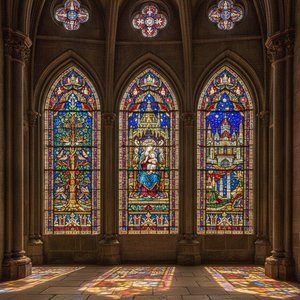
Luminous Masterpieces: The Captivating Beauty and Timeless Elegance of Stained Glass Artworks
Embark on a visual journey through the luminous world of stained glass art. Discover the exquisite craftsmanship, historical significance, and captivating beauty of masterworks from Art Nouveau to the Gothic era, curated for the discerning fine art enthusiast.

Les 10 Chefs-d'œuvre Bronzes Qui Ont Révolutionné la Sculpture | OriginalUniqueArt
Plongez dans l'univers fascinant des 10 sculptures en bronze les plus emblématiques de l'histoire de l'art. Rodin, Degas et autres maîtres révélés ! Découvrez leur histoire, leurs techniques et trouvez l'œuvre parfaite pour sublimer votre intérieur sur OriginalUniqueArt.com.

The Enduring Form: Sculpture Across History, Technique & Emotional Resonance
Explore the rich history of sculpture with OriginalUniqueArt. Discover key techniques, influential artists & investment potential for discerning collectors. Expert insights into valuing and collecting timeless masterpieces.
