Passer au format impression
 Lire la suite







































 Pour les œuvres ou reproductions dont un côté mesure plus de 105 cm (environ 41 pouces), le cadre sera expédié sous forme de kit démonté. Cette méthode garantit une livraison sécurisée et prévient tout dommage pendant le transport.


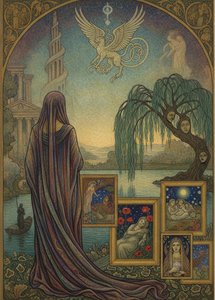
A Descent Into Shadow: Exploring Odilon Redon’s “Cain and Abel”
Odilon Redon's "Cain and Abel," etched in 1886, stands as a cornerstone of Symbolist art—a haunting meditation on primal conflict rendered with masterful precision. More than just a depiction of biblical narrative, the print embodies a profound exploration of psychological turmoil and the unsettling beauty found within darkness. Its enduring appeal lies not merely in its visual impact but in Redon’s ability to translate intangible emotions into tangible form through his distinctive drypoint technique.- The Image: The artwork portrays two figures locked in violent struggle, mirroring the biblical tale of Cain and Abel. One man dominates the other, wielding a sword with grim determination; their postures convey palpable tension and aggression.
- Drypoint Technique: Redon’s choice of etching medium—drypoint—is crucial to understanding the artwork's aesthetic qualities. This method involves incising lines into a copper plate using a stylus hardened with abrasive material, creating a textured surface that captures subtle tonal variations. The resulting print possesses an ethereal quality, reminiscent of moonlight filtering through foliage – a deliberate stylistic decision reflecting Redon’s fascination with nocturnal landscapes and dreamlike imagery.
- Symbolism: Beyond its narrative basis, “Cain and Abel” operates on symbolic levels. The sword represents aggression and violence, while the positioning of the figures speaks to dominance and submission—archetypal motifs that underscore the primal forces shaping human behavior.
Questions et réponses
L'œuvre « Cain and Abel » présente-t-elle des contrastes ombre et lumière marqués ?
Le niveau de contraste de «Cain and Abel» de Odilon Redon est Serene.
Quelle ambiance "Cain and Abel" apporterait-elle à une pièce ?
«Cain and Abel» de Odilon Redon dégage une atmosphère Dramatic et s'intègre parfaitement dans une Living Room. Cette ambiance reflète l'émotion que l'œuvre apporte à l'espace qui l'entoure.
Dans quel mouvement et à quelle époque s'inscrit «Cain and Abel» de Odilon Redon ?
« Cain and Abel » appartient au mouvement Symbolist, et son créateur a œuvré à l'époque XIXe siècle.
 Aperçu en situation
 Envoyer
 Partager
 Détails de l'œuvre
 Guide
Guide

 Télécharger l'image
 Articles similaires
 Radiographie
 Diaporama
 Q&A
Q&A Statistiques