
 Aperçu en situation
 Envoyer
 Partager
 Détails de l'œuvre

 Télécharger
 Articles similaires
 Radiographie
 Diaporama
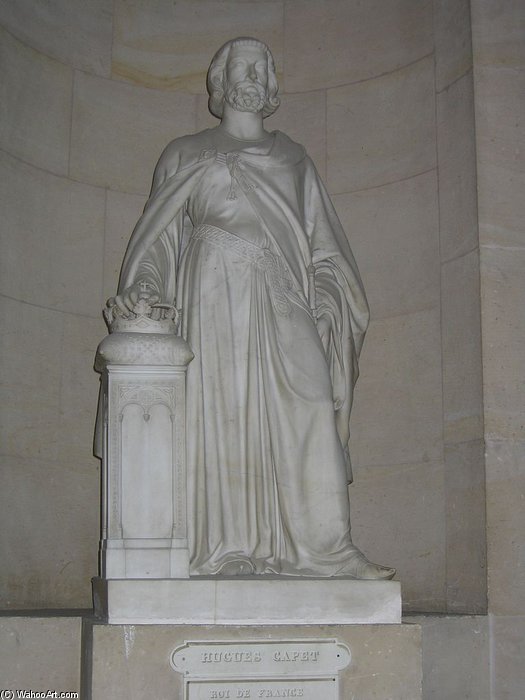
Hugues Capet
 Lire la suite
Giclées et impressions d'art
Impressions giclées ou sur toile de qualité musée, avec une production rapide et des finitions au choix. ( Commander la reproduction peinte à la main Télécharger l'image haute résolution)




































Choisissez parmi nos formats prédéfinis qui respectent les proportions originales de l’œuvre.

Vous pouvez saisir vos propres dimensions pour vous adapter à un cadre ou à un espace spécifique. Si la taille sélectionnée ne correspond pas aux proportions de l'image originale, nous recadrerons l'œuvre ou étendrons l'image avec une bordure en miroir ou une couleur unie. Une maquette numérique vous sera envoyée pour approbation avant le début de la production.
Veuillez noter que l'aperçu à l'écran ne reflète pas le recadrage ou l'extension réelle. Seule la maquette montrera avec précision la composition finale.
Bien que des tailles personnalisées soient disponibles, nous vous recommandons de choisir une dimension dans la liste prédéfinie afin de préserver les proportions originales.
Livraison dans le monde entier () en 2 semaines au lieu des 4/5 semaines habituelles. (14 août)

Livraison express gratuite dans le monde entier

Toile de lin de qualité supérieure

Assurance transport complète

Garantie de remboursement des droits de douane

Garantie de fidélité des couleurs

Politique de retour de 60 jours (uniquement en cas de défaut)

Garantie de remboursement à 100%

Offre de tarifs dégressifs
 L'option verre n'est disponible que pour les dimensions inférieures à 110 cm.

Hugues Capet
Giclées et impressions d'art
Format de la reproduction
-


Prix total
$ 80
Biographie de l'artiste
Nicolas Bernard Raggi: Sculptor of French Glory
Nicolas Bernard Raggi (1790 – 1862) stands as a prominent figure in the neoclassical sculptural tradition, primarily celebrated for his monumental portraits commemorating influential figures from French history. Born in Carrara, Italy—a region renowned for its marble quarries—Raggi’s artistic journey began amidst the burgeoning fervor of Enlightenment ideals and aristocratic patronage, shaping him into one of the era's most respected sculptors. His formative years were steeped in classical art scholarship, instilled by his father, a sculptor himself, who ensured Raggi received an exceptional education focused on mastering the techniques of marble carving and embodying the principles of idealized beauty championed by artists like Antonio Canova. This dedication to classical aesthetics would become a defining characteristic of his oeuvre, informing his meticulous approach to capturing likenesses with unparalleled accuracy and conveying noble character traits. Raggi’s artistic career flourished during Napoleon III's reign, securing commissions from the imperial court that cemented his reputation as the sculptor of choice for portraying monarchs and statesmen. He achieved particular renown for his colossal statues honoring Henri IV and Bayard—symbols of French monarchy and chivalry respectively—which grace prominent locations throughout Paris. These sculptures exemplify Raggi’s mastery of Carrara marble, utilizing subtle gradations of color and masterful drapery to imbue the figures with palpable vitality and dignity. The monumental scale itself underscores the ambition of commemorating these historical heroes and projecting an image of grandeur and stability onto the French nation. Beyond Henri IV and Bayard, Raggi undertook commissions for numerous other notable individuals, including Hugues Capet—the last Carolingian King of France—demonstrating his versatility as a sculptor. His works consistently adhered to the stylistic conventions of neoclassicism, prioritizing clarity of form, harmonious proportions, and restrained ornamentation. Influenced by artists like Antonio Canova and Bertel Thorvaldsen, Raggi skillfully blended classical ideals with contemporary artistic sensibilities, resulting in sculptures that resonate powerfully with viewers even today. Raggi’s legacy extends beyond his individual creations; he played a crucial role in establishing Carrara as the epicenter of sculptural excellence during the Second Empire. He mentored younger sculptors and championed innovative techniques for working with marble—particularly polishing—further elevating the art form's standards. Nicolas Bernard Raggi remains an enduring testament to the transformative power of classical inspiration and the ability of sculpture to immortalize historical figures in ways that continue to captivate audiences worldwide.
nicolas bernard raggi
1790 - 1862 , Italy
L'essentiel de l'artiste
- Artistic Movement Or Style: Neoclassical Sculpture
- Artists Or Movements Influenced By This Artist: ['Classical Art']
- Artists Who Influenced This Artist: ['Antonio Canova']
- Date Of Birth: Carrara, Italy (1790)
- Date Of Death: 1862
- Full Name: Nicolas Bernard Raggi
- Nationality: Italian
- Notable Artworks:
- Henri IV
- Monument To Comte Frochot
- Hugues Capet
- Place Of Birth: Carrara

