Aperçu en situation
 Partager
 Partager
 Détails
 Guide imprimable

 Télécharger
 Articles similaires
 Radiographie
 Voir le diaporama
 Statistiques
Vaydelots


 Afficher la suite
Giclées et impressions d'art
Impressions giclées ou sur toile de qualité musée, avec une production rapide et des finitions au choix. ( Acheter la peinture faite à la main Passer au format image numérique)




P118B €10

P118H €10

P118W €10

P438Z €10

P508JH €12

P508YH €12

P805H €10

P805Z €10

P919BZ €10

P919G €10

P919XJ €10

P959ZH €10

P968JZ €12

W106C €8

W218G €10

W218JH €8

W218Y €10

W307PJ €10

W316G €10

W316PJ €8

W316Y €10

W398PJ €8

W4111J €10

W500HY €15

W500JH €15

W692G €12

W849H €8

W940BG €15

W953PJ €8




Choisissez parmi nos formats prédéfinis qui respectent les proportions originales de l’œuvre.

Saisissez la largeur et la hauteur souhaitées pour qu'elles s'adaptent à votre cadre ou à votre mur. Une impression ne peut être que découpée, elle ne peut jamais être agrandie au-delà de l'image originale ; ainsi, un format de forme différente entraînera la perte d'une partie de l'image. Nous vous envoyons une maquette numérique pour approbation avant toute impression. L'image présentée sur cette page ne montre pas le recadrage réel — seule la maquette le permet.
Livraison dans le monde entier () en 2 semaines au lieu des 4/5 semaines habituelles. (23 octobre)

Livraison express gratuite dans le monde entier

Toile de lin de haute qualité

Assurance transport complète

Garantie de remboursement des droits de douane

Garantie de fidélité des couleurs

Garantie de retour de 100 jours (uniquement en cas de défaut)

Garantie de remboursement à 100%

Tarifs dégressifs sur quantité
 L'option verre n'est disponible que pour les dimensions inférieures à 110 cm.

Vaydelots
Giclées et impressions d'art
Format de la reproduction
-


Prix total final
€ 70
Vaydelots: A Symphony of Symbolism from Nicholas Roerich
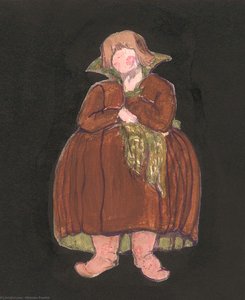
Nicholas Roerich’s 1914 painting, “Vaydelots,” isn't merely a depiction of a coastal scene; it’s an immersive experience, a carefully constructed tableau brimming with symbolic resonance and the artist’s signature blend of Symbolism, mysticism, and profound connection to nature. The work transports the viewer to a serene beach bathed in the warm glow of twilight, yet beneath its tranquil surface lies a complex tapestry of meaning rooted in ancient traditions and Roerich's own evolving spiritual beliefs.
At first glance, “Vaydelots” presents a simple composition: two figures seated by a crackling fire pit on a rocky outcrop overlooking the sea. These aren’t isolated individuals; they are integral parts of a larger narrative woven through the landscape itself. The central tree, its roots seemingly emerging from the sand and reaching towards the heavens, dominates the scene – a potent symbol of life, growth, and connection to the earth's core. The fire pit, radiating warmth and light, represents not just physical comfort but also the enduring power of tradition, community, and spiritual contemplation. The figures themselves, shrouded in shadow yet clearly engaged in conversation, embody harmony and balance within this elemental setting.
Decoding the Symbolism
Roerich’s work is renowned for its intricate symbolism, often drawing from sources as diverse as ancient mythologies, Eastern philosophies, and his own personal spiritual journey. In “Vaydelots,” several key symbols converge to create a layered meaning. The presence of boats in the background evokes journeys – both literal and metaphorical – suggesting themes of exploration, transition, and the search for inner truth. The birds scattered throughout the scene represent messengers, guides, or perhaps even glimpses into other realms. More subtly, the arrangement of elements—the placement of the tree, the positioning of the figures—mirrors patterns found in sacred geometry and ancient cosmologies.
Notably, the painting’s title itself – “Vaydelots” – is significant. It refers to a mythical figure from Baltic folklore, often associated with wisdom, prophecy, and the guardianship of sacred places. This connection elevates the scene beyond a simple beachscape, imbuing it with an aura of ancient knowledge and spiritual significance. The painting’s creation during a period of immense social upheaval in Russia—the aftermath of the 1905 Revolution and the rise of Bolshevism—further underscores the symbolic weight of its themes: resilience, continuity, and the enduring power of tradition amidst chaos.
Roerich's Technique and Artistic Style
“Vaydelots” exemplifies Roerich’s distinctive artistic style, a synthesis of Symbolist aesthetics with elements of Russian landscape painting. He employed loose, expressive brushstrokes to capture the fluidity of light and shadow, creating an atmosphere of both serenity and mystery. The use of warm earth tones—ochres, browns, and golds—dominates the palette, evoking the warmth of the fire and the golden hues of a setting sun. Roerich’s masterful handling of texture adds depth and realism to the scene, particularly in the depiction of the rough-hewn rocks and the flickering flames of the fire.
The painting's composition is carefully balanced, drawing the eye towards the central tree and the figures while simultaneously creating a sense of spaciousness and openness. Roerich’s meticulous attention to detail—the subtle variations in color, the delicate rendering of foliage—contributes to the overall feeling of authenticity and invites the viewer to lose themselves within the scene.
A Timeless Masterpiece – Reproduction Possibilities
OriginalUniqueArt.com is proud to offer meticulously crafted hand-painted oil painting reproductions of “Vaydelots,” allowing art enthusiasts to experience the beauty and depth of this iconic work firsthand. Our skilled artisans replicate Roerich’s unique style with exceptional accuracy, capturing not only the visual details but also the emotional resonance of the original. Whether you're seeking a stunning addition to your home décor or an investment in a timeless piece of art history, our reproductions provide a faithful and accessible representation of this remarkable painting.
Explore the full depth of Nicholas Roerich’s artistic vision through OriginalUniqueArt.com – where artistry meets preservation.
Questions et réponses
Quelle taille de reproduction est suggérée pour «Vaydelots» de Nicolas Roerich ?
Pour «Vaydelots», un format d'impression de Grand format est recommandé. D'autres tailles sont disponibles avec les mêmes proportions.
Quelle palette de couleurs est utilisée dans «Vaydelots» de Nicolas Roerich ?
La palette de «Vaydelots» de Nicolas Roerich est décrite comme étant Sombre et profond. Il s'agit d'une description concise des couleurs de l'œuvre.
Où est-il recommandé d'exposer le format Format carré de « Vaydelots » ?
Avec sa forme Format carré, une reproduction de « Vaydelots » est idéale pour un(e) Salon.
Biographie de l'artiste
Nicholas Roerich : Vie, Art et Héritage
Jeunesse et Éducation
- Nicolas Constantinovich Roerich est né le 9 octobre 1874 à Saint-Pétersbourg, en Russie.
- Son père, notaire public allemand de la Baltique, et sa mère, une femme russe, ont cultivé chez lui un goût précoce pour les arts.
- Roerich a poursuivi le droit et l'art simultanément, s'inscrivant à l'Université de Saint-Pétersbourg et à l'Académie des Beaux-Arts impériale en 1893.
- Il a reçu le titre d'"Artiste" en 1897 et un diplôme de droit l'année suivante.
Poursuites Artistiques et Influences
- Le développement artistique de Roerich a été significativement influencé par le Symbolisme russe, un mouvement mettant l'accent sur la spiritualité et la profondeur émotionnelle.
- Il s'est impliqué dans la société "World of Art" de Sergueï Diaghilev, devenant son président de 1910 à 1916.
- Ses premières œuvres ont mis en évidence une fascination pour l'archéologie et la conception de décors de scène, menant à des collaborations sur des productions pour les Ballets Russes.
- Il a également été influencé par l'apocryphe et les écrits sectaires médiévaux comme le Livre de Colombe.
Collaboration avec les Ballets Russes
- Les conceptions de Roerich pour les Ballets Russes ont été très saluées, en particulier son travail sur l'Opéra Prince Igor d'Alexandre Borodine (1909) et l’Opéra Le Rite de Printemps d'Igor Stravinsky (1913).
- Ses décors de scène ont combiné des recherches historiques avec un art imaginatif, créant des productions visuellement époustouflantes.
- Cette collaboration l'a établi comme une figure de proue en matière de conception théâtrale au début du XXe siècle.
Développement Artistique et Thèmes
- Les peintures de Roerich ont évolué pour incorporer des thèmes de plus en plus mystiques et spirituels, reflétant son intérêt croissant pour la Théosophie et les religions orientales.
- Sa série Études architecturales (1904–1905) a démontré sa prouesse architecturale et son engagement à préserver le patrimoine culturel.
- Des motifs récurrents dans son œuvre comprennent des paysages majestueux, des villes anciennes et des figures religieuses telles que Saint Panteleimon et Kuan Yin.
- Il a souvent représenté l'Himalaya, une région qui avait un profond sens spirituel pour lui.
Réalisations Majeures et Reconnaissance
- Roerich était un défenseur dévoué de la protection de l'art et de l'architecture pendant les temps de guerre.
- Ses efforts ont conduit à la création du Pacte Roerich (1935), un traité international pour la préservation des objets culturels, lui valant de nombreuses nominations au prix Nobel de la paix.
- Il a voyagé largement en Asie centrale, menant des recherches archéologiques et documentant les cultures anciennes.
- Son œuvre est présentée dans des collections muséales prestigieuses du monde entier, notamment la Galerie d'art d'Astrachane.
Signification Historique et Héritage
- L'impact de Nicolas Roerich sur l'art et la culture russes est immeasurable.
- Il a comblé le fossé entre l'expression artistique et l'exploration spirituelle, influençant des générations d'artistes et de penseurs.
- Son engagement à préserver le patrimoine culturel reste pertinent aujourd'hui, soulignant l'importance de protéger notre héritage commun.
- L'héritage de Roerich s'étend au-delà de ses peintures ; il est souvenu comme un artiste visionnaire, érudit et humanitaire.

Nicolas Roerich
1874 - 1947 , Russie
En bref
- Artistes Influents: ['Symbolisme russe']
- Date De Décès: 13 décembre 1947
- Date De Naissance: 9 octobre 1874
- Lieu De Naissance: Saint-Pétersbourg, Russie
- Mouvement Artistique: Symbolisme russe
- Nationalité: Russe
- Nom Complet: Nicolas Roerich
- Œuvres Notables:
- Lac des Nagas
- Mont de cinq trésors
- Chemin vers Kailas 4
- Tempe-jal-tzen-baykin
- Guerrier
- Pont de Gloire
Articles connexes
Vasily Polenov: A Pioneer of Landscape Impressionism & Russian National Identity
Explore the captivating landscapes of Vasily Polenov, a pivotal figure in Russian art history. Discover his lyrical realism, biblical series & influence on Impressionism. Learn about the 'Knight of Beauty' and his enduring legacy.

Ivan Bilibin: A Synthesis of Folklore, Modernism & National Identity in Russian Illustration
Explore the enchanting world of Ivan Bilibin, a master Russian illustrator who synthesized folklore, Art Nouveau & national identity. Discover his iconic fairy tale illustrations and legacy with OriginalUniqueArt.

Nicholas Roerich: Mysticism, Mountains & the Search for Ageless Wisdom in Art
Explore the captivating art of Nicholas Roerich – a visionary painter whose Himalayan landscapes blend spiritual mysticism with cultural preservation. Discover his legacy & symbolism.

Les 10 Chefs-d'œuvre du Paysage Romantique : Artistes et Décor d'Intérieur
Plongez dans l'émotion du Romantisme avec les 10 plus beaux paysages de Friedrich, Turner & Delacroix. Découvrez leur histoire et trouvez l'inspiration déco idéale sur OriginalUniqueArt.com !

Évocations de lieux : Un voyage historique à travers l'art du paysage
Explorez l'histoire fascinante de la peinture de paysage à travers les chefs-d'œuvre du Romantisme. Découvrez Friedrich, Turner et Aivazovski et laissez-vous inspirer par la beauté sauvage et le sublime. Reproduction d'art de qualité chez OriginalUniqueArt.