Aperçu en situation
 Envoyer
 Partager
 Détails de l'œuvre
 Guide
Guide

 Télécharger l'image
 Articles similaires
 Radiographie
 Diaporama
 Questions et réponses
 Statistiques
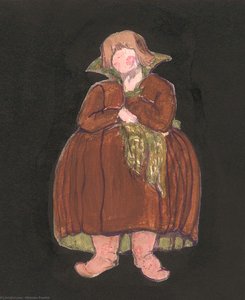
Snow Maiden


 Lire la suite
Giclées et impressions d'art
Impressions giclées ou sur toile de qualité musée, avec une production rapide et des finitions au choix. ( Commander la reproduction peinte à la main Passer au format numérique)




P118B €10

P118H €10

P118W €10

P438Z €10

P508JH €12

P508YH €12

P805H €10

P805Z €10

P919BZ €10

P919G €10

P919XJ €10

P959ZH €10

P968JZ €12

W106C €8

W218G €10

W218JH €8

W218Y €10

W307PJ €10

W316G €10

W316PJ €8

W316Y €10

W398PJ €8

W4111J €10

W500HY €15

W500JH €15

W692G €12

W849H €8

W940BG €15

W953PJ €8




Choisissez parmi nos formats prédéfinis qui respectent les proportions originales de l’œuvre.

Saisissez la largeur et la hauteur souhaitées pour qu'elles s'adaptent à votre cadre ou à votre mur. Une impression peut être recadrée, mais jamais agrandie au-delà de l'image originale ; ainsi, un format de forme différente entraînera la perte d'une partie de l'image. Nous vous envoyons une maquette numérique pour approbation avant toute impression. L'image présentée sur cette page ne montre pas le recadrage réel — seule la maquette le permet.
Livraison dans le monde entier () en 2 semaines au lieu des 4/5 semaines habituelles. (6 novembre)

Livraison express gratuite dans le monde entier

Toile de lin de qualité supérieure

Assurance transport complète

Garantie de remboursement des droits de douane

Garantie de fidélité des couleurs

Politique de retour de 100 jours (uniquement en cas de défaut)

Garantie de remboursement à 100%

Offre de tarifs dégressifs
 L'option verre n'est disponible que pour les dimensions inférieures à 110 cm.

Snow Maiden
Giclées et impressions d'art
Format de la reproduction
-


Prix total
€ 72
Nicholas Roerich’s “Snow Maiden”: A Frozen Echo of Russian Folklore
Nicholas Roemerich's "Snow Maiden," painted in 1920, is more than just a depiction of a winter scene; it’s a profound meditation on solitude, spirituality, and the enduring power of myth. Created during a pivotal moment in Russian art history – bridging the Symbolist movement with nascent influences of Art Deco – this monochrome masterpiece immediately captivates with its stark beauty and unsettling stillness. The image, likely a photograph of an original illustration, presents a vertically oriented composition dominated by the figure of the Snow Maiden, a central character from Russian folklore deeply intertwined with winter’s magic and the promise of rebirth. The deliberate use of grayscale amplifies the artwork's emotional resonance, stripping away superficial distractions to focus on the core themes of mystery and introspection.
Composition and Technique: A Stylized Narrative
- Geometric Precision, Human Emotion: Roerich masterfully employs geometric shapes – particularly in the simplified architecture of a stylized church or temple – to ground the ethereal figure. The sharp angles and onion domes contribute to a sense of order, yet the Snow Maiden herself is rendered with flowing lines that subtly disrupt this formality, suggesting an inherent tension between the rational and the mystical.
- Monochromatic Mastery: The artist’s skillful manipulation of grayscale creates a dramatic effect through intense tonal contrasts. Deep blacks define shadows, while bright whites highlight forms, generating a palpable sense of depth and volume despite the absence of color. This technique echoes the conventions of Symbolist art, prioritizing mood and atmosphere over realistic representation.
- Line Work as Structure: Strong, defined lines delineate the Snow Maiden’s clothing and facial features, contributing to the artwork's graphic quality. The deliberate use of line not only defines form but also creates a sense of separation, emphasizing the figure’s isolation within the vastness of the winter landscape.
Symbolism and Historical Context: Echoes of Russian Tradition
The Snow Maiden herself is a potent symbol in Russian folklore – representing purity, innocence, and the cyclical nature of life and death. Her presence within this artwork speaks to a deep-seated cultural tradition, one rooted in pagan beliefs and Christian iconography. Roerich’s work reflects the broader artistic currents of his time, grappling with questions of spirituality, national identity, and the search for meaning in a rapidly changing world. The 1920 date places it within a period of significant social and political upheaval in Russia, adding another layer of complexity to its interpretation – a reflection perhaps of the nation’s own frozen state.
Emotional Impact and Artistic Legacy
"Snow Maiden" possesses an undeniable emotional power. The monochromatic palette and the figure's serene yet distant expression evoke a sense of melancholy, solitude, and quiet contemplation. It is a work that invites viewers to confront their own feelings about mortality, faith, and the beauty of the natural world. Roerich’s influence extends far beyond his time; his exploration of symbolism and spirituality continues to resonate with artists and collectors today. This reproduction offers a unique opportunity to experience firsthand the profound artistry and enduring appeal of one of Nicholas Roerich's most iconic works – a timeless testament to the power of myth and the beauty of a frozen landscape.
Questions et réponses
Quelle origine nationale sous-tend le Symbolist Expressionism de « Snow Maiden » ?
«Snow Maiden» lie le mouvement Symbolist Expressionism à Russie à travers le lieu de naissance de son créateur.
L'œuvre « Snow Maiden » est-elle disponible en tirage d'art ?
Pour obtenir une impression de «Snow Maiden» de Nicolas Roerich, il vous suffit de la commander sur sa page Tirage d'art fine art : une impression d'art sur toile de coton ou sur papier canvas d'archive.
Quel est le niveau de contraste de «Snow Maiden» de Nicolas Roerich ?
Le niveau de contraste de «Snow Maiden» de Nicolas Roerich est Statement.
Biographie de l'artiste
Nicholas Roerich : Vie, Art et Héritage
Jeunesse et Éducation
- Nicolas Constantinovich Roerich est né le 9 octobre 1874 à Saint-Pétersbourg, en Russie.
- Son père, notaire public allemand de la Baltique, et sa mère, une femme russe, ont cultivé chez lui un goût précoce pour les arts.
- Roerich a poursuivi le droit et l'art simultanément, s'inscrivant à l'Université de Saint-Pétersbourg et à l'Académie des Beaux-Arts impériale en 1893.
- Il a reçu le titre d'"Artiste" en 1897 et un diplôme de droit l'année suivante.
Poursuites Artistiques et Influences
- Le développement artistique de Roerich a été significativement influencé par le Symbolisme russe, un mouvement mettant l'accent sur la spiritualité et la profondeur émotionnelle.
- Il s'est impliqué dans la société "World of Art" de Sergueï Diaghilev, devenant son président de 1910 à 1916.
- Ses premières œuvres ont mis en évidence une fascination pour l'archéologie et la conception de décors de scène, menant à des collaborations sur des productions pour les Ballets Russes.
- Il a également été influencé par l'apocryphe et les écrits sectaires médiévaux comme le Livre de Colombe.
Collaboration avec les Ballets Russes
- Les conceptions de Roerich pour les Ballets Russes ont été très saluées, en particulier son travail sur l'Opéra Prince Igor d'Alexandre Borodine (1909) et l’Opéra Le Rite de Printemps d'Igor Stravinsky (1913).
- Ses décors de scène ont combiné des recherches historiques avec un art imaginatif, créant des productions visuellement époustouflantes.
- Cette collaboration l'a établi comme une figure de proue en matière de conception théâtrale au début du XXe siècle.
Développement Artistique et Thèmes
- Les peintures de Roerich ont évolué pour incorporer des thèmes de plus en plus mystiques et spirituels, reflétant son intérêt croissant pour la Théosophie et les religions orientales.
- Sa série Études architecturales (1904–1905) a démontré sa prouesse architecturale et son engagement à préserver le patrimoine culturel.
- Des motifs récurrents dans son œuvre comprennent des paysages majestueux, des villes anciennes et des figures religieuses telles que Saint Panteleimon et Kuan Yin.
- Il a souvent représenté l'Himalaya, une région qui avait un profond sens spirituel pour lui.
Réalisations Majeures et Reconnaissance
- Roerich était un défenseur dévoué de la protection de l'art et de l'architecture pendant les temps de guerre.
- Ses efforts ont conduit à la création du Pacte Roerich (1935), un traité international pour la préservation des objets culturels, lui valant de nombreuses nominations au prix Nobel de la paix.
- Il a voyagé largement en Asie centrale, menant des recherches archéologiques et documentant les cultures anciennes.
- Son œuvre est présentée dans des collections muséales prestigieuses du monde entier, notamment la Galerie d'art d'Astrachane.
Signification Historique et Héritage
- L'impact de Nicolas Roerich sur l'art et la culture russes est immeasurable.
- Il a comblé le fossé entre l'expression artistique et l'exploration spirituelle, influençant des générations d'artistes et de penseurs.
- Son engagement à préserver le patrimoine culturel reste pertinent aujourd'hui, soulignant l'importance de protéger notre héritage commun.
- L'héritage de Roerich s'étend au-delà de ses peintures ; il est souvenu comme un artiste visionnaire, érudit et humanitaire.

Nicolas Roerich
1874 - 1947 , Russie
L'essentiel de l'artiste
- Artistes Influents: ['Symbolisme russe']
- Date De Décès: 13 décembre 1947
- Date De Naissance: 9 octobre 1874
- Lieu De Naissance: Saint-Pétersbourg, Russie
- Mouvement Artistique: Symbolisme russe
- Nationalité: Russe
- Nom Complet: Nicolas Roerich
- Œuvres Notables:
- Lac des Nagas
- Mont de cinq trésors
- Chemin vers Kailas 4
- Tempe-jal-tzen-baykin
- Guerrier
- Pont de Gloire
Articles connexes

Victor Vasnetsov: Myth, Nationalism & the Revival of Russian Fairy Tale Painting
Explore the captivating world of Victor Vasnetsov, a co-founder of Russian folklorist painting. Discover his iconic works, influence on national identity, and lasting legacy in this expert guide.

The Enduring Legacy of Fine Art Prints: Technique, History & Aesthetic Impact
Explore the rich history & techniques of fine art prints. Discover investment potential, assess authenticity, and learn how to preserve your collection with expert guidance. Trusted insights for discerning collectors.

Echoes of Time: Exploring the Enduring Appeal & Historical Context of Vintage Art Prints
Explore the captivating world of vintage art prints! Discover their history, collecting tips & enduring appeal. Expert insights on chromolithography and building a legacy collection with OriginalUniqueArt.

L'Excellence de l'Impression Giclée : Guide Technique pour des Reproductions d'Art de Qualité Musée
Maîtrisez la technique giclée et les encres pigmentaires pour vos collections. Découvrez les secrets d'une impression de qualité musée.

Ivan Bilibin: A Synthesis of Folklore, Modernism & National Identity in Russian Illustration
Explore the enchanting world of Ivan Bilibin, a master Russian illustrator who synthesized folklore, Art Nouveau & national identity. Discover his iconic fairy tale illustrations and legacy with OriginalUniqueArt.