
 Aperçu en situation
 Envoyer
 Partager
 Détails de l'œuvre

 Télécharger
 Articles similaires
 Radiographie
 Diaporama
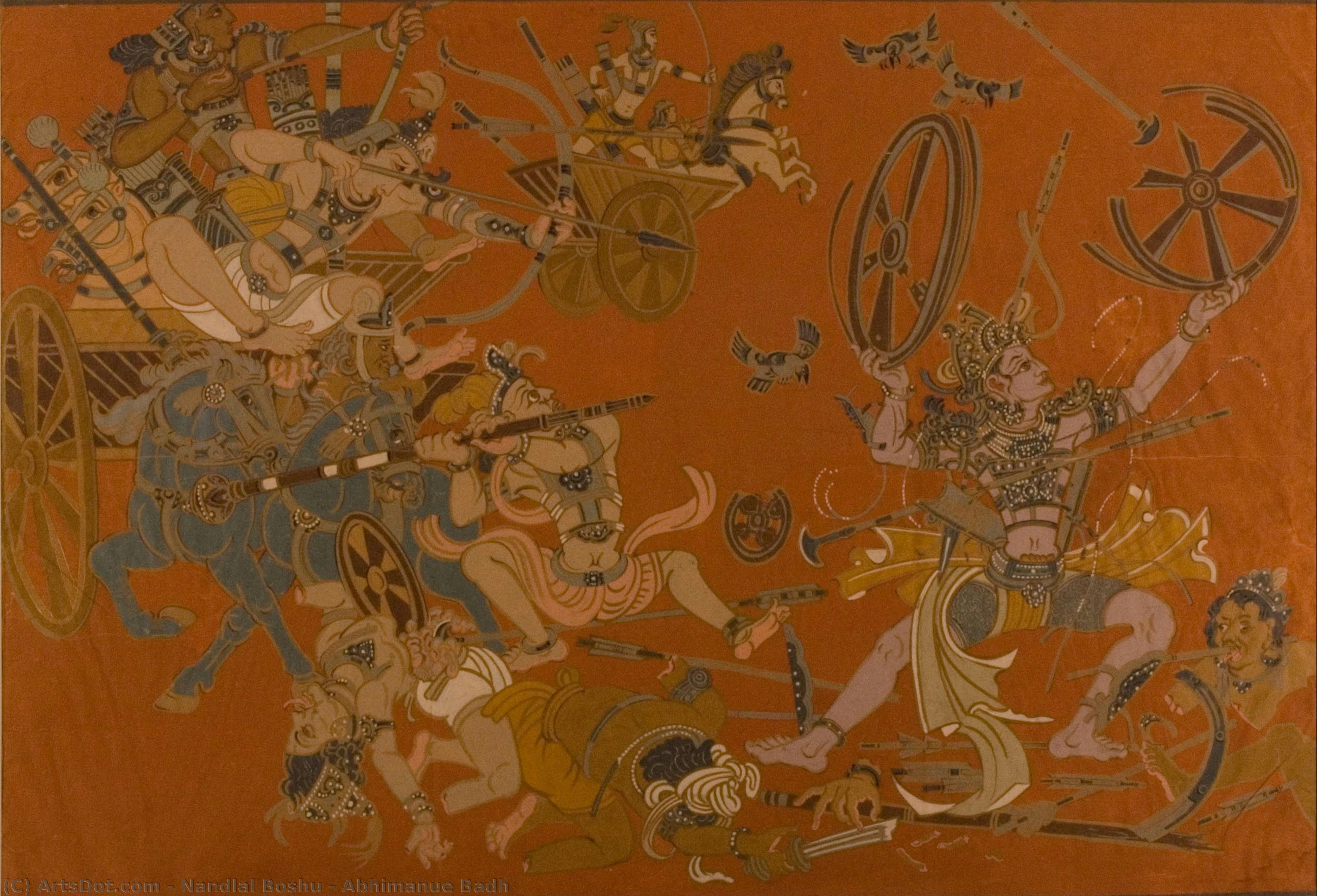
Abhimanue Badh
 Indo-Islamic Style
 1947
1947- Modern
 1790.0 x 1300.0 cm
 National Gallery of Modern Art
 Lire la suite
Reproduction à l'huile faite à la main
Huile sur toile peinte à la main, avec cadre et dimensions personnalisés, réalisée sur commande par nos artistes. ( Commander l'impression Télécharger l'image haute résolution)




P118B $10

P118H $10

P118W $10

P438Z $10

P508JH $12

P508YH $12

P805H $10

P805Z $10

P919BZ $10

P919G $10

P919XJ $10

P959ZH $10

P968JZ $12

W106C $8

W218G $10

W218JH $8

W218Y $10

W307PJ $10

W316G $10

W316PJ $8

W316Y $10

W398PJ $8

W4111J $10

W500HY $15

W500JH $15

W692G $12

W849H $8

W940BG $15

W953PJ $8




Choisissez parmi nos formats prédéfinis qui respectent les proportions originales de l’œuvre.

Vous pouvez saisir vos propres dimensions pour l'adapter à un cadre ou à un espace spécifique. Si la taille sélectionnée ne correspond pas aux proportions de l'image d'origine, nous recadrerons l'œuvre ou prolongerons la peinture avec des éléments peints à la main supplémentaires. Une maquette numérique vous sera envoyée pour approbation avant le début de la production.
Veuillez noter que l'aperçu à l'écran ne reflète pas le recadrage ou l'extension réels. Seule la maquette montrera fidèlement la composition finale.
Bien que des tailles personnalisées soient disponibles, nous vous recommandons de sélectionner une dimension dans la liste prédéfinie afin de préserver les proportions d'origine.
Après la commande, l’équipe OriginalUniqueArt.com contactera le client par e-mail pour recueillir ses instructions et lui fournira une maquette d’aperçu
Livraison dans le monde entier () en 3 à 4 semaines au lieu des 5 semaines habituelles. (21 août). Aucun compromis sur la qualité.

Livraison express gratuite dans le monde entier

Toile de lin de qualité supérieure

Assurance transport complète

Garantie de remboursement des droits de douane

Garantie de fidélité des couleurs

Politique de retour de 60 jours (uniquement en cas de défaut)

Garantie de remboursement à 100%

Offre de tarifs dégressifs
 L'option verre n'est disponible que pour les dimensions inférieures à 110 cm.

Abhimanue Badh
Technique de reproduction
Format de la reproduction
-


Prix total
$ 500
Description de l'œuvre
A Heroic Tragedy in Gold and Ochre
In the heart of Nandalal Bose’s profound contribution to Indian modernism lies Abhimanue Badh, a work that breathes life into the ancient echoes of the Mahabharata. This masterpiece captures the tragic moment of the young hero Abhimanyu’s demise, an episode defined by both unparalleled bravery and heartbreaking injustice. As one of the most significant figures of the Bengal School, Bose does not merely illustrate a myth; he orchestrates a visual symphony of chaos and courage. The painting presents a dense, kinetic landscape where the boundaries between man and myth blur, inviting the viewer into a swirling vortex of combat that feels both timeless and urgently present.
The composition is a masterclass in controlled chaos. Within a crowded and energetic frame, the artist utilizes a flattened perspective reminiscent of classical Indian mural traditions to emphasize the sheer scale of the struggle. The eye is immediately drawn to the interplay of geometric precision—the sharp lines of spears, the circular strength of shields, and the rotating wheels of chariots—against the fluid, organic forms of the warriors' bodies. This tension between structure and movement creates a rhythmic pulse throughout the piece, ensuring that even in its most crowded moments, the painting maintains a sense of epic grandeur.
The Alchemy of Color and Line
Technically, Abhimanue Badh is an exploration of warmth and intensity. The palette is dominated by a luminous spectrum of oranges, golds, and deep ochres, creating an atmosphere that feels as though it is radiating heat from the very center of the battlefield. This monochromatic warmth serves to unify the disparate elements of the battle, casting a divine yet violent glow over the scene. Bose’s meticulous brushwork achieves a rich, layered texture that suggests the weight of history itself, giving the surface a tactile quality that invites close inspection.
The artist's lineage, deeply rooted in the study of the Ajanta cave murals and Mughal miniature traditions, is evident in his masterful use of line. Every contour of a muscle, every arc of a weapon, is defined with a precision that speaks to his disciplined training at Kala Bhavana. These lines do more than define shape; they direct the emotional flow of the piece, guiding the viewer from the frantic energy of the periphery toward the tragic epicenter of the hero's stand. For the collector or designer, this work offers a profound sense of movement and light that can serve as a commanding focal point in any sophisticated interior.
A Legacy of Cultural Revival
Beyond its aesthetic brilliance, this artwork stands as a testament to the revival of Indian visual identity. Created during a period of immense national transformation, Bose’s work reflects his commitment to a "new visual language"—one that drew strength from India's classical past to forge a modern future. The symbolism of the chariot and the heroic struggle serves as a metaphor for the indomitable human spirit in the face of overwhelming odds. To possess a reproduction of this work is to hold a piece of the soul of Indian modernism, bringing into one's space a narrative of resilience, artistry, and the eternal drama of the human condition.
Biographie de l'artiste
Early Life and Career
Nandalal Bose, a luminary of Indian art, was born on December 3rd, 1882, in Kharagpur, Munger District, Bihar—a humble beginning for an artist destined to reshape the visual landscape of his nation. His familial roots lay in a middle-class Bengali household where Kshetramonidevi and Purnachandra Bose nurtured him alongside his four siblings. Unlike many artists of his time, Bose faced initial resistance from his family regarding his artistic aspirations—a testament to the unwavering conviction he held in his passion for creation. Despite these challenges, Bose embarked on his artistic journey by enrolling at Calcutta School of Art, profoundly influenced by the monumental murals adorning Ajanta Caves. This formative experience ignited within him a fascination for storytelling through visual mediums and cemented his commitment to preserving India’s rich cultural heritage. He quickly became part of an international circle of artists and writers who championed the revival of classical Indian aesthetics—a movement that would propel him toward groundbreaking innovations in artistic expression. A pivotal moment arrived in 1930 when Bose captured the essence of Mahatma Gandhi's unwavering spirit through a striking linocut print, symbolizing his dedication to nonviolent resistance. This artwork not only solidified his reputation as a socially conscious artist but also demonstrated his mastery of printmaking techniques—a skill he honed with meticulous precision.Artistic Style and Contributions
Bose’s artistic style—often termed “Indian Style”—represented a harmonious fusion between traditional Indian iconography and Persian influences. He skillfully blended elements from Hindu mythology, portraying figures like Rama and Sita with grace and dignity, alongside depictions of rural life brimming with vibrant colors and textures. His canvases resonated with the spirit of his era, reflecting both spiritual contemplation and humanist empathy. Bose’s artistic prowess earned him recognition as one of the pioneers of modern Indian art—a distinction that underscores his enduring legacy within the realm of visual culture. Notable among his creations are “A Lion” (59 x 63 cm), housed in the National Gallery of Modern Art, New Delhi, and “Dhol Wala” (59 x 63 cm), also residing at NGMA—both masterpieces executed in tempera paint—which exemplify Bose’s meticulous attention to detail and his ability to convey emotion through color palettes. Furthermore, "Pranam" (50 x 55 cm) stands as a testament to his artistic vision and technical skill.Influences and Mentorship
Bose's artistic development was irrevocably shaped by the mentorship of Abanindranath Tagore—a relationship that fostered experimentation with European techniques while simultaneously grounding him in the traditions of Indian art. Tagore’s encouragement instilled in Bose a belief in continuous learning and refinement—qualities that would characterize his entire career. He diligently studied the works of masters like Raphael, absorbing their stylistic nuances and adapting them to his own artistic sensibilities. This dedication to observation and emulation ensured that Bose remained at the forefront of artistic innovation throughout his lifetime.Recognition and Legacy
Nandalal Bose’s contribution to Indian art is immeasurable—a legacy enshrined in the annals of cultural history. He was entrusted with illustrating the Constitution of India, a monumental undertaking that showcased his artistic versatility and commitment to civic responsibility. In 1976, he received the Padma Vibhushan—India's highest honor for artistic achievement—acknowledging his profound impact on the nation’s artistic landscape. Today, the National Gallery of Modern Art in Delhi proudly displays over 7,000 of Bose’s artworks—a tangible reminder of his enduring influence on generations of artists and a beacon of inspiration for aspiring creatives everywhere.
Nandalal Bose
1882 - 1966 , Inde
L'essentiel de l'artiste
- Artistic Movement Or Style: Style Indien
- Artists Who Influenced This Artist: ['Abanindranath Tagore']
- Date Of Birth: Décembre 3, 1882
- Date Of Death: Avril 16, 1966
- Full Name: Nandalal Bose
- Nationality: Indien
- Notable Artworks:
- A Lion
- Dhol Wala
- Pranam
- Place Of Birth: Kharagpur, Inde
Articles connexes

Fresques Murales : L'Élévation de la Cuisine et Salle de Bain en Havres Artistiques
Découvrez comment intégrer des fresques murales pour sublimer votre cuisine et salle de bain. Conseils d'experts, tendances & inspirations pour un intérieur unique. : l'art à portée de tous.

De la Jungle aux Géométries Dorées : Les Tendances Fresques les Plus Demandées par les Designers d'Hôtels
Découvrez les tendances fresques les plus demandées par les designers d'hôtels ! Guide expert sur l'art mural, techniques innovantes & artistes à suivre. : votre partenaire pour des décorations exceptionnelles.
Fresques Murales : L'Art comme Élément Central du Design d'Intérieur
Découvrez l'art de la fresque murale ! Conseils d'experts, inspirations et commandes sur mesure pour sublimer votre intérieur. : qualité, authenticité & service personnalisé.
![Transformer les Espaces : Comment les Fresques Personnalisées Forgent l'Identité de Marque et Améliorent l'Expérience Client[Image Placeholder][Article Body Placeholder][Call to Action Placeholder]](/media/articles/images/thumbnails/b9/5d/b95db6de2f674f37942060e32a01df4a.jpg)
Transformer les Espaces : Comment les Fresques Personnalisées Forgent l'Identité de Marque et Améliorent l'Expérience Client[Image Placeholder][Article Body Placeholder][Call to Action Placeholder]
Valorisez votre marque et vos espaces grâce à des fresques murales personnalisées. Découvrez des conseils d’experts sur le design, les artistes, les matériaux et l’installation. Transformez votre environnement : explorez les solutions sur mesure de . [placeholder]
Transformez Votre Hall d'Entrée en Œuvre d'Art : Des Murs qui Impressionnent
Transformez votre hall d'entrée en œuvre d'art ! Découvrez nos conseils d'experts et notre collection exclusive de peintures murales, fresques & reproductions pour un accueil prestigieux. : l'excellence artistique à portée de main.


