Aperçu en situation
 Partager
 Partager
 Détails

 Télécharger
 Articles similaires
 Radiographie
 Voir le diaporama
 Statistiques
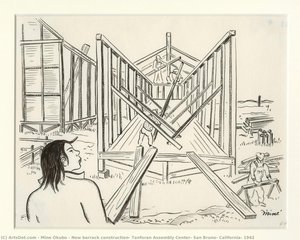
Walking over muddy ground, Central Utah Relocation Project, Topaz, Utah, 1942-1944


 Afficher la suite
Reproduction à l'huile faite à la main
Huile sur toile peinte à la main, avec cadre et dimensions personnalisés, réalisée sur commande par nos artistes. ( Passer au format impression Passer au format image numérique)




P118B $10

P118H $10

P118W $10

P438Z $10

P508JH $12

P508YH $12

P805H $10

P805Z $10

P919BZ $10

P919G $10

P919XJ $10

P959ZH $10

P968JZ $12

W106C $8

W218G $10

W218JH $8

W218Y $10

W307PJ $10

W316G $10

W316PJ $8

W316Y $10

W398PJ $8

W4111J $10

W500HY $15

W500JH $15

W692G $12

W849H $8

W940BG $15

W953PJ $8




Choisissez parmi nos formats prédéfinis qui respectent les proportions originales de l’œuvre.

Vous pouvez saisir vos propres dimensions pour l'adapter à un cadre ou à un espace spécifique. Si la taille sélectionnée ne correspond pas aux proportions de l'image d'origine, nous recadrerons l'œuvre ou prolongerons la peinture avec des éléments peints à la main supplémentaires. Une maquette numérique vous sera envoyée pour approbation avant le début de la production.
Veuillez noter que l'aperçu à l'écran ne reflète pas le recadrage ou l'extension réels. Seule la maquette montrera fidèlement la composition finale.
Bien que des tailles personnalisées soient disponibles, nous vous recommandons de sélectionner une dimension dans la liste prédéfinie afin de préserver les proportions d'origine.
Après la commande, l’équipe OriginalUniqueArt.com contactera le client par e-mail pour recueillir ses instructions et lui fournira une maquette d’aperçu
Livraison dans le monde entier () en 3 à 4 semaines au lieu des 5 semaines habituelles. (18 septembre). Aucun compromis sur la qualité.

Livraison express gratuite dans le monde entier

Toile de lin de haute qualité

Assurance transport complète

Garantie de remboursement des droits de douane

Garantie de fidélité des couleurs

Garantie de retour de 100 jours (uniquement en cas de défaut)

Garantie de remboursement à 100%

Tarifs dégressifs sur quantité
 L'option verre n'est disponible que pour les dimensions inférieures à 110 cm.

Walking over muddy ground, Central Utah Relocation Project, Topaz, Utah, 1942-1944
Technique de reproduction
Format de la reproduction
-


Prix total final
$ 300
Walking Over Muddy Ground: A Chronicle of Resilience
Miné Okubo’s “Walking Over Muddy Ground, Central Utah Relocation Project, Topaz, Utah, 1942-1944” isn't merely a depiction of a landscape; it’s a distilled essence of hardship, determination, and the quiet dignity of a people displaced. Rendered in stark black and white, the drawing captures a pivotal moment within the Topaz War Relocation Center—a microcosm of the larger narrative of Japanese American internment during World War II. The image immediately draws the eye to two figures, a man and a woman, navigating a landscape saturated with mud, their postures conveying both physical exertion and an unspoken weight of experience. It’s a scene that speaks volumes without uttering a single word, inviting viewers to contemplate the complexities of displacement, resilience, and the enduring spirit of those who persevered through unimaginable circumstances.
A Study in Line and Texture
Okubo's masterful technique lies in her deliberate use of line. Hatching and cross-hatching dominate the composition, meticulously building up texture to represent the slick, clinging mud that dominates the foreground. The lines aren’t simply descriptive; they possess a palpable energy, mirroring the figures’ struggle as they navigate the treacherous terrain. Notice how the lines thicken and intensify where the mud is deepest, creating a sense of physical resistance. This isn't a romanticized view of nature; it’s an honest portrayal of a challenging environment—a visual metaphor for the obstacles faced by the internees. The careful rendering of clothing, particularly the man’s knit hat and checkered jacket, adds another layer of detail, grounding the scene in a specific time and place while simultaneously highlighting the contrast between their resilience and the surrounding adversity.
Echoes of a Troubled Era
“Walking Over Muddy Ground” is inextricably linked to the historical context of Japanese American internment. The Topaz Relocation Center, established in 1942 amidst rising anti-Japanese sentiment and fueled by wartime hysteria, represented a dark chapter in American history. Executive Order 9066, signed by President Franklin Roosevelt, initiated the forced removal of over 120,000 Americans of Japanese descent from their homes along the West Coast. The camp itself was not simply a place of confinement; it was a site of bureaucratic control, social disruption, and profound emotional distress. Okubo’s drawing serves as a poignant visual record of this period, offering a glimpse into the daily realities experienced by those who were unjustly incarcerated.
Symbolism and Emotional Resonance
The muddy ground itself is laden with symbolic weight. It represents not only the physical challenges faced by the internees—the constant struggle against the elements, the pervasive dust—but also the metaphorical obstacles they encountered in their lives. The figures’ determined strides forward suggest a refusal to succumb to despair, an unwavering commitment to maintaining dignity and hope amidst adversity. The distant barracks, barely visible on the horizon, serve as a reminder of the imposed limitations and the loss of freedom. Yet, despite these constraints, the drawing radiates a quiet strength—a testament to the resilience of the human spirit and the enduring power of observation. “Walking Over Muddy Ground” is more than just an artwork; it’s a powerful historical document and a moving meditation on displacement, perseverance, and the importance of bearing witness.
Biographie de l'artiste
Miné Okubo : Vie, Art et Héritage
Jeunesse et Éducation
- Née le: 27 juin 1912 à Riverside, en Californie, auprès de parents immigrants japonais.
- Okubo a démontré un talent artistique précoce, encouragée par sa famille.
- Elle a poursuivi une formation artistique formelle, étudiant à l'Université de Californie, Berkeley, et plus tard voyageant en Europe en 1938 pour poursuivre ses études.
- Son séjour en Suisse a été interrompu par les tensions politiques croissantes menant à la Seconde Guerre mondiale.
Internement et Réponse Artistique
- Suite à l'attaque de Pearl Harbor, Okubo, avec son frère Benji, a été retirée de force de sa maison et incarcérée dans les camps d'internement américain japonais.
- Elle a d’abord été envoyée au Tanforan Assembly Center en 1942, puis transférée au Topaz War Relocation Center en Utah.
- Pendant sa détention, Okubo a entrepris un projet remarquable : elle a méticuleusement documenté la vie quotidienne dans les camps à travers plus de 2 000 dessins et croquis.
- Ces œuvres ont capturé la réalité difficile de l'existence dans le camp – les conditions de vie surpeuplées, les procédures bureaucratiques, la détresse émotionnelle et la résilience des internés.
Citizen 13660 : Témoignage Puissant
- Après sa libération en 1944, Okubo a compilé une sélection de 198 dessins et un texte d'accompagnement dans un livre intitulé Citizen 13660.
- Publié en 1946, le livre est considéré comme une œuvre majeure documentant l'expérience des internements japonais-américains.
- Le titre fait référence à son numéro attribué au sein du système d'internement, soulignant l'aspect déshumanisant du transfert forcé.
- Les dessins se caractérisent par leur directivité, leur honnêteté et leur profondeur émotionnelle, offrant un récit visuel poignant d'une sombre page de l'histoire américaine.
Carrière Post-Guerre et Développement Artistique
- Okubo s'est installée à New York après la guerre, où elle a poursuivi sa carrière artistique.
- Elle travaillait comme artiste indépendante, créant des illustrations pour des magazines et des livres, et poursuivant également des projets de fresques.
- Son style a évolué avec le temps, mais elle a constamment maintenu un accent sur les commentaires sociaux et les thèmes humanistes.
- Okubo a reçu de nombreux prix et reconnaissances tout au long de sa carrière, notamment des subventions du National Endowment for the Arts.
Influences et Héritage
- Le travail d'Okubo a été influencé par le mouvement réaliste social, qui mettait l’accent sur la représentation des problèmes sociaux et de la vie quotidienne avec un accent sur le réalisme.
- Elle s'est inspirée d'artistes comme Käthe Kollwitz, connue pour ses représentations puissantes de la souffrance humaine.
- Son héritage réside dans sa documentation courageuse de l'expérience d'internement et dans sa contribution à sensibiliser le public aux droits civiques et à la justice sociale.
- “Citizen 13660” reste un document historique essentiel et continue de résonner auprès du public aujourd’hui, servant de rappel de l’importance de la vigilance contre les préjugés et la discrimination.
Décès et Commémoration
- Miné Okubo est décédée le 10 février 2001, laissant derrière elle un corps de travail puissant qui continue d'inspirer et d'éduquer.
- Son art est conservé dans de nombreuses collections publiques et privées, garantissant que son histoire et son message perdureront pour les générations à venir.

Miné Okubo
1912 - 2001 , United States of America
En bref
- Artistic Movement Or Style: Réalisme social
- Artists Or Movements Influenced By This Artist: ['Social Realisme']
- Artists Who Influenced This Artist: ['Käthe Kollwitz']
- Date Of Birth: 27 juin 1912
- Date Of Death: 10 février 2001
- Full Name: Miné Okubo
- Nationality: Américaine
- Notable Artworks:
- Citizen 13660
- Interior de Mine et Toku
- Travail à la Topaz
- Place Of Birth: Riverside, États-Unis
Articles similaires

American Regionalism: The Soul of the Heartland and the Mastery of Grant Wood
Explore the profound history of American Regionalism. Discover how Grant Wood captured the heart of the Midwest through masterpieces like American Gothic. An expert guide to the movement, its cultural impact, and the enduring beauty of American Realism.

Grant Wood & American Regionalism: Identity, Myth & the Rural Landscape
Explore the world of Grant Wood & American Regionalism with OriginalUniqueArt. Discover the symbolism behind 'American Gothic', recurring themes, and the movement's lasting impact on art history. High-quality reproductions available.

Réalisme Américain : 10 Chefs-d'œuvre Incontournables pour une Déco Inspirée
Plongez au cœur du Réalisme Américain avec 10 chefs-d'œuvre d'Edward Hopper, Andrew Wyeth et plus. Découvrez l'histoire et les techniques de ces artistes emblématiques. Reproductions de tableaux de qualité musée sur OriginalUniqueArt.com !
Le Régionalisme Américain : Identité, Espace et Commentaire Social dans la Peinture du XXe Siècle
Explorez le régionalisme américain : un mouvement artistique majeur du XXe siècle capturant l'identité rurale et les réalités sociales de l'Amérique. Analyse approfondie, artistes clés & héritage durable sur OriginalUniqueArt.
Échos de la terre : Le régionalisme américain et l'identité entre les deux guerres
Explorez le régionalisme américain et le réalisme entre les deux guerres : artistes emblématiques, thèmes clés et l'impact durable de ce mouvement sur l'art. Analyse approfondie par OriginalUniqueArt.
![[Sans titre]](/media/artworks/images-thumb/da/f5/daf58ec86f2a4b9d0b02cc6cd4383556.jpg)