
 Aperçu en situation
 Envoyer
 Partager
 Détails de l'œuvre

 Télécharger
 Articles similaires
 Radiographie
 Diaporama
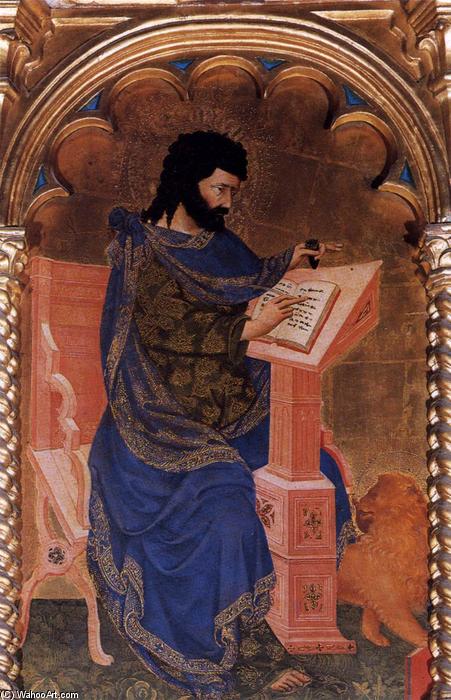
St Mark


 Lire la suite
Giclées et impressions d'art
Impressions giclées ou sur toile de qualité musée, avec une production rapide et des finitions au choix. ( Commander la reproduction peinte à la main Télécharger l'image haute résolution)




































Choisissez parmi nos formats prédéfinis qui respectent les proportions originales de l’œuvre.

Vous pouvez saisir vos propres dimensions pour vous adapter à un cadre ou à un espace spécifique. Si la taille sélectionnée ne correspond pas aux proportions de l'image originale, nous recadrerons l'œuvre ou étendrons l'image avec une bordure en miroir ou une couleur unie. Une maquette numérique vous sera envoyée pour approbation avant le début de la production.
Veuillez noter que l'aperçu à l'écran ne reflète pas le recadrage ou l'extension réelle. Seule la maquette montrera avec précision la composition finale.
Bien que des tailles personnalisées soient disponibles, nous vous recommandons de choisir une dimension dans la liste prédéfinie afin de préserver les proportions originales.
Livraison dans le monde entier () en 2 semaines au lieu des 4/5 semaines habituelles. (14 août)

Livraison express gratuite dans le monde entier

Toile de lin de qualité supérieure

Assurance transport complète

Garantie de remboursement des droits de douane

Garantie de fidélité des couleurs

Politique de retour de 60 jours (uniquement en cas de défaut)

Garantie de remboursement à 100%

Offre de tarifs dégressifs
 L'option verre n'est disponible que pour les dimensions inférieures à 110 cm.

St Mark
Giclées et impressions d'art
Format de la reproduction
-


Prix total
$ 80
Biographie de l'artiste
Michele di Matteo Lambertini: A Bolognese Voice in Late Gothic Art
Michele di Matteo Lambertini (circa 1410 – living), often referred to as da bologna or lambertini, stands as a significant figure within the artistic landscape of late gothic Bologna. His contribution to the city’s visual culture is marked by ambitious fresco cycles and meticulously crafted altar panels that reflect both stylistic trends and humanist ideals emerging during his lifetime. While scholarly debate persists regarding his precise place amongst Bolognese painters—particularly distinguishing him from Michelangelo da Bergamo—Lambertini undeniably possessed a distinctive artistic vision, shaping the aesthetic sensibilities of his era.Early Life and Artistic Training
Information concerning Lambertini’s formative years remains scarce, primarily due to the limitations of surviving biographical records. He emerged as an artist during the vibrant intellectual milieu fostered by Bologna's university and papal presence. Evidence suggests he apprenticed under Francesco Lola, a renowned fresco painter known for his involvement in monumental projects celebrating papal authority. This collaboration instilled in Lambertini foundational skills in pigment preparation, mural technique, and compositional design—elements that would characterize his subsequent artistic endeavors.Notable Commissions and Artistic Output
Lambertini’s career gained prominence through prestigious commissions undertaken during the episcopacy of Cardinal Jean Bilheres. He undertook a monumental task decorating the basilica san petronio with frescoes depicting scenes from the life of Saint Peter, demonstrating mastery in portraying biblical narratives with dramatic intensity and nuanced detail. Simultaneously, he collaborated on the church of san giacomo, designing elaborate windows adorned with intricate stained glass panels—a testament to his understanding of visual storytelling and artistic innovation. Perhaps Lambertini’s most enduring legacy resides in his altar-piece for the chiesa di sant'elena, Venice. Executed around 1462, this artwork showcases a masterful blend of Byzantine influences and emerging Renaissance sensibilities. The depiction of saints john, mark, roch, and anthony abbot embodies serene piety and conveys profound spiritual contemplation—a hallmark of humanist artistic expression. Furthermore, his Virgin and Child panel (1469), housed in the Accademia di Bologna, exemplifies Lambertini’s meticulous attention to anatomical accuracy and expressive drapery—characteristics that foreshadow developments within Bolognese painting during the transitional period between gothic and renaissance styles.Influence and Legacy
Lambertini's work exerted considerable influence on subsequent generations of Bolognese artists. Crowe and Cavalcaselle, prominent art historians of the early 20th century, acknowledged Lambertini’s artistic prowess but controversially dismissed his paintings as “ugly,” “injured,” and “defective.” Despite these critical assessments, Lambertini remains recognized for his contribution to the visual arts—particularly his role in shaping Bolognese artistic identity. His polyptych depicting St Helena and the Virgin Mary (1430-1437), commissioned for the church of sant’elena, Venice, exemplifies the stylistic sophistication achieved during this period. The Museo Nazionale di San Matteo houses a remarkable collection of Lambertini's paintings, offering visitors an opportunity to appreciate his artistic achievements firsthand. Lambertini’s oeuvre continues to inspire scholars and artists alike—underscoring the enduring significance of his contribution to Bolognese art history and demonstrating the lasting impact of late gothic aesthetics on Italian Renaissance painting.
L'essentiel de l'artiste
- Artistic Movement Or Style: Late Gothic
- Artists Or Movements Influenced By This Artist: ['Michelangelo da Bergamo']
- Artists Who Influenced This Artist: ['Francesco Lola']
- Date Of Death: Living
- Full Name: Michele di Matteo Lambertini
- Nationality: Italian
- Notable Artworks:
- Polyptych of Sant'Elena
- St Mark
- Virgin and Child
- Twelve Articles of the Apostles Creed
- Cristo Crucifisso
- Place Of Birth: Italy

