
 Aperçu en situation
 Envoyer
 Partager
 Détails de l'œuvre
 Guide
Guide

 Télécharger l'image
 Articles similaires
 Radiographie
 Diaporama
 Questions et réponses
 Statistiques
La Pietà


 Lire la suite
Giclées et impressions d'art
Impressions giclées ou sur toile de qualité musée, avec une production rapide et des finitions au choix. ( Commander la reproduction peinte à la main Passer au format numérique)




P118B €10

P118H €10

P118W €10

P438Z €10

P508JH €12

P508YH €12

P805H €10

P805Z €10

P919BZ €10

P919G €10

P919XJ €10

P959ZH €10

P968JZ €12

W106C €8

W218G €10

W218JH €8

W218Y €10

W307PJ €10

W316G €10

W316PJ €8

W316Y €10

W398PJ €8

W4111J €10

W500HY €15

W500JH €15

W692G €12

W849H €8

W940BG €15

W953PJ €8




Choisissez parmi nos formats prédéfinis qui respectent les proportions originales de l’œuvre.

Saisissez la largeur et la hauteur souhaitées pour qu'elles s'adaptent à votre cadre ou à votre mur. Une impression peut être recadrée, mais jamais agrandie au-delà de l'image originale ; ainsi, un format de forme différente entraînera la perte d'une partie de l'image. Nous vous envoyons une maquette numérique pour approbation avant toute impression. L'image présentée sur cette page ne montre pas le recadrage réel — seule la maquette le permet.
Livraison dans le monde entier () en 2 semaines au lieu des 4/5 semaines habituelles. (5 novembre)

Livraison express gratuite dans le monde entier

Toile de lin de qualité supérieure

Assurance transport complète

Garantie de remboursement des droits de douane

Garantie de fidélité des couleurs

Politique de retour de 100 jours (uniquement en cas de défaut)

Garantie de remboursement à 100%

Offre de tarifs dégressifs
 L'option verre n'est disponible que pour les dimensions inférieures à 110 cm.

La Pietà
Giclées et impressions d'art
Format de la reproduction
-


Prix total
€ 72
Michelangelo Buonarroti: Pietà – A Timeless Emblem of Sorrow and Divine Grace
The Pietà by Michelangelo Buonarroti stands as arguably the most poignant sculpture born from the Renaissance, an artwork that transcends mere representation to embody profound spiritual contemplation. Located within the solemn grandeur of St. Peter’s Basilica in Vatican City, this masterpiece continues to captivate viewers centuries after its creation, cementing its place among the pinnacles of Western art history. It’s a testament to Michelangelo's unparalleled ability to distill complex emotions into stone—a feat that resonates powerfully with audiences even today.The Artist's Vision and Inspiration
Michelangelo Buonarroti, a titan of his era—a sculptor, painter, architect, and poet—was profoundly influenced by Dante Alighieri’s *Divine Comedy*, specifically Virgil’s descent into Hell and Beatrice’s ascent to Paradise. This literary pilgrimage instilled in Michelangelo a fascination with the interplay between earthly suffering and divine compassion – themes that would permeate his artistic output. However, it was particularly Dante's depiction of Mary mourning Jesus after the crucifixion that ignited Michelangelo’s imagination. He envisioned Mary not merely as a grieving mother but as an embodiment of maternal grace and unwavering faith—a figure radiating serenity amidst unimaginable sorrow. This unique interpretation distinguishes Michelangelo’s Pietà from earlier depictions of the same scene, elevating it to a level of psychological depth rarely achieved in sculpture.A Synthesis of Classical Beauty and Naturalism
Executed between 1498 and 1499 during his formative years as an artist—a period marked by intense experimentation and stylistic evolution—the Pietà exemplifies Michelangelo’s masterful synthesis of classical ideals with humanist observation. He meticulously studied the anatomical precision of Greek sculptures, particularly those depicting idealized human forms, striving to achieve a level of realism that mirrored the beauty inherent in divine grace. The sculpture's drapery is rendered with astonishing subtlety, conveying movement and texture—a testament to Michelangelo’s unparalleled skill in manipulating marble. Notice how the folds of Mary’s robe cascade downwards, creating an illusion of depth and emphasizing her posture as she cradles Jesus’s lifeless body. This careful attention to detail underscores Michelangelo’s commitment to portraying human emotion with uncompromising honesty.Historical Context: The Basilica of St. Peter’s and Papal Patronage
The Pietà’s commission by Jean Bilhères de Lagraulas, Cardinal of France, for his funerary chapel in Old St. Peter’s Basilica reflects the pervasive influence of papal patronage during the High Renaissance. Michelangelo was tasked with creating a monumental sculpture that would honor the deceased cardinal and serve as a powerful symbol of Christian faith—a project undertaken amidst the ambitious architectural endeavors of Bramante and Raphael to transform Rome into a new center of artistic splendor. The basilica itself, conceived as a testament to Christendom’s enduring power, became Michelangelo's canvas for conveying spiritual contemplation and commemorating sacred narratives.Symbolism: Grief, Compassion, and Divine Redemption
Beyond its aesthetic brilliance, the Pietà is laden with symbolic significance—a visual meditation on themes of grief, compassion, and divine redemption. Mary’s serene expression contrasts sharply with Jesus’s lifeless posture, representing not despair but acceptance—the ultimate triumph over suffering. The positioning of Mary's hands—one gently supporting Jesus’s torso while the other cradling his feet—symbolizes her unwavering devotion to God and her selfless embrace of human sorrow. Michelangelo skillfully employs pyramidal composition—a technique borrowed from classical sculpture—to convey stability and grandeur, reinforcing the Pietà’s message of enduring faith and divine grace. The Pietà continues to resonate with audiences today because it speaks directly to the universal experience of loss and longing—a timeless reminder of humanity’s capacity for compassion and its yearning for spiritual solace.- Michelangelo Buonarroti: Pietà (detail)
Questions et réponses
Quel est le format de « La Pietà » ?
«La Pietà» de Michel-Ange Buonarroti est une composition en Format portrait. Il convient de vérifier les proportions avant de choisir un format d'impression.
Est-il possible de télécharger l'image de « La Pietà » ?
L'image de «La Pietà» de Michel-Ange Buonarroti peut être téléchargée sur la page de téléchargement de l'œuvre : Téléchargement (téléchargement d'une image numérique haute résolution).
Quel est le niveau de contraste de «La Pietà» de Michel-Ange Buonarroti ?
Le contraste clair-obscur de « La Pietà » est évalué à Niveau de contraste. Le contraste décrit l'intensité de la différence entre les zones claires et les zones sombres.
Biographie de l'artiste
Michel-Ange Buonarroti : Un Titan de la Renaissance
Jeunesse et Formation (1475-1496)
- Michel-Ange di Lodovico Buonarroti Simoni est né le 6 mars 1475 à Caprese Michelangelo, en Toscane.
- Initialement, son père résistait à une carrière artistique, mais a cédé à l'exceptionnelle talent de son fils pour le dessin.
- À l’âge de 13 ans, il est devenu apprenti de Domenico Ghirlandaio, apprenant les techniques de fresque et de dessin.
- Il s'est rapidement tourné vers la sculpture, étudiant les œuvres classiques dans les jardins des Médicis – une influence décisive.
Période Précoce : Établissement du Maîtrise (1490-1505)
- Autour de 1496, il reçoit sa première commande majeure : la sculpture de la Piéta, achevée en 1499.
- La Piéta, hébergée dans la basilique Saint-Pierre, a fait preuve de son maîtrise du travail de la pierre et de sa profondeur émotionnelle.
- Son prochain chef-d'œuvre emblématique est la statue colossale de David (1501-1504), symbolisant les idéaux républicains florentins.
- Le David, plus de 17 pieds de haut, a démontré sa compréhension de l'anatomie et sa capacité à insuffler la vie aux pierres.
La Renaissance Italienne : Fresques de la Chapelle Sixtine (1505-1520)
- Le pape Jules II a commandé à Michel-Ange de peindre le plafond de la chapelle Sixtine en 1508.
- Sur une période de quatre ans, il a peint plus de 300 figures représentant des scènes de la Genèse, y compris La Création d'Adam.
- Ce cycle de fresques monumental est une réalisation marquante dans l’art occidental, démontrant ses compétences en composition et son pouvoir narratif.
- Il a également commencé à travailler sur la tombe du pape Jules II – un projet qui durera des décennies mais restera inachevé tel qu'initialement envisagé.
Années Ultérieures : Architecture et le Jugement Dernier (1520-1564)
- En 1520, Michel-Ange devient architecte de la basilique Saint-Pierre à Rome, modifiant considérablement le projet de Bramante.
- Entre 1536 et 1541, il a peint Le Jugement Dernier sur le mur d'autel de la chapelle Sixtine.
- Ce vaste cycle de fresques a dépeint le Second Coming du Christ avec une composition dramatique et une intensité émotionnelle, reflétant un passage vers le Manichéisme.
Influences et Développement Artistique
- Antiquité Classique : L'étude des sculptures grecques et romaines a profondément influencé sa compréhension de l'anatomie et de la proportion.
- Humanisme Renaissance : L'accent mis sur le potentiel humain est évident dans sa célébration de la forme humaine.
- Tradition Florentine : Il s’est appuyé sur la lignée d'artistes tels que Donatello et Masaccio.
- Son style a évolué de l'idéalisme classique à un Manichéisme plus dynamique et expressif.
Signification Historique et Héritage
- Michel-Ange est considéré comme l’un des plus grands artistes de tous les temps, incarnant le “homme de la Renaissance”.
- Ses sculptures, ses peintures et son architecture ont inspiré des générations et continuent de captiver les publics du monde entier.
- Il a profondément influencé les mouvements artistiques de la Renaissance italienne et du Manichéisme.
- Son exactitude anatomique, ses compositions dramatiques et sa profondeur émotionnelle ont établi de nouvelles normes d'excellence artistique.
Années Finales
- Michel-Ange est décédé le 18 février 1564 à Rome, laissant derrière lui un ouvrage inestimable.
- Son héritage continue de façonner notre compréhension de la beauté, du pouvoir et du potentiel humain.

Michel-Ange Buonarroti
1475 - 1564 , Italie
L'essentiel de l'artiste
- Artistes Influents:
- Donatello
- Masaccio
- Antiquité Classique
- Date De Décès: 18 février 1564
- Date De Naissance: 6 mars 1475
- Influences Artistiques:
- Manierisme
- Haute Renaissance
- Lieu De Naissance: Caprese Michelangelo, Italie
- Mouvement Artistique: Haute Renaissance, Manierisme
- Nationalité: Italienne
- Nom Complet: Michel-Ange Buonarroti
- Oeuvres Notables:
- La Pietà
- David
- Plafond de la Chapelle Sixtine
- Le Jugement Dernier
Articles connexes

The Enduring Allure of Marble in Art History: From Classical Sculpture to Modern Abstraction
Explore the captivating history of marble sculpture from ancient Greece to modern art. Discover renowned artists like Canova & Michelangelo, carving techniques, and investment insights at OriginalUniqueArt.

Les 10 Chefs-d'œuvre en Bronze qui ont Révolutionné l'Art : Collection OriginalUniqueArt
Plongez dans l'univers fascinant des 10 chefs-d'œuvre en bronze qui ont marqué l'histoire de l'art. Découvrez Rodin, Degas et les secrets de ces sculptures iconiques. Reproductions d'art exceptionnelles sur OriginalUniqueArt.com – Explorez la collection !
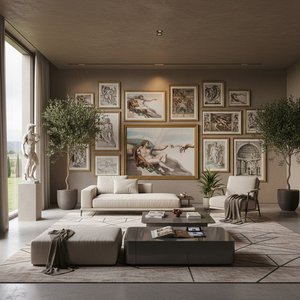
Les 25 chefs-d'œuvre de Michel-Ange : la légende de la Renaissance
Explorez les 25 chefs-d'œuvre de Michel-Ange et la Renaissance. Trouvez l'inspiration sur OriginalUniqueArt.com.

Les 10 Chefs-d'œuvre Bronzes Qui Ont Révolutionné la Sculpture | OriginalUniqueArt
Plongez dans l'univers fascinant des 10 sculptures en bronze les plus emblématiques de l'histoire de l'art. Rodin, Degas et autres maîtres révélés ! Découvrez leur histoire, leurs techniques et trouvez l'œuvre parfaite pour sublimer votre intérieur sur OriginalUniqueArt.com.

L'Évolution du Volume : Analyse des Procédés et de l'Histoire de la Sculpture
Explorez l'évolution technique de la sculpture, du marbre classique à l'art cinétique. Maîtrisez l'histoire du volume dès maintenant.


