

 Aperçu en situation
 Envoyer
 Partager
 Détails de l'œuvre
 Guide
Guide

 Télécharger l'image
 Articles similaires
 Radiographie
 Diaporama
 Q&A
Q&A Statistiques
Wizard Woman
 Acrylique sur toile
- Décoration murale
- Surrealism
 1941
1941- Époque moderne
 245.0 x 190.0 cm
 Lire la suite
L’œuvre d'art présentée sur cette page est protégée par le droit d'auteur, ce qui signifie que nous ne pouvons légalement créer ou vendre de reproduction identique. Cette protection est appliquée en vertu d'accords internationaux tels que la Convention de Berne et par les lois nationales, notamment celles énoncées par le Loi américaine sur le droit d'auteur - Titre 17.
Cette méthode est pleinement conforme aux réglementations sur le droit d'auteur car elle ne repose pas sur la copie ou la duplication de l'œuvre protégée. Il s'agit plutôt d'une réinterprétation créative — une nouvelle peinture qui s'inspire de l'original sans pour autant lui être identique.
Giclées et impressions d'art
Impressions giclées ou sur toile de qualité musée, avec une production rapide et des finitions au choix. ( Commander la reproduction peinte à la main Passer au format numérique)




P118B €10

P118H €10

P118W €10

P438Z €10

P508JH €12

P508YH €12

P805H €10

P805Z €10

P919BZ €10

P919G €10

P919XJ €10

P959ZH €10

P968JZ €12

W106C €8

W218G €10

W218JH €8

W218Y €10

W307PJ €10

W316G €10

W316PJ €8

W316Y €10

W398PJ €8

W4111J €10

W500HY €15

W500JH €15

W692G €12

W849H €8

W940BG €15

W953PJ €8




Choisissez parmi nos formats prédéfinis qui respectent les proportions originales de l’œuvre.

Saisissez la largeur et la hauteur souhaitées pour qu'elles s'adaptent à votre cadre ou à votre mur. Une impression peut être recadrée, mais jamais agrandie au-delà de l'image originale ; ainsi, un format de forme différente entraînera la perte d'une partie de l'image. Nous vous envoyons une maquette numérique pour approbation avant toute impression. L'image présentée sur cette page ne montre pas le recadrage réel — seule la maquette le permet.
Livraison dans le monde entier () en 2 semaines au lieu des 4/5 semaines habituelles. (31 octobre)

Livraison express gratuite dans le monde entier

Toile de lin de qualité supérieure

Assurance transport complète

Garantie de remboursement des droits de douane

Garantie de fidélité des couleurs

Politique de retour de 100 jours (uniquement en cas de défaut)

Garantie de remboursement à 100%

Offre de tarifs dégressifs
 L'option verre n'est disponible que pour les dimensions inférieures à 110 cm.

Wizard Woman
Giclées et impressions d'art
Format de la reproduction
-


Prix total
€ 71
Wizard Woman by Max Ernst: A Surreal Encounter
Max Ernst’s “Wizard Woman,” painted in 1941, is more than just a depiction of two women; it's an immersion into the unsettling and profoundly evocative world of surrealism. Measuring 245 x 190 cm, this oil on canvas work captures a moment suspended between reality and dream, reflecting Ernst’s lifelong fascination with psychology, mythology, and the subconscious. The painting’s immediate impact stems from its enigmatic subject matter – two figures poised in contemplation before a monumental red sculpture, their gazes directed towards an unseen point beyond the frame. This deliberate ambiguity invites the viewer to become an active participant in constructing meaning, a hallmark of Ernst's artistic approach.
Surrealist Techniques and Composition
Ernst’s technique is characterized by meticulous layering and a controlled use of color. The application of paint is deliberately textured, creating a palpable sense of depth and suggesting the fragmented nature of memory and perception. Notice the subtle gradations in the red sculpture – it isn't simply a solid mass but rendered with variations in tone that lend it an almost organic quality. The composition itself is carefully constructed to disorient and intrigue. The placement of the women, their averted gazes, and the imposing scale of the sculpture all contribute to a feeling of unease and mystery. The inclusion of the tree in the background adds another layer of complexity, hinting at ancient wisdom or perhaps a symbolic representation of life’s journey.
Historical Context: The Rise of Surrealism
"Wizard Woman" was created during a pivotal moment in art history – the rise of surrealism. Following the devastation of World War I and the widespread disillusionment with rational thought, artists sought to explore the irrational, the dreamlike, and the subconscious as avenues for expressing profound anxieties and challenging conventional norms. Max Ernst was at the forefront of this movement, experimenting with techniques like frottage (rubbing textures onto paper) and collage to tap into these hidden realms. The painting’s themes – isolation, mystery, and the search for meaning – resonate deeply within the context of post-war Europe.
Symbolism and Interpretation
The symbolism within “Wizard Woman” remains open to interpretation, a deliberate strategy employed by Ernst. The red sculpture could represent power, danger, or perhaps even a distorted reflection of societal values. The women themselves are deliberately ambiguous; their identities remain obscured, allowing viewers to project their own emotions and experiences onto the scene. Some scholars suggest that the painting reflects Ernst’s interest in alchemy and mythology, while others see it as a meditation on the human condition – our inherent desire for knowledge, our vulnerability to illusion, and our struggle to find meaning in a chaotic world. The title itself, “Wizard Woman,” adds another layer of intrigue, evoking images of ancient wisdom, magic, and feminine power.
Perfect for Interior Design & Art Collection
This hand-painted reproduction of Max Ernst’s "Wizard Woman" offers a captivating addition to any art collection or interior design scheme. Its evocative imagery and masterful technique will undoubtedly spark conversation and create a focal point within your space. The 245 x 190 cm size makes it suitable for both large walls and more intimate settings. OriginalUniqueArt’s meticulous reproduction ensures that you experience the full impact of this seminal work of surrealist art.
Questions et réponses
L'œuvre «Wizard Woman» de Max Ernst est-elle plutôt claire ou sombre ?
En termes de luminosité perçue, «Wizard Woman» de Max Ernst est équilibrée.
Quel format et quelle orientation d'impression sont suggérés pour «Wizard Woman» de Max Ernst ?
Format Grand format, orientation Format portrait : voici la configuration d'impression suggérée pour «Wizard Woman» de Max Ernst.
Quelle est la couleur dominante de «Wizard Woman» de Max Ernst ?
Brun espresso (#372227) est la couleur dominante de «Wizard Woman» de Max Ernst.
Biographie de l'artiste
Max Ernst : Une Vie au Sein du Surréalisme
Jeunesse et Éducation
- Né le: 1er avril 1891 à Brühl, en Allemagne.
- Le père d'Ernst, Philipp Ernst, était enseignant des sourds et peintre amateur, encourageant ainsi l'intérêt précoce de Max pour l'art.
- Il a étudié la philosophie, l'histoire de l'art, la littérature, la psychologie et la psychiatrie à l'Université de Bonn de 1909.
- Ce parcours académique diversifié a profondément influencé ses explorations artistiques ultérieures.
Développement Artistique & Influences
- Un moment décisif fut l'exposition Sonderbund à Cologne (1912), où il a découvert des œuvres de Pablo Picasso, Vincent van Gogh, et Paul Gauguin.
- En 1914, il a rencontré Hans Arp, débutant une amitié qui a durablement façonné son parcours artistique.
- La Première Guerre mondiale a profondément marqué Ernst ; ses expériences de soldat ont conduit à la déception et à une vision critique de la société.
- Il s'est inspiré des écrits de Sigmund Freud, explorant les thèmes de l'inconscient dans son art.
Dadisme & Surréalisme
- Ernst est devenu une figure clé du groupe Dadiste de Cologne après la Première Guerre mondiale, rejetant les conventions artistiques traditionnelles.
- Il a pionné des techniques innovantes telles que frottage (frotter un crayon sur des surfaces texturées) et grattage (gratter la peinture pour révéler les couches sous-jacentes).
- Dans les années 1920, il a rejoint le mouvement surréaliste à Paris, collaborant avec des artistes tels que Paul Éluard.
- Son œuvre de cette période explorait des images oniriques et des thèmes psychologiques.
Œuvres Majeures & Techniques
- Frottage : Une technique utilisée pour créer des textures et des images inattendues, exemplifiée dans de nombreuses œuvres.
- Collage : Ernst a fréquemment utilisé le collage, combinant des éléments disparates pour créer des compositions surréalistes.
- Œuvres Notables :
- La Ville Entière
- Euclides
- De Ceci, Personne Ne Devrait Savoir
- Forêt et Colombe
- Ses peintures présentent souvent des images symboliques, notamment les oiseaux (en particulier son alter ego Loplop), les paysages et des juxtapositions troublantes.
Vie Tardive & Héritage
- Ernst s'est installé aux États-Unis pendant la Seconde Guerre mondiale, continuant à peindre et à expérimenter de nouvelles techniques.
- Il est revenu en France après la guerre et est resté actif jusqu'à sa mort le 1er avril 1976 à Paris.
- Signification Historique : Les contributions d'Ernst au Dadisme et au Surréalisme ont été révolutionnaires. Il a défié les normes artistiques, exploré l’esprit inconscient et inventé des techniques innovantes qui continuent d’inspirer les artistes aujourd’hui.
- Il reste l'un des figures les plus importantes et influentes de l'art du 20e siècle.
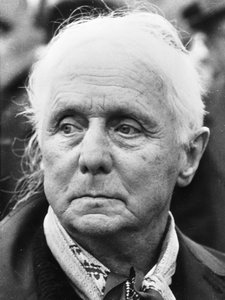
Max Ernst
1891 - 1976 , Allemagne
L'essentiel de l'artiste
- Artistes Influents:
- Pablo Picasso
- Vincent van Gogh
- Paul Gauguin
- Date De Décès: 1er avril 1976
- Date De Naissance: 1er avril 1891
- Lieu De Naissance: Brühl, Allemagne
- Mouvement Artistique: Dadaïsme et Surréalisme
- Nationalité: Allemand/Américain/Français
- Nom Complet: Max Ernst
- Œuvres Notables:
- La Ville Entière
- Euclides
- Forêt et Colombe
Articles connexes

L'Excellence de l'Impression Giclée : Guide Technique pour des Reproductions d'Art de Qualité Musée
Maîtrisez la technique giclée et les encres pigmentaires pour vos collections. Découvrez les secrets d'une impression de qualité musée.

The Enduring Legacy of Fine Art Prints: Technique, History & Aesthetic Impact
Explore the rich history & techniques of fine art prints. Discover investment potential, assess authenticity, and learn how to preserve your collection with expert guidance. Trusted insights for discerning collectors.

Crimson Threads of Narrative: Exploring Symbolism & Representation in Artworks Featuring the Red Dress
Explore the rich symbolism of the red dress in art history! From ancient power displays to iconic portraits like Cézanne’s 'Madame Cezanne', discover the cultural and artistic significance behind this captivating color. Expert analysis & insights.
Exploration du subconscient : Les 25 chefs-d'œuvre de Max Ernst
Plongez dans l'univers surréaliste de Max Ernst et ses 25 chefs-d'œuvre. Explorez la collection complète sur OriginalUniqueArt.com.
Surréalisme : 10 Chefs-d'œuvre Révolutionnaires pour une Déco Inspirée
Plongez dans l'univers fascinant du surréalisme avec OriginalUniqueArt.com ! Découvrez 10 chefs-d’œuvre de Dalí, Magritte et autres artistes emblématiques. Inspirez votre déco avec des reproductions de tableaux exceptionnelles. Explorez la collection en ligne !


