Aperçu en situation
 Envoyer
 Partager
 Détails de l'œuvre

 Télécharger
 Articles similaires
 Radiographie
 Diaporama
Marlene (Mother and son)
 Huile
Huile- Art mural
- Surrealism
 1940
1940- Moderne
 23.0 x 19.0 cm
 Lire la suite
Giclées et impressions d'art
Impressions giclées ou sur toile de qualité musée, avec une production rapide et des finitions au choix. ( Commander la reproduction peinte à la main Télécharger l'image haute résolution)




P118B $10

P118H $10

P118W $10

P438Z $10

P508JH $12

P508YH $12

P805H $10

P805Z $10

P919BZ $10

P919G $10

P919XJ $10

P959ZH $10

P968JZ $12

W106C $8

W218G $10

W218JH $8

W218Y $10

W307PJ $10

W316G $10

W316PJ $8

W316Y $10

W398PJ $8

W4111J $10

W500HY $15

W500JH $15

W692G $12

W849H $8

W940BG $15

W953PJ $8




Choisissez parmi nos formats prédéfinis qui respectent les proportions originales de l’œuvre.

Vous pouvez saisir vos propres dimensions pour vous adapter à un cadre ou à un espace spécifique. Si la taille sélectionnée ne correspond pas aux proportions de l'image originale, nous recadrerons l'œuvre ou étendrons l'image avec une bordure en miroir ou une couleur unie. Une maquette numérique vous sera envoyée pour approbation avant le début de la production.
Veuillez noter que l'aperçu à l'écran ne reflète pas le recadrage ou l'extension réelle. Seule la maquette montrera avec précision la composition finale.
Bien que des tailles personnalisées soient disponibles, nous vous recommandons de choisir une dimension dans la liste prédéfinie afin de préserver les proportions originales.
Livraison dans le monde entier () en 2 semaines au lieu des 4/5 semaines habituelles. (14 août)

Livraison express gratuite dans le monde entier

Toile de lin de qualité supérieure

Assurance transport complète

Garantie de remboursement des droits de douane

Garantie de fidélité des couleurs

Politique de retour de 60 jours (uniquement en cas de défaut)

Garantie de remboursement à 100%

Offre de tarifs dégressifs
 L'option verre n'est disponible que pour les dimensions inférieures à 110 cm.

Marlene (Mother and son)
Giclées et impressions d'art
Format de la reproduction
-


Prix total
$ 80
Description de la pièce
A Surrealist Vision of Instinct and Connection
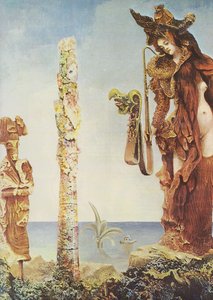
In the hauntingly beautiful 1940 masterpiece “Marlene (Mother and son),” Max Ernst invites viewers into a realm where the boundaries between the human psyche and the natural world dissolve. Created during one of the most turbulent eras in modern history, this painting transcends a simple depiction of maternity to become an arresting meditation on primal instincts and subconscious desires. The composition presents a striking, dreamlike tableau: a woman with vibrant red hair stands poised atop a large bird, her form embodying both vulnerability and a strange, mythic strength. Beside her, the presence of a child suggests a profound, almost elemental bond, weaving a narrative of protection and continuity amidst a landscape that feels plucked directly from a fever dream.
The emotional resonance of the piece is deeply tied to its historical moment. Painted at the height of the Second World War, the work reflects the profound anxieties of an era marked by destruction and the fragmentation of established values. Through his use of Surrealist imagery, Ernst captures the psychological distress of the time, using the dreamscape as a sanctuary for exploring themes of loss and resilience. For the collector or interior designer, this painting offers more than just visual intrigue; it provides a window into the human capacity to find meaning and connection even when the rational world is in chaos.
Technique and the Language of Automatism
To understand the visceral impact of “Marlene,” one must look toward Ernst’s mastery of automatism. Eschewing the rigid constraints of traditional academic painting, Ernst utilized techniques designed to bypass conscious thought and tap into the hidden depths of the mind. His process involved a meticulous yet spontaneous layering of textures, often employing methods such as dripping paint or creating complex collage-like surfaces that suggest a sense of organic growth and decay. This deliberate unevenness creates a tactile, breathing quality on the canvas, where every stroke feels like an unfiltered expression of the artist's internal landscape.
This technique allows the viewer to experience the painting as a living entity. The way the light seems to catch on the textured surfaces and the fluid, almost liquid transitions between figures and background contribute to its hypnotic effect. For those seeking to incorporate such a profound piece into a curated space, the technical complexity of the work ensures that it remains a captivating focal point, offering new layers of discovery upon every viewing.
Symbolism: The Flight of the Subconscious
The symbolic vocabulary of “Marlene (Mother and son)” is rich with archetypal meaning. Central to the work is the motif of the bird—a recurring element in Ernst’s oeuvre. In this composition, the bird serves as a literal foundation for the woman, yet metaphorically, it represents freedom, aspiration, and the soaring power of the spirit. The scattered birds throughout the scene further amplify this sense of interconnectedness between humanity and the wild, untamed forces of nature. These avian figures act as messengers from the subconscious, bridging the gap between the earthly maternal bond and the infinite sky.
The juxtaposition of the naked, vulnerable female form with the powerful, grounded presence of the bird creates a tension that is both unsettling and deeply moving. It speaks to the duality of existence: the fragility of life and the enduring strength of instinct. As an investment in fine art reproduction, this piece serves as a sophisticated conversation starter, bringing a sense of intellectual depth and mythic grandeur to any high-end interior, whether it be a private gallery, a study, or a contemporary living space.
Biographie de l'artiste
Max Ernst : Une Vie au Sein du Surréalisme
Jeunesse et Éducation
- Né le: 1er avril 1891 à Brühl, en Allemagne.
- Le père d'Ernst, Philipp Ernst, était enseignant des sourds et peintre amateur, encourageant ainsi l'intérêt précoce de Max pour l'art.
- Il a étudié la philosophie, l'histoire de l'art, la littérature, la psychologie et la psychiatrie à l'Université de Bonn de 1909.
- Ce parcours académique diversifié a profondément influencé ses explorations artistiques ultérieures.
Développement Artistique & Influences
- Un moment décisif fut l'exposition Sonderbund à Cologne (1912), où il a découvert des œuvres de Pablo Picasso, Vincent van Gogh, et Paul Gauguin.
- En 1914, il a rencontré Hans Arp, débutant une amitié qui a durablement façonné son parcours artistique.
- La Première Guerre mondiale a profondément marqué Ernst ; ses expériences de soldat ont conduit à la déception et à une vision critique de la société.
- Il s'est inspiré des écrits de Sigmund Freud, explorant les thèmes de l'inconscient dans son art.
Dadisme & Surréalisme
- Ernst est devenu une figure clé du groupe Dadiste de Cologne après la Première Guerre mondiale, rejetant les conventions artistiques traditionnelles.
- Il a pionné des techniques innovantes telles que frottage (frotter un crayon sur des surfaces texturées) et grattage (gratter la peinture pour révéler les couches sous-jacentes).
- Dans les années 1920, il a rejoint le mouvement surréaliste à Paris, collaborant avec des artistes tels que Paul Éluard.
- Son œuvre de cette période explorait des images oniriques et des thèmes psychologiques.
Œuvres Majeures & Techniques
- Frottage : Une technique utilisée pour créer des textures et des images inattendues, exemplifiée dans de nombreuses œuvres.
- Collage : Ernst a fréquemment utilisé le collage, combinant des éléments disparates pour créer des compositions surréalistes.
- Œuvres Notables :
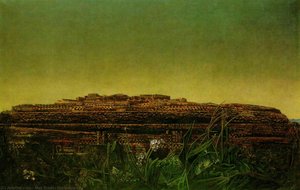
- La Ville Entière
- Euclides
- De Ceci, Personne Ne Devrait Savoir
- Forêt et Colombe
- Ses peintures présentent souvent des images symboliques, notamment les oiseaux (en particulier son alter ego Loplop), les paysages et des juxtapositions troublantes.
Vie Tardive & Héritage
- Ernst s'est installé aux États-Unis pendant la Seconde Guerre mondiale, continuant à peindre et à expérimenter de nouvelles techniques.
- Il est revenu en France après la guerre et est resté actif jusqu'à sa mort le 1er avril 1976 à Paris.
- Signification Historique : Les contributions d'Ernst au Dadisme et au Surréalisme ont été révolutionnaires. Il a défié les normes artistiques, exploré l’esprit inconscient et inventé des techniques innovantes qui continuent d’inspirer les artistes aujourd’hui.
- Il reste l'un des figures les plus importantes et influentes de l'art du 20e siècle.
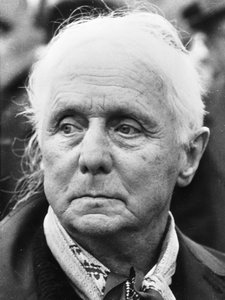
Max Ernst
1891 - 1976 , Allemagne
L'essentiel de l'artiste
- Artistes Influents:
- Pablo Picasso
- Vincent van Gogh
- Paul Gauguin
- Date De Décès: 1er avril 1976
- Date De Naissance: 1er avril 1891
- Lieu De Naissance: Brühl, Allemagne
- Mouvement Artistique: Dadaïsme et Surréalisme
- Nationalité: Allemand/Américain/Français
- Nom Complet: Max Ernst
- Œuvres Notables:
- La Ville Entière
- Euclides
- Forêt et Colombe
Articles connexes
Max Ernst : Les 25 Œuvres Maîtresses d'un Surréalisme Révolutionnaire | OriginalUniqueArt
Plongez dans l'univers surréaliste de Max Ernst ! Découvrez les 25 œuvres les plus emblématiques du maître allemand, entre frottage, collage et rêves éveillés. Inspirez votre décoration intérieure avec OriginalUniqueArt : reproductions de tableaux de qualité muséale et collection d'art unique. Explorez la co
René Magritte : Les 25 Œuvres Incontournables du Maître du Surréalisme | OriginalUniqueArt
Plongez dans l'univers fascinant de René Magritte avec les 25 œuvres incontournables du maître surréaliste. Découvrez l'histoire, les techniques et la magie de tableaux célèbres comme 'L'Empire des Lumières'. Reproductions d'art de qualité muséale sur OriginalUniqueArt.com.
Feathered Visions: A Historical & Artistic Exploration of Birds in Painting
Explore the rich history of birds in painting! Discover symbolism, artistic movements & master artists like Audubon. High-quality reproductions available at OriginalUniqueArt.
Dreamscapes & Disrupted Realities: Exploring Surrealism's Enduring Influence
Explore the fascinating world of Surrealism! Discover its origins, key artists like Dalí & Magritte, and enduring influence on art & culture. Expert insights & high-quality reproductions at OriginalUniqueArt.
Surréalisme : 10 Chefs-d'œuvre Révolutionnaires pour une Déco Inspirée
Plongez dans l'univers fascinant du surréalisme avec OriginalUniqueArt.com ! Découvrez 10 chefs-d’œuvre de Dalí, Magritte et autres artistes emblématiques. Inspirez votre déco avec des reproductions de tableaux exceptionnelles. Explorez la collection en ligne !