

 Aperçu en situation
 Partager
 Partager
 Détails

 Télécharger
 Articles similaires
 Radiographie
 Voir le diaporama
 Statistiques
It's a Highway to Heaven


 Afficher la suite
Giclées et impressions d'art
Impressions giclées ou sur toile de qualité musée, avec une production rapide et des finitions au choix. ( Acheter la peinture faite à la main Passer au format image numérique)




P118B $10

P118H $10

P118W $10

P438Z $10

P508JH $12

P508YH $12

P805H $10

P805Z $10

P919BZ $10

P919G $10

P919XJ $10

P959ZH $10

P968JZ $12

W106C $8

W218G $10

W218JH $8

W218Y $10

W307PJ $10

W316G $10

W316PJ $8

W316Y $10

W398PJ $8

W4111J $10

W500HY $15

W500JH $15

W692G $12

W849H $8

W940BG $15

W953PJ $8




Choisissez parmi nos formats prédéfinis qui respectent les proportions originales de l’œuvre.

Vous pouvez saisir vos propres dimensions pour vous adapter à un cadre ou à un espace spécifique. Si la taille sélectionnée ne correspond pas aux proportions de l'image originale, nous recadrerons l'œuvre ou étendrons l'image avec une bordure en miroir ou une couleur unie. Une maquette numérique vous sera envoyée pour approbation avant le début de la production.
Veuillez noter que l'aperçu à l'écran ne reflète pas le recadrage ou l'extension réelle. Seule la maquette montrera avec précision la composition finale.
Bien que des tailles personnalisées soient disponibles, nous vous recommandons de choisir une dimension dans la liste prédéfinie afin de préserver les proportions originales.
Livraison dans le monde entier () en 2 semaines au lieu des 4/5 semaines habituelles. (18 septembre)

Livraison express gratuite dans le monde entier

Toile de lin de haute qualité

Assurance transport complète

Garantie de remboursement des droits de douane

Garantie de fidélité des couleurs

Garantie de retour de 100 jours (uniquement en cas de défaut)

Garantie de remboursement à 100%

Tarifs dégressifs sur quantité
 L'option verre n'est disponible que pour les dimensions inférieures à 110 cm.

It's a Highway to Heaven
Giclées et impressions d'art
Format de la reproduction
-


Prix total final
$ 80
A Kaleidoscope of Identity: The Surreal Vision of Max Ernst
To gaze upon "It's a Highway to Heaven" is to step through a portal where the boundaries of the self begin to dissolve. In this arresting masterpiece, Max Ernst presents us with a visual paradox that defies the logic of the waking world. At first glance, the viewer is confronted by a single, monumental figure, yet upon closer inspection, this central presence is revealed to be a complex tapestry of superimposed faces. This is not merely a portrait in the traditional sense; it is a profound exploration of fragmentation and introspection. Each overlapping visage acts as a layer of memory, a whisper of a dream, or a fragment of a subconscious thought, creating a mesmerizing rhythm of identity that pulls the observer into a deep psychological labyrinth.
The artwork serves as a quintessential exemplar of Surrealism, a movement that sought to liberate the human imagination from the suffocating constraints of rationalism. Ernst, a pioneer who emerged from the ashes of the Dada movement, masterfully employs dreamlike imagery juxtaposed with sharp, observational detail. The composition vibrates with an unsettling yet sublime energy, inviting those who view it—whether as collectors of fine art or designers of evocative spaces—to contemplate the layers that constitute our own existence. It is a piece that does not merely sit upon a wall; it breathes, challenging the viewer to look beyond the surface of reality.
Technique and the Alchemy of Texture
The physical creation of this work reflects Ernst’s restless, experimental spirit. Eschewing the rigid academicism of his era, he utilized a sophisticated mixed-media approach that bridges the gap between painting and collage. By meticulously combining oil paints with paper fragments and printed elements, Ernst achieved a tactile complexity that is rare in traditional canvas works. This technique allows for a stunning interplay of textures, where smooth transitions of color meet the raw, disrupted edges of collage. The result is a rich, multidimensional surface that catches the light and demands physical presence.
This layering process is central to the painting's emotional resonance. As colors are built up and textures are scraped or superimposed, a sense of depth is created that mirrors the complexity of the human psyche. For the interior designer, this provides an incredible opportunity for visual depth within a room; the artwork functions as a focal point that offers new discoveries with every glance, making it an ideal centerpiece for a sophisticated, contemporary gallery or a thoughtfully curated study.
Symbolism and the Flight of the Soul
Beyond its striking aesthetic, "It's a Highway to Heaven" is steeped in profound symbolism. The multitude of faces serves as a poignant metaphor for the multifaceted nature of human experience—the way we are composed of our anxieties, our triumphs, and our many different roles throughout life. Amidst this sea of identities, Ernst introduces the motif of birds, which drift through the composition like wandering thoughts. These avian figures represent freedom, aspiration, and the ultimate transcendence of the spirit. They act as guides, leading the viewer away from the heavy, fragmented earth toward a higher state of consciousness.
Born from the historical anxieties of the post-World War I era, the painting reflects a period when the foundations of European society were being radically redefined. It captures that specific tension between the trauma of the past and the soaring hope for a new, liberated way of seeing. To own a reproduction of this work is to possess a piece of art history that speaks to the enduring human search for meaning amidst chaos. It is an invitation to embrace the irrational beauty of the universe and to find transcendence within the beautiful complexity of our own fragmented souls.
Biographie de l'artiste
Max Ernst : Une Vie au Sein du Surréalisme
Jeunesse et Éducation
- Né le: 1er avril 1891 à Brühl, en Allemagne.
- Le père d'Ernst, Philipp Ernst, était enseignant des sourds et peintre amateur, encourageant ainsi l'intérêt précoce de Max pour l'art.
- Il a étudié la philosophie, l'histoire de l'art, la littérature, la psychologie et la psychiatrie à l'Université de Bonn de 1909.
- Ce parcours académique diversifié a profondément influencé ses explorations artistiques ultérieures.
Développement Artistique & Influences
- Un moment décisif fut l'exposition Sonderbund à Cologne (1912), où il a découvert des œuvres de Pablo Picasso, Vincent van Gogh, et Paul Gauguin.
- En 1914, il a rencontré Hans Arp, débutant une amitié qui a durablement façonné son parcours artistique.
- La Première Guerre mondiale a profondément marqué Ernst ; ses expériences de soldat ont conduit à la déception et à une vision critique de la société.
- Il s'est inspiré des écrits de Sigmund Freud, explorant les thèmes de l'inconscient dans son art.
Dadisme & Surréalisme
- Ernst est devenu une figure clé du groupe Dadiste de Cologne après la Première Guerre mondiale, rejetant les conventions artistiques traditionnelles.
- Il a pionné des techniques innovantes telles que frottage (frotter un crayon sur des surfaces texturées) et grattage (gratter la peinture pour révéler les couches sous-jacentes).
- Dans les années 1920, il a rejoint le mouvement surréaliste à Paris, collaborant avec des artistes tels que Paul Éluard.
- Son œuvre de cette période explorait des images oniriques et des thèmes psychologiques.
Œuvres Majeures & Techniques
- Frottage : Une technique utilisée pour créer des textures et des images inattendues, exemplifiée dans de nombreuses œuvres.
- Collage : Ernst a fréquemment utilisé le collage, combinant des éléments disparates pour créer des compositions surréalistes.
- Œuvres Notables :
- La Ville Entière
- Euclides
- De Ceci, Personne Ne Devrait Savoir
- Forêt et Colombe
- Ses peintures présentent souvent des images symboliques, notamment les oiseaux (en particulier son alter ego Loplop), les paysages et des juxtapositions troublantes.
Vie Tardive & Héritage
- Ernst s'est installé aux États-Unis pendant la Seconde Guerre mondiale, continuant à peindre et à expérimenter de nouvelles techniques.
- Il est revenu en France après la guerre et est resté actif jusqu'à sa mort le 1er avril 1976 à Paris.
- Signification Historique : Les contributions d'Ernst au Dadisme et au Surréalisme ont été révolutionnaires. Il a défié les normes artistiques, exploré l’esprit inconscient et inventé des techniques innovantes qui continuent d’inspirer les artistes aujourd’hui.
- Il reste l'un des figures les plus importantes et influentes de l'art du 20e siècle.
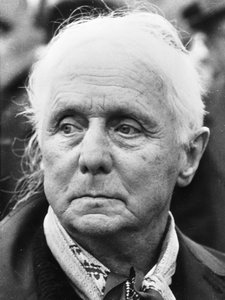
Max Ernst
1891 - 1976 , Allemagne
En bref
- Artistes Influents:
- Pablo Picasso
- Vincent van Gogh
- Paul Gauguin
- Date De Décès: 1er avril 1976
- Date De Naissance: 1er avril 1891
- Lieu De Naissance: Brühl, Allemagne
- Mouvement Artistique: Dadaïsme et Surréalisme
- Nationalité: Allemand/Américain/Français
- Nom Complet: Max Ernst
- Œuvres Notables:
- La Ville Entière
- Euclides
- Forêt et Colombe
Articles similaires

Giclée Prints: Archival Quality & Aesthetic Nuances for the Discerning Collector
Explore the world of giclée prints with OriginalUniqueArt. Learn about archival quality, aesthetic nuances & investment potential. Expert guidance for discerning art collectors seeking museum-quality reproductions and lasting value.

Beyond Reality: A Sophisticated Exploration of the Dreamlike Architecture in Surrealist Landscapes
Embark on a sophisticated journey through the dreamlike architecture of Surrealist landscapes. Uncover the profound psychological depths and visual paradoxes of masters like Salvador Dalí in this expert exploration of art’s most captivating, impossible vistas.

The Enduring Legacy of Fine Art Prints: Technique, History & Aesthetic Impact
Explore the rich history & techniques of fine art prints. Discover investment potential, assess authenticity, and learn how to preserve your collection with expert guidance. Trusted insights for discerning collectors.
Max Ernst : Les 25 Œuvres Maîtresses d'un Surréalisme Révolutionnaire | OriginalUniqueArt
Plongez dans l'univers surréaliste de Max Ernst ! Découvrez les 25 œuvres les plus emblématiques du maître allemand, entre frottage, collage et rêves éveillés. Inspirez votre décoration intérieure avec OriginalUniqueArt : reproductions de tableaux de qualité muséale et collection d'art unique. Explorez la co
Surréalisme : 10 Chefs-d'œuvre Révolutionnaires pour une Déco Inspirée
Plongez dans l'univers fascinant du surréalisme avec OriginalUniqueArt.com ! Découvrez 10 chefs-d’œuvre de Dalí, Magritte et autres artistes emblématiques. Inspirez votre déco avec des reproductions de tableaux exceptionnelles. Explorez la collection en ligne !


