

 Aperçu en situation
 Partager
 Partager
 Détails
 Guide imprimable

 Télécharger
 Articles similaires
 Radiographie
 Voir le diaporama
 Statistiques
Self-Portrait in Florence
 Oil On Canvas
- WallArt
- Expressionism
 1907
1907- Modern
 90.0 x 98.0 cm
 Afficher la suite
Giclées et impressions d'art
Impressions giclées ou sur toile de qualité musée, avec une production rapide et des finitions au choix. ( Acheter la peinture faite à la main Passer au format image numérique)




P118B €10

P118H €10

P118W €10

P438Z €10

P508JH €12

P508YH €12

P805H €10

P805Z €10

P919BZ €10

P919G €10

P919XJ €10

P959ZH €10

P968JZ €12

W106C €8

W218G €10

W218JH €8

W218Y €10

W307PJ €10

W316G €10

W316PJ €8

W316Y €10

W398PJ €8

W4111J €10

W500HY €15

W500JH €15

W692G €12

W849H €8

W940BG €15

W953PJ €8




Choisissez parmi nos formats prédéfinis qui respectent les proportions originales de l’œuvre.

Saisissez la largeur et la hauteur souhaitées pour qu'elles s'adaptent à votre cadre ou à votre mur. Une impression ne peut être que découpée, elle ne peut jamais être agrandie au-delà de l'image originale ; ainsi, un format de forme différente entraînera la perte d'une partie de l'image. Nous vous envoyons une maquette numérique pour approbation avant toute impression. L'image présentée sur cette page ne montre pas le recadrage réel — seule la maquette le permet.
Livraison dans le monde entier () en 2 semaines au lieu des 4/5 semaines habituelles. (22 octobre)

Livraison express gratuite dans le monde entier

Toile de lin de haute qualité

Assurance transport complète

Garantie de remboursement des droits de douane

Garantie de fidélité des couleurs

Garantie de retour de 100 jours (uniquement en cas de défaut)

Garantie de remboursement à 100%

Tarifs dégressifs sur quantité
 L'option verre n'est disponible que pour les dimensions inférieures à 110 cm.

Self-Portrait in Florence
Giclées et impressions d'art
Format de la reproduction
-


Prix total final
€ 70
Subject and Composition
The canvas opens onto a man in a tailored suit, his white shirt crisp beneath a dark coat that drapes with quiet authority. In one hand he cradles a cigarette, the ember’s glow mirroring the faint light that spills through a window behind him. The background is a muted landscape of trees, their silhouettes softened by distance, suggesting an open Florentine courtyard. Beckmann places himself at the center, yet his gaze is not directed toward the viewer; it lingers on the horizon beyond the glass, hinting at introspection and the weight of unseen thoughts.Style and Technique
Beckmann’s brushwork here is vigorous yet controlled, a hallmark of early expressionism that would later evolve into more distorted forms. The oil paint is applied in thick, impasto layers, giving texture to the coat’s folds and the cigarette’s ash. He uses a palette dominated by earthy browns and muted blues, punctuated by the stark white of the shirt and the subtle glow of the ember. The edges are softened with gentle blending, yet the overall composition retains a sense of solidity that anchors the figure against the hazy backdrop.Historical Context and Symbolism
Painted in 1907, this self‑portrait emerges at a pivotal moment when Beckmann was transitioning from academic realism toward a more personal, expressive language. The cigarette—a symbol of modernity and perhaps the artist’s own anxieties—contrasts with the timeless setting of Florence, a city steeped in Renaissance heritage. The window frames a view that could represent both escape and confinement, suggesting the duality of an artist caught between tradition and innovation. In this light, the portrait becomes a dialogue between past and present, personal identity and broader cultural currents.Emotional Resonance and Interior Design Appeal
The painting’s somber palette and contemplative mood invite viewers into a quiet space of reflection. Its size—90 by 98 centimeters—makes it an ideal focal point for living rooms or study areas where one seeks depth without overwhelming the room. The subtle interplay of light and shadow, coupled with Beckmann’s expressive brushwork, creates an atmosphere that feels both intimate and expansive. For collectors and interior designers alike, this work offers a timeless piece that speaks to the human condition while complementing sophisticated décor with its understated elegance.Questions et réponses
À quel point la palette de "Self-Portrait in Florence" est-elle saturée ?
«Self-Portrait in Florence» de Max Beckmann est présenté avec une saturation de Subtle Color.
Pour quel usage une reproduction de «Self-Portrait in Florence» de Max Beckmann est-elle recommandée ?
L'utilisation recommandée d'une impression de « Self-Portrait in Florence » est Statement.
Quelle est la couleur dominante de «Self-Portrait in Florence» de Max Beckmann ?
La couleur dominante de «Self-Portrait in Florence» de Max Beckmann est le Driftwood (#9f8663).
Biographie de l'artiste
Premières années et développement artistique
Max Beckmann, peintre, dessinateur, graveur, sculpteur et écrivain allemand de renom, est né le 12 février 1884 à Leipzig, en Saxe. Son parcours artistique a débuté par des représentations académiquement correctes qui se sont ensuite transformées en figures déformées et des espaces altérés, reflétant sa vision modifiée de l'humanité après avoir servi comme brancardier pendant la Première Guerre mondiale.Style artistique et influences
Le style de Beckmann, ancré dans l’imagerie des vitraux médiévaux, a été influencé par divers artistes, notamment Cézanne, Van Gogh, Blake, Rembrandt et Rubens. Il s'est également inspiré d'artistes européens du nord de la fin du Moyen Âge et du début de la Renaissance, tels que Bosch, Bruegel et Matthias Grünewald. Son œuvre témoigne d’une profonde exploration des thèmes sociaux, politiques et spirituels de son époque.Œuvres notables et expositions
* Le Canot (acquis par la Galerie nationale de Berlin) : Une œuvre majeure qui explore les thèmes du voyage, de l'isolement et de la condition humaine. * Autoportrait en smoking (acheté en 1928) : Un autoportrait révélateur qui témoigne de son évolution artistique et de sa perception de soi. * Rétrospectives à la Städtische Kunsthalle Mannheim (1928) et à Bâle et Zurich (1930) : Ces expositions ont contribué à établir Beckmann comme l'une des figures majeures de l’art allemand moderne. * Ses triptyques, notamment Les Acteurs (1942), sont parmi ses œuvres les plus emblématiques, offrant une critique sociale et une exploration complexe de la condition humaine.Exil et héritage
La situation de Beckmann a changé avec l'ascension d'Adolf Hitler, entraînant son renvoi de l’école d’art de Francfort et la confiscation de plus de 500 de ses œuvres. Il vécut en exil auto-imposé à Amsterdam pendant dix ans, sans parvenir à obtenir un visa pour les États-Unis. * Il a enseigné dans les écoles d'art de Washington University à Saint-Louis et du Brooklyn Museum. * La première rétrospective aux États-Unis a eu lieu en 1948 au City Art Museum de Saint Louis, marquant une reconnaissance internationale de son œuvre. * La Galerie Max-Slevogt en Allemagne présente une collection de ses œuvres, assurant la préservation et la diffusion de son héritage artistique. Beckmann est aujourd'hui considéré comme l’un des artistes les plus importants du XXe siècle, dont l'œuvre continue d'inspirer et de provoquer la réflexion sur les défis et les complexités de l'existence humaine. Son style unique et sa capacité à exprimer les angoisses et les espoirs de son temps en font un artiste incontournable pour comprendre l’histoire de l’art moderne.
Max Beckmann
1884 - 1950 , Allemagne
En bref
- Artistes Influents:
- Cézanne
- Van Gogh
- Blake
- Rembrandt
- Rubens
- Bosch
- Bruegel
- Matthias Grünewald
- Date De Décès: 27 décembre 1950
- Date De Naissance: 12 février 1884
- Lieu De Naissance: Leipzig, Allemagne
- Mouvement Artistique: Expressionnisme allemand
- Nationalité: Allemande
- Nom Complet: Max Beckmann
- Oeuvres Notables:
- The Bark
- Autoportrait en smoking
- La Nuit
- Columbine
- Grande Scène d'Agonie
- Les acteurs
Articles connexes

L'héritage durable de la peinture à l'huile : technique, histoire et pratique contemporaine
Explorez l'histoire fascinante de la peinture à l'huile, des techniques ancestrales aux pratiques contemporaines. Découvrez les maîtres, apprenez et trouvez votre œuvre d'art idéale chez .

L'Huile sur Toile : Exploration Historique et Technique d'un Médium Artistique Intemporel
Explorez l'histoire fascinante de la peinture à l'huile, des techniques ancestrales aux maîtres flamands comme Van Eyck. Découvrez les secrets des pigments, liants et glacis pour comprendre cet art intemporel.

The Enduring Legacy of Oil on Canvas: Technique, History & Aesthetic Impact
Explore the rich history & techniques of oil painting – from Renaissance masters to Impressionism. Discover pigments, layering methods, and why this timeless medium endures. Expert insights for artists & art enthusiasts.
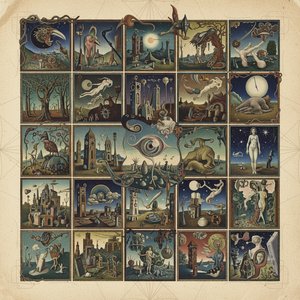
Max Ernst : Les 25 Œuvres Maîtresses d'un Surréalisme Révolutionnaire | OriginalUniqueArt
Plongez dans l'univers surréaliste de Max Ernst ! Découvrez les 25 œuvres les plus emblématiques du maître allemand, entre frottage, collage et rêves éveillés. Inspirez votre décoration intérieure avec OriginalUniqueArt : reproductions de tableaux de qualité muséale et collection d'art unique. Explorez la co

The Soul of Impressionism: Why Oil on Canvas Captures Eternal Light and Timeless Emotion
Discover the enchanting alchemy of Impressionism. Explore how the mastery of oil on canvas, through glazing and impasto, captures eternal light and emotion. Perfect for lovers of Monet and Van Gogh seeking the profound depth of hand-painted fine art.


