

 Aperçu en situation
 Partager
 Partager
 Détails
 Guide imprimable

 Télécharger
 Articles similaires
 Radiographie
 Voir le diaporama
 Statistiques
Old Woman Praying
 Oil On Canvas
- WallArt
- Baroque
 1640
1640- Early Modern
 78.0 x 64.0 cm
 Metropolitan Museum of Art
 Afficher la suite
Giclées et impressions d'art
Impressions giclées ou sur toile de qualité musée, avec une production rapide et des finitions au choix. ( Acheter la peinture faite à la main Passer au format image numérique)




P118B $10

P118H $10

P118W $10

P438Z $10

P508JH $12

P508YH $12

P805H $10

P805Z $10

P919BZ $10

P919G $10

P919XJ $10

P959ZH $10

P968JZ $12

W106C $8

W218G $10

W218JH $8

W218Y $10

W307PJ $10

W316G $10

W316PJ $8

W316Y $10

W398PJ $8

W4111J $10

W500HY $15

W500JH $15

W692G $12

W849H $8

W940BG $15

W953PJ $8




Choisissez parmi nos formats prédéfinis qui respectent les proportions originales de l’œuvre.

Vous pouvez saisir vos propres dimensions pour vous adapter à un cadre ou à un espace spécifique. Si la taille sélectionnée ne correspond pas aux proportions de l'image originale, nous recadrerons l'œuvre ou étendrons l'image avec une bordure en miroir ou une couleur unie. Une maquette numérique vous sera envoyée pour approbation avant le début de la production.
Veuillez noter que l'aperçu à l'écran ne reflète pas le recadrage ou l'extension réelle. Seule la maquette montrera avec précision la composition finale.
Bien que des tailles personnalisées soient disponibles, nous vous recommandons de choisir une dimension dans la liste prédéfinie afin de préserver les proportions originales.
Livraison dans le monde entier () en 2 semaines au lieu des 4/5 semaines habituelles. (27 septembre)

Livraison express gratuite dans le monde entier

Toile de lin de haute qualité

Assurance transport complète

Garantie de remboursement des droits de douane

Garantie de fidélité des couleurs

Garantie de retour de 100 jours (uniquement en cas de défaut)

Garantie de remboursement à 100%

Tarifs dégressifs sur quantité
 L'option verre n'est disponible que pour les dimensions inférieures à 110 cm.

Old Woman Praying
Giclées et impressions d'art
Format de la reproduction
-


Prix total final
$ 80
A Moment Suspended in Shadow and Light
In the quietude of a dimly lit room, a single figure emerges from the darkness, her presence felt through the profound weight of her devotion. Matthias Stom’s Old Woman Praying is not merely a portrait of age, but a masterclass in the spiritual power of silence. Painted around 1640, this evocative work captures a fleeting moment of intense concentration, where the boundaries between the physical world and the divine seem to dissolve. The subject, an elderly woman draped in the humble textures of a brown dress, sits anchored by the simple geometry of a chair and bench. Her hands, clasped with a resolute tenderness, serve as the emotional heartbeat of the composition, inviting the viewer to share in her private communion.
The brilliance of this piece lies in its adherence to the Utrecht Caravaggism movement, a style that brought the dramatic intensity of Italian Caravaggio to the Northern European consciousness. Stom utilizes chiaroscuro—the stark, theatrical interplay between light and shadow—to sculpt the woman’s weathered features. The light does not merely illuminate; it reveals the depth of her character, catching the subtle lines of concentration on her face and the tactile reality of her surroundings. This technique creates a sense of profound intimacy, as if we are witnesses to a sacred ritual that has been occurring undisturbed for centuries.
Symbolism and the Beauty of the Everyday
Beyond its technical mastery, Old Woman Praying is rich with quiet symbolism that resonates with anyone who finds beauty in the mundane. Resting prominently on the table in the foreground are two strands of rosary beads, their presence acting as a silent testament to piety, remembrance, and the rhythmic nature of faith. Stom’s ability to render these objects—the smooth surface of the beads against the worn wood of the table—grounds the spiritual theme in a tangible, domestic reality. By placing such profound religious sentiment within an ordinary setting, the artist suggests that the most significant spiritual encounters often occur within the simplest corners of our lives.
For the discerning collector or interior designer, this painting offers more than just aesthetic value; it provides a focal point of contemplative energy. The muted palette of earth tones and deep shadows allows the work to integrate seamlessly into sophisticated, classical, or even contemporary minimalist spaces. A high-quality reproduction of this masterpiece brings with it an atmosphere of timelessness and dignity. It is a piece that demands a slow gaze, rewarding the observer with a sense of peace and a reminder of the enduring strength found in quiet moments of reflection.
Biographie de l'artiste
A Shadowy Master of the Baroque: Unveiling Matthias Stom
The name Matthias Stom, or Stomer as he was sometimes known, resonates with a captivating mystery within the annals of 17th-century painting. A Dutch artist whose life remains shrouded in ambiguity, Stom carved a distinctive niche for himself not in his homeland, but amidst the vibrant artistic landscape of Italy. Born around 1600, likely in Amersfoort near Utrecht, he emerged as a compelling figure within the orbit of Caravaggism—a movement defined by its dramatic use of light and shadow, and an unflinching commitment to realism. While definitive biographical details are scarce, piecing together fragmented records and stylistic analysis reveals a journey marked by artistic exploration and a profound engagement with the prevailing Baroque sensibilities. The very uncertainty surrounding his origins – some scholars suggest possible Flemish roots – adds to the enigmatic allure that surrounds his oeuvre.From Utrecht Influences to Italian Immersion
Stom’s early training remains largely speculative, though it is widely believed he absorbed influences from prominent Utrecht Caravaggists like Gerard van Honthorst, Hendrick ter Brugghen, Paulus Moreelse and Abraham Bloemaert. These artists had embraced the revolutionary style of Michelangelo Merisi da Caravaggio, bringing its tenebrism—the stark contrast between light and dark—and emotionally charged realism to Dutch art. However, Stom’s artistic trajectory diverged from many of his contemporaries who favored genre scenes or allegorical compositions. He gravitated towards biblical narratives, imbuing them with a psychological depth and dramatic intensity that set him apart. Around 1630, he arrived in Rome, documented as living alongside the French painter Nicolas Provost. This marked a pivotal moment in his development, exposing him directly to the source of Caravaggio’s inspiration and allowing him to refine his technique within the heart of the Italian Baroque. His early Roman period culminated in the altarpiece of the Assumption of Mary with three saints, showcasing his burgeoning mastery of chiaroscuro and narrative power.Naples, Sicily, and a Distinctive Artistic Voice
The subsequent chapters of Stom’s artistic life unfolded across the Italian peninsula. From approximately 1635 to 1640, he resided in Naples, a city teeming with artistic energy and under the strong influence of the Spanish painter Jusepe de Ribera. This exposure further honed his dramatic style, adding a heightened sense of realism and emotional intensity to his work. It was during this period that Stom began creating pieces for Capuchin churches, solidifying his reputation as a skilled religious painter. Around 1640, he moved to Sicily, where he would spend the most significant portion of his career. Here, he received commissions for churches in Caccamo, Messina, and Monreale, producing some of his most celebrated works. *The Miracle of Saint Isidore the Labourer* (1641) stands as his only securely dated painting, a testament to his ability to capture both the spiritual fervor and human drama of religious events. Other notable Sicilian creations include *Saint Dominic* in Monreale and, tragically lost during the 1908 Messina earthquake, *The Martyrdom of Saint Cecilia*. Stom’s distinctive “claylike” treatment of flesh tones, coupled with his masterful use of light and shadow, became hallmarks of his style.Key Characteristics of Stom's Work
- Dramatic Chiaroscuro: A hallmark of his style, employing strong contrasts between light and dark to create a sense of drama and focus attention.
- Realistic Depiction: An unflinching commitment to portraying figures and scenes with anatomical accuracy and emotional honesty.
- Biblical Narratives: Primarily focused on religious subjects, particularly stories from the Bible, imbued with psychological depth.
- “Claylike” Flesh Tones: A distinctive technique characterized by a warm, earthy palette used to render skin tones.
- Influence of Caravaggio and Ribera: Demonstrates a clear understanding and adaptation of the styles of these Baroque masters.
Rediscovery and Lasting Legacy
Despite his prolific output during his lifetime, Matthias Stom fell into relative obscurity for centuries after his death, which occurred sometime after 1652, likely in Northern Italy. Many of his works were misattributed to other artists, particularly Gerard van Honthorst, obscuring his individual contribution to the Baroque movement. It wasn’t until the early 20th century that dedicated scholarship began to unravel the mystery surrounding Stom, establishing him as a significant figure within the Utrecht Caravaggist school. His rediscovery revealed an artist of remarkable skill and sensitivity, capable of conveying profound emotional depth through his dramatic compositions. Stom's legacy lies in his ability to synthesize Italian Baroque influences with Northern European sensibilities, creating a unique artistic voice that continues to captivate viewers today. He demonstrated the powerful adaptability of Caravaggio’s style, proving its resonance beyond Italy and inspiring generations of artists with his masterful use of light, shadow, and realistic portrayal of religious subjects.
Matthias Stomer
1590 - 1670 , Pays-Bas
En bref
- Artistic Movement Or Style: Utrecht Caravaggisme
- Artists Or Movements Influenced By This Artist: ['Baroque tardive']
- Artists Who Influenced This Artist:
- Caravaggio
- Ribera
- Date Of Birth: c. 1600
- Date Of Death: après 1652
- Full Name: Matthias Stom
- Nationality: Néerlandais
- Notable Artworks:
- Assomption Marie
- Miracle Isidore
- Saint Dominique
- Place Of Birth: Amersfoort, Pays-Bas
Articles similaires
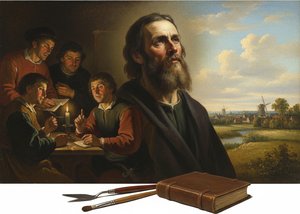
Hendrick Terbrugghen: Caravaggism, Spirituality & the Dutch Golden Age Painter's Evolving Style
Explore the captivating world of Hendrick Terbrugghen, a leading Dutch Golden Age painter influenced by Caravaggio. Discover his dramatic use of light, spiritual depth & lasting legacy. Learn more at OriginalUniqueArt.
Modern Royalty: The Definitive Guide to Commissioning Custom Old Masters Style Portraits
Discover the art of luxury living with our guide to commissioning custom Old Masters style portraits. Learn how to transform personal memories into timeless, hand-painted oil masterpieces through expert craftsmanship and bespoke historical techniques.
Beneath the Surface: How X-Rays and Imaging Uncover the Secrets of Old Master Paintings
Explore the hidden secrets of Old Master paintings through X-ray imaging and radiography. Discover how science reveals pentimento, pigment alchemy, and the profound layers of history beneath the surface of classical masterpieces.
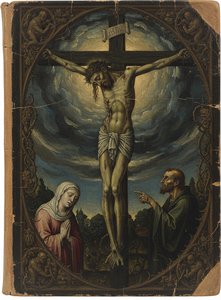
Matthias Grünewald : Dévotion, Distorsion et Tourments Spirituels dans l'Art de la Renaissance
Explorez l'œuvre poignante de Matthias Grünewald, figure majeure de la Renaissance allemande. Analyse approfondie de son iconographie expressive et du célèbre Retable d'Isenheim. Découvrez un art empreint de dévotion et de tourments spirituels.
Gerard van Honthorst: Illuminating the Dutch Golden Age with Caravaggism & Courtly Grace
Explore the captivating world of Gerard van Honthorst, a Dutch Golden Age master renowned for his dramatic chiaroscuro & courtly portraits. Discover his life, art, and lasting influence on Baroque painting.