Aperçu en situation
 Partager
 Partager
 Détails

 Télécharger
 Articles similaires
 Radiographie
 Voir le diaporama
 Statistiques
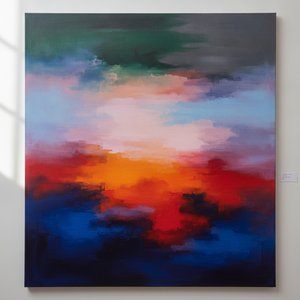
Untitled (figure lying on park bench)

 Afficher la suite
Reproduction à l'huile faite à la main
Huile sur toile peinte à la main, avec cadre et dimensions personnalisés, réalisée sur commande par nos artistes. ( Passer au format impression Passer au format image numérique)




P118B $10

P118H $10

P118W $10

P438Z $10

P508JH $12

P508YH $12

P805H $10

P805Z $10

P919BZ $10

P919G $10

P919XJ $10

P959ZH $10

P968JZ $12

W106C $8

W218G $10

W218JH $8

W218Y $10

W307PJ $10

W316G $10

W316PJ $8

W316Y $10

W398PJ $8

W4111J $10

W500HY $15

W500JH $15

W692G $12

W849H $8

W940BG $15

W953PJ $8




Choisissez parmi nos formats prédéfinis qui respectent les proportions originales de l’œuvre.

Vous pouvez saisir vos propres dimensions pour l'adapter à un cadre ou à un espace spécifique. Si la taille sélectionnée ne correspond pas aux proportions de l'image d'origine, nous recadrerons l'œuvre ou prolongerons la peinture avec des éléments peints à la main supplémentaires. Une maquette numérique vous sera envoyée pour approbation avant le début de la production.
Veuillez noter que l'aperçu à l'écran ne reflète pas le recadrage ou l'extension réels. Seule la maquette montrera fidèlement la composition finale.
Bien que des tailles personnalisées soient disponibles, nous vous recommandons de sélectionner une dimension dans la liste prédéfinie afin de préserver les proportions d'origine.
Après la commande, l’équipe OriginalUniqueArt.com contactera le client par e-mail pour recueillir ses instructions et lui fournira une maquette d’aperçu
Livraison dans le monde entier () en 3 à 4 semaines au lieu des 5 semaines habituelles. (18 septembre). Aucun compromis sur la qualité.

Livraison express gratuite dans le monde entier

Toile de lin de haute qualité

Assurance transport complète

Garantie de remboursement des droits de douane

Garantie de fidélité des couleurs

Garantie de retour de 100 jours (uniquement en cas de défaut)

Garantie de remboursement à 100%

Tarifs dégressifs sur quantité
 L'option verre n'est disponible que pour les dimensions inférieures à 110 cm.

Untitled (figure lying on park bench)
Technique de reproduction
Format de la reproduction
-


Prix total final
$ 300
A Moment of Quietude: Exploring Mark Rothko's "Untitled (Figure Lying on Park Bench)"
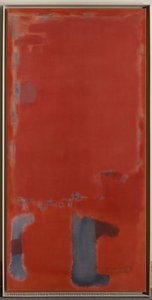
Mark Rothko’s “Untitled (Figure Lying on Park Bench)” isn’t merely a painting; it’s an invitation to contemplation. Completed in 1949, during the heart of his formative period as an abstract expressionist, this work encapsulates the core tenets of Rothko's signature style – vast fields of luminous color designed not to represent objects directly, but to evoke profound emotional responses within the viewer. The painting’s power resides in its ability to distill a complex human experience—solitude, introspection, perhaps even a touch of melancholy—into a deceptively simple composition.
The scene unfolds with remarkable restraint. A solitary figure, rendered almost as an amorphous silhouette, rests on a park bench beneath the expansive sky. The bench itself is subtly suggested, anchoring the figure within a space that feels both familiar and profoundly distanced. Rothko’s masterful use of color—a layered blend of deep blues, greens, and reds—creates an atmosphere of quiet intensity. These aren't vibrant hues meant to dazzle; rather, they are muted, almost somber tones, imbued with a sense of depth and luminosity that seems to emanate from within the canvas itself. The colors bleed into one another, blurring the boundaries between form and field, contributing to the painting’s dreamlike quality.
The Language of Color: Rothko's Abstract Expressionist Technique
Rothko’s technique was revolutionary for its time. He eschewed traditional brushwork, opting instead for a process he described as “laying color on color.” He applied thin washes of paint directly to the canvas, allowing them to blend and merge organically. This method resulted in surfaces that appear almost velvety, with subtle gradations of tone and texture. The lack of sharp edges or defined forms is deliberate; Rothko sought to create a sense of immersion, encouraging the viewer to lose themselves within the painting’s chromatic depths. He famously stated, “I'm not interested in what I show, but in what I evoke.”
The layering technique also contributes significantly to the painting’s spatial ambiguity. The colors seem to recede and advance simultaneously, creating a sense of infinite space within the confines of the canvas. This effect is further enhanced by Rothko's careful attention to color temperature – the warmth or coolness of each hue – which subtly guides the viewer’s eye across the composition.
Context and Symbolism: A Portrait of Modern Loneliness
“Untitled (Figure Lying on Park Bench)” was created during a period of significant social and psychological upheaval in post-war America. The painting reflects the anxieties and uncertainties of the era, capturing a sense of isolation and alienation that resonated deeply with many viewers. The figure’s posture—relaxed yet vulnerable—suggests a moment of quiet contemplation, perhaps a respite from the pressures of urban life. It's important to note that Rothko himself often refused to provide definitive interpretations of his work, preferring to leave it open to individual experience.
Interestingly, the painting’s genesis is tied to Rothko’s own personal struggles with depression and a sense of displacement. Born in Latvia and immigrating to America as a young child, he carried within him a profound awareness of loss and the complexities of identity. The park bench itself can be seen as a symbol of transition—a place of rest and reflection between destinations.
A Legacy of Emotional Resonance: Reproductions and Beyond
“Untitled (Figure Lying on Park Bench)” remains one of Mark Rothko’s most iconic works, captivating audiences with its quiet intensity and profound emotional depth. High-quality reproductions capture a significant portion of the original's luminous quality, offering a window into this powerful piece of art history. When considering a reproduction for your home or office, seek out prints that utilize archival inks on museum-grade canvas to ensure color accuracy and longevity. The painting’s ability to evoke contemplation makes it an ideal addition to any space seeking serenity and artistic inspiration.
Biographie de l'artiste
enfance et influences
Mark Rothko (Marcus Rothkowitz), un artiste américain renommé, est né le 25 septembre 1903 à Dvinsk, Lettonie. Sa famille a immigré aux États-Unis lorsqu'il n’avait que dix ans. Ce changement culturel aura influencé plus tard son style artistique.évolution artistique
Le travail précoce de Rothko était caractérisé par l’expressionnisme abstrait, un style qui mettait l’accent sur le processus de création d'une œuvre d'art plutôt que sur le produit final. Ses peintures, telles que No. 18 (1948) et Untitled (1948), mettaient en valeur son approche unique de la couleur et de la forme.- Champ de couleurs : L'utilisation par Rothko de champs de couleurs audacieux et rectangulaires, souvent en contraste saisissant les uns avec les autres, créait une sensation de profondeur et d’émotion.
- Structure organique : Ses peintures semblaient respirer la vie, comme si les couleurs étaient des entités vivantes.
œuvres notables et expositions
- No. 10 (1950), une peinture qui marquait un tournant significatif dans le style de Rothko, est maintenant au sein de la collection du Museum of Modern Art.
- Les Seagram Murals, une série de peintures commandées pour le restaurant Four Seasons, mettait en valeur la capacité de Rothko à adapter son style à différents environnements.
- No. 3 (1950), une peinture qui exemplifie l'utilisation par Rothko de champs de couleurs audacieux et rectangulaires.
vie tardive et héritage
La vie de Rothko a été marquée par des luttes contre la santé mentale et un mariage tumultueux. Il est décédé le 25 février 1970, à l'âge de 66 ans. Malgré ses difficultés, Rothko a laissé une marque indélébile sur le monde de l’art. Ochre et rouge sur rouge (champ de couleurs), une peinture qui met en valeur l'approche unique de Rothko à la couleur, peut être trouvée dans la collection OriginalUniqueArt.com. La page Wikipédia de Mark Rothko fournit des informations supplémentaires sur sa vie et son style artistique.
Mark Rothko
1903 - 1970 , Lettonie
En bref
- Artistes Influents:
- Sigmund Freud
- Marcel Proust
- Date De Décès: 25 février 1970
- Date De Naissance: 25 septembre 1903
- Influences Artistiques:
- Minimalisme
- Art contemporain
- Lieu De Naissance: Daugavpils, Lettonie
- Mouvement Artistique: Expressionnisme abstrait
- Nationalité: Américaine
- Nom Complet: Mark Rothko / Marcus Rothkowitz
- Œuvres Notables:
- No. 18 (1948)
- No. 10 (1950)
- Murals Seagram
- White Center (1957)
Articles similaires

The Sublimity of Color: Exploring the Emotional Landscapes of Mark Rothko's Abstract Expressionism
Explore the profound emotional depth of Mark Rothko's abstract expressionism. Discover the history, techniques & lasting impact of this pivotal Color Field painter. Expert insights for collectors and art enthusiasts.
The Essence of Abstraction: A Definitive Guide to the Power and History of Color Field Painting Masterpieces
Explore the profound emotional depth of Color Field painting. Our expert guide delves into the post-war origins of Abstract Expressionism, analyzing masterpieces by Rothko and Newman. Discover museum-grade, hand-painted oil reproductions that bring art history to your walls.

Expressionnisme Abstrait : Les 10 Chefs-d'Œuvre Incontournables pour Décorer avec Art et Histoire
Plongez au cœur de l'Expressionnisme Abstrait avec ! Découvrez les 10 œuvres majeures de Pollock, Rothko et De Kooning. Histoire, techniques & inspiration déco. Explorez la collection complète en ligne.

Mark Rothko : Les 25 Œuvres Maîtresses de l'Abstraction Coloriste | OriginalUniqueArt
Plongez dans l'univers émotionnel de Mark Rothko avec les 25 œuvres clés du maître de l'abstraction. Découvrez l'histoire, la technique et le pouvoir des couleurs de ces tableaux iconiques. Reproductions d'art de qualité musée sur OriginalUniqueArt.com
Color Field Painting: The Emotional Power of Pure Abstraction and Chromatic Depth
Explore the profound emotional depth of Color Field painting. Discover the history of mid-century abstraction, from Rothko to Newman, and learn how pure color transforms the viewer's experience through our expert art history guide.