Aperçu en situation
 Partager
 Partager
 Détails
 Guide imprimable

 Télécharger
 Articles similaires
 Radiographie
 Voir le diaporama
 Statistiques
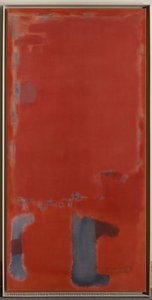
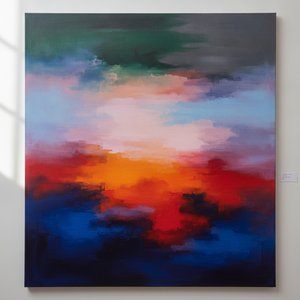
Untitled (Blue, Green, and Brown)

 Afficher la suite
Reproduction à l'huile faite à la main
Huile sur toile peinte à la main, avec cadre et dimensions personnalisés, réalisée sur commande par nos artistes. ( Passer au format impression Passer au format image numérique)




P118B $10

P118H $10

P118W $10

P438Z $10

P508JH $12

P508YH $12

P805H $10

P805Z $10

P919BZ $10

P919G $10

P919XJ $10

P959ZH $10

P968JZ $12

W106C $8

W218G $10

W218JH $8

W218Y $10

W307PJ $10

W316G $10

W316PJ $8

W316Y $10

W398PJ $8

W4111J $10

W500HY $15

W500JH $15

W692G $12

W849H $8

W940BG $15

W953PJ $8




Choisissez parmi nos formats prédéfinis qui respectent les proportions originales de l’œuvre.

Vous pouvez saisir vos propres dimensions pour l'adapter à un cadre ou à un espace spécifique. Si la taille sélectionnée ne correspond pas aux proportions de l'image d'origine, nous recadrerons l'œuvre ou prolongerons la peinture avec des éléments peints à la main supplémentaires. Une maquette numérique vous sera envoyée pour approbation avant le début de la production.
Veuillez noter que l'aperçu à l'écran ne reflète pas le recadrage ou l'extension réels. Seule la maquette montrera fidèlement la composition finale.
Bien que des tailles personnalisées soient disponibles, nous vous recommandons de sélectionner une dimension dans la liste prédéfinie afin de préserver les proportions d'origine.
Après la commande, l’équipe OriginalUniqueArt.com contactera le client par e-mail pour recueillir ses instructions et lui fournira une maquette d’aperçu
Livraison dans le monde entier () en 3 à 4 semaines au lieu des 5 semaines habituelles. (26 septembre). Aucun compromis sur la qualité.

Livraison express gratuite dans le monde entier

Toile de lin de haute qualité

Assurance transport complète

Garantie de remboursement des droits de douane

Garantie de fidélité des couleurs

Garantie de retour de 100 jours (uniquement en cas de défaut)

Garantie de remboursement à 100%

Tarifs dégressifs sur quantité
 L'option verre n'est disponible que pour les dimensions inférieures à 110 cm.

Untitled (Blue, Green, and Brown)
Technique de reproduction
Format de la reproduction
-


Prix total final
$ 300
Mark Rothko’s ‘Blue, Green, and Brown’: A Meditation on Color and Emotion
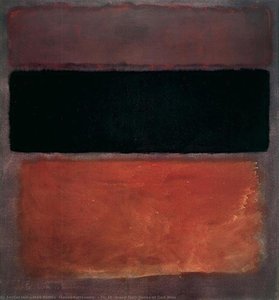
Mark Rothko's Blue, Green, and Brown (1952) stands as a monumental achievement within the American abstract expressionist movement. More than simply a painting, it is an immersive experience—a carefully constructed space designed to evoke profound emotional responses in the viewer. Created during a pivotal period of Rothko’s artistic development, this work exemplifies his signature style: vast rectangular blocks of color stacked vertically against a subtly textured ground, creating a sense of depth and ambiguity that continues to captivate audiences today.
The painting's genesis lies in Rothko’s deliberate exploration of the relationship between color and human experience. He sought to move beyond representational imagery, aiming instead to capture fundamental aspects of existence – sorrow, joy, spirituality – through pure chromatic form. Rothko himself described his process as “an anecdote of the spirit,” a phrase that encapsulates the painting's core intention: not to depict something recognizable, but to offer a visceral encounter with emotion itself. The seemingly simple arrangement of blue, green, and brown is, in fact, the result of meticulous layering and glazing techniques, building up complex tonal variations within each block.
Color as Symbol and Atmosphere
The choice of these specific colors is profoundly significant. Rothko’s use of blue—a color often associated with melancholy, introspection, and spirituality—dominates the composition, creating a sense of quiet contemplation. The green introduces an element of vitality and growth, yet remains subdued, suggesting a restrained energy. Finally, the brown provides grounding and stability, anchoring the vertical forms within the canvas. These colors aren’t merely decorative; they are carefully calibrated to create a specific atmosphere—one that is both unsettling and deeply moving.
Rothko's technique involved applying thin layers of oil paint, building up color through multiple glazes. This process allowed him to achieve remarkable luminosity and depth within the rectangular forms, creating an illusion of three-dimensionality. The subtle variations in tone—the way light catches on the edges of each block—are crucial to the painting’s impact, inviting the viewer to lose themselves in its surface.
Contextualizing Rothko's Vision
Blue, Green, and Brown was created during a period of intense experimentation within abstract expressionism. While artists like Jackson Pollock were embracing gestural abstraction, Rothko sought a more controlled and contemplative approach. His work reflects the broader anxieties and spiritual questioning of post-war America, grappling with themes of mortality, isolation, and the search for meaning in a rapidly changing world.
The painting’s eventual placement within the Rothko Chapel in Houston, Texas—a space designed to foster contemplation and spiritual reflection—further solidified its significance. The chapel's architecture, with its darkened walls and soaring ceilings, was specifically conceived to enhance the impact of Rothko’s monumental canvases. This setting underscores the artist’s ambition: to create works that transcend mere decoration and become genuine spaces for emotional and spiritual engagement.
A Timeless Masterpiece
Blue, Green, and Brown remains one of Mark Rothko's most iconic paintings, a testament to his profound understanding of color and its ability to evoke powerful emotions. Its enduring appeal lies in its simplicity, its ambiguity, and its capacity to connect with viewers on a deeply personal level. A hand-painted reproduction offers an unparalleled opportunity to experience the full force of this masterpiece within your own space – a window into the soul of one of 20th century’s most influential artists.
Biographie de l'artiste
enfance et influences
Mark Rothko (Marcus Rothkowitz), un artiste américain renommé, est né le 25 septembre 1903 à Dvinsk, Lettonie. Sa famille a immigré aux États-Unis lorsqu'il n’avait que dix ans. Ce changement culturel aura influencé plus tard son style artistique.évolution artistique
Le travail précoce de Rothko était caractérisé par l’expressionnisme abstrait, un style qui mettait l’accent sur le processus de création d'une œuvre d'art plutôt que sur le produit final. Ses peintures, telles que No. 18 (1948) et Untitled (1948), mettaient en valeur son approche unique de la couleur et de la forme.- Champ de couleurs : L'utilisation par Rothko de champs de couleurs audacieux et rectangulaires, souvent en contraste saisissant les uns avec les autres, créait une sensation de profondeur et d’émotion.
- Structure organique : Ses peintures semblaient respirer la vie, comme si les couleurs étaient des entités vivantes.
œuvres notables et expositions
- No. 10 (1950), une peinture qui marquait un tournant significatif dans le style de Rothko, est maintenant au sein de la collection du Museum of Modern Art.
- Les Seagram Murals, une série de peintures commandées pour le restaurant Four Seasons, mettait en valeur la capacité de Rothko à adapter son style à différents environnements.
- No. 3 (1950), une peinture qui exemplifie l'utilisation par Rothko de champs de couleurs audacieux et rectangulaires.
vie tardive et héritage
La vie de Rothko a été marquée par des luttes contre la santé mentale et un mariage tumultueux. Il est décédé le 25 février 1970, à l'âge de 66 ans. Malgré ses difficultés, Rothko a laissé une marque indélébile sur le monde de l’art. Ochre et rouge sur rouge (champ de couleurs), une peinture qui met en valeur l'approche unique de Rothko à la couleur, peut être trouvée dans la collection OriginalUniqueArt.com. La page Wikipédia de Mark Rothko fournit des informations supplémentaires sur sa vie et son style artistique.
Mark Rothko
1903 - 1970 , Lettonie
En bref
- Artistes Influents:
- Sigmund Freud
- Marcel Proust
- Date De Décès: 25 février 1970
- Date De Naissance: 25 septembre 1903
- Influences Artistiques:
- Minimalisme
- Art contemporain
- Lieu De Naissance: Daugavpils, Lettonie
- Mouvement Artistique: Expressionnisme abstrait
- Nationalité: Américaine
- Nom Complet: Mark Rothko / Marcus Rothkowitz
- Œuvres Notables:
- No. 18 (1948)
- No. 10 (1950)
- Murals Seagram
- White Center (1957)
Articles similaires

Expressionnisme Abstrait : Les 10 Chefs-d'Œuvre Incontournables pour Décorer avec Art et Histoire
Plongez au cœur de l'Expressionnisme Abstrait avec ! Découvrez les 10 œuvres majeures de Pollock, Rothko et De Kooning. Histoire, techniques & inspiration déco. Explorez la collection complète en ligne.
The Essence of Abstraction: A Definitive Guide to the Power and History of Color Field Painting Masterpieces
Explore the profound emotional depth of Color Field painting. Our expert guide delves into the post-war origins of Abstract Expressionism, analyzing masterpieces by Rothko and Newman. Discover museum-grade, hand-painted oil reproductions that bring art history to your walls.

Mark Rothko : Les 25 Œuvres Maîtresses de l'Abstraction Coloriste | OriginalUniqueArt
Plongez dans l'univers émotionnel de Mark Rothko avec les 25 œuvres clés du maître de l'abstraction. Découvrez l'histoire, la technique et le pouvoir des couleurs de ces tableaux iconiques. Reproductions d'art de qualité musée sur OriginalUniqueArt.com

The Sublimity of Color: Exploring the Emotional Landscapes of Mark Rothko's Abstract Expressionism
Explore the profound emotional depth of Mark Rothko's abstract expressionism. Discover the history, techniques & lasting impact of this pivotal Color Field painter. Expert insights for collectors and art enthusiasts.
Color Field Painting: The Emotional Power of Pure Abstraction and Chromatic Depth
Explore the profound emotional depth of Color Field painting. Discover the history of mid-century abstraction, from Rothko to Newman, and learn how pure color transforms the viewer's experience through our expert art history guide.