Aperçu en situation
 Partager
 Partager
 Détails

 Télécharger l'image
 Articles similaires
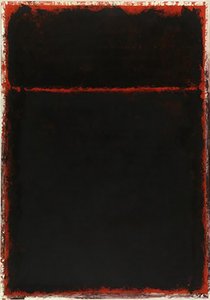
 Radiographie
 Voir le diaporama
Untitled
 Oil On Canvas
- WallArt
- Abstract Expressionism
 1941
1941- Modern
 60.0 x 80.0 cm
 Afficher la suite
Giclées et impressions d'art
Impressions giclées ou sur toile de qualité musée, avec une production rapide et des finitions au choix. ( Acheter la peinture faite à la main Acheter l'image)




P118B $10

P118H $10

P118W $10

P438Z $10

P508JH $12

P508YH $12

P805H $10

P805Z $10

P919BZ $10

P919G $10

P919XJ $10

P959ZH $10

P968JZ $12

W106C $8

W218G $10

W218JH $8

W218Y $10

W307PJ $10

W316G $10

W316PJ $8

W316Y $10

W398PJ $8

W4111J $10

W500HY $15

W500JH $15

W692G $12

W849H $8

W940BG $15

W953PJ $8




Choisissez parmi nos formats prédéfinis qui respectent les proportions originales de l’œuvre.

Vous pouvez saisir vos propres dimensions pour vous adapter à un cadre ou à un espace spécifique. Si la taille sélectionnée ne correspond pas aux proportions de l'image originale, nous recadrerons l'œuvre ou étendrons l'image avec une bordure en miroir ou une couleur unie. Une maquette numérique vous sera envoyée pour approbation avant le début de la production.
Veuillez noter que l'aperçu à l'écran ne reflète pas le recadrage ou l'extension réelle. Seule la maquette montrera avec précision la composition finale.
Bien que des tailles personnalisées soient disponibles, nous vous recommandons de choisir une dimension dans la liste prédéfinie afin de préserver les proportions originales.
Livraison dans le monde entier () en 2 semaines au lieu des 4/5 semaines habituelles. (25 août)

Livraison express gratuite dans le monde entier

Toile de lin de haute qualité

Assurance transport complète

Garantie de remboursement des droits de douane

Garantie de fidélité des couleurs

Politique de retour de 60 jours (uniquement en cas de défaut)

Garantie de remboursement à 100%

Tarifs dégressifs sur quantité
 L'option verre n'est disponible que pour les dimensions inférieures à 110 cm.

Untitled
Giclées et impressions d'art
Format de la reproduction
-


Prix total final
$ 80
Description de la pièce
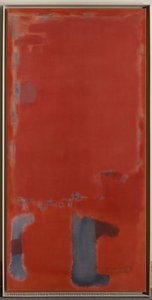
A Symphony of Crimson and Light
To stand before Mark Rothko’s “Untitled” (1941) is to enter a realm where the boundaries between the physical canvas and the human soul begin to dissolve. This evocative work, measuring 60 x 80 cm, serves as a profound meditation on the duality of existence—the heavy weight of grief intertwined with the luminous promise of transcendence. Unlike his later, more famous monochromatic color fields, this earlier piece captures a pivotal moment in Rothko’s evolution, where the artist began to strip away the distractions of the material world to uncover the raw, pulsing essence of emotion through the sheer power of pigment.
The composition is a masterclass in atmospheric depth. Rothko employs his signature technique of layering thin, translucent washes of color, allowing hues of deep crimson and vibrant orange to bleed into one another. These warm, energetic tones suggest a heartbeat, a flicker of vitality that refuses to be extinguished. Yet, this warmth is tempered by subtle, darker gradations that creep into the edges of the forms, creating a palpable sense of melancholy. The way the light seems to emanately from within the layers of paint creates an illusion of luminosity, as if the canvas itself were breathing, inviting the viewer to lose themselves in its rhythmic, chromatic pulse.
The Shadow of History and the Language of Color
The historical context of 1941 casts a long, somber shadow over this masterpiece. Created during the tumultuous onset of World War II, the painting vibrates with the collective anxieties of an era defined by displacement and global upheaval. For Rothko, this period was deeply personal; his life was marked by the profound loss of his father and the challenges of navigating a new identity in America. This sense of existential vulnerability is woven into the very fabric of the work. By eschewing recognizable imagery and traditional figures, Rothko bypasses the intellect to speak directly to the primal emotions of the viewer.
In this piece, color functions as the primary protagonist. The reds and oranges are not merely decorative; they are symbols of passion, blood, and life, while the darker, receding tones represent the encroaching void of loss. For the discerning collector or interior designer, "Untitled" offers more than just a visual focal point; it provides an emotional anchor. It is a piece that demands presence, making it an ideal centerpiece for spaces dedicated to contemplation, such as a private study, a quiet library, or a sophisticated gallery setting where art is intended to provoke thought and inspire a sense of profound peace.
An Invitation to Transcendence
For those seeking to bring the transformative power of Abstract Expressionism into their homes, a high-quality reproduction of this Rothko masterpiece offers a gateway to a different state of being. The painting does not merely decorate a wall; it alters the atmosphere of a room, infusing it with a sense of quiet drama and intellectual depth. It serves as a reminder that even within the darkest shades of mourning, there exists a radiant, indestructible light.
Whether you are an art enthusiast drawn to the technical brilliance of the Color Field movement or a designer looking to evoke a mood of sophisticated introspection, this work stands as a testament to the enduring relevance of Rothko’s vision. It is an invitation to look past the surface and encounter the infinite within the finite.
Biographie de l'artiste
enfance et influences
Mark Rothko (Marcus Rothkowitz), un artiste américain renommé, est né le 25 septembre 1903 à Dvinsk, Lettonie. Sa famille a immigré aux États-Unis lorsqu'il n’avait que dix ans. Ce changement culturel aura influencé plus tard son style artistique.évolution artistique
Le travail précoce de Rothko était caractérisé par l’expressionnisme abstrait, un style qui mettait l’accent sur le processus de création d'une œuvre d'art plutôt que sur le produit final. Ses peintures, telles que No. 18 (1948) et Untitled (1948), mettaient en valeur son approche unique de la couleur et de la forme.- Champ de couleurs : L'utilisation par Rothko de champs de couleurs audacieux et rectangulaires, souvent en contraste saisissant les uns avec les autres, créait une sensation de profondeur et d’émotion.
- Structure organique : Ses peintures semblaient respirer la vie, comme si les couleurs étaient des entités vivantes.
œuvres notables et expositions
- No. 10 (1950), une peinture qui marquait un tournant significatif dans le style de Rothko, est maintenant au sein de la collection du Museum of Modern Art.
- Les Seagram Murals, une série de peintures commandées pour le restaurant Four Seasons, mettait en valeur la capacité de Rothko à adapter son style à différents environnements.
- No. 3 (1950), une peinture qui exemplifie l'utilisation par Rothko de champs de couleurs audacieux et rectangulaires.
vie tardive et héritage
La vie de Rothko a été marquée par des luttes contre la santé mentale et un mariage tumultueux. Il est décédé le 25 février 1970, à l'âge de 66 ans. Malgré ses difficultés, Rothko a laissé une marque indélébile sur le monde de l’art. Ochre et rouge sur rouge (champ de couleurs), une peinture qui met en valeur l'approche unique de Rothko à la couleur, peut être trouvée dans la collection OriginalUniqueArt.com. La page Wikipédia de Mark Rothko fournit des informations supplémentaires sur sa vie et son style artistique.
Mark Rothko
1903 - 1970 , Lettonie
En bref
- Artistes Influents:
- Sigmund Freud
- Marcel Proust
- Date De Décès: 25 février 1970
- Date De Naissance: 25 septembre 1903
- Influences Artistiques:
- Minimalisme
- Art contemporain
- Lieu De Naissance: Daugavpils, Lettonie
- Mouvement Artistique: Expressionnisme abstrait
- Nationalité: Américaine
- Nom Complet: Mark Rothko / Marcus Rothkowitz
- Œuvres Notables:
- No. 18 (1948)
- No. 10 (1950)
- Murals Seagram
- White Center (1957)
Articles similaires
Mark Rothko : Les 25 Œuvres Maîtresses de l'Abstraction Coloriste | OriginalUniqueArt
Plongez dans l'univers émotionnel de Mark Rothko avec les 25 œuvres clés du maître de l'abstraction. Découvrez l'histoire, la technique et le pouvoir des couleurs de ces tableaux iconiques. Reproductions d'art de qualité musée sur OriginalUniqueArt.com

The Sublimity of Color: Exploring the Emotional Landscapes of Mark Rothko's Abstract Expressionism
Explore the profound emotional depth of Mark Rothko's abstract expressionism. Discover the history, techniques & lasting impact of this pivotal Color Field painter. Expert insights for collectors and art enthusiasts.

Expressionnisme Abstrait : Les 10 Chefs-d'Œuvre Incontournables pour Décorer avec Art et Histoire
Plongez au cœur de l'Expressionnisme Abstrait avec ! Découvrez les 10 œuvres majeures de Pollock, Rothko et De Kooning. Histoire, techniques & inspiration déco. Explorez la collection complète en ligne.
Color Field Painting: The Emotional Power of Pure Abstraction and Chromatic Depth
Explore the profound emotional depth of Color Field painting. Discover the history of mid-century abstraction, from Rothko to Newman, and learn how pure color transforms the viewer's experience through our expert art history guide.
The Essence of Abstraction: A Definitive Guide to the Power and History of Color Field Painting Masterpieces
Explore the profound emotional depth of Color Field painting. Our expert guide delves into the post-war origins of Abstract Expressionism, analyzing masterpieces by Rothko and Newman. Discover museum-grade, hand-painted oil reproductions that bring art history to your walls.