- Accueil

- Impression sur toile
- Mark Rothko
- Untitled 69

 Commander la reproduction Acheter l'image haute résolution
 Partager
 Partager
 Détails de l'œuvre
 Ajouter aux favoris

 Télécharger
 Articles similaires
 Radiographie
 Diaporama
Untitled 69


 Afficher la suite
Giclée / Impression d'art
Impression giclée ou sur toile de qualité musée, avec une production rapide et des finitions au choix.




P118B $10

P118H $10

P118W $10

P438Z $10

P508JH $12

P508YH $12

P805H $10

P805Z $10

P919BZ $10

P919G $10

P919XJ $10

P959ZH $10

P968JZ $12

W106C $8

W218G $10

W218JH $8

W218Y $10

W307PJ $10

W316G $10

W316PJ $8

W316Y $10

W398PJ $8

W4111J $10

W500HY $15

W500JH $15

W692G $12

W849H $8

W940BG $15

W953PJ $8




Choisissez parmi nos formats prédéfinis qui respectent les proportions originales de l’œuvre.

Vous pouvez saisir vos propres dimensions pour vous adapter à un cadre ou à un espace spécifique. Si la taille sélectionnée ne correspond pas aux proportions de l'image originale, nous recadrerons l'œuvre ou étendrons l'image avec une bordure en miroir ou une couleur unie. Une maquette numérique vous sera envoyée pour approbation avant le début de la production.
Veuillez noter que l'aperçu à l'écran ne reflète pas le recadrage ou l'extension réelle. Seule la maquette montrera avec précision la composition finale.
Bien que des tailles personnalisées soient disponibles, nous vous recommandons de choisir une dimension dans la liste prédéfinie afin de préserver les proportions originales.
Livraison dans le monde entier () en 2 semaines au lieu des 4/5 semaines habituelles. (21 juillet)

Livraison express gratuite dans le monde entier

Toile de lin de haute qualité

Assurance transport complète

Garantie de remboursement des frais de douane

Garantie de fidélité des couleurs

Politique de retour de 60 jours (uniquement en cas de défaut)

Garantie de remboursement à 100%

Réduction sur les achats groupés
 L'option verre n'est disponible que pour les dimensions inférieures à 110 cm.

Untitled 69
Giclée / Impression d'art
Format de reproduction
-


Prix total final
-
Description de l'œuvre
Mark Rothko’s ‘Untitled 69’: A Meditation on Loss and Light
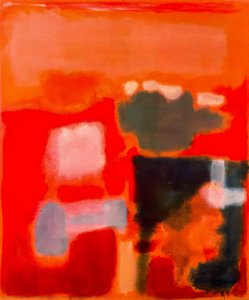
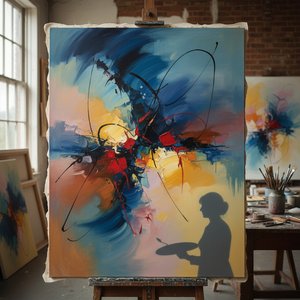
Mark Rothko's “Untitled 69” is not merely a painting; it’s an immersion into the profound depths of human emotion, a testament to the artist’s lifelong grappling with themes of mortality, trauma, and the enduring search for solace. Born in Dvinsk, Latvia – a city steeped in history and shadowed by displacement – Rothko carried within him the weight of his family's experiences, a sensitivity forged in the crucible of early loss and cultural upheaval. This painting, created during a pivotal period of his career, exemplifies the core tenets of his color field style: vast blocks of saturated pigment arranged to evoke an almost unbearable intensity of feeling. The image depicts a woman enveloped in shadow, wings subtly suggested rather than explicitly rendered, suggesting a figure caught between earthly concerns and a yearning for transcendence. The surrounding figures, indistinct yet undeniably present, contribute to the painting’s unsettling atmosphere – a silent congregation witnessing a private struggle.
- Color as Emotion: Rothko's masterful use of color is central to the work’s impact. Deep reds and browns dominate, colors traditionally associated with blood, earth, and primal emotions. These hues are layered with subtle gradations of orange and yellow, creating a shimmering effect that seems to pulse with an inner light.
- Compositional Ambiguity: The lack of sharp lines or defined forms contributes to the painting’s dreamlike quality. Rothko deliberately avoids traditional representational techniques, opting instead for abstract shapes that invite viewers to project their own interpretations and emotional responses onto the canvas.
The Context of American Abstract Expressionism
“Untitled 69” emerged during a period of intense experimentation within American Abstract Expressionism – a movement defined by its rejection of representational art in favor of subjective expression. Following World War II, artists like Rothko sought to capture the anxieties and uncertainties of the modern world through non-objective forms. Rothko’s work, particularly, was deeply influenced by his experiences during the war, witnessing firsthand the devastation and suffering inflicted upon Europe. This informed a profound sense of melancholy that permeates his paintings – a recognition of human vulnerability in the face of overwhelming forces.
This painting is often viewed as a key example of Rothko’s mature style, developed after his initial explorations with more gestural brushwork. It represents a shift towards greater control and precision, allowing him to achieve an even more powerful emotional effect through the manipulation of color and form.Symbolism and Interpretation
The symbolism within “Untitled 69” remains open to interpretation, reflecting Rothko’s belief that art should evoke rather than dictate meaning. The winged figure is perhaps most powerfully interpreted as a representation of the soul – struggling for release from earthly constraints or seeking connection with something beyond human comprehension. The surrounding figures could symbolize witnesses to this struggle, or perhaps even aspects of the viewer's own psyche. The overall effect is one of profound contemplation, inviting viewers to confront their own mortality and grapple with existential questions.
Rothko Chapel: A Legacy of Color
Rothko’s influence extends far beyond individual paintings; it’s profoundly shaped the landscape of contemporary art. His work found a particularly resonant audience at the Rothko Chapel in Houston, Texas – a space he designed and populated with fourteen monumental canvases. This chapel stands as a testament to his vision, offering visitors an immersive experience that transcends traditional religious or spiritual contexts. “Untitled 69,” like its counterparts within the chapel, continues to captivate audiences worldwide, solidifying Rothko’s place as one of the most important and influential artists of the 20th century.
Biographie de l'artiste
enfance et influences
Mark Rothko (Marcus Rothkowitz), un artiste américain renommé, est né le 25 septembre 1903 à Dvinsk, Lettonie. Sa famille a immigré aux États-Unis lorsqu'il n’avait que dix ans. Ce changement culturel aura influencé plus tard son style artistique.évolution artistique
Le travail précoce de Rothko était caractérisé par l’expressionnisme abstrait, un style qui mettait l’accent sur le processus de création d'une œuvre d'art plutôt que sur le produit final. Ses peintures, telles que No. 18 (1948) et Untitled (1948), mettaient en valeur son approche unique de la couleur et de la forme.- Champ de couleurs : L'utilisation par Rothko de champs de couleurs audacieux et rectangulaires, souvent en contraste saisissant les uns avec les autres, créait une sensation de profondeur et d’émotion.
- Structure organique : Ses peintures semblaient respirer la vie, comme si les couleurs étaient des entités vivantes.
œuvres notables et expositions
- No. 10 (1950), une peinture qui marquait un tournant significatif dans le style de Rothko, est maintenant au sein de la collection du Museum of Modern Art.
- Les Seagram Murals, une série de peintures commandées pour le restaurant Four Seasons, mettait en valeur la capacité de Rothko à adapter son style à différents environnements.
- No. 3 (1950), une peinture qui exemplifie l'utilisation par Rothko de champs de couleurs audacieux et rectangulaires.
vie tardive et héritage
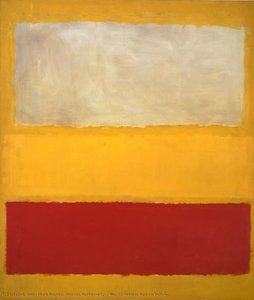
La vie de Rothko a été marquée par des luttes contre la santé mentale et un mariage tumultueux. Il est décédé le 25 février 1970, à l'âge de 66 ans. Malgré ses difficultés, Rothko a laissé une marque indélébile sur le monde de l’art. Ochre et rouge sur rouge (champ de couleurs), une peinture qui met en valeur l'approche unique de Rothko à la couleur, peut être trouvée dans la collection OriginalUniqueArt.com. La page Wikipédia de Mark Rothko fournit des informations supplémentaires sur sa vie et son style artistique.
Mark Rothko
1903 - 1970 , Lettonie
En bref
- Artistes Influents:
- Sigmund Freud
- Marcel Proust
- Date De Décès: 25 février 1970
- Date De Naissance: 25 septembre 1903
- Influences Artistiques:
- Minimalisme
- Art contemporain
- Lieu De Naissance: Daugavpils, Lettonie
- Mouvement Artistique: Expressionnisme abstrait
- Nationalité: Américaine
- Nom Complet: Mark Rothko / Marcus Rothkowitz
- Œuvres Notables:
- No. 18 (1948)
- No. 10 (1950)
- Murals Seagram
- White Center (1957)
Articles connexes

The Sublimity of Color: Exploring the Emotional Landscapes of Mark Rothko's Abstract Expressionism
Explore the profound emotional depth of Mark Rothko's abstract expressionism. Discover the history, techniques & lasting impact of this pivotal Color Field painter. Expert insights for collectors and art enthusiasts.

Morris Louis: Pioneering Color Field Painting & Abstract Expressionism's Legacy
Explore the groundbreaking abstract expressionism of Morris Louis, a pioneer of Color Field painting. Discover his innovative techniques, influential series & lasting legacy in post-war American art. Learn more at OriginalUniqueArt.
Jacob Kainen: A Pioneer of American Color Field Painting & Abstract Expressionism
Explore the life & work of Jacob Kainen, a pivotal figure in American Abstract Expressionism and Color Field painting. Discover his journey from Social Realism to vibrant abstraction and lasting influence on 20th-century art.
Chromatic Atmospheres: Exploring the Subtleties of Color Field Painting's Emotional Resonance
Explore the profound world of Color Field painting with OriginalUniqueArt. Discover key artists like Rothko & Newman, its philosophical roots, and lasting impact on modern art. Expert insights for collectors.
Beatrice Parsons: A Study in Abstract Expressionism & the Poetics of Color Field Painting
Explore the captivating world of Beatrice Parsons, a pioneering British abstract expressionist. Discover her journey from garden watercolors to evocative color field paintings and learn about her place within art history.