Aperçu en situation
 Partager
 Partager
 Détails

 Télécharger
 Articles similaires
 Radiographie
 Voir le diaporama
 Statistiques
Untitled 46

 Afficher la suite
Giclées et impressions d'art
Impressions giclées ou sur toile de qualité musée, avec une production rapide et des finitions au choix. ( Acheter la peinture faite à la main Passer au format image numérique)




































Choisissez parmi nos formats prédéfinis qui respectent les proportions originales de l’œuvre.

Vous pouvez saisir vos propres dimensions pour vous adapter à un cadre ou à un espace spécifique. Si la taille sélectionnée ne correspond pas aux proportions de l'image originale, nous recadrerons l'œuvre ou étendrons l'image avec une bordure en miroir ou une couleur unie. Une maquette numérique vous sera envoyée pour approbation avant le début de la production.
Veuillez noter que l'aperçu à l'écran ne reflète pas le recadrage ou l'extension réelle. Seule la maquette montrera avec précision la composition finale.
Bien que des tailles personnalisées soient disponibles, nous vous recommandons de choisir une dimension dans la liste prédéfinie afin de préserver les proportions originales.
Livraison dans le monde entier () en 2 semaines au lieu des 4/5 semaines habituelles. (12 septembre)

Livraison express gratuite dans le monde entier

Toile de lin de haute qualité

Assurance transport complète

Garantie de remboursement des droits de douane

Garantie de fidélité des couleurs

Garantie de retour de 100 jours (uniquement en cas de défaut)

Garantie de remboursement à 100%

Tarifs dégressifs sur quantité
 L'option verre n'est disponible que pour les dimensions inférieures à 110 cm.

Untitled 46
Giclées et impressions d'art
Format de la reproduction
-


Prix total final
$ 80
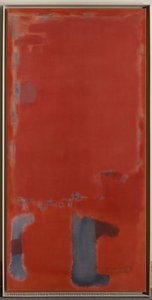
Exploring the Fragmented Soul: An Examination of Mark Rothko’s Untitled No. 46
The canvas holds an arresting stillness—a deceptive calm that belies the turbulent energy contained within Mark Rothko's Untitled No. 46. Executed in 1953, this monumental work exemplifies Rothko’s signature approach to abstraction, prioritizing feeling over representation and inviting viewers into a contemplative dialogue about the human condition. It’s not merely pigment on paper; it’s an embodiment of existential anxiety rendered with breathtaking simplicity.A Legacy Shaped by Displacement
Rothko's formative years instilled in him a profound awareness of suffering—a legacy that would permeate his artistic vision throughout his life. Born Markus Yakovlevich Rothkowitz in Dvinsk, Latvia, he experienced firsthand the anxieties of Jewish families navigating precarious political landscapes marked by pogroms and persecution. This early exposure to trauma profoundly influenced his preoccupation with themes of loss and vulnerability, informing his relentless pursuit of conveying profound emotional truths through reductive visual language. The subsequent move to Portland, Oregon, solidified this trajectory, presenting him with challenges of cultural assimilation that further deepened his introspection.The Language of Color and Gesture
Rothko’s technique—a deceptively effortless process of drawing and sketching before applying layers of luminous color—is central to understanding the artwork's impact. He eschewed meticulous detail, opting instead for broad washes of cadmium red, orange, and yellow rectangles that bleed into one another on a creamy off-white surface. The deliberate flatness of these blocks defies conventional perspective, creating an illusion of depth achieved not through realistic depiction but through subtle variations in tone and texture. Hatching and crosshatching contribute to this textural richness, subtly modulating the luminosity of each rectangle and suggesting an underlying rhythm—a visual heartbeat that pulsates with unspoken emotion.Symbolism Beneath the Surface Calm
Despite its apparent simplicity, Untitled No. 46 is laden with symbolic resonance. The rectangles themselves are often interpreted as representing cells of consciousness – fragments of the human psyche grappling with fundamental questions about existence. Their overlapping positions evoke a sense of interconnectedness and interdependence, mirroring the complexities of human relationships and the inescapable awareness of mortality. Furthermore, Rothko’s deliberate avoidance of recognizable imagery—the absence of faces or landscapes—forces viewers to confront their own emotions and intuitions directly. The suggestion of stylized eyes within the rectangles adds another layer of ambiguity, prompting contemplation about perception and self-awareness.A Bridge Between Expressionism and Color Field Painting
Rothko’s Untitled No. 46 stands firmly within the tradition of Abstract Expressionism, particularly echoing the pioneering work of artists like Willem de Kooning and Jackson Pollock who championed spontaneous gesture and emotional intensity. However, it transcends mere stylistic imitation; it anticipates the ascendancy of Color Field painting—a movement spearheaded by Mark Rothko himself—which prioritized color as the primary vehicle for conveying emotion and spiritual experience. Like Rothko’s later canvases, this piece invites viewers to surrender to its immersive quality, fostering a meditative state where visual sensation becomes synonymous with psychological insight.Concluding Reflections
Ultimately, Untitled No. 46 is more than just an aesthetically pleasing composition; it's a profound meditation on the human condition—a testament to Rothko’s unwavering commitment to exploring the depths of emotion through reductive abstraction. Its enduring power lies in its ability to provoke contemplation and resonate with viewers long after they have gazed upon its luminous rectangles, reminding us that beauty can reside not in representation but in the unspoken language of feeling itself.Biographie de l'artiste
enfance et influences
Mark Rothko (Marcus Rothkowitz), un artiste américain renommé, est né le 25 septembre 1903 à Dvinsk, Lettonie. Sa famille a immigré aux États-Unis lorsqu'il n’avait que dix ans. Ce changement culturel aura influencé plus tard son style artistique.évolution artistique
Le travail précoce de Rothko était caractérisé par l’expressionnisme abstrait, un style qui mettait l’accent sur le processus de création d'une œuvre d'art plutôt que sur le produit final. Ses peintures, telles que No. 18 (1948) et Untitled (1948), mettaient en valeur son approche unique de la couleur et de la forme.- Champ de couleurs : L'utilisation par Rothko de champs de couleurs audacieux et rectangulaires, souvent en contraste saisissant les uns avec les autres, créait une sensation de profondeur et d’émotion.
- Structure organique : Ses peintures semblaient respirer la vie, comme si les couleurs étaient des entités vivantes.
œuvres notables et expositions
- No. 10 (1950), une peinture qui marquait un tournant significatif dans le style de Rothko, est maintenant au sein de la collection du Museum of Modern Art.
- Les Seagram Murals, une série de peintures commandées pour le restaurant Four Seasons, mettait en valeur la capacité de Rothko à adapter son style à différents environnements.
- No. 3 (1950), une peinture qui exemplifie l'utilisation par Rothko de champs de couleurs audacieux et rectangulaires.
vie tardive et héritage
La vie de Rothko a été marquée par des luttes contre la santé mentale et un mariage tumultueux. Il est décédé le 25 février 1970, à l'âge de 66 ans. Malgré ses difficultés, Rothko a laissé une marque indélébile sur le monde de l’art. Ochre et rouge sur rouge (champ de couleurs), une peinture qui met en valeur l'approche unique de Rothko à la couleur, peut être trouvée dans la collection OriginalUniqueArt.com. La page Wikipédia de Mark Rothko fournit des informations supplémentaires sur sa vie et son style artistique.
Mark Rothko
1903 - 1970 , Lettonie
En bref
- Artistes Influents:
- Sigmund Freud
- Marcel Proust
- Date De Décès: 25 février 1970
- Date De Naissance: 25 septembre 1903
- Influences Artistiques:
- Minimalisme
- Art contemporain
- Lieu De Naissance: Daugavpils, Lettonie
- Mouvement Artistique: Expressionnisme abstrait
- Nationalité: Américaine
- Nom Complet: Mark Rothko / Marcus Rothkowitz
- Œuvres Notables:
- No. 18 (1948)
- No. 10 (1950)
- Murals Seagram
- White Center (1957)
Articles similaires
Mark Rothko : Les 25 Œuvres Maîtresses de l'Abstraction Coloriste | OriginalUniqueArt
Plongez dans l'univers émotionnel de Mark Rothko avec les 25 œuvres clés du maître de l'abstraction. Découvrez l'histoire, la technique et le pouvoir des couleurs de ces tableaux iconiques. Reproductions d'art de qualité musée sur OriginalUniqueArt.com

Expressionnisme Abstrait : Les 10 Chefs-d'Œuvre Incontournables pour Décorer avec Art et Histoire
Plongez au cœur de l'Expressionnisme Abstrait avec ! Découvrez les 10 œuvres majeures de Pollock, Rothko et De Kooning. Histoire, techniques & inspiration déco. Explorez la collection complète en ligne.

The Sublimity of Color: Exploring the Emotional Landscapes of Mark Rothko's Abstract Expressionism
Explore the profound emotional depth of Mark Rothko's abstract expressionism. Discover the history, techniques & lasting impact of this pivotal Color Field painter. Expert insights for collectors and art enthusiasts.

Kandinsky : Les 25 Œuvres Maîtresses d'un Pionnier de l'Art Abstrait | OriginalUniqueArt
Plongez dans l'univers vibrant de Kandinsky ! Découvrez les 25 œuvres majeures du pionnier de l'art abstrait. Explorez son expressionnisme, ses couleurs audacieuses et l'histoire fascinante derrière chaque tableau. Reproductions d'exception sur OriginalUniqueArt.com.
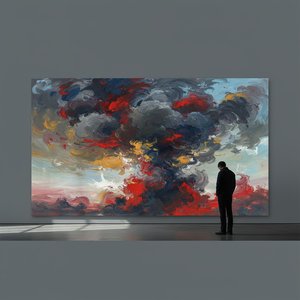
Au-Delà de la Représentation : Exploration du Paysage Émotionnel de l'Expressionnisme Abstrait
Explorez l'univers fascinant de l'Expressionnisme Abstrait avec OriginalUniqueArt. Analyse approfondie des maîtres (Pollock, Rothko, De Kooning) et conseils d'experts pour collectionner ces œuvres emblématiques. Découvrez une sélection unique.