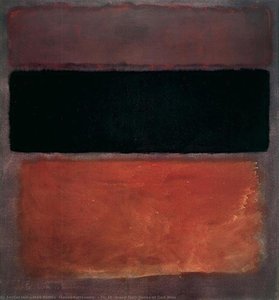
Aperçu en situation
 Partager
 Partager
 Détails
 Guide imprimable

 Télécharger
 Articles similaires
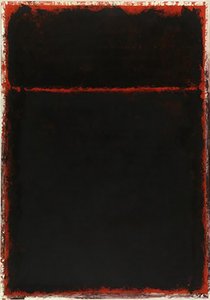
 Radiographie
 Voir le diaporama
 Statistiques
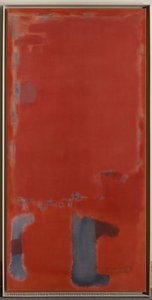
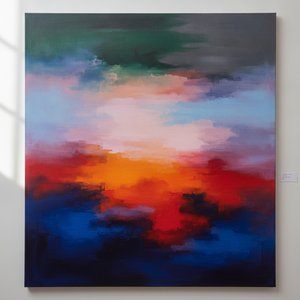
Untitled 21


 Afficher la suite
L’œuvre d'art présentée sur cette page est protégée par le droit d'auteur, ce qui signifie que nous ne pouvons légalement créer ou vendre de reproduction identique. Cette protection est appliquée en vertu d'accords internationaux tels que la Convention de Berne et par les lois nationales, notamment celles énoncées par le Loi américaine sur le droit d'auteur - Titre 17.
Cette méthode est pleinement conforme aux réglementations sur le droit d'auteur car elle ne repose pas sur la copie ou la duplication de l'œuvre protégée. Il s'agit plutôt d'une réinterprétation créative — une nouvelle peinture qui s'inspire de l'original sans pour autant lui être identique.
Giclées et impressions d'art
Impressions giclées ou sur toile de qualité musée, avec une production rapide et des finitions au choix. ( Acheter la peinture faite à la main Passer au format image numérique)




P118B €10

P118H €10

P118W €10

P438Z €10

P508JH €12

P508YH €12

P805H €10

P805Z €10

P919BZ €10

P919G €10

P919XJ €10

P959ZH €10

P968JZ €12

W106C €8

W218G €10

W218JH €8

W218Y €10

W307PJ €10

W316G €10

W316PJ €8

W316Y €10

W398PJ €8

W4111J €10

W500HY €15

W500JH €15

W692G €12

W849H €8

W940BG €15

W953PJ €8




Choisissez parmi nos formats prédéfinis qui respectent les proportions originales de l’œuvre.

Saisissez la largeur et la hauteur souhaitées pour qu'elles s'adaptent à votre cadre ou à votre mur. Une impression ne peut être que découpée, elle ne peut jamais être agrandie au-delà de l'image originale ; ainsi, un format de forme différente entraînera la perte d'une partie de l'image. Nous vous envoyons une maquette numérique pour approbation avant toute impression. L'image présentée sur cette page ne montre pas le recadrage réel — seule la maquette le permet.
Livraison dans le monde entier () en 2 semaines au lieu des 4/5 semaines habituelles. (20 octobre)

Livraison express gratuite dans le monde entier

Toile de lin de haute qualité

Assurance transport complète

Garantie de remboursement des droits de douane

Garantie de fidélité des couleurs

Garantie de retour de 100 jours (uniquement en cas de défaut)

Garantie de remboursement à 100%

Tarifs dégressifs sur quantité
 L'option verre n'est disponible que pour les dimensions inférieures à 110 cm.

Untitled 21
Giclées et impressions d'art
Format de la reproduction
-


Prix total final
€ 70
Mark Rothko: Exploring Grief Through Color
Mark Rothko’s paintings stand as monuments to profound sorrow—a testament to the artist's own personal struggles and an enduring reflection of the human condition. Born Markus Yakovlevich Rothkowitz in Dvinsk, Latvia, in 1903, he navigated a childhood steeped in displacement and loss, experiences that would irrevocably inform his artistic vision.
Early Life and Artistic Roots: Rothko’s formative years were marked by the anxieties of a Jewish family residing within the Pale of Settlement. Pogroms and political instability instilled a deep empathy for suffering—a sensitivity that would become central to his artistic exploration. The 1913 emigration to Portland, Oregon, represented not merely a geographical relocation but a cultural collision for the young Rothko, shaping him as he embraced new ideas and perspectives.
The Rise of Color Field Painting: Rothko emerged as a pivotal figure in the burgeoning Color Field movement of the 1940s and 50s. Rejecting traditional representational art, he championed an approach that prioritized pure color—vast expanses of pigment applied to canvas without discernible imagery. This stylistic choice wasn’t arbitrary; it was deliberately conceived as a vehicle for conveying emotion directly, bypassing intellectual mediation.
- Style: Color Field Painting – Characterized by large blocks or rectangles of color that dominate the composition.
- Technique: Thickly applied paint—often layered multiple times—creating a palpable textural surface.
- Materials: Canvas stretched taut over wooden frames; oil paints mixed with mediums to achieve desired consistency and luminosity.
Symbolism of Grief and Transcendence: Rothko’s canvases are imbued with potent symbolism. The muted hues—primarily reds, yellows, and blues—are not intended to depict specific objects or scenes but rather to evoke feelings of grief, vulnerability, and spiritual yearning. Critics have interpreted the overlapping rectangles as representing the merging of individual consciousnesses into a unified whole—a visual metaphor for confronting mortality and achieving transcendence.
Emotional Resonance: Viewing Rothko’s paintings is an experience akin to entering a meditative space. The sheer scale of the canvases compels contemplation, inviting viewers to immerse themselves in the artist's emotional landscape. Rather than offering answers or judgments, Rothko’s work prompts introspection—encouraging us to confront our own anxieties about existence and to appreciate the beauty inherent in confronting difficult truths.
Legacy: Rothko’s influence extends far beyond the Color Field movement, shaping generations of artists who followed him. His unwavering commitment to exploring profound emotional themes continues to inspire creativity and provoke dialogue—solidifying his place as one of the most significant figures in 20th-century art.
Questions et réponses
Pour quelle pièce «Untitled 21» de Mark Rothko est-il recommandé ?
Une reproduction de « Untitled 21 » s'intègre parfaitement dans une Salon.
L'œuvre « Untitled 21 » présente-t-elle des contrastes ombre et lumière marqués ?
Le niveau de contraste de «Untitled 21» de Mark Rothko est Contraste maximal.
Quelle couleur domine la composition de «Untitled 21» de Mark Rothko ?
La couleur dominante de «Untitled 21» de Mark Rothko est le Vert de phtalo (#221e21).
Biographie de l'artiste
enfance et influences
Mark Rothko (Marcus Rothkowitz), un artiste américain renommé, est né le 25 septembre 1903 à Dvinsk, Lettonie. Sa famille a immigré aux États-Unis lorsqu'il n’avait que dix ans. Ce changement culturel aura influencé plus tard son style artistique.évolution artistique
Le travail précoce de Rothko était caractérisé par l’expressionnisme abstrait, un style qui mettait l’accent sur le processus de création d'une œuvre d'art plutôt que sur le produit final. Ses peintures, telles que No. 18 (1948) et Untitled (1948), mettaient en valeur son approche unique de la couleur et de la forme.- Champ de couleurs : L'utilisation par Rothko de champs de couleurs audacieux et rectangulaires, souvent en contraste saisissant les uns avec les autres, créait une sensation de profondeur et d’émotion.
- Structure organique : Ses peintures semblaient respirer la vie, comme si les couleurs étaient des entités vivantes.
œuvres notables et expositions
- No. 10 (1950), une peinture qui marquait un tournant significatif dans le style de Rothko, est maintenant au sein de la collection du Museum of Modern Art.
- Les Seagram Murals, une série de peintures commandées pour le restaurant Four Seasons, mettait en valeur la capacité de Rothko à adapter son style à différents environnements.
- No. 3 (1950), une peinture qui exemplifie l'utilisation par Rothko de champs de couleurs audacieux et rectangulaires.
vie tardive et héritage
La vie de Rothko a été marquée par des luttes contre la santé mentale et un mariage tumultueux. Il est décédé le 25 février 1970, à l'âge de 66 ans. Malgré ses difficultés, Rothko a laissé une marque indélébile sur le monde de l’art. Ochre et rouge sur rouge (champ de couleurs), une peinture qui met en valeur l'approche unique de Rothko à la couleur, peut être trouvée dans la collection OriginalUniqueArt.com. La page Wikipédia de Mark Rothko fournit des informations supplémentaires sur sa vie et son style artistique.
Mark Rothko
1903 - 1970 , Lettonie
En bref
- Artistes Influents:
- Sigmund Freud
- Marcel Proust
- Date De Décès: 25 février 1970
- Date De Naissance: 25 septembre 1903
- Influences Artistiques:
- Minimalisme
- Art contemporain
- Lieu De Naissance: Daugavpils, Lettonie
- Mouvement Artistique: Expressionnisme abstrait
- Nationalité: Américaine
- Nom Complet: Mark Rothko / Marcus Rothkowitz
- Œuvres Notables:
- No. 18 (1948)
- No. 10 (1950)
- Murals Seagram
- White Center (1957)
Articles connexes

Expressionnisme Abstrait : Les 10 Chefs-d'Œuvre Incontournables pour Décorer avec Art et Histoire
Plongez au cœur de l'Expressionnisme Abstrait avec ! Découvrez les 10 œuvres majeures de Pollock, Rothko et De Kooning. Histoire, techniques & inspiration déco. Explorez la collection complète en ligne.

Kandinsky : Les 25 Œuvres Maîtresses d'un Pionnier de l'Art Abstrait | OriginalUniqueArt
Plongez dans l'univers vibrant de Kandinsky ! Découvrez les 25 œuvres majeures du pionnier de l'art abstrait. Explorez son expressionnisme, ses couleurs audacieuses et l'histoire fascinante derrière chaque tableau. Reproductions d'exception sur OriginalUniqueArt.com.
Mark Rothko : Les 25 Œuvres Maîtresses de l'Abstraction Coloriste | OriginalUniqueArt
Plongez dans l'univers émotionnel de Mark Rothko avec les 25 œuvres clés du maître de l'abstraction. Découvrez l'histoire, la technique et le pouvoir des couleurs de ces tableaux iconiques. Reproductions d'art de qualité musée sur OriginalUniqueArt.com

The Sublimity of Color: Exploring the Emotional Landscapes of Mark Rothko's Abstract Expressionism
Explore the profound emotional depth of Mark Rothko's abstract expressionism. Discover the history, techniques & lasting impact of this pivotal Color Field painter. Expert insights for collectors and art enthusiasts.
Color Field Painting: The Emotional Power of Pure Abstraction and Chromatic Depth
Explore the profound emotional depth of Color Field painting. Discover the history of mid-century abstraction, from Rothko to Newman, and learn how pure color transforms the viewer's experience through our expert art history guide.