

 Aperçu en situation
 Partager
 Partager
 Détails
 Guide imprimable

 Télécharger
 Articles similaires
 Radiographie
 Voir le diaporama
 Statistiques
Alpine Landscape
 Acrylic On Canvas
- WallArt
- Neo-Classical Modernism
 1930
1930- 19th Century
 70.0 x 80.0 cm
 Maison de Boschi Di Stefano
 Afficher la suite
L’œuvre d'art présentée sur cette page est protégée par le droit d'auteur, ce qui signifie que nous ne pouvons légalement créer ou vendre de reproduction identique. Cette protection est appliquée en vertu d'accords internationaux tels que la Convention de Berne et par les lois nationales, notamment celles énoncées par le Loi américaine sur le droit d'auteur - Titre 17.
Cette méthode est pleinement conforme aux réglementations sur le droit d'auteur car elle ne repose pas sur la copie ou la duplication de l'œuvre protégée. Il s'agit plutôt d'une réinterprétation créative — une nouvelle peinture qui s'inspire de l'original sans pour autant lui être identique.
Giclées et impressions d'art
Impressions giclées ou sur toile de qualité musée, avec une production rapide et des finitions au choix. ( Acheter la peinture faite à la main Passer au format image numérique)




P118B €10

P118H €10

P118W €10

P438Z €10

P508JH €12

P508YH €12

P805H €10

P805Z €10

P919BZ €10

P919G €10

P919XJ €10

P959ZH €10

P968JZ €12

W106C €8

W218G €10

W218JH €8

W218Y €10

W307PJ €10

W316G €10

W316PJ €8

W316Y €10

W398PJ €8

W4111J €10

W500HY €15

W500JH €15

W692G €12

W849H €8

W940BG €15

W953PJ €8




Choisissez parmi nos formats prédéfinis qui respectent les proportions originales de l’œuvre.

Saisissez la largeur et la hauteur souhaitées pour qu'elles s'adaptent à votre cadre ou à votre mur. Une impression ne peut être que découpée, elle ne peut jamais être agrandie au-delà de l'image originale ; ainsi, un format de forme différente entraînera la perte d'une partie de l'image. Nous vous envoyons une maquette numérique pour approbation avant toute impression. L'image présentée sur cette page ne montre pas le recadrage réel — seule la maquette le permet.
Livraison dans le monde entier () en 2 semaines au lieu des 4/5 semaines habituelles. (21 octobre)

Livraison express gratuite dans le monde entier

Toile de lin de haute qualité

Assurance transport complète

Garantie de remboursement des droits de douane

Garantie de fidélité des couleurs

Garantie de retour de 100 jours (uniquement en cas de défaut)

Garantie de remboursement à 100%

Tarifs dégressifs sur quantité
 L'option verre n'est disponible que pour les dimensions inférieures à 110 cm.

Alpine Landscape
Giclées et impressions d'art
Format de la reproduction
-


Prix total final
€ 70
Mario Sironi’s ‘Alpine Landscape’: A Study in Quietude and Post-War Reflection
This meticulously crafted hand-painted reproduction of Mario Sironi's “Alpine Landscape” (1930) offers a profound glimpse into the artist’s evolving vision during a pivotal moment in Italian art history. Measuring 70 x 80 cm, the painting immediately draws the viewer into a serene yet subtly melancholic depiction of the Italian Alps. The composition is dominated by a distant mountain range, rendered with a restrained palette and a masterful understanding of atmospheric perspective – hallmarks of Sironi’s mature style. Scattered throughout the scene are buildings, not as flamboyant displays of human activity, but rather as quiet witnesses to the enduring power of nature. These structures, varying in size and placement, subtly introduce an element of human presence without disrupting the overall sense of contemplative isolation.
The Evolution of a Master: Sironi’s Artistic Journey
Born in Sassari, Sardinia, in 1885, Mario Sironi's artistic trajectory was marked by experimentation and a profound shift in sensibility. Initially trained in engineering, he abandoned this path after a debilitating breakdown, recognizing his true calling lay within the realm of art. His early work, exemplified by pieces like “The Student,” reveals an engagement with Divisionism – a technique prioritizing separated colors to achieve luminous effects – reflecting influences from artists like Giovanni Segantini. However, Sironi’s artistic journey took a dramatic turn around 1914 when he briefly embraced Futurism, a movement championing speed and dynamism. Yet, the intensity of this period quickly dissipated, leading him towards a more restrained and introspective approach. Following World War I, Sironi developed his signature style: a monumental, almost monolithic aesthetic characterized by flattened forms, muted colors, and a profound sense of urban alienation – a reflection of the anxieties and uncertainties of the post-war era.
Technique and Materiality: A Legacy of Precision
This reproduction is executed with exceptional attention to detail, faithfully recreating Sironi’s distinctive technique. The artist employed oil paints on canvas, layering thin glazes to build up depth and luminosity. Note the careful rendering of textures – the rough stone of the mountains, the weathered surfaces of the buildings – all contributing to a remarkably realistic effect. The subdued color palette—dominated by grays, blues, and browns—is characteristic of Sironi’s mature style, reflecting his desire to move beyond the expressive gestures of earlier movements and towards a more objective representation of reality. The meticulous brushwork and precise composition demonstrate the artist's dedication to achieving a sense of monumental stillness.
Symbolism and Emotional Resonance
"Alpine Landscape" transcends a simple depiction of a mountain scene; it embodies a deeper philosophical inquiry. The vastness of the mountains, coupled with the isolated buildings, evokes a feeling of human insignificance in the face of nature’s enduring power. The painting's quietude speaks to the post-war disillusionment and the search for meaning that characterized much of European art at the time. It is a testament to Sironi’s ability to capture not just visual reality, but also the emotional weight of his subject matter. This artwork invites contemplation on themes of isolation, resilience, and the relationship between humanity and the natural world – qualities that continue to resonate with viewers today.
Questions et réponses
Quel est le format et les dimensions de « Alpine Landscape » ?
Le format de « Alpine Landscape » est Square, et l'original mesure 70 x 80 cm. Ces deux informations sont utiles lors de la planification d'une reproduction.
De quel pays provient l'œuvre Neo-Classical Modernism « Alpine Landscape » ?
«Alpine Landscape» relie le mouvement Neo-Classical Modernism à Italie par le biais du lieu de naissance de son créateur.
Quelle nuance dominante traverse «Alpine Landscape» de Mario Sironi ?
Une nuance Green to Violet Spectrum traverse «Alpine Landscape» de Mario Sironi.
Biographie de l'artiste
Mario Sironi : Une Vie dans l'Art Italien Moderne
Jeunesse et Formation
- Né le 12 mai 1885 à Sassari, en Sardaigne, Italie.
- Son père était ingénieur et son grand-père maternel, Ignazio Villa, était un architecte et sculpteur respecté – offrant une exposition artistique précoce.
- Il a initialement étudié l'ingénierie à l'Université de Rome mais l'a abandonnée en 1903 suite à une crise nerveuse. Cela marque un tournant vers l'art.
- Il a commencé sa formation artistique à la Scuola Libera del Nudo de l'Accademia di Belle Arti di Roma, où il a rencontré son premier professeur important, Giacomo Balla.
Développement Artistique et Influences
- Ses premières œuvres ont été fortement influencées par le Divisionnisme, une technique qui met l'accent sur les couleurs séparées pour créer de la luminosité – illustrée par des œuvres telles que "L'Étudiant".
- Il a brièvement expérimenté le Futurisme autour de 1914, exposant à la Galleria Sprovieri à Rome. Cependant, il s'est rapidement éloigné de son accent sur la vitesse et la dynamique.
- Un tournant décisif est survenu après la Première Guerre mondiale, développant un style caractérisé par des formes massives et immobiles et des formes géométriques. Cela a été influencé par ses expériences de guerre et un sentiment croissant d'isolement.
- Ses influences clés comprenaient Giacomo Balla (formation précoce), Giorgio de Chirico & Carlo Carrà (l'impact de la peinture métaphysique sur la forme) et des éléments du Néoclassicisme et du Classicisme Primitif.
Le Novecento Italien et Style Mûr
- En 1922, Sironi est devenu membre fondateur du mouvement Novecento Italiano – un retour à l'ordre dans l'art européen post-guerre, mettant l'accent sur la clarté et la tradition.
- Son style mûr se caractérise par :
- Une emphase sur les formes géométriques et les formes simplifiées.
- Une esthétique délibérément maladroite dans ses œuvres ultérieures.
- Des thèmes de solitude, d'aliénation et de la condition humaine.
- Exploration des paysages industriels et de la vie ouvrière.
- Œuvres notables de cette période comprennent "Vénus" (1921-1923) et "Solitude" ("Solitude", 1925).
Affiliations Politiques et Vie Tardive
- Sironi était un soutien de Benito Mussolini et a contribué de manière importante aux publications fascistes avec plus de 1700 caricatures.
- Il croyait à l'intégration de l'art et de l'architecture, cherchant à créer des œuvres monumentales pour les espaces publics – reflétant les idéaux du régime fasciste.
- Après la Seconde Guerre mondiale, son association au Fascisme a entraîné un déclin de sa popularité et de son éloge critique.
- Il s'est largement retiré de la vie publique, continuant à peindre dans l'isolement jusqu'à sa mort.
Réalisations Majeures et Importance Historique
- L'œuvre de Sironi représente une contribution significative au modernisme italien, reliant le fossé entre le Futurisme et les développements artistiques ultérieurs.
- Son exploration de thèmes tels que la solitude et l’aliénation a résonné avec les angoisses du 20e siècle.
- Malgré les controverses entourant ses affiliations politiques, son art a été présenté dans de grandes expositions à l'étranger, notamment au Centre Georges Pompidou (1981) et à la Royal Academy, Londres (1989).
- Décédé le 13 août 1961 à Milan.
- Son héritage réside dans sa synthèse stylistique unique et ses depictions puissantes de l'être humain au sein d'un monde en rapide évolution.

Mario Sironi
1885 - 1961 , Italie
En bref
- Artistic Movement Or Style: Futurismo, Novecento Italiano
- Artists Or Movements Influenced By This Artist: ['Giorgio de Chirico']
- Artists Who Influenced This Artist: ['Giacomo Balla']
- Date Of Birth: 1885-05-12
- Full Name: Mario Sironi
- Nationality: Italian
- Notable Artworks:
- La Lampada
- Venere
- Solitudine
- Place Of Birth: Sassari, Italie
Articles connexes

Hokusai : Les 25 Œuvres Maîtresses d'un Génie Japonais | OriginalUniqueArt
Plongez dans l'univers de Katsushika Hokusai avec les 25 œuvres incontournables du maître japonais. Découvrez l'histoire, les techniques d'ukiyo-e et la beauté intemporelle de 'La Grande Vague'. Reproductions tableaux de qualité muséale sur OriginalUniqueArt.com.

Echoes of Time: Exploring the Enduring Appeal & Historical Context of Vintage Art Prints
Explore the captivating world of vintage art prints! Discover their history, collecting tips & enduring appeal. Expert insights on chromolithography and building a legacy collection with OriginalUniqueArt.

The Enduring Legacy of Fine Art Prints: Technique, History & Aesthetic Impact
Explore the rich history & techniques of fine art prints. Discover investment potential, assess authenticity, and learn how to preserve your collection with expert guidance. Trusted insights for discerning collectors.

Giclée Prints: Archival Quality & Aesthetic Nuances for the Discerning Collector
Explore the world of giclée prints with OriginalUniqueArt. Learn about archival quality, aesthetic nuances & investment potential. Expert guidance for discerning art collectors seeking museum-quality reproductions and lasting value.
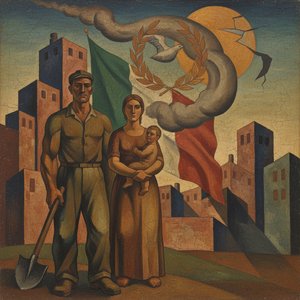
Mario Sironi: A Poetic of Modern Italian Identity Through Symbolism & Social Commentary
Explore the profound works of Mario Sironi, a key figure in Italian Modernism. Discover his evolution from Futurism to Metaphysical painting and his powerful social commentary. Learn about his legacy at OriginalUniqueArt.

