- Accueil

- Impression sur toile
- Mariano Fortuny
- Print sample
 Commander la reproduction Acheter l'image haute résolution
 Partager
 Partager
 Détails de l'œuvre
 Ajouter aux favoris

 Télécharger
 Articles similaires
 Radiographie
 Diaporama
Print sample
 Acrylic On Canvas
- WallArt
- Fortuny Aesthetic
 1907
1907- 19th Century
 49.0 x 34.0 cm
 Palazzo Fortuny
 Afficher la suite
Giclée / Impression d'art
Impression giclée ou sur toile de qualité musée, avec une production rapide et des finitions au choix.




P118B $10

P118H $10

P118W $10

P438Z $10

P508JH $12

P508YH $12

P805H $10

P805Z $10

P919BZ $10

P919G $10

P919XJ $10

P959ZH $10

P968JZ $12

W106C $8

W218G $10

W218JH $8

W218Y $10

W307PJ $10

W316G $10

W316PJ $8

W316Y $10

W398PJ $8

W4111J $10

W500HY $15

W500JH $15

W692G $12

W849H $8

W940BG $15

W953PJ $8




Choisissez parmi nos formats prédéfinis qui respectent les proportions originales de l’œuvre.

Vous pouvez saisir vos propres dimensions pour vous adapter à un cadre ou à un espace spécifique. Si la taille sélectionnée ne correspond pas aux proportions de l'image originale, nous recadrerons l'œuvre ou étendrons l'image avec une bordure en miroir ou une couleur unie. Une maquette numérique vous sera envoyée pour approbation avant le début de la production.
Veuillez noter que l'aperçu à l'écran ne reflète pas le recadrage ou l'extension réelle. Seule la maquette montrera avec précision la composition finale.
Bien que des tailles personnalisées soient disponibles, nous vous recommandons de choisir une dimension dans la liste prédéfinie afin de préserver les proportions originales.
Livraison dans le monde entier () en 2 semaines au lieu des 4/5 semaines habituelles. (22 juillet)

Livraison express gratuite dans le monde entier

Toile de lin de haute qualité

Assurance transport complète

Garantie de remboursement des frais de douane

Garantie de fidélité des couleurs

Politique de retour de 60 jours (uniquement en cas de défaut)

Garantie de remboursement à 100%

Réduction sur les achats groupés
 L'option verre n'est disponible que pour les dimensions inférieures à 110 cm.

Print sample
Giclée / Impression d'art
Format de reproduction
-


Prix total final
-
Description de l'œuvre
A Study in Color and Illusion: Mariano Fortuny’s “Print Sample”
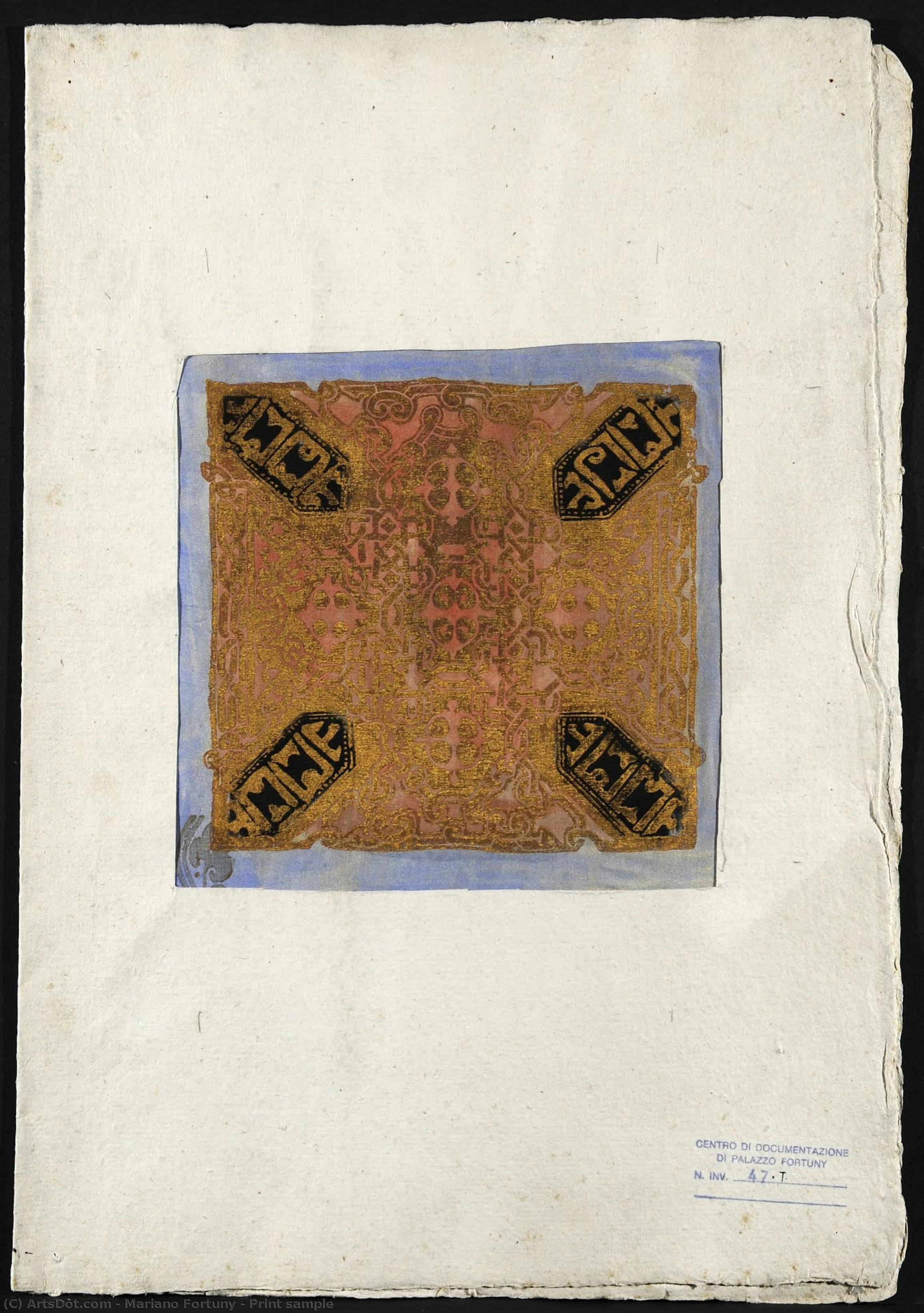
This captivating artwork, titled "Print sample," offers an intimate glimpse into the revolutionary world of Mariano Fortuny – a figure as adept at theatrical innovation as he was at painting. Measuring 49 x 34 cm, this 1907 print embodies Fortuny’s meticulous approach to light and color, a cornerstone of his artistic legacy. The composition itself is deceptively simple: a square canvas dominated by a rich red background, punctuated by four overlapping circles of varying blues. Yet, within this apparent restraint lies a profound exploration of visual perception and the techniques that would define Fortuny's enduring fame.
The Genius of the Fortuny Cyclorama
Mariano Fortuny’s genius wasn’t confined to easel painting; it extended into the realm of theatrical design. Born in Reus, Spain, in 1871, he inherited a passion for art from his father, a genre painter who tragically died when Mariano was just three years old. This early loss propelled the family to Paris, where Mariano’s mother exposed him to the luxurious world of textiles and fabrics – an influence that would profoundly shape his artistic vocabulary. Fortuny's most significant contribution came with the development of the “cyclorama dome,” a semi-hemispherical structure designed to bathe theatrical scenes in indirect light, creating an illusion of vastness and seamlessly blending painted backdrops with the actual stage. This technique, detailed in his treatise "Eclairage Scenique," was born from his meticulous study of reflected light – a concept that he applied equally to his still-life paintings.
Technique and Materiality
Created using print media in 1907, “Print sample” demonstrates Fortuny’s mastery of color mixing and layering. The varying shades of blue within the circles aren't simply painted; they are achieved through a sophisticated understanding of how light interacts with different surfaces – a principle he meticulously documented. The use of multiple layers, characteristic of his technique, creates a shimmering depth that draws the viewer into the artwork. The slight overlap of the circles isn’t merely an aesthetic choice; it's a deliberate manipulation of perspective, echoing Fortuny’s broader interest in creating illusions and challenging traditional notions of representation. The piece speaks to his innovative approach to materials, utilizing print media to achieve effects previously only attainable through oil paint.
Symbolism and Emotional Resonance
"Print sample" can be interpreted as a meditation on the nature of perception itself. Fortuny’s relentless pursuit of creating believable illusions – whether in theatrical settings or paintings – suggests a fascination with the power of the mind to construct reality. The circles, seemingly simple forms, become imbued with a sense of mystery and contemplation. Displayed at the Palazzo Fortuny in Venice, this artwork serves as a tangible link to a visionary artist who fundamentally altered the landscape of both art and theatre. It’s a testament to his dedication to innovation and his profound understanding of how light, color, and form can evoke powerful emotions.
Biographie de l'artiste
Early Life and Inspiration
Mariano Fortuny y Marsal (1838-1874), painter orientalist spanish, was born in Grenada on May 5, 1838, to a modest family of artists. When Fortuny was three, his father died suddenly — a loss he carried the rest of his life. After his father’s death, his mother moved the family first to Paris, france, where mariano's mother introduced him to various textiles and fabrics that would later influence his creativity.Artistic Talents and Inventions
Mariano Fortuny showcased his artistic talents from a young age, demonstrating skills in painting, photography, sculpting, architecture, etching, and theatrical stage lighting. His inventions, including over twenty patented between 1901 and 1934, revolutionized the world of theater design.- He developed the fortuny cyclorama dome, a quarter dome-shaped structure of plaster or cloth, which used indirect lighting to create a seamless transition between scenes.
- His treatise "eclairage scenique" (1904) described his discovery of reflecting light off different surfaces, changing its color, intensity, and properties.
Notable Contributions and Collaborations
Mariano Fortuny's work gained widespread recognition in the 1920s. He collaborated with notable figures, including:- Richard Wagner, a german composer, whose operas inspired mariano to paint scenes.
- The famous opera house, La Scala of Milan, where he installed his dome, adapting it for the larger theater and inventing a suction fan to maintain its taut structure.
Legacy and Later Life
Mariano Fortuny passed away on May 3, 1949, in venice, italy. His work inspired french novelist Marcel Proust, and his life was depicted in pere gimferrer's novel "fortuny." Mariano’s legacy continues to influence the world of theatrical design.- Explore more about mariano fortuny's inventions and designs at OriginalUniqueArt's collection.
- Discover the impact of his work on theatrical lighting in The Museum Destroyed by Fire (united states), a story of an unfortunate event that shaped american art history, available at OriginalUniqueArt's blog.
Selected Paintings by Mariano Fortuny and Other Artists
- Mariano Fortuny: Teagown (museum of fine arts, boston, united states), available at OriginalUniqueArt's collection.
- Marc Chagall: Study to 'song of songs iv' (naive art / primitivism), available at OriginalUniqueArt.com/@@/8xyhdc-marc-chagall-study-to-song-of-songs-iv
- Pablo Picasso: Clarinet (analytical cubism, oil on canvas), available at OriginalUniqueArt.com/@@/8xz53k-vincent-van-gogh-tree-roots
- Vincent van Gogh: Tree Roots (50 x 100 cm, post-impressionism, oil on canvas), available at OriginalUniqueArt.com/@@/8xz53k-vincent-van-gogh-tree-roots

Mariano Fortuny
1871 - 1949 , Espagne
En bref
- Artistic Movement Or Style: Orientalism art
- Artists Or Movements Influenced By This Artist: ['Marcel Proust']
- Artists Who Influenced This Artist: ['Richard Wagner']
- Date Of Birth: May 11, 1871
- Date Of Death: May 3, 1949
- Full Name: Mariano Fortuny y Marsal
- Nationality: Spanish
- Notable Artworks:
- Teagown
- Portrait of Henriette Fortuny
- Place Of Birth: Granada, Spain
Articles connexes
Les 25 Chefs-d'œuvre du Metropolitan Museum of Art : Voyage Artistique et Décor d'Exception
Plongez au cœur du Metropolitan Museum of Art avec notre sélection des 25 œuvres les plus emblématiques. Découvrez l'histoire de Van Gogh, Monet et d'autres maîtres, et trouvez l'inspiration pour une décoration intérieure raffinée. Reproductions de qualité muséale sur OriginalUniqueArt.com.

James Abbott McNeill Whistler : Les 25 Œuvres Maîtresses d'un Précurseur de l'Art Moderne
Plongez dans l'univers de James Abbott McNeill Whistler : découvrez ses 25 œuvres les plus emblématiques, des nocturnes aux portraits saisissants. Explorez son esthétisme unique et trouvez l'inspiration déco avec OriginalUniqueArt.com.
Les 25 Chefs-d'œuvre Incontournables de la National Gallery of Art : Peintures et Décor d'Exception
Plongez au cœur des 25 chefs-d'œuvre de la National Gallery of Art, Washington ! Découvrez l'histoire fascinante de Cézanne, Matisse, Picasso et bien d'autres. Trouvez l'inspiration déco et admirez les reproductions tableaux exceptionnelles sur OriginalUniqueArt.com.
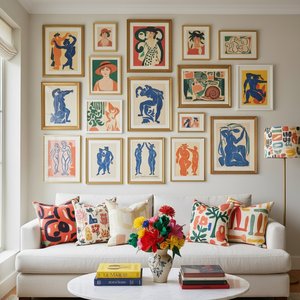
Henri Matisse : Les 25 Œuvres Maîtresses d'un Génie de la Couleur | OriginalUniqueArt
Plongez dans l'univers vibrant d'Henri Matisse ! Découvrez les 25 œuvres majeures du fauvisme et de la peinture moderne. Explorez La Danse, L'Atelier Rouge & plus encore. Reproductions de qualité musée sur OriginalUniqueArt.com.
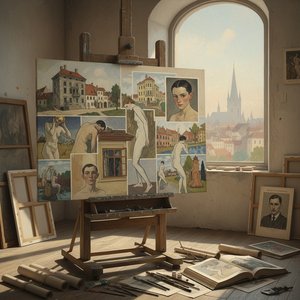
Egon Schiele : Les 25 Œuvres Maîtresses d'un Artiste Expressionniste
Plongez dans l'univers poignant d'Egon Schiele avec les 25 œuvres incontournables de ce maître expressionniste. Découvrez son style unique, ses nus audacieux et la profondeur émotionnelle de ses portraits. Reproductions de qualité muséale sur OriginalUniqueArt.com