 Envoyer
 Partager
 Détails de l'œuvre

 Télécharger
 Articles similaires
 Diaporama
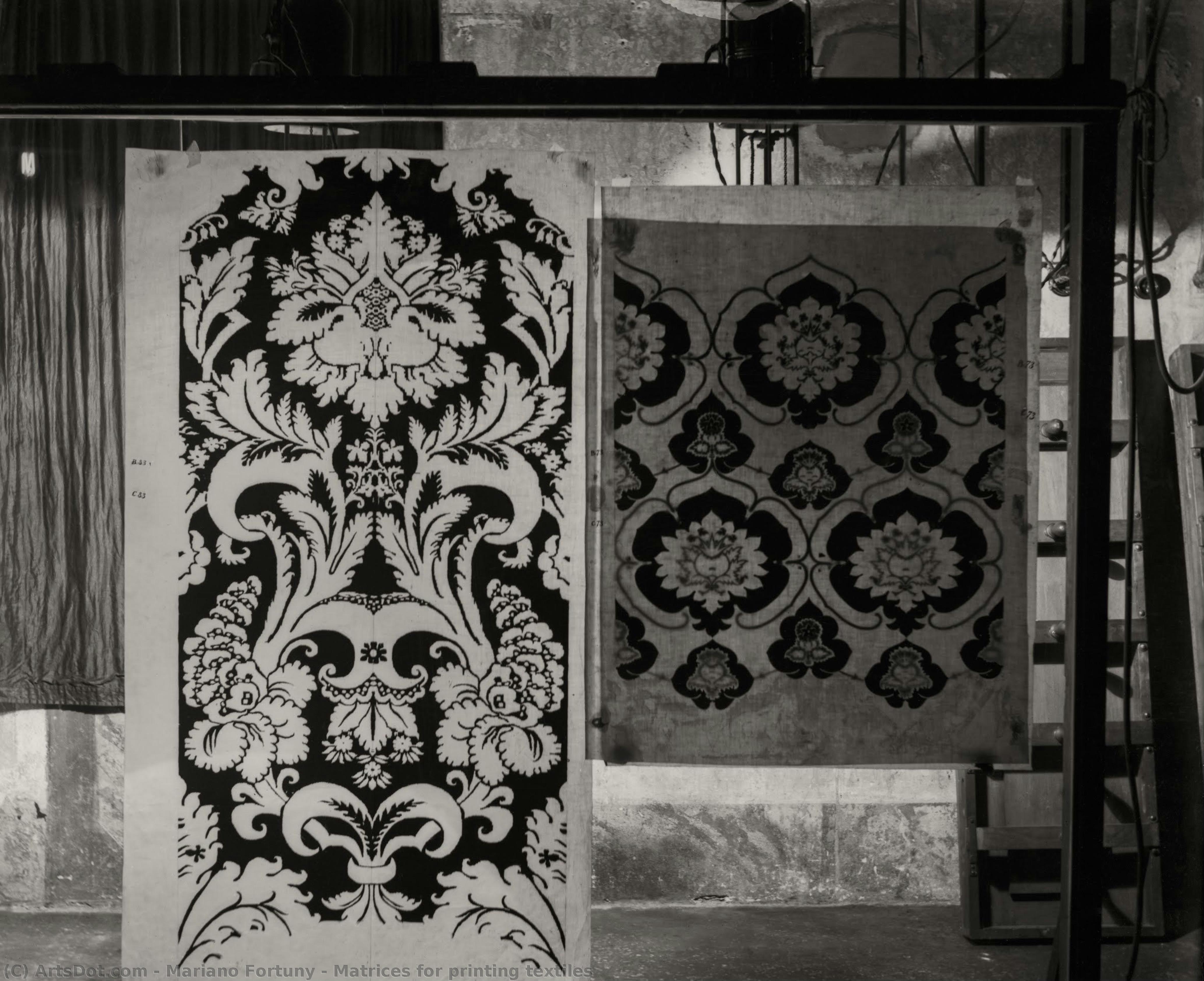
Matrices for printing textiles
 Textile
- Art Deco
 1920
1920 9.0 x 12.0 cm
 Palazzo Fortuny
 Lire la suite
Reproduction à l'huile faite à la main
Huile sur toile peinte à la main, avec cadre et dimensions personnalisés, réalisée sur commande par nos artistes. ( Commander l'impression Télécharger l'image haute résolution)




































Choisissez parmi nos formats prédéfinis qui respectent les proportions originales de l’œuvre.

Vous pouvez saisir vos propres dimensions pour l'adapter à un cadre ou à un espace spécifique. Si la taille sélectionnée ne correspond pas aux proportions de l'image d'origine, nous recadrerons l'œuvre ou prolongerons la peinture avec des éléments peints à la main supplémentaires. Une maquette numérique vous sera envoyée pour approbation avant le début de la production.
Veuillez noter que l'aperçu à l'écran ne reflète pas le recadrage ou l'extension réels. Seule la maquette montrera fidèlement la composition finale.
Bien que des tailles personnalisées soient disponibles, nous vous recommandons de sélectionner une dimension dans la liste prédéfinie afin de préserver les proportions d'origine.
Après la commande, l’équipe OriginalUniqueArt.com contactera le client par e-mail pour recueillir ses instructions et lui fournira une maquette d’aperçu
Livraison dans le monde entier () en 3 à 4 semaines au lieu des 5 semaines habituelles. (19 août). Aucun compromis sur la qualité.

Livraison express gratuite dans le monde entier

Toile de lin de qualité supérieure

Assurance transport complète

Garantie de remboursement des droits de douane

Garantie de fidélité des couleurs

Politique de retour de 60 jours (uniquement en cas de défaut)

Garantie de remboursement à 100%

Offre de tarifs dégressifs
 L'option verre n'est disponible que pour les dimensions inférieures à 110 cm.

Matrices for printing textiles
Technique de reproduction
Format de la reproduction
-


Prix total
$ 300
Description de l'œuvre
A Window into a Spanish Atelier: Exploring ‘Matrices for Printing Textiles’
Mariano Fortuny y Madrazo's “Matrices for Printing Textiles,” created in 1920, isn’t merely a depiction of fabric; it’s a meticulously crafted glimpse into the heart of a vibrant artistic and industrial world. This black-and-white photograph, housed within a serene art studio setting, captures a pivotal moment in Fortuny's career – his innovative approach to textile design and production. The image isn’t simply about patterns; it’s about the process itself: the careful arrangement of matrices, the tools that translated artistic vision into tangible, repeating designs destined for luxurious fabrics.
The composition immediately draws the eye to the two wall hangings dominating the scene. One bursts with a dense floral tapestry, a riot of swirling leaves and stylized blossoms rendered in rich, layered textures. The other presents a more controlled geometric design – a symmetrical framework of repeating motifs that subtly resemble abstracted flowers. Fortuny’s genius lies not just in his aesthetic choices but also in his understanding of how these designs would be realized through the intricate process of matrix creation. Notice the precise lines and angles, suggesting a methodical approach to pattern development, a testament to Fortuny's engineering mind alongside his artistic sensibilities.
The Master of Delphos and Orientalist Influence
Mariano Fortuny (1871-1949) was far more than just a painter; he was a polymath – a designer, stage lighting innovator, architect, and textile pioneer. Born in Granada, Spain, his early life was profoundly shaped by the loss of his father, leading to a move to Paris where his mother introduced him to the world of textiles. This exposure ignited a lifelong fascination with fabrics, culminating in his revolutionary “Delphos” gowns – inspired by ancient Greek drapery and celebrated for their flowing elegance. His work is deeply rooted in Orientalist themes, reflecting a fascination with exotic cultures and incorporating intricate patterns and motifs borrowed from North African and Middle Eastern designs.
Fortuny’s influence extended beyond fashion; he revolutionized theatrical lighting design with his “fortuny cyclorama dome,” a groundbreaking invention that created seamless transitions between scenes through the strategic use of reflected light. This technical innovation, combined with his artistic vision, cemented his reputation as a true innovator and a master of visual storytelling.
Decoding the Symbolism: Craft, Tradition, and Artistic Vision
Beyond the purely decorative, “Matrices for Printing Textiles” speaks to a deeper narrative about craftsmanship, tradition, and the marriage of art and industry. The photograph’s muted tones evoke a sense of timelessness, suggesting a process that has remained largely unchanged for centuries. The studio setting itself – with its worn walls and simple furniture – hints at an environment dedicated to meticulous work and artistic contemplation. The matrices themselves are not just tools; they represent the culmination of creative thought, transforming abstract ideas into reproducible patterns.
Furthermore, the image subtly references Spain’s rich history of textile production. Fortuny's work builds upon a long tradition of intricate weaving and dyeing techniques, while simultaneously pushing the boundaries of design with his innovative approach to pattern creation. The photograph serves as a visual testament to this legacy – a bridge between past and present, artistry and industry.
A Legacy in Reproduction: Bringing Fortuny’s Vision to Life
Today, OriginalUniqueArt offers high-quality reproductions of “Matrices for Printing Textiles,” allowing art lovers worldwide to experience the beauty and intricacy of this remarkable work. Whether adorning a wall or serving as a focal point in an interior design scheme, this print captures the essence of Fortuny’s artistic vision – a celebration of craftsmanship, pattern, and the enduring power of visual storytelling. Consider commissioning a custom-sized reproduction to perfectly complement your space and bring a touch of Spanish elegance into your home.
Biographie de l'artiste
Early Life and Inspiration
Mariano Fortuny y Marsal (1838-1874), painter orientalist spanish, was born in Grenada on May 5, 1838, to a modest family of artists. When Fortuny was three, his father died suddenly — a loss he carried the rest of his life. After his father’s death, his mother moved the family first to Paris, france, where mariano's mother introduced him to various textiles and fabrics that would later influence his creativity.Artistic Talents and Inventions
Mariano Fortuny showcased his artistic talents from a young age, demonstrating skills in painting, photography, sculpting, architecture, etching, and theatrical stage lighting. His inventions, including over twenty patented between 1901 and 1934, revolutionized the world of theater design.- He developed the fortuny cyclorama dome, a quarter dome-shaped structure of plaster or cloth, which used indirect lighting to create a seamless transition between scenes.
- His treatise "eclairage scenique" (1904) described his discovery of reflecting light off different surfaces, changing its color, intensity, and properties.
Notable Contributions and Collaborations
Mariano Fortuny's work gained widespread recognition in the 1920s. He collaborated with notable figures, including:- Richard Wagner, a german composer, whose operas inspired mariano to paint scenes.
- The famous opera house, La Scala of Milan, where he installed his dome, adapting it for the larger theater and inventing a suction fan to maintain its taut structure.
Legacy and Later Life
Mariano Fortuny passed away on May 3, 1949, in venice, italy. His work inspired french novelist Marcel Proust, and his life was depicted in pere gimferrer's novel "fortuny." Mariano’s legacy continues to influence the world of theatrical design.- Explore more about mariano fortuny's inventions and designs at OriginalUniqueArt's collection.
- Discover the impact of his work on theatrical lighting in The Museum Destroyed by Fire (united states), a story of an unfortunate event that shaped american art history, available at OriginalUniqueArt's blog.
Selected Paintings by Mariano Fortuny and Other Artists
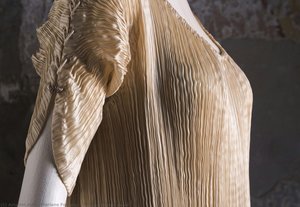
- Mariano Fortuny: Teagown (museum of fine arts, boston, united states), available at OriginalUniqueArt's collection.
- Marc Chagall: Study to 'song of songs iv' (naive art / primitivism), available at OriginalUniqueArt.com/@@/8xyhdc-marc-chagall-study-to-song-of-songs-iv
- Pablo Picasso: Clarinet (analytical cubism, oil on canvas), available at OriginalUniqueArt.com/@@/8xz53k-vincent-van-gogh-tree-roots
- Vincent van Gogh: Tree Roots (50 x 100 cm, post-impressionism, oil on canvas), available at OriginalUniqueArt.com/@@/8xz53k-vincent-van-gogh-tree-roots

Mariano Fortuny
1871 - 1949 , Espagne
L'essentiel de l'artiste
- Artistic Movement Or Style: Orientalism art
- Artists Or Movements Influenced By This Artist: ['Marcel Proust']
- Artists Who Influenced This Artist: ['Richard Wagner']
- Date Of Birth: May 11, 1871
- Date Of Death: May 3, 1949
- Full Name: Mariano Fortuny y Marsal
- Nationality: Spanish
- Notable Artworks:
- Teagown
- Portrait of Henriette Fortuny
- Place Of Birth: Granada, Spain
Articles connexes

Mariano Fortuny: A Fusion of Art, Fashion & Design – Exploring a Venetian Innovator's Legacy
Explore the captivating world of Mariano Fortuny – artist, designer & innovator. Discover his revolutionary textiles, iconic Delphos gown, and lasting influence on art, fashion & interiors. A collector's guide to a Venetian master.

Echoes of Time: Exploring the Enduring Appeal & Historical Context of Vintage Art Prints
Explore the captivating world of vintage art prints! Discover their history, collecting tips & enduring appeal. Expert insights on chromolithography and building a legacy collection with OriginalUniqueArt.
Giclée Prints: Archival Quality & Aesthetic Nuances for the Discerning Collector
Explore the world of giclée prints with OriginalUniqueArt. Learn about archival quality, aesthetic nuances & investment potential. Expert guidance for discerning art collectors seeking museum-quality reproductions and lasting value.

The Enduring Legacy of Fine Art Prints: Technique, History & Aesthetic Impact
Explore the rich history & techniques of fine art prints. Discover investment potential, assess authenticity, and learn how to preserve your collection with expert guidance. Trusted insights for discerning collectors.
Art Deco Unveiled: The Glamour and Geometry of a Timeless Era
Discover the breathtaking allure of Art Deco. Explore the era's iconic geometry, legendary designers like Erté, and timeless glamour. Perfect for discerning collectors seeking to infuse their spaces with sophisticated modernist elegance and historical prestige.