Text size

() ·

A painting made for you, by hand

Block for printing textiles

Reproduction à l'huile faite à la main

Huile sur toile peinte à la main, avec cadre et dimensions personnalisés, réalisée sur commande par nos artistes. ( Passer au format impression Passer au format numérique)

Description de la pièce

A striking 1905 woodblock print by Mariano Fortuny featuring geometric abstraction and Celtic-inspired design. Explore the beauty of this unique textile art reproduction.

Biographie de l'artiste

Mariano Fortuny (1871-1949) était un peintre espagnol renommé pour ses tissus innovants, le modèle Delphos et ses créations éclairages théâtraux révolutionnaires. Découvrez son influence orientaliste et son héritage artistique durable.

from ·

Chapter 1

How large should it be?

Slide to change the size; the picture on the left shows the frame at its real width. The proportions of the original are kept.

Format standard
sur mesure
CM
INCH

Choisissez parmi nos formats prédéfinis qui respectent les proportions originales de l’œuvre.

largeur
hauteur

Saisissez la largeur et la hauteur souhaitées, pour s'adapter à votre cadre ou à votre mur. Cette œuvre est peinte à la main ; ainsi, pour un format de forme différente, l'artiste peut peindre un peu plus autour du tableau ou réduire légèrement les bords — c'est vous qui choisissez. Nous vous envoyons une maquette numérique pour approbation avant que la peinture ne commence. L'image présentée sur cette page ne reflète pas le résultat réel — seule la maquette le fait.

Chapter 2

How should it arrive?

Choose the edges of the stretched canvas

Choose your frame

Corner sample of the WhiteWrap canvas edge finish, stretched on bois massif bars
White €1
Corner sample of the BlurSideWrap canvas edge finish, stretched on bois massif bars
Blurside €1
Corner sample of the ExtendedWrap canvas edge finish, stretched on bois massif bars
Extended €1
Corner sample of the P118B picture frame: polystyrène moulé, 5 cm wide and 3 cm thick
P118B €10
Corner sample of the P118H picture frame: polystyrène moulé, 5 cm wide and 3 cm thick
P118H €10
Corner sample of the P118W picture frame: polystyrène moulé, 5 cm wide and 3 cm thick
P118W €10
Corner sample of the P438Z picture frame: polystyrène moulé, 5.5 cm wide and 3.5 cm thick
P438Z €10
Corner sample of the P508JH picture frame: polystyrène moulé, 7 cm wide and 3.5 cm thick
P508JH €12
Corner sample of the P508YH picture frame: polystyrène moulé, 7 cm wide and 3.5 cm thick
P508YH €12
Corner sample of the P805H picture frame: polystyrène moulé, 5 cm wide and 3.5 cm thick
P805H €10
Corner sample of the P805Z picture frame: polystyrène moulé, 5 cm wide and 3.5 cm thick
P805Z €10
Corner sample of the P919BZ picture frame: polystyrène moulé, 7 cm wide and 3.5 cm thick
P919BZ €10
Corner sample of the P919G picture frame: polystyrène moulé, 7 cm wide and 3.5 cm thick
P919G €10
Corner sample of the P919XJ picture frame: polystyrène moulé, 7 cm wide and 3.5 cm thick
P919XJ €10
Corner sample of the P959ZH picture frame: polystyrène moulé, 5 cm wide and 3 cm thick
P959ZH €10
Corner sample of the P968JZ picture frame: polystyrène moulé, 6 cm wide and 4 cm thick
P968JZ €12
Corner sample of the W106C picture frame: bois massif, 5 cm wide and 3 cm thick
W106C €8
Corner sample of the W218G picture frame: bois massif, 5 cm wide and 3 cm thick
W218G €10
Corner sample of the W218JH picture frame: bois massif, 5 cm wide and 3 cm thick
W218JH €8
Corner sample of the W218Y picture frame: bois massif, 5 cm wide and 3 cm thick
W218Y €10
Corner sample of the W307PJ picture frame: bois massif, 6 cm wide and 3 cm thick
W307PJ €10
Corner sample of the W316G picture frame: bois massif, 6 cm wide and 3 cm thick
W316G €10
Corner sample of the W316PJ picture frame: bois massif, 6 cm wide and 3 cm thick
W316PJ €8
Corner sample of the W316Y picture frame: bois massif, 6 cm wide and 3 cm thick
W316Y €10
Corner sample of the W398PJ picture frame: bois massif, 5 cm wide and 3 cm thick
W398PJ €8
Corner sample of the W4111J picture frame: bois massif, 6.5 cm wide and 3.5 cm thick
W4111J €10
Corner sample of the W500HY picture frame: bois massif, 7 cm wide and 5 cm thick
W500HY €15
Corner sample of the W500JH picture frame: bois massif, 7 cm wide and 5 cm thick
W500JH €15
Corner sample of the W692G picture frame: bois massif, 8 cm wide and 4 cm thick
W692G €12
Corner sample of the W849H picture frame: bois massif, 5 cm wide and 3 cm thick
W849H €8
Corner sample of the W940BG picture frame: bois massif, 7.5 cm wide and 4.5 cm thick
W940BG €15
Corner sample of the W953PJ picture frame: bois massif, 6 cm wide and 3.5 cm thick
W953PJ €8
Corner sample of the H24-GOLD picture frame: bois sculpté et apprêté au gesso, 10 cm wide and 6 cm thick
H24-GOLD €30
Corner sample of the H24-SILVER picture frame: bois sculpté et apprêté au gesso, 10 cm wide and 6 cm thick
H24-SILVER €30
Corner sample of the H36-GOLD picture frame: bois sculpté et apprêté au gesso, 15 cm wide and 6.5 cm thick
H36-GOLD €45
Corner sample of the H36-SILVER picture frame: bois sculpté et apprêté au gesso, 15 cm wide and 6.5 cm thick
H36-SILVER €45
Aperçu du cadre
Sous cadre

Moulding: . Overall size with the frame: .

Chapter 3

Who paints it, and should anything change?

Examples of what can be changed: Replace face with customer photo; Add pet (e.g., replace cat with dog); Include hidden message in background; Change background landscape or elements.
After order, OriginalUniqueArt.com team will email client for instructions and provide a mockup preview

Livraison dans le monde entier () en 3 à 4 semaines au lieu des 5 semaines habituelles. (2 novembre). Aucun compromis sur la qualité.

Chapter 4

The finishing touches

A nameplate, as in a museum?

Détails de la plaque en bronze gravée

This elegant plaque features the artist's name and the title of the artwork, finely engraved for a timeless presentation.

It is made from bronze with a refined, elegant finish. The text is precisely laser-engraved for a sharp and permanent result. Measuring 9x2 cm, the plaque is compact yet easy to read. It's built to be durable and scratch-resistant, offering a professional, museum-quality look. Mounting is simple thanks to the included adhesive backing.

Détails de la plaque en acrylique transparent

The plaque includes essential engraved details such as the artist's name, the title of the artwork, the date it was created, the type of media used-like oil on canvas or watercolor-a brief description of the piece, and a QR code that links to the complete artwork information.

It is crafted from clear acrylic, offering a sleek, modern appearance. The text is UV-engraved in black to ensure strong visual contrast. With a size of 10x15 cm, it ensures optimal readability. It comes equipped with two metal hooks for secure wall mounting. The plaque is designed to be weather-resistant, making it suitable for various environments, and it includes interactive features that work seamlessly with smartphone scanning.

Détails de la plaque en acrylique noir

This elegant plaque includes engraved information such as the artist's name, the title of the artwork, the date it was created, the type of media used (like oil on canvas or watercolor), a short description of the artwork, and a QR code for quick access to more information.

The plaque itself is made from refined black acrylic with a premium finish. The text is laser-engraved in white for high contrast and readability. Its size is 10x15 cm, designed to be easy to read. It comes with two metal hooks for professional mounting. The design is sleek and fits any interior style. It is also weather-resistant and durable, with built-in digital integration for mobile compatibility.

A protective varnish?

When do you need it?

Chapter 5

Your painting, as you ordered it

Block for printing textiles

Technique de reproduction

Format de la reproduction

-

Artiste de prestige

Plus de détails, de finesse et un temps de production accru

-

Cadre de reproduction

-

-

Pour les œuvres ou reproductions dont un côté mesure plus de 105 cm (environ 41 pouces), le cadre sera expédié sous forme de kit démonté. Cette méthode garantit une livraison sécurisée et prévient tout dommage pendant le transport.

Assemblage professionnel requis - ce produit n'est pas destiné au bricolage (DIY).
Le kit doit être assemblé et la toile tendue par un encadreur professionnel expérimenté, en utilisant de la colle à bois (non fournie), une pince à tendre la toile et des serre-joints pour maintenir les traverses d'équerre pendant le séchage de la colle. Un assemblage incorrect ou une tension inégale de la toile peut endommager l'œuvre de manière irréversible et n'est pas couvert par notre garantie.

  • Toutes les baguettes en bois massif sont incluses, découpées avec précision à la taille requise.

  • À assembler avec les vis fournies, ainsi qu'avec de la colle à bois pour les assemblages d'angles (non fournie), à prévoir par votre encadreur.

  • L'utilisation d'outils professionnels est requise et non incluse : une pince à tendre la toile (tendeur) et des serre-joints pour maintenir les baguettes bien d'équerre pendant le séchage de la colle.

Important :
L'assemblage des angles nécessite de la colle à bois, les barres doivent être maintenues avec des serre-joints jusqu'au séchage complet de la colle, et le tendage de la toile sur le châssis assemblé nécessite une pince à tendre la toile. Aucun de ces éléments n'est inclus dans le kit. Veuillez consulter un encadreur professionnel expérimenté avant de commander ce format.

Cartel

-

-

Vernis de protection

Vernis brillant (intensifie les couleurs, protège de la lumière et de l'humidité)

-

Personnaliser mon œuvre

Exemples de personnalisation : remplacer le visage par une photo du client ; ajouter un animal de compagnie (par exemple, remplacer un chat par un chien) ; inclure un message caché en arrière-plan ; modifier le paysage ou les éléments d'arrière-plan.

-

Livraison urgente

Livraison dans le monde entier () en 3 à 4 semaines au lieu des 5 semaines habituelles. (2 novembre). Aucune concession sur la qualité.

-

Livraison express

Livraison dans le monde entier () sous 5 semaines. (9 novembre).

Inclus

Prix total

€ 267

Prix total € 267

L'option verre n'est disponible que pour les dimensions inférieures à 110 cm.

Included with every order

  • Livraison express gratuite dans le monde entier

  • Toile de lin de qualité supérieure
  • Assurance transport complète
  • Garantie de remboursement des droits de douane
  • Garantie de fidélité des couleurs
  • Politique de retour de 100 jours (uniquement en cas de défaut)
  • Garantie de remboursement à 100%
  • Offre de tarifs dégressifs

A Fragment of Ancient Echoes: Mariano Fortuny’s ‘Block for Printing Textiles’

Within the hushed galleries of art history resides a deceptively simple object – a wooden block, carved with an intricate dance of geometric forms and subtly suggestive Celtic motifs. This is not merely a tool; it's a portal to a bygone era, a tangible link to the artistic ingenuity of Mariano Fortuny y Madrazo, a Spanish polymath whose vision transcended mere decoration. Fortuny’s ‘Block for Printing Textiles’ (1905), now meticulously reproduced in exquisite detail, offers a glimpse into his revolutionary approach to design and theatrical lighting, revealing a mind deeply influenced by both ancient traditions and the burgeoning innovations of the early 20th century.

The block itself is crafted from boxwood, a material prized for its density and ability to retain fine details. Its surface isn’t smooth; rather, it bears the marks of deliberate carving – deep grooves that would have held the inked patterns during the printing process. The design is remarkably restrained yet profoundly evocative. Dominating the block are two opposing faces, each presenting a stylized human form, seemingly caught in an eternal embrace or contemplation. These aren’t literal representations; they're abstracted figures, hinting at themes of duality, balance, and perhaps even the interplay between masculine and feminine energies – a recurring motif throughout Fortuny’s oeuvre.

The Weaver of Light and Shadow: Fortuny’s Theatrical Legacy

To fully appreciate this block, one must understand Fortuny's broader artistic ambitions. Born in Granada in 1871, he inherited his father’s legacy as a painter but quickly developed an insatiable curiosity for diverse crafts – from sculpture and architecture to photography and stage lighting. His fascination with the theatre, particularly the work of Richard Wagner, proved transformative. Fortuny recognized that traditional theatrical design relied on jarring transitions between scenes, disrupting the immersive experience he envisioned. He sought to create a seamless flow, mimicking the natural progression of light and shadow.

This quest led him to develop the “Fortuny cyclorama dome,” a revolutionary device that utilized indirect lighting reflected off various surfaces to eliminate harsh shadows and create a continuous, atmospheric illumination across the stage. His treatise, ‘Eclairage Scenique’ (1904), meticulously documented his discoveries – a radical departure from conventional stage design. The block for printing textiles wasn't simply a decorative element; it was intrinsically linked to this larger project, serving as a visual representation of the geometric principles underpinning his lighting system. The precise patterns carved into the wood mirrored the complex interplay of light and shadow he sought to achieve on stage.

Roots in Ancient Techniques: Woodblock Printing’s Enduring Allure

Fortuny's work is deeply rooted in the rich history of woodblock printing, a technique that stretches back millennia. From its origins in ancient China – where it was used for both textiles and paper – to its flourishing in Japan (ukiyo-e prints), this method has served as a powerful tool for artistic expression. The block itself embodies this legacy: a testament to the skill of artisans who patiently carved intricate designs into wood, preparing them for the application of ink and subsequent transfer onto fabric.

Consider the influence of traditional Japanese ukiyo-e prints, characterized by bold outlines, flat planes of color, and a focus on capturing fleeting moments of beauty. While Fortuny’s style is distinctly his own – incorporating elements of Celtic design and a refined European aesthetic – one can discern echoes of this ancient tradition in the block's composition and its emphasis on geometric abstraction. The careful consideration given to the carving process itself speaks volumes about the dedication and artistry involved.

A Timeless Echo: Reproduction and Artistic Resonance

Today, ‘Block for Printing Textiles’ is brought back to life through meticulous hand-painted reproductions. These aren't mere copies; they are faithful interpretations that capture the essence of Fortuny’s original vision. The subtle variations in color, texture, and detail reflect the inherent imperfections of the handcrafted process – a reminder that each reproduction possesses its own unique character.

Whether adorning a contemporary interior or serving as a focal point in an art collection, this block offers more than just visual appeal. It’s a window into the mind of a visionary artist, a celebration of ancient techniques, and a testament to the enduring power of design to evoke emotion and inspire contemplation. It's a fragment of ancient echoes, brought vividly back to life.

Questions et réponses

Puis-je prévisualiser «Block for printing textiles» de Mariano Fortuny avant de commander ?

Pour prévisualiser une reproduction de «Block for printing textiles» de Mariano Fortuny, consultez la page d'aperçu de l'œuvre : Aperçu en situation.

Quelle taille d'impression est recommandée pour « Block for printing textiles » ?

La taille d'impression recommandée pour «Block for printing textiles» de Mariano Fortuny est Medium.

Quelle atmosphère et quelle émotion se dégagent de « Block for printing textiles » ?

«Block for printing textiles» de Mariano Fortuny dégage un sentiment Reflective au sein d'une atmosphère globalement Calm.

More about this painting

Passer au format impression Passer au format numérique Envoyer
Détails de l'œuvre Guide Ajouter aux favoris Télécharger l'image Articles similaires Diaporama Q&A Statistiques

In numbers

  • 1905the year it was painted
  • 29frames to choose from
  • standard sizes, in its own proportions
  • 5weeks to paint and deliver it
Mariano Fortuny

Mariano Fortuny

1871 - 1949, Espagne

Quick facts about Mariano Fortuny

  • Artistic Movement Or Style: Orientalism art
  • Artists Or Movements Influenced By This Artist: ['Marcel Proust']
  • Artists Who Influenced This Artist: ['Richard Wagner']
  • Date Of Birth: May 11, 1871
  • Date Of Death: May 3, 1949
  • Full Name: Mariano Fortuny y Marsal
  • Nationality: Spanish
  • Notable Artworks:
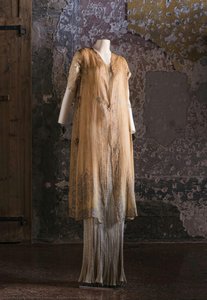
    • Teagown
    • Portrait of Henriette Fortuny
  • Place Of Birth: Granada, Spain

Biographie de l'artiste

Early Life and Inspiration

Mariano Fortuny y Marsal (1838-1874), painter orientalist spanish, was born in Grenada on May 5, 1838, to a modest family of artists. When Fortuny was three, his father died suddenly — a loss he carried the rest of his life. After his father’s death, his mother moved the family first to Paris, france, where mariano's mother introduced him to various textiles and fabrics that would later influence his creativity.

Artistic Talents and Inventions

Mariano Fortuny showcased his artistic talents from a young age, demonstrating skills in painting, photography, sculpting, architecture, etching, and theatrical stage lighting. His inventions, including over twenty patented between 1901 and 1934, revolutionized the world of theater design.
  • He developed the fortuny cyclorama dome, a quarter dome-shaped structure of plaster or cloth, which used indirect lighting to create a seamless transition between scenes.
  • His treatise "eclairage scenique" (1904) described his discovery of reflecting light off different surfaces, changing its color, intensity, and properties.

Notable Contributions and Collaborations

Mariano Fortuny's work gained widespread recognition in the 1920s. He collaborated with notable figures, including:
  • Richard Wagner, a german composer, whose operas inspired mariano to paint scenes.
  • The famous opera house, La Scala of Milan, where he installed his dome, adapting it for the larger theater and inventing a suction fan to maintain its taut structure.

Legacy and Later Life

Mariano Fortuny passed away on May 3, 1949, in venice, italy. His work inspired french novelist Marcel Proust, and his life was depicted in pere gimferrer's novel "fortuny." Mariano’s legacy continues to influence the world of theatrical design.
  • Explore more about mariano fortuny's inventions and designs at OriginalUniqueArt's collection.
  • Discover the impact of his work on theatrical lighting in The Museum Destroyed by Fire (united states), a story of an unfortunate event that shaped american art history, available at OriginalUniqueArt's blog.

Selected Paintings by Mariano Fortuny and Other Artists

  • Mariano Fortuny: Teagown (museum of fine arts, boston, united states), available at OriginalUniqueArt's collection.
  • Marc Chagall: Study to 'song of songs iv' (naive art / primitivism), available at OriginalUniqueArt.com/@@/8xyhdc-marc-chagall-study-to-song-of-songs-iv
  • Pablo Picasso: Clarinet (analytical cubism, oil on canvas), available at OriginalUniqueArt.com/@@/8xz53k-vincent-van-gogh-tree-roots
  • Vincent van Gogh: Tree Roots (50 x 100 cm, post-impressionism, oil on canvas), available at OriginalUniqueArt.com/@@/8xz53k-vincent-van-gogh-tree-roots

Informations clés

  • Subject or theme: Textile printing
  • Artistic style: Celtic-inspired design
  • Dimensions: 14 x 11 cm
  • Location: Private Collection
  • Artist: Mariano Fortuny

Quiz d'art

Chaque question ne comporte qu'une seule bonne réponse.

Question 1:
What is the primary subject depicted in Mariano Fortuny’s ‘Block for Printing Textiles’?
Question 2:
In what year was Mariano Fortuny’s ‘Block for Printing Textiles’ created?
Question 3:
The image shows a wooden block. What is the likely purpose of this type of block in the context of the artwork?
Question 4:
Mariano Fortuny was known for his innovations in which field?
Question 5:
The image suggests a connection to what historical printing technique?