Aperçu en situation
 Partager
 Partager
 Détails
 Guide imprimable

 Télécharger
 Articles similaires
 Radiographie
 Voir le diaporama
 Statistiques
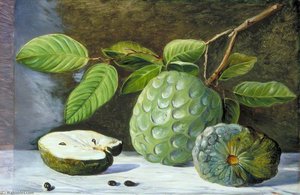
Feuillage et fruits d'un arbre de la forêt de Java
 Acrylique sur toile
- Art mural
- Botanique Victorien
 1876
1876 51.0 x 29.0 cm
 Galerie Marianne North
 Afficher la suite
Giclées et impressions d'art
Impressions giclées ou sur toile de qualité musée, avec une production rapide et des finitions au choix. ( Acheter la peinture faite à la main Passer au format image numérique)




P118B $10

P118H $10

P118W $10

P438Z $10

P508JH $12

P508YH $12

P805H $10

P805Z $10

P919BZ $10

P919G $10

P919XJ $10

P959ZH $10

P968JZ $12

W106C $8

W218G $10

W218JH $8

W218Y $10

W307PJ $10

W316G $10

W316PJ $8

W316Y $10

W398PJ $8

W4111J $10

W500HY $15

W500JH $15

W692G $12

W849H $8

W940BG $15

W953PJ $8




Choisissez parmi nos formats prédéfinis qui respectent les proportions originales de l’œuvre.

Vous pouvez saisir vos propres dimensions pour vous adapter à un cadre ou à un espace spécifique. Si la taille sélectionnée ne correspond pas aux proportions de l'image originale, nous recadrerons l'œuvre ou étendrons l'image avec une bordure en miroir ou une couleur unie. Une maquette numérique vous sera envoyée pour approbation avant le début de la production.
Veuillez noter que l'aperçu à l'écran ne reflète pas le recadrage ou l'extension réelle. Seule la maquette montrera avec précision la composition finale.
Bien que des tailles personnalisées soient disponibles, nous vous recommandons de choisir une dimension dans la liste prédéfinie afin de préserver les proportions originales.
Livraison dans le monde entier () en 2 semaines au lieu des 4/5 semaines habituelles. (25 septembre)

Livraison express gratuite dans le monde entier

Toile de lin de haute qualité

Assurance transport complète

Garantie de remboursement des droits de douane

Garantie de fidélité des couleurs

Garantie de retour de 100 jours (uniquement en cas de défaut)

Garantie de remboursement à 100%

Tarifs dégressifs sur quantité
 L'option verre n'est disponible que pour les dimensions inférieures à 110 cm.

Feuillage et fruits d'un arbre de la forêt de Java
Giclées et impressions d'art
Format de la reproduction
-


Prix total final
$ 80
A Forest’s Embrace: Marianne North's ‘Foliage and Fruit of a Forest Tree of Java’
Marianne North’s “Foliage and Fruit of a Forest Tree of Java,” painted in 1876, is more than just a botanical illustration; it’s a vibrant testament to Victorian exploration, artistic passion, and a profound connection with the natural world. This oil-on-board masterpiece transports us to the heart of Java’s rainforest, capturing not merely the appearance of a magnificent tree but also its teeming life and inherent beauty. North, a remarkably independent woman who defied societal expectations by embarking on decades of global expeditions solely dedicated to documenting flora, imbued her work with an almost palpable sense of wonder and scientific rigor.
The painting immediately draws the eye with its riotous profusion of color – the deep emerald greens of the glossy leaves, punctuated by the delicate blush of pink blossoms cascading from the branches. These aren’t simply decorative elements; they are integral to the tree's identity, suggesting a fecundity and abundance that speaks to the rainforest’s dynamic ecosystem. North meticulously rendered each leaf with an astonishing level of detail, capturing their subtle variations in texture and form. The artist’s use of oil paint allows for rich, layered tones, creating a sense of depth and volume that brings the tree vividly to life. Notice how she expertly utilizes light and shadow to model the foliage, giving it a three-dimensional quality that invites the viewer to step into the scene.
A Victorian Adventurer’s Vision
Marianne North's journey as an artist was uniquely shaped by her personal circumstances and unwavering determination. Born in 1830, she initially pursued a career as a musician but, following the death of her mother, redirected her energies towards botanical illustration – a field largely dominated by men at the time. Her father’s position as a Liberal MP provided some financial support, enabling her to embark on an extraordinary series of expeditions across Asia, Africa, and South America. These journeys weren't simply fact-finding missions; they were deeply personal quests fueled by a genuine love for botany and a desire to capture the beauty of the natural world with unparalleled accuracy.
North’s approach was revolutionary for her era. She didn’t rely on existing botanical illustrations or sketches; instead, she meticulously observed and painted directly from nature, often working in remote locations under challenging conditions. Her dedication resulted in over 800 paintings, forming a remarkable visual record of global biodiversity. Her work challenged the prevailing Victorian view of women's roles, demonstrating that scientific inquiry and artistic expression were not mutually exclusive pursuits.
Symbolism and the Rainforest’s Essence
Beyond its technical brilliance, “Foliage and Fruit of a Forest Tree of Java” is rich in symbolic meaning. The tree itself represents resilience, growth, and interconnectedness – fundamental themes within the rainforest ecosystem. The profusion of blossoms symbolizes fertility and abundance, while the fruits hint at sustenance and the cycle of life. The inclusion of specific plant species—such as the *Ficus benjamina*, a common fig tree known for its adaptability—underscores North’s commitment to documenting both familiar and exotic flora.
Furthermore, the painting can be interpreted as an allegory for Victorian exploration itself. North's journey mirrors the broader colonial enterprise of the time, albeit viewed through a distinctly artistic lens. However, unlike many depictions of colonialism, her work emphasizes appreciation and respect for the natural world rather than exploitation or domination. The vibrant colors and detailed rendering suggest a celebration of biodiversity—a plea to preserve these precious ecosystems before they are lost.
A Timeless Masterpiece – Reproduction Possibilities
Today, “Foliage and Fruit of a Forest Tree of Java” stands as a testament to Marianne North’s extraordinary life and artistic legacy. High-quality reproductions capture the painting's luminous colors and intricate details, making it an ideal addition to any home or office space. Whether displayed in a formal study or a bohemian living room, this artwork evokes a sense of tranquility and wonder—a reminder of the beauty and fragility of our planet’s natural heritage. Consider commissioning a hand-painted reproduction from OriginalUniqueArt.com to bring this iconic image into your world.
Biographie de l'artiste
Marianne North : Une vie en art botanique
Jeunesse et formation
- Née le 24 octobre 1830 à Hastings, au Royaume-Uni, Marianne North était la fille aînée d'une famille aisée propriétaire terrienne.
- Sa jeunesse a inclus une formation vocale auprès de Charlotte Helen Sainton-Dolby. Cependant, ses ambitions vocales ont été entravées par des problèmes de santé.
- Après cet échec, elle s'est tournée vers la peinture de fleurs, qui est devenue sa passion et son objectif professionnel.
Voyages étendus et découvertes botaniques
- Marianne North a entrepris des voyages étendus à travers le monde, débutant dans sa quarantaine – une entreprise remarquablement indépendante pour une femme victorienne.
- Ses voyages l'ont menée en Syrie, au Nil, en Sicile, au Canada, aux États-Unis, en Jamaïque, au Brésil, à Ténriffe, en Californie, au Japon, à Bornéo, à Java, à Ceylan (Sri Lanka), en Inde, en Australie et en Nouvelle-Zélande.
- Ces voyages n'étaient pas simplement du tourisme ; elle a méticuleusement documenté la flore de chaque région grâce à des peintures botaniques détaillées.
- Elle a découvert de nombreuses espèces de plantes lors de ses expéditions, contribuant ainsi significativement aux connaissances botaniques.
Style artistique et développement
- Le style artistique de North est caractérisé par son réalisme détaillé et sa palette de couleurs vibrantes.
- Elle travaillait principalement à l'huile, créant des peintures qui capturaient l'essence des plantes et paysages exotiques avec une précision remarquable.
- Son approche était largement autodidacte ; elle a développé ses compétences grâce à l'observation et à la pratique pendant ses voyages.
- Bien qu'elle ne soit pas alignée sur un mouvement artistique spécifique, son travail reflète des éléments du naturalisme victorien et de l'illustration scientifique.
Œuvres notables et la galerie de Kew
- Certaines de ses œuvres les plus célèbres comprennent Foliage, Fleurs et Fruits du cajou, Tanjore, Inde, Éléphants, Poissons exotiques et Insecte à feuilles.
- Reconnaissant l'importance de sa collection, Marianne North a offert environ 800 peintures aux Jardins botaniques royaux de Kew.
- En 1882, une galerie dédiée a été construite à Kew spécifiquement pour abriter son travail – la Galerie Marianne North. Elle reste aujourd'hui une attraction populaire.
Héritage et signification historique
- Marianne North a défié les attentes victoriennes conventionnelles envers les femmes en poursuivant une carrière artistique indépendante et professionnelle.
- Ses peintures fournissent une documentation précieuse de la vie végétale du monde entier au XIXe siècle, servant à la fois d'art et de document scientifique.
- La restauration de la Galerie Marianne North à Kew en 2008 a souligné son héritage durable et sa contribution à la botanique et à l'art.
- Elle est mémoriée comme une artiste botanique pionnière et une âme aventureuse qui a défié les normes sociétales pour poursuivre ses passions.

Marianne North
1830 - 1890 , Royaume-Uni
En bref
- Date De Décès: 30 août 1890
- Date De Naissance: 24 octobre 1830
- Lieu De Naissance: Hastings, Royaume-Uni
- Mouvement Artistique: Naturalisme victorien
- Nationalité: Britannique
- Nom Complet: Marianne North
- Œuvres Notables:
- Foliage, Fleurs et Fruits du Cajou
- Éléphants
- Poissons exotiques
- Insecte à feuilles
Articles similaires
The Flourishing Canvas: A Historical Journey Through Botanical Illustration
Explore the captivating history of botanical illustration! Discover renowned artists like Robert Havell & Mary Walcott, learn about techniques, and find museum-quality art at OriginalUniqueArt.com.
Marianne North : Les 25 Œuvres Maîtresses d'une Voyageuse en Couleurs | OriginalUniqueArt
Plongez dans l'univers coloré de Marianne North ! Découvrez ses 25 œuvres les plus emblématiques, des paysages exotiques aux fleurs peintes avec une précision botanique unique. Reproductions d'art de qualité supérieure sur OriginalUniqueArt.com.

Victorian Botanical Art: How Bold, High-Impact Florals are Reclaiming Modern Interior Design
Discover how Victorian botanical art is transforming modern spaces. Explore high-impact floral aesthetics, from Marianne North's tropical drama to bold, hand-painted reproductions that bring vintage scientific beauty into contemporary urban design.
The Timeless Elegance of Victorian Botanical Painting: A Journey Through Nature's Intricate Detail and Scientific Artistry
Discover the exquisite world of Victorian botanical painting, where scientific precision meets profound aesthetic grace. Explore a journey through nature's intricate details, from legendary illustrators to the untamed beauty of Marianne North’s vibrant floral masterpieces.
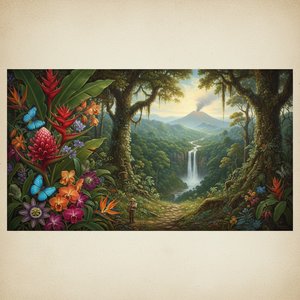
Exploring the Vibrant World of Marianne North: A Journey Through Botanical and Exotic Landscapes
Discover the breathtaking botanical world of Marianne North. Explore her vibrant Victorian oil paintings of exotic landscapes, from Brazil to Jamaica, through an expert art-historical lens. Perfect for classic art enthusiasts and collectors of fine natural history art.