
 Aperçu en situation
 Envoyer
 Partager
 Détails de l'œuvre

 Télécharger
 Articles similaires
 Radiographie
 Diaporama
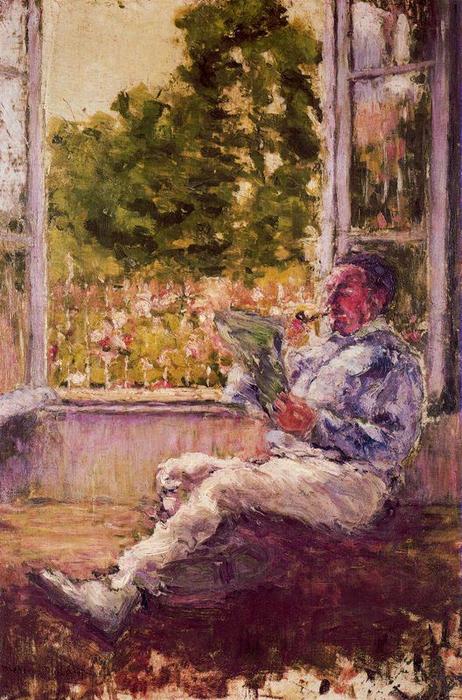
Man sitting beside a window

 Lire la suite
Acquérez une image numérique haute résolution et optimisée, d'une qualité bien supérieure à l'aperçu en ligne.
Chaque fichier est méticuleusement préparé par nos spécialistes internes à l'aide d'outils avancés et d'une retouche manuelle experte. Nous garantissons que chaque image possède une clarté exceptionnelle, une précision des couleurs irréprochable et un niveau de détail fin.
Le fichier final est livré par e-mail sous 72 heures, optimisé pour une utilisation immédiate dans des contextes professionnels, éditoriaux et d'impression. Il offre la même qualité de confiance que celle utilisée par les plus grands studios de création, éditeurs et galeries.
Image numérique
Téléchargez un fichier haute résolution pour votre usage personnel, l'impression et vos projets créatifs. ( Passer au tirage Passer à la peinture faite à la main)
Inclus avec chaque commande d'image numérique
Livraison numérique experte, garantie.
En choisissant OriginalUniqueArt.com, vous n'obtenez pas seulement une simple image : vous recevez une œuvre numérique sublimée avec professionnalisme, conçue avec précision et accompagnée d'une garantie de satisfaction. Voici tout ce qui accompagne automatiquement votre commande :

Envoi rapide par e-mail
Votre fichier d'image numérique haute résolution vous sera envoyé par e-mail sous 72 heures après votre commande — prêt à un usage immédiat.

Fichier numérique optimisé par l'IA
Votre œuvre d'art bénéficie d'une optimisation professionnelle grâce à des outils d'IA avancés et une retouche manuelle, garantissant un niveau maximal de détail, de clarté et de fidélité chromatique.

Réexpédition gratuite à vie
Vous avez accidentellement supprimé ou perdu votre fichier ? Pas d'inquiétude — nous vous le renverrons gratuitement, quand vous le souhaitez.

Aucun frais de douane - À jamais
Profitez de votre œuvre d'art instantanément sans frais de douane ni de livraison — les téléchargements numériques sont toujours exonérés de taxes.

Garantie de fidélité des couleurs
Nous garantissons que votre image numérique reproduit les couleurs de l'original aussi fidèlement que possible grâce à des outils professionnels et une gestion rigoureuse des couleurs.

Garantie satisfaction 60 jours
Si vous n'êtes pas satisfait de votre image numérique, nous la retoucherons ou vous rembourserons 100% sous 60 jours — sans poser de questions.

Garantie de remboursement à 100%
Pas satisfait ? Obtenez un remboursement intégral dans les 60 jours suivant la réception de votre fichier numérique — sans aucune question posée.

Remises sur les commandes groupées
Achetez 3 images, économisez 10% - Achetez 5, économisez 15% - Achetez 10+, économisez 20%. Idéal pour les projets créatifs, les galeries et les agences.
Description de la collection
A Window Into Duchamp’s Vision: Examining “Man Seated by a Window”
Marcel Duchamp's "Man Seated by a Window," painted in 1907, stands as an arresting testament to the artist’s burgeoning fascination with challenging conventional artistic boundaries. Created during his formative years amidst the vibrant currents of Impressionism and Cubism – movements he would soon dismantle – this deceptively simple canvas embodies Duchamp's nascent philosophical inquiries into the very essence of art itself. It’s a piece that invites contemplation not merely for its aesthetic qualities, but for the profound questions it poses about perception and representation.The Painting's Composition and Style
At first glance, “Man Seated by a Window” presents a tranquil scene: a solitary figure positioned before a window overlooking blossoming plants. The artist skillfully employs Post-Impressionist techniques—characterized by expressive brushstrokes and vibrant color palettes—to convey an atmosphere of contemplative repose. Unlike the meticulous realism championed by Impressionists, Duchamp deliberately eschews detailed depiction, prioritizing instead emotional resonance over photographic accuracy. This stylistic choice reflects his growing disillusionment with traditional artistic conventions and foreshadows his groundbreaking embrace of Conceptual Art. The muted blues and greens dominating the background harmonize beautifully with the warmer hues emanating from the flowers, creating a visual equilibrium that underscores the painting’s serene mood.Technique and Material Considerations
Duchamp executed “Man Seated by a Window” in oil on canvas—a medium he had begun to explore during his academic training—demonstrating an impressive command of artistic craft. However, his approach transcends mere technical proficiency; it's infused with a spirit of experimentation that anticipates Duchamp’s later innovations. The brushstrokes are loose and gestural, conveying movement and capturing the fleeting effects of light on the foliage outside the window. Notably, Duchamp deliberately avoids blending colors extensively, allowing individual pigments to retain their distinct identities—a technique that contributes significantly to the painting's textural richness and visual vibrancy.Historical Context: Impressionism’s Legacy and Duchamp’s Dissolution
“Man Seated by a Window” emerges from the crucible of Impressionism, a movement that revolutionized painting by prioritizing subjective experience over objective observation. Artists like Monet and Renoir sought to capture the ephemeral beauty of nature—the shimmering light, the shifting colors—rather than striving for precise likenesses. Duchamp’s rejection of Impressionistic ideals represents a decisive break with artistic tradition, signaling his commitment to dismantling established hierarchies and redefining notions of artistic value. He viewed Impressionism as aesthetically pleasing but intellectually stagnant, arguing that it lacked the capacity to grapple with fundamental philosophical dilemmas.Symbolic Resonance: The Window as Portal to Reflection
The window itself serves as a potent symbol within “Man Seated by a Window,” representing not merely an architectural feature but also a conduit for introspection and contemplation. As Duchamp himself noted, the figure seated before the window is engaged in "looking," suggesting that he is actively confronting his own thoughts and emotions—a process mirrored in the blossoming flowers outside. The juxtaposition of interior stillness and exterior vitality underscores the painting’s central theme: the relationship between inner consciousness and external reality. It's a visual meditation on the transformative power of observation and the importance of engaging with one's surroundings in a mindful manner.Emotional Impact: Tranquility Amidst Uncertainty
Despite its understated aesthetic qualities, “Man Seated by a Window” possesses an undeniable emotional impact—one characterized by tranquility, serenity, and a subtle hint of melancholy. The painting’s harmonious color scheme and expressive brushstrokes evoke feelings of peace and contentment, inviting viewers to savor the beauty of the natural world. Yet, beneath this surface calm lies a deeper resonance—a recognition that even in moments of repose, we remain confronted with existential questions about our place in the universe. Duchamp's masterpiece continues to captivate audiences today precisely because it speaks to the enduring human desire for connection—both with oneself and with the broader tapestry of existence.Biographie de l'artiste
jeune vie et débuts artistiques
marcel duchamp, peintre, sculpteur, joueur d'échecs et écrivain français-américain, est né le 28 juillet 1887 à Blainville-Crevon, en Normandie, France. Sa famille, connue pour ses inclinations culturelles, a encouragé son intérêt précoce pour l’art. Le parcours artistique de Duchamp a commencé avec des styles post-impressionnistes, expérimentant avec les techniques et les sujets classiques.évolution artistique et œuvres notables
- L'œuvre de marcel duchamp est associée au cubisme, à l’art conceptuel et au dadaïsme, bien qu'il soit prudent quant à son utilisation du terme dada.
- L'une de ses œuvres les plus célèbres, Fountain (1917), un urinoir signé « r. mutt », est un exemple de ses ready-mades, remettant en question la notion de ce qui constitue l’art.
- Portrait de joueurs d'échecs (1911), une œuvre cubiste, met en évidence son intérêt pour le jeu et ses aspects stratégiques.
- To be looked at (from the other side of the glass) with one eye, close to, for almost an hour (1945) est une autre œuvre notable, reflétant ses inclinations dadaïstes.
influence et héritage
L'impact de Duchamp sur l’art du XXe siècle est immense. Il, avec Pablo Picasso et Henri Matisse, a défini les arts plastiques au début du XXe siècle. Son approche conceptuelle de l’art a influencé des générations d’artistes.- Explorez davantage les œuvres de Duchamp sur OriginalUniqueArt : Marcel Duchamp | œuvres
- Découvrez le Musée Ohara d'art, au Japon, qui présente des collections d’art occidental, dont certaines influencées par le style de Duchamp : Musée Ohara d'art, Japon
- Apprenez-en davantage sur le lettrisme, un mouvement influencé par le dadaïsme et le surréalisme, dans lequel Duchamp participait : Mouvement artistique du lettrisme
conclusion
L’approche énigmatique de l’art de Marcel Duchamp, combinant des éléments conceptuels et dadaïstes, a laissé une marque indélébile sur le monde de l’art. Son héritage continue d'inspirer les artistes et d'influencer le développement de l’art moderne et contemporain. Franck Scurti, artiste français connu pour son art conceptuel, suit les traces de cet artiste pionnier.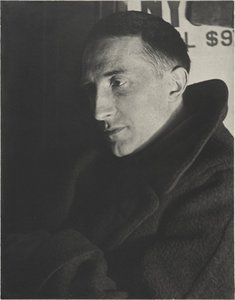
Marcel Duchamp
1887 - 1968 , France
En bref
- Artistes Influencés: ['Franck Scurti']
- Date De Décès: 2 octobre 1968
- Date De Naissance: 28 juillet 1887
- Influence:
- Pablo Picasso
- Henri Matisse
- Lieu De Naissance: Blainville-sur-Mer, France
- Mouvement Artistique:
- Cubisme
- Dadaïsme
- Art conceptuel
- Nationalité: Français-Américain
- Nom Complet: Marcel Duchamp
- Oeuvres Notables:
- Fontaine
- Portrait de joueurs d'échecs
- La Grande Verrière
- Boîte-en-valise

