

 Aperçu en situation
 Partager
 Partager
 Détails
 Guide imprimable

 Télécharger
 Articles similaires
 Radiographie
 Voir le diaporama
 Statistiques
Chocolate grinder No 2, Oil paint, thread and


 Afficher la suite
Giclées et impressions d'art
Impressions giclées ou sur toile de qualité musée, avec une production rapide et des finitions au choix. ( Acheter la peinture faite à la main Passer au format image numérique)




P118B $10

P118H $10

P118W $10

P438Z $10

P508JH $12

P508YH $12

P805H $10

P805Z $10

P919BZ $10

P919G $10

P919XJ $10

P959ZH $10

P968JZ $12

W106C $8

W218G $10

W218JH $8

W218Y $10

W307PJ $10

W316G $10

W316PJ $8

W316Y $10

W398PJ $8

W4111J $10

W500HY $15

W500JH $15

W692G $12

W849H $8

W940BG $15

W953PJ $8




Choisissez parmi nos formats prédéfinis qui respectent les proportions originales de l’œuvre.

Vous pouvez saisir vos propres dimensions pour vous adapter à un cadre ou à un espace spécifique. Si la taille sélectionnée ne correspond pas aux proportions de l'image originale, nous recadrerons l'œuvre ou étendrons l'image avec une bordure en miroir ou une couleur unie. Une maquette numérique vous sera envoyée pour approbation avant le début de la production.
Veuillez noter que l'aperçu à l'écran ne reflète pas le recadrage ou l'extension réelle. Seule la maquette montrera avec précision la composition finale.
Bien que des tailles personnalisées soient disponibles, nous vous recommandons de choisir une dimension dans la liste prédéfinie afin de préserver les proportions originales.
Livraison dans le monde entier () en 2 semaines au lieu des 4/5 semaines habituelles. (27 septembre)

Livraison express gratuite dans le monde entier

Toile de lin de haute qualité

Assurance transport complète

Garantie de remboursement des droits de douane

Garantie de fidélité des couleurs

Garantie de retour de 100 jours (uniquement en cas de défaut)

Garantie de remboursement à 100%

Tarifs dégressifs sur quantité
 L'option verre n'est disponible que pour les dimensions inférieures à 110 cm.

Chocolate grinder No 2, Oil paint, thread and
Giclées et impressions d'art
Format de la reproduction
-


Prix total final
$ 80
A Paradoxical Vision: Reimagining the Everyday
In the vast landscape of early twentieth-century modernism, few works possess the quiet, unsettling magnetism of Marcel Duchamp’s Chocolate Grinder No 2. Painted in 1914, this piece serves as a profound threshold between the structured geometric explorations of Cubism and the radical, intellectual provocations of Dadaism. At first glance, the viewer is presented with a scene that feels deceptively domestic: a yellow chair with a wooden frame, possessing a singular, circular design featuring a central hole. Yet, beneath this seemingly mundane depiction of furniture lies a deliberate disruption of reality. The painting does not merely capture an object; it captures a concept, inviting the observer to look through the physical form and into the void of artistic intention.
The composition is masterfully arranged to evoke a sense of surreal stillness. As the eye wanders across the canvas, one notices the presence of other chairs and a dining table, all sharing an unusual, circular geometry that mirrors the central motif of the primary subject. The inclusion of a figure seated at the table adds a layer of narrative ambiguity, suggesting a moment of quietude that is simultaneously interrupted by the strange, mechanical-like design of the objects. For the collector or interior designer, this work offers a sophisticated tension—a way to introduce a conversation piece into a space that challenges the boundaries between functional decor and high-concept fine art.
Technical Precision and the Language of Form
While Duchamp is often celebrated for his "readymades"—the act of selecting ordinary objects and declaring them art—Chocolate Grinder No 2 reveals a much more traditional, yet equally subversive, technical mastery. Utilizing oil paint to achieve a smooth, luminous surface finish, the artist employs a level of precision that recalls the meticulousness of the Post-Impressionists. The wooden textures of the chair are rendered with such care that one can almost feel the grain beneath the pigment, creating a tactile reality that grounds the more abstract elements of the composition.
The technique serves a dual purpose: it provides a sense of hyper-reality that makes the absurd design of the "grinder" even more jarring. By using the light and shadow characteristic of classical oil painting to define these strange, perforated shapes, Duchamp forces the viewer to confront the object as something tangible and present. This juxtaposition of calculated accuracy with conceptual disruption is where the true magic of the piece resides. It is a technical triumph that uses the tools of tradition to dismantle the very idea of traditional representation.
A Legacy of Intellectual Provocation
To understand the emotional weight of this painting, one must consider the historical turbulence of 1914. As Europe stood on the precipice of World War I, Duchamp was already beginning to reject the aesthetic dogmas that prioritized beauty and craftsmanship over intellectual inquiry. This work embodies the genesis of conceptual art, where the "idea" becomes the primary driver of the creative act. The circular hole in the chair is not merely a design choice; it is a symbolic aperture, a way for Duchamp to puncture the illusion of the canvas and invite the viewer to question what is real and what is constructed.
For those seeking to adorn a contemporary space with art that inspires deep thought, a high-quality reproduction of this masterpiece offers more than just visual appeal. It brings into a room a piece of history—a fragment of the revolutionary spirit that redefined the twentieth century. Whether placed in a minimalist gallery setting or as a focal point in a richly textured study, Chocolate Grinder No 2 remains an enduring symbol of the power of the imagination to transform the ordinary into the extraordinary.
Biographie de l'artiste
jeune vie et débuts artistiques
marcel duchamp, peintre, sculpteur, joueur d'échecs et écrivain français-américain, est né le 28 juillet 1887 à Blainville-Crevon, en Normandie, France. Sa famille, connue pour ses inclinations culturelles, a encouragé son intérêt précoce pour l’art. Le parcours artistique de Duchamp a commencé avec des styles post-impressionnistes, expérimentant avec les techniques et les sujets classiques.évolution artistique et œuvres notables
- L'œuvre de marcel duchamp est associée au cubisme, à l’art conceptuel et au dadaïsme, bien qu'il soit prudent quant à son utilisation du terme dada.
- L'une de ses œuvres les plus célèbres, Fountain (1917), un urinoir signé « r. mutt », est un exemple de ses ready-mades, remettant en question la notion de ce qui constitue l’art.
- Portrait de joueurs d'échecs (1911), une œuvre cubiste, met en évidence son intérêt pour le jeu et ses aspects stratégiques.
- To be looked at (from the other side of the glass) with one eye, close to, for almost an hour (1945) est une autre œuvre notable, reflétant ses inclinations dadaïstes.
influence et héritage
L'impact de Duchamp sur l’art du XXe siècle est immense. Il, avec Pablo Picasso et Henri Matisse, a défini les arts plastiques au début du XXe siècle. Son approche conceptuelle de l’art a influencé des générations d’artistes.- Explorez davantage les œuvres de Duchamp sur OriginalUniqueArt : Marcel Duchamp | œuvres
- Découvrez le Musée Ohara d'art, au Japon, qui présente des collections d’art occidental, dont certaines influencées par le style de Duchamp : Musée Ohara d'art, Japon
- Apprenez-en davantage sur le lettrisme, un mouvement influencé par le dadaïsme et le surréalisme, dans lequel Duchamp participait : Mouvement artistique du lettrisme
conclusion
L’approche énigmatique de l’art de Marcel Duchamp, combinant des éléments conceptuels et dadaïstes, a laissé une marque indélébile sur le monde de l’art. Son héritage continue d'inspirer les artistes et d'influencer le développement de l’art moderne et contemporain. Franck Scurti, artiste français connu pour son art conceptuel, suit les traces de cet artiste pionnier.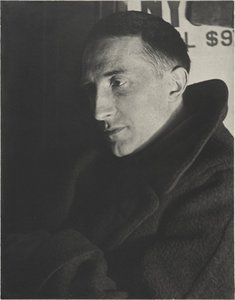
Marcel Duchamp
1887 - 1968 , France
En bref
- Artistes Influencés: ['Franck Scurti']
- Date De Décès: 2 octobre 1968
- Date De Naissance: 28 juillet 1887
- Influence:
- Pablo Picasso
- Henri Matisse
- Lieu De Naissance: Blainville-sur-Mer, France
- Mouvement Artistique:
- Cubisme
- Dadaïsme
- Art conceptuel
- Nationalité: Français-Américain
- Nom Complet: Marcel Duchamp
- Oeuvres Notables:
- Fontaine
- Portrait de joueurs d'échecs
- La Grande Verrière
- Boîte-en-valise
Articles similaires

The Enduring Form: Exploring Themes & Techniques in Sculpture Across Historical Periods
Explore the rich history of sculpture from ancient masterpieces to contemporary innovations. Discover key techniques, influential artists & investment potential for discerning art collectors.

Les 10 Chefs-d'œuvre en Bronze qui ont Révolutionné l'Art : Collection OriginalUniqueArt
Plongez dans l'univers fascinant des 10 chefs-d'œuvre en bronze qui ont marqué l'histoire de l'art. Découvrez Rodin, Degas et les secrets de ces sculptures iconiques. Reproductions d'art exceptionnelles sur OriginalUniqueArt.com – Explorez la collection !

Cubism Unveiled: How Picasso and Braque Redefined Reality Through Geometric Abstraction
Explore the revolutionary world of Cubism. Discover how masters Pablo Picasso and Georges Braque dismantled reality through geometric abstraction to redefine modern art history.

The Enduring Form: Sculpture Across History, Technique & Emotional Resonance
Explore the rich history of sculpture with OriginalUniqueArt. Discover key techniques, influential artists & investment potential for discerning collectors. Expert insights into valuing and collecting timeless masterpieces.

Les 10 Chefs-d'œuvre Bronzes Qui Ont Révolutionné la Sculpture | OriginalUniqueArt
Plongez dans l'univers fascinant des 10 sculptures en bronze les plus emblématiques de l'histoire de l'art. Rodin, Degas et autres maîtres révélés ! Découvrez leur histoire, leurs techniques et trouvez l'œuvre parfaite pour sublimer votre intérieur sur OriginalUniqueArt.com.


