 Passer au format impression
 Lire la suite







































 Pour les œuvres ou reproductions dont un côté mesure plus de 105 cm (environ 41 pouces), le cadre sera expédié sous forme de kit démonté. Cette méthode garantit une livraison sécurisée et prévient tout dommage pendant le transport.


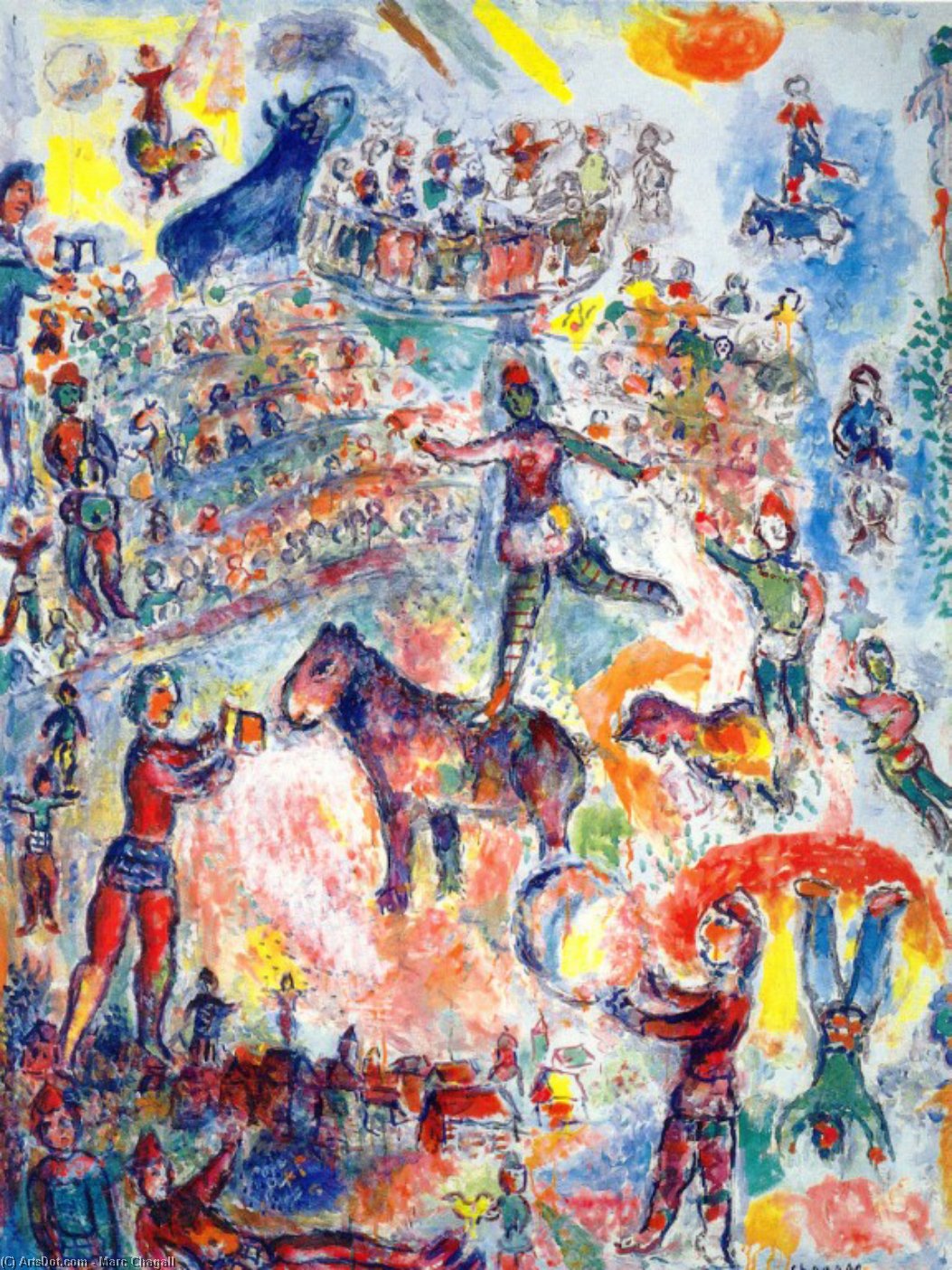
Great Circus – Marc Chagall
Marc Chagall’s “Great Circus” transcends mere depiction; it's an immersion into a dreamscape brimming with vibrant color and fantastical imagery—a testament to the artist’s profound connection to folklore and his unwavering belief in imagination. Painted in 1984 during a period of artistic exploration, this monumental canvas embodies Chagall’s signature Surrealist style, firmly rooted in his Vitebsk origins and infused with Jewish traditions.A Symphony of Color and Movement
The painting explodes with hues reminiscent of stained glass windows—deep blues mingle with fiery reds, yellows shimmer against emerald greens—creating an atmosphere that pulsates with life. Chagall’s masterful brushstrokes capture the dynamism of a circus performance, conveying both joyous celebration and underlying melancholy. The swirling patterns and undulating lines contribute to this sense of movement, mirroring the acrobats' feats and the animals’ restless energy. This deliberate use of color isn’t merely decorative; it serves as a conduit for emotion, reflecting Chagall’s own inner world and inviting viewers into his visionary perspective.Symbolism Rooted in Memory
“Great Circus” is laden with symbolic references to Chagall's Jewish heritage. The central figure—a man riding atop a horse—represents resilience and perseverance, mirroring the biblical story of Joseph, who endured hardship before achieving greatness. Surrounding him are horses, symbolizing fertility and nobility, alongside birds – emblems of freedom and aspiration – soaring across the canvas. These figures aren’t merely present; they embody archetypal themes that resonate deeply within Jewish culture and spirituality. The circus itself can be interpreted as a microcosm of life—a place where performers strive for perfection, where illusion blends with reality, and where dreams take flight.Technique and Context
Chagall employed a technique characterized by flattened perspectives and simplified forms, reminiscent of Byzantine iconography. He utilized tempera on canvas, layering colors to achieve luminous effects that capture the ethereal quality of his visions. This approach aligns perfectly with Surrealism’s rejection of rational representation, prioritizing intuition and subconscious expression. Created during a time marked by political upheaval and artistic experimentation—the aftermath of World War II— “Great Circus” stands as a defiant assertion of beauty and imagination in the face of adversity. It reflects Chagall's enduring fascination with storytelling and his desire to convey universal human experiences through fantastical imagery.Emotional Resonance
Ultimately, “Great Circus” evokes a profound sense of wonder and nostalgia. Its vibrant colors and captivating composition transport viewers back to Chagall’s childhood memories—to the bustling marketplaces of Vitebsk and the comforting rituals of Jewish tradition. The painting speaks to our yearning for escape from mundane realities and invites us to embrace the transformative power of dreams. It's a masterpiece that continues to inspire artists and collectors alike, cementing Chagall’s place as one of the most influential figures in 20th-century art.Questions et réponses
En quelle année "Le Grand Cirque" a-t-il été réalisé ?
«Le Grand Cirque» de Marc Chagall a été créé en 1984.
Quelle ambiance "Le Grand Cirque" apporterait-elle à une pièce ?
L'atmosphère Romantique de «Le Grand Cirque» de Marc Chagall s'accorde parfaitement avec l'espace recommandé : un(e) Salon.
Quelle est la luminance de «Le Grand Cirque» de Marc Chagall ?
«Le Grand Cirque» de Marc Chagall présente une luminance de Équilibre lumineux. La luminance décrit la quantité de lumière que les couleurs semblent réfléchir.
 Aperçu en situation
 Envoyer
 Partager
 Détails de l'œuvre
 Guide
Guide

 Télécharger l'image
 Articles similaires
 Radiographie
 Diaporama
 Questions et réponses
 Statistiques