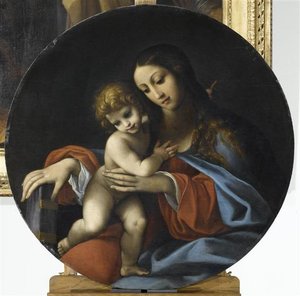
Aperçu en situation
 Partager
 Partager
 Détails
 Guide imprimable

 Télécharger
 Articles similaires
 Radiographie
 Voir le diaporama
 Statistiques
Presentation in the Temple
 Oil On Canvas
- WallArt
- Baroque
 1605
1605- Early Modern
 122.0 x 92.0 cm
 Musée Thyssen-Bornemisza
 Afficher la suite
Giclées et impressions d'art
Impressions giclées ou sur toile de qualité musée, avec une production rapide et des finitions au choix. ( Acheter la peinture faite à la main Passer au format image numérique)




P118B $10

P118H $10

P118W $10

P438Z $10

P508JH $12

P508YH $12

P805H $10

P805Z $10

P919BZ $10

P919G $10

P919XJ $10

P959ZH $10

P968JZ $12

W106C $8

W218G $10

W218JH $8

W218Y $10

W307PJ $10

W316G $10

W316PJ $8

W316Y $10

W398PJ $8

W4111J $10

W500HY $15

W500JH $15

W692G $12

W849H $8

W940BG $15

W953PJ $8




Choisissez parmi nos formats prédéfinis qui respectent les proportions originales de l’œuvre.

Vous pouvez saisir vos propres dimensions pour vous adapter à un cadre ou à un espace spécifique. Si la taille sélectionnée ne correspond pas aux proportions de l'image originale, nous recadrerons l'œuvre ou étendrons l'image avec une bordure en miroir ou une couleur unie. Une maquette numérique vous sera envoyée pour approbation avant le début de la production.
Veuillez noter que l'aperçu à l'écran ne reflète pas le recadrage ou l'extension réelle. Seule la maquette montrera avec précision la composition finale.
Bien que des tailles personnalisées soient disponibles, nous vous recommandons de choisir une dimension dans la liste prédéfinie afin de préserver les proportions originales.
Livraison dans le monde entier () en 2 semaines au lieu des 4/5 semaines habituelles. (26 septembre)

Livraison express gratuite dans le monde entier

Toile de lin de haute qualité

Assurance transport complète

Garantie de remboursement des droits de douane

Garantie de fidélité des couleurs

Garantie de retour de 100 jours (uniquement en cas de défaut)

Garantie de remboursement à 100%

Tarifs dégressifs sur quantité
 L'option verre n'est disponible que pour les dimensions inférieures à 110 cm.

Presentation in the Temple
Giclées et impressions d'art
Format de la reproduction
-


Prix total final
$ 80
A Symphony of Faith and Light
In the quiet sanctity of the Museo Thyssen-Bornemisza, there exists a moment frozen in time, a celestial encounter captured through the masterful hand of Ludovico Carracci. His Presentation in the Temple, executed around 1605, is far more than a mere religious depiction; it is a profound meditation on divinity and human devotion. The scene unfolds with a serene grace, as Mary presents the infant Jesus to the venerable Simeon and Anne within the hallowed halls of the Temple of Jerusalem. There is an immediate, palpable sense of peace that washes over the viewer, an atmosphere where the weight of sacred tradition meets the tender vulnerability of new life. For the discerning collector or lover of classical beauty, this work offers a window into a period when art served as a bridge between the earthly and the divine.
The composition is a masterclass in the Baroque aesthetic, specifically reflecting the transformative influence of the Carracci School. While many of his contemporaries sought to provoke through shock or extreme psychological tension, Ludovico Carracci pursued a harmonious balance that revitalized Italian painting. He skillfully blended the theatrical grandeur of the burgeoning Baroque era with a renewed commitment to humanist clarity. The figures are arranged with a deliberate, rhythmic elegance, guiding the eye through a narrative of reverence. This careful orchestration ensures that even as the scene possesses a dramatic scale, it never loses its intimate, spiritual core, making it an ideal centerpiece for spaces designed for contemplation and quiet sophistication.
The Mastery of Chiaroscuro and Form
Technically, the painting is a triumph of light and shadow. Carracci employs chiaroscuro—the dramatic interplay between deep, velvety shadows and brilliant highlights—to sculpt the figures with remarkable anatomical precision. This technique does not merely provide depth; it creates an ethereal glow that seems to emanate from Mary and the Christ child themselves, casting them as the luminous heart of the composition. The artist’s mastery is further revealed in the meticulous rendering of drapery, where subtle gradations of color are achieved through the delicate layering of glazes. These textures invite the eye to linger on the heavy, flowing fabrics, which possess a tactile quality that brings the historical scene into a startlingly present reality.
Beyond the technical brilliance lies a rich tapestry of symbolism that rewards deep observation. The presence of doves within the frame is not merely decorative; they serve as potent symbols of divine grace and foreshadow the future sacrifices inherent in the Christian narrative. Every element, from the soft light hitting the infant's skin to the solemn expressions of the elders, is imbued with meaning. For interior designers seeking to infuse a room with historical depth and emotional resonance, a high-quality reproduction of this masterpiece provides more than just decoration; it introduces a legacy of Bolognese Baroque excellence, offering a timeless elegance that complements both classical and contemporary environments.
Biographie de l'artiste
L'Architecte du Baroque Bolognais
Au cœur vibrant et intellectuel de Bologne, une ville où la tradition de la Renaissance rencontrait l'esprit bourgeonnant d'une ère nouvelle, Ludovico Carracci s'est imposé comme une force transformatrice de l'art européen. Né en 1555, sa vie fut inextricablement liée aux fondements mêmes de l'École bolognaise. Membre de l'illustre famille Carracci, aux côtés de ses cousins Annibale et Agostino, Ludovico ne s'est pas contenté de participer à un mouvement artistique ; il a aidé à concevoir la transition entre l'élégance stylisée et souvent artificielle du Maniérisme et le naturalisme profond et émotif du Baroque. Ses premières années furent façonnées par l'atelier de son père, Prospero Carracci, un cadre qui servit de creuset à l'expérimentation et de sanctuaire pour l'étude du disegno—cette observation méticuleuse de la forme et de l'anatomie qui deviendrait la marque de fabrique de son héritage.
Alors que ses cousins cherchaient souvent la gloire dans les grandes cours de Rome, Ludovico resta profondément enraciné dans sa Bologne natale. Ce lien indéfectible lui permit de cultiver un sanctuaire artistique unique, dirigeant une académie qui devint un phare pour la génération suivante de maîtres, notamment Guido Reni et Domenichino. Son œuvre représente une synthèse magistrale d'influences historiques ; il s'est nourri de la grâce divine de Raphaël, de la douce luminosité de Corrège et du riche colorisme de Titien, tout en insufflant à ces éléments classiques une vitalité nouvelle et dramatique. En rejetant les poses étirées et souvent contraintes des peintres maniéristes tardifs comme Parmigianino, Ludovico embrassa une réalité plus viscérale, utilisant des gestes audacieux et une lumière atmosphérique vacillante pour émouvoir l'âme de ses spectateurs.
Lumière, Ombre et Intensité Spirituelle
Le véritable génie de Ludovico Carracci réside dans sa capacité à manipuler le clair-obscur—ce jeu dramatique entre l'ombre et la lumière—pour en faire un vecteur de contemplation spirituelle. Ses toiles sont rarement de simples représentations d'événements bibliques ; ce sont des expériences immersives conçues pour évoquer la ferveur religieuse. Dans des œuvres telles que Un ange libère les âmes du purgatoire, on peut témoigner de la manière dont son usage de la lumière ne se contente pas d'éclairer une scène, mais participe activement à son récit, sculptant les figures hors de l'obscurité pour mettre en lumière des instants de compassion et de grâce divines. Cette technique, rappelant le naturalisme naissant de Caravage, lui permit d'insuffler aux sujets les plus sacrés une émotion humaine palpable.
Sa maîtrise s'étendait à divers médiums, de l'échelle monumentale des fresques à la précision délicate des eaux-fortes et des estampes. Qu'il capturât la sérénité sacrée de la Présentation au Temple ou la tension musculaire et héroïque de son Nu masculin (Hercule ?), un fil conducteur de profondeur émotionnelle traverse toute son œuvre. Ses peintures religieuses, comme la Madone Bargellini, démontrent une capacité à organiser des groupes complexes de saints et d'anges en compositions harmonieuses mais dynamiques, où chaque pli de draperie et chaque inclinaison de tête contribue à un sentiment plus vaste de mouvement céleste.
Un Héritage Durable dans le Canon Italien
L'importance historique de Ludovico Carracci ne peut être surestimée. Il fut une figure pivot qui a aidé à réenchanter l'art italien à une époque où celui-ci risquait de stagner sous le poids de ses propres traditions formalistes. En défendant un style privilégiant la vérité émotionnelle et l'observation naturaliste, il a fourni le modèle des accomplissements les plus célèbres de l'ère baroque. Son influence rayonna bien au-delà de Bologne, façonnant le langage esthétique d'une grande partie de l'Europe et posant les bases du naturalisme classique qui allait dominer le XVIIe siècle.
En réfléchissant à sa vie et à son œuvre, nous voyons un artiste qui a réussi à jeter un pont entre deux mondes : la perfection structurée de la Renaissance et l'énergie dramatique et théâtrale du Baroque. Sa capacité à marier la rigueur intellectuelle du disegno avec un sens profond du colore et une résonance émotionnelle assure sa place parmi les peintres les plus vitaux de son époque. Par sa dévotion à son art et son engagement envers la puissance spirituelle de la peinture, Ludovico Carracci a laissé une marque indélébile dans l'histoire de la peinture occidentale, nous rappelant que la véritable beauté réside à l'intersection de la maîtrise technique et du cœur humain.

Ludovico Carracci
1555 - 1619 , Italie
En bref
- Artistic Movement Or Style: Baroque peinture
- Artists Who Influenced This Artist:
- Michelangelo
- Raphael
- Date Of Birth: 21 avril 1555
- Date Of Death: 13 novembre 1619 Bologna
- Full Name: Ludovico Carracci
- Nationality: Italien
- Notable Artworks:
- Les Histoires de Jason
- La Vierge à l'enfant
- Place Of Birth: Bologne Italie
Articles similaires
Annibale Carracci: Bridging Renaissance Ideals & Baroque Innovation
Explore the life & art of Annibale Carracci, a pivotal figure bridging Renaissance ideals with Baroque innovation. Discover his masterpieces and lasting influence on Italian painting.

Le Drame Baroque : L'Art qui Apporte la Splendeur dans Votre Intérieur
Plongez dans l'univers somptueux du baroque ! Découvrez son histoire, comment l'intégrer à votre intérieur et les œuvres incontournables. : reproductions d'art de qualité supérieure.

Giuseppe Maria Crespi: Pioneering Genre Painting & the Bolognese Baroque
Explore the life & art of Giuseppe Maria Crespi, a pivotal Bolognese Baroque painter. Discover his groundbreaking genre scenes, religious works, and lasting influence on Italian art history. Learn more at OriginalUniqueArt.

The Dramatic Flourish: Exploring the Baroque Movement's Enduring Legacy in Art History
Explore the dramatic world of Baroque art! Discover iconic artists like Caravaggio & Rubens, defining techniques, and its lasting impact on art history. Expert insights for collectors & enthusiasts at OriginalUniqueArt.

The Visceral Stage: Exploring Dramatic Narratives & Emotional Intensity in Baroque Art
Explore the dramatic world of Baroque art! Discover iconic masters like Caravaggio & Rembrandt, their techniques, and the movement's lasting impact. Expert insights for collectors & enthusiasts at OriginalUniqueArt.