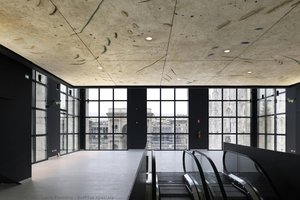
Aperçu en situation
 Partager
 Partager
 Détails
 Guide imprimable

 Télécharger
 Articles similaires
 Radiographie
 Voir le diaporama
 Statistiques
Concept Spatial


 Afficher la suite
L’œuvre d'art présentée sur cette page est protégée par le droit d'auteur, ce qui signifie que nous ne pouvons légalement créer ou vendre de reproduction identique. Cette protection est appliquée en vertu d'accords internationaux tels que la Convention de Berne et par les lois nationales, notamment celles énoncées par le Loi américaine sur le droit d'auteur - Titre 17.
Cette méthode est pleinement conforme aux réglementations sur le droit d'auteur car elle ne repose pas sur la copie ou la duplication de l'œuvre protégée. Il s'agit plutôt d'une réinterprétation créative — une nouvelle peinture qui s'inspire de l'original sans pour autant lui être identique.
Giclées et impressions d'art
Impressions giclées ou sur toile de qualité musée, avec une production rapide et des finitions au choix. ( Acheter la peinture faite à la main Passer au format image numérique)




































Choisissez parmi nos formats prédéfinis qui respectent les proportions originales de l’œuvre.

Saisissez la largeur et la hauteur souhaitées pour qu'elles s'adaptent à votre cadre ou à votre mur. Une impression ne peut être que découpée, elle ne peut jamais être agrandie au-delà de l'image originale ; ainsi, un format de forme différente entraînera la perte d'une partie de l'image. Nous vous envoyons une maquette numérique pour approbation avant toute impression. L'image présentée sur cette page ne montre pas le recadrage réel — seule la maquette le permet.
Livraison dans le monde entier () en 2 semaines au lieu des 4/5 semaines habituelles. (21 octobre)

Livraison express gratuite dans le monde entier

Toile de lin de haute qualité

Assurance transport complète

Garantie de remboursement des droits de douane

Garantie de fidélité des couleurs

Garantie de retour de 100 jours (uniquement en cas de défaut)

Garantie de remboursement à 100%

Tarifs dégressifs sur quantité
 L'option verre n'est disponible que pour les dimensions inférieures à 110 cm.

Concept Spatial
Giclées et impressions d'art
Format de la reproduction
-


Prix total final
€ 70
A Portal to the Infinite: The Radical Vision of Lucio Fontana
In the landscape of twentieth-century abstraction, few gestures are as visceral or as transformative as Lucio Fontana’s “Spatial Concept.” Created in 1962, this masterpiece serves as a profound testament to the artist's role as a pioneer of the Spatialist movement. At first glance, the viewer is met with a serene, pale pink expanse, a soft field that seems to recede into an ethereal distance. Yet, this tranquility is interrupted by a luminous white circle, a celestial orb that appears not merely painted upon the surface, but emerging from it. The composition is further animated by smaller circular forms connected by delicate, precise lines, creating a visual rhythm that suggests a cosmic or microscopic blueprint. It is a work that refuses to remain static; it breathes, it pulses, and it invites the eye to wander through a dimension that exists beyond the physical limits of the canvas.
The brilliance of this piece lies in its defiance of traditional boundaries. Fontana was not interested in the mere imitation of reality; he sought to dismantle the very concept of the two-dimensional plane. Through his revolutionary technique, he moved beyond the brushstroke to engage with the physical integrity of the medium itself. By utilizing perforations and incisions, Fontana disrupted the surface, creating actual voids that allow light and shadow to interact with the artwork in real-time. This method transforms the painting from a window into a sculptural object, where the "space" mentioned in the title is not an illusion created by perspective, but a tangible, physical reality. For the collector or interior designer, this creates a dynamic focal point that changes character depending on the lighting and the angle of observation, offering a sophisticated layer of depth to any curated space.
The Alchemy of Spatialism and Modernity
To understand the emotional weight of “Spatial Concept,” one must look to the historical crucible in which it was forged. Emerging from the post-war intellectual fervor of Milan, Fontana’s work was a reaction against the exhausted traditions of academic art. He sought to synthesize color, sound, and movement into a new language capable of expressing the complexities of the atomic age. The symbolism within this specific work—the interplay between the solid pigment and the void—speaks to the human desire to explore the unknown. The white circles act as beacons of clarity amidst the soft pink haze, representing a search for order and mathematical truth within the vastness of the universe.
For those seeking to integrate such a profound piece into a contemporary interior, "Spatial Concept" offers an unparalleled sense of intellectual luxury. It is a work that commands respect through its minimalism yet rewards intimacy through its subtle textures. Whether placed in a minimalist gallery setting or as a sophisticated anchor in a modern living space, the painting evokes a sense of quiet contemplation and forward-thinking elegance. Owning a high-quality reproduction of this work allows one to possess a fragment of art history—a piece that does not just decorate a wall, but expands the very walls themselves, inviting the infinite into the home.
Questions et réponses
Quelle est l'orientation de «Concept Spatial» de Lucio Fontana ?
Le format de « Concept Spatial » est Format portrait. Cela est utile lors de la planification de l'emplacement d'une reproduction.
De quel pays provient l'œuvre Spatial Minimalism « Concept Spatial » ?
L'œuvre Spatial Minimalism « Concept Spatial » a été réalisée par un artiste né en Argentine.
Quelle est la saturation des couleurs de «Concept Spatial» de Lucio Fontana ?
Les couleurs de «Concept Spatial» de Lucio Fontana présentent une saturation Couleurs subtiles. La saturation décrit si les couleurs sont vives ou atténuées.
Biographie de l'artiste
jeune vie et formation
Lucio Fontana, un artiste argentin renommé, est né en 1899 à Buenos Aires, en Argentine. Sa jeune vie a été marquée par une profonde passion pour l'art, ce qui l'a conduit à poursuivre une carrière dans la peinture. La formation artistique de Fontana a commencé à l’Escuela de Bellas Artes de Buenos Aires, où il a perfectionné ses compétences en peinture à l’huile et au dessin.style artistique et influences
L'œuvre de Fontana est caractérisée par des **traits de pinceau audacieux**, des **couleurs vibrantes** et un mélange unique d'influences européennes et argentines. Son style artistique, souvent décrit comme une fusion de l'impressionnisme et de l'expressionnisme, reflète la diversité culturelle de l’Argentine.- L'utilisation de la lumière et des couleurs de Fontana a été influencée par les œuvres de Jan Grzegorz Stanisławski, un artiste polonais connu pour sa série de muflons.
- Son style audacieux et expressif rappelle celui de Vincent van Gogh, ses œuvres post-impressionnistes telles que les branches en fleurs.
œuvres notables et expositions
Certaines des œuvres les plus remarquables de Fontana comprennent :- Le paysage argentin, une série de peintures à l'huile présentant la géographie variée du pays.
- Portraits de Buenos Aires, une collection de portraits mettant en scène les habitants de la ville, exposée actuellement au Musée d'Art Moderne de Buenos Aires.
- L’influence de Pieter Bruegel l'Ancien est visible dans Le Pays des Cocagne de Fontana, une œuvre satirique reflétant le vide spirituel de la gourmandise et de l'oisiveté.
héritage et collections muséales
L’œuvre de Lucio Fontana fait désormais partie de diverses collections muséales, notamment :- Le Musée Metropolitain d'Art, qui conserve plusieurs de ses peintures à l'huile.
- La Galerie d’Art Fin Ballarat en Australie, présentant les œuvres de Fontana aux côtés d'autres artistes notables.

Lucio Fontana
1899 - 1968 , Argentine
En bref
- Artistes Influents:
- Jan Grzegorz Stanisławski
- Vincent van Gogh
- Pieter Bruegel l'Ancien
- Date De Décès: 7 septembre 1968
- Date De Naissance: 19 février 1899
- Influences Artistiques:
- Mouvement Zero
- Nouveau Réalisme
- Minimalisme
- Lieu De Naissance: Rosario, Argentine
- Mouvement Artistique: Spatialisme
- Nationalité: Argentin et Italien
- Nom Complet: Lucio Fontana
- Œuvres Notables:
- Concetto Spaziale
- Soffitto Spaziale
- The Argentine Landscape
- Portraits of Buenos Aires
Articles connexes

Éclat Pur : 10 Chefs-d'œuvre Iconiques Sublimés par le Blanc
Explorez la pureté de la lumière à travers 10 chefs-d'œuvre dominés par le blanc. De Miró à Klimt, découvrez l'histoire et l'élégance de ces tableaux iconiques pour votre décoration. Trouvez vos reproductions de qualité musée sur OriginalUniqueArt.com.

Blancs Sublimes : Les 10 Chefs-d'œuvre de la Peinture Révélés par
Plongez dans l'univers fascinant des 10 plus beaux tableaux blancs de l'histoire de l'art ! Découvrez Monet, Whistler, Kandinsky et d'autres maîtres. Inspirez votre décoration intérieure avec : reproductions de qualité muséale en ligne.
Top 10 des Tableaux Célèbres Dominés par le Rose Pâle : Art & Décor Raffiné
Plongez dans la douceur des 10 tableaux les plus célèbres dominés par le rose pâle. Découvrez Monet, Renoir et d'autres maîtres de l'impressionnisme. Inspirez votre décoration intérieure avec ! Explorez notre collection en ligne.

Éclat Pur : Top 10 des Tableaux Célèbres Dominés par le Blanc
Plongez dans l'éclat du blanc à travers 10 chefs-d'œuvre iconiques. De Miró à Klimt, explorez la lumière et le minimalisme pour votre décoration. Trouvez vos reproductions de qualité musée sur OriginalUniqueArt.com.

Éclat Pur : Top 10 des Chefs-d'œuvre de la Peinture aux Tons Blancs
Explorez la magie de la lumière à travers 10 chefs-d'œuvre dominés par le blanc. De Miró à Klimt, découvrez l'histoire et l'éclat de ces tableaux iconiques pour votre décoration. Trouvez des reproductions de qualité musée sur OriginalUniqueArt.com.