

 Aperçu en situation
 Partager
 Partager
 Détails
 Guide imprimable

 Télécharger
 Articles similaires
 Radiographie
 Voir le diaporama
 Statistiques
Reflection (Self-Portrait)
 Oil On Canvas
- WallArt
- Neo-Figurative Art
 1985
1985- Contemporary
 51.0 x 56.0 cm
 Afficher la suite
L’œuvre d'art présentée sur cette page est protégée par le droit d'auteur, ce qui signifie que nous ne pouvons légalement créer ou vendre de reproduction identique. Cette protection est appliquée en vertu d'accords internationaux tels que la Convention de Berne et par les lois nationales, notamment celles énoncées par le Loi américaine sur le droit d'auteur - Titre 17.
Cette méthode est pleinement conforme aux réglementations sur le droit d'auteur car elle ne repose pas sur la copie ou la duplication de l'œuvre protégée. Il s'agit plutôt d'une réinterprétation créative — une nouvelle peinture qui s'inspire de l'original sans pour autant lui être identique.
Giclées et impressions d'art
Impressions giclées ou sur toile de qualité musée, avec une production rapide et des finitions au choix. ( Acheter la peinture faite à la main Passer au format image numérique)




P118B €10

P118H €10

P118W €10

P438Z €10

P508JH €12

P508YH €12

P805H €10

P805Z €10

P919BZ €10

P919G €10

P919XJ €10

P959ZH €10

P968JZ €12

W106C €8

W218G €10

W218JH €8

W218Y €10

W307PJ €10

W316G €10

W316PJ €8

W316Y €10

W398PJ €8

W4111J €10

W500HY €15

W500JH €15

W692G €12

W849H €8

W940BG €15

W953PJ €8




Choisissez parmi nos formats prédéfinis qui respectent les proportions originales de l’œuvre.

Saisissez la largeur et la hauteur souhaitées pour qu'elles s'adaptent à votre cadre ou à votre mur. Une impression ne peut être que découpée, elle ne peut jamais être agrandie au-delà de l'image originale ; ainsi, un format de forme différente entraînera la perte d'une partie de l'image. Nous vous envoyons une maquette numérique pour approbation avant toute impression. L'image présentée sur cette page ne montre pas le recadrage réel — seule la maquette le permet.
Livraison dans le monde entier () en 2 semaines au lieu des 4/5 semaines habituelles. (21 octobre)

Livraison express gratuite dans le monde entier

Toile de lin de haute qualité

Assurance transport complète

Garantie de remboursement des droits de douane

Garantie de fidélité des couleurs

Garantie de retour de 100 jours (uniquement en cas de défaut)

Garantie de remboursement à 100%

Tarifs dégressifs sur quantité
 L'option verre n'est disponible que pour les dimensions inférieures à 110 cm.

Reflection (Self-Portrait)
Giclées et impressions d'art
Format de la reproduction
-


Prix total final
€ 70
The Raw Essence of Being: Unveiling Lucian Freud's Reflection
In the intimate theater of Reflection (Self-Portrait), created in 1985, we encounter one of the most profound encounters with the human psyche ever captured on canvas. Lucian Freud, a titan of 20th-century realism, does not merely present a likeness; he presents an excavation of the self. The painting serves as a window into a moment of deep introspection, where the artist’s gaze drifts toward a distant, unseen horizon, inviting the viewer to participate in his silent contemplation. There is no artifice here, only the heavy, palpable presence of a man confronting his own existence. This work stands as a testament to Freud's ability to bridge the gap between the physical reality of the flesh and the invisible weight of the human spirit.
The technical mastery displayed in this self-portrait is nothing short of visceral. Utilizing a thick impasto technique, Freud applies oil paint with a sculptural intensity that gives the skin a rugged, almost topographical quality. Every brushstroke contributes to a textured landscape of features, where the heavy application of pigment mimics the very density of life itself. This method allows the light to catch the ridges of the paint, creating a dynamic interplay of shadow and highlight that breathes movement into the static image. For collectors and lovers of fine art, this tactile quality offers a sensory experience that transcends traditional portraiture, making the canvas feel less like a flat surface and more like a living, breathing entity.
A Legacy of Vulnerability and Neo-Figurative Truth
To understand the emotional gravity of Reflection, one must consider Freud's unique position within the Neo-Figurative movement. Emerging as a powerful reaction against the sweeping abstractions of his era, Freud sought a return to the figure, yet he did so with a modern, unsettling edge. He famously distinguished between the "nude" and the "naked"—where the former suggests an idealized elegance, the latter conveys a raw, unshielded vulnerability. In this self-portrait, we see the artist in his most naked state, stripped of social masks and presented with an unflinching honesty that can be both haunting and deeply moving.
The historical context of Freud’s life—marked by his displacement from Berlin to London and his lineage as the grandson of Sigmund Freud—adds a layer of psychological complexity to the work. While he distanced himself from his grandfather's psychoanalytic theories, the biological and psychological tension remains ever-present in his brushwork. For interior designers and curators, this piece offers more than just aesthetic beauty; it provides a focal point of intellectual and emotional depth. A high-quality reproduction of this masterpiece brings a sense of gravity and sophisticated introspection to any space, serving as a conversation piece that celebrates the enduring power of human truth and the transformative beauty of the realist tradition.
Questions et réponses
En quelle année "Reflection (Self-Portrait)" a-t-il été réalisé ?
«Reflection (Self-Portrait)» date de 1985. Cette date inscrit l'œuvre dans la carrière de Lucian Freud ainsi que dans son époque.
Quelle est la popularité de « Reflection (Self-Portrait) » au sein du mouvement Neo-Figurative Art ?
Au sein du mouvement Neo-Figurative Art, « Reflection (Self-Portrait) » affiche un niveau de popularité Iconic.
Que représente «Reflection (Self-Portrait)» de Lucian Freud, et quelle atmosphère s'en dégage ?
«Reflection (Self-Portrait)» de Lucian Freud allie self-portrait, realism, human form, introspection, impasto, expressionism, male portrait à une atmosphère Dramatic.
Biographie de l'artiste
Premières années et carrière
Lucian Michael Freud, un peintre et dessinateur britannique renommé, est né le 8 décembre 1922 à Berlin, en Allemagne. Petit-fils de Sigmund Freud, le célèbre psychanalyste, la famille de Lucian a déménagé en Grande-Bretagne en 1933 pour échapper à la montée du nazisme. Ce déménagement influencerait considérablement son style artistique et sa thématique.Style artistique et influences
Les premières œuvres de Freud étaient caractérisées par un mélange de surréalisme et d’expressionnisme allemand, mais il développa rapidement un style réaliste unique. Ses peintures présentaient souvent des portraits sombres et épais de ses amis et de sa famille dans des intérieurs troublants et des paysages urbains. Cet accent intense sur le portraitisme a conduit Freud à être considéré comme l'un des plus importants portraitistes britanniques du XXe siècle.Œuvres notables et techniques
- Girl with a Kitten (1947, Tate), une œuvre précoce qui met en évidence le style émergent de Freud.
- And the Bridegroom (1994), un portrait de Leigh Bowery, soulignant la capacité de Freud à capturer l'essence de ses sujets.
- Dessin de cellules nerveuses spinales (Musée Freud Londres), un exemple des illustrations scientifiques précoces de Freud.
- Utilisation de larges pinceaux à poils de sanglier pour des tons chair texturés et vibrants.
- Emploi de couleurs sourdes pour les zones non charnues.
- Peinture souvent debout, puis passage à un tabouret en vieillissant.
Héritage et influence
La carrière de Freud, qui a duré 60 ans, a laissé une marque indélébile sur le portrait britannique. Ses peintures intenses et psychologiquement chargées continuent d'inspirer les artistes et les amateurs d'art.- Découvrez les œuvres de Lucian Freud sur OriginalUniqueArt
- En savoir plus sur Lucian Freud sur Wikipédia
- Explorez et le fiancé (1994) dans la collection de OriginalUniqueArt
Œuvres sélectionnées et musées présentant les œuvres de Lucian Freud
- Tate, Londres, Royaume-Uni
- Musée Freud Londres, Londres, Royaume-Uni
- Goldsmiths' College, Université de Londres, Royaume-Uni (où Freud a étudié et enseigné plus tard)

Lucian Freud
1922 - 2011 , Allemagne
En bref
- Artistes Influents: ['Sigmund Freud']
- Date De Décès: 2011
- Date De Naissance: 8 décembre 1922
- Lieu De Naissance: Berlin, Allemagne
- Mouvement Artistique: Réalisme
- Nationalité: Britannique
- Nom Complet: Lucian Michael Freud
- Oeuvres Notables:
- Girl with a Kitten
- The Bridegroom
- Drawing of Spinal Nerve Cells
Articles connexes

The Tactile Soul of Impressionism: Elevating Interiors with the Depth of Impasto and Plaster Art
Discover the sensory beauty of Impressionist texture. Learn how impasto brushstrokes and plaster art bring depth and light to your home with museum-quality, hand-painted reproductions from OriginalUniqueArt.com.
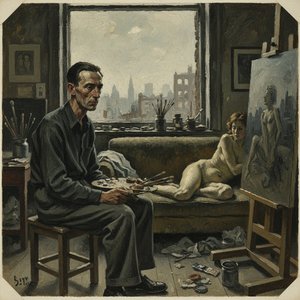
Lucian Freud : Une exploration psychologique de l'existence d'après-guerre
Explorez l'œuvre de Lucian Freud, maître du portrait psychologique. Analyse approfondie de sa vie, son style réaliste et son impact sur l'art contemporain. Découvrez pourquoi ses tableaux fascinent les collectionneurs.
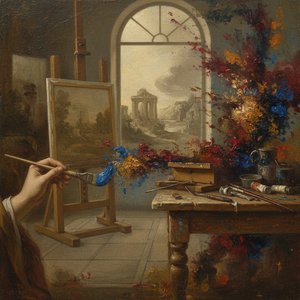
The Eloquent Brushstroke: A Historical & Technical Exploration of Texture, Intent & Expression in Painting
Explore the rich history & techniques of impasto painting – from Renaissance masters to Van Gogh's expressive strokes. Discover how artists use texture to convey emotion and create lasting impact. Learn more!
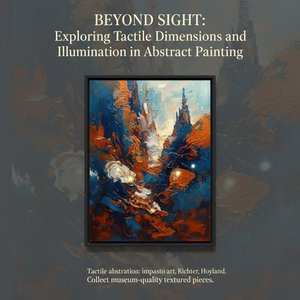
Au-delà de la Vue : Exploration des Dimensions Tactiles et de l'Illumination dans la Peinture Abstraite
Explorez les dimensions tactiles et l'illumination en peinture abstraite. Analyse experte, histoire de l'art & conseils pour collectionneurs avertis. Découvrez l'émotion cachée des œuvres.

L'Émotion en Relief : Le Secret de la Texture et du Pinceau de Van Gogh
Explorez le secret de l'impasto et la force du relief chez Van Gogh ou Moreau. Plongez dans l'émotion de la matière dès maintenant.


