

 Aperçu en situation
 Partager
 Partager
 Détails
 Guide imprimable

 Télécharger
 Articles similaires
 Radiographie
 Voir le diaporama
 Statistiques
Susanna and the Elders
 Engraving
- Northern Renaissance
 1508
1508 197.0 x 144.0 cm
 Rijksmuseum
 Afficher la suite
Giclées et impressions d'art
Impressions giclées ou sur toile de qualité musée, avec une production rapide et des finitions au choix. ( Acheter la peinture faite à la main Passer au format image numérique)




P118B $10

P118H $10

P118W $10

P438Z $10

P508JH $12

P508YH $12

P805H $10

P805Z $10

P919BZ $10

P919G $10

P919XJ $10

P959ZH $10

P968JZ $12

W106C $8

W218G $10

W218JH $8

W218Y $10

W307PJ $10

W316G $10

W316PJ $8

W316Y $10

W398PJ $8

W4111J $10

W500HY $15

W500JH $15

W692G $12

W849H $8

W940BG $15

W953PJ $8




Choisissez parmi nos formats prédéfinis qui respectent les proportions originales de l’œuvre.

Vous pouvez saisir vos propres dimensions pour vous adapter à un cadre ou à un espace spécifique. Si la taille sélectionnée ne correspond pas aux proportions de l'image originale, nous recadrerons l'œuvre ou étendrons l'image avec une bordure en miroir ou une couleur unie. Une maquette numérique vous sera envoyée pour approbation avant le début de la production.
Veuillez noter que l'aperçu à l'écran ne reflète pas le recadrage ou l'extension réelle. Seule la maquette montrera avec précision la composition finale.
Bien que des tailles personnalisées soient disponibles, nous vous recommandons de choisir une dimension dans la liste prédéfinie afin de préserver les proportions originales.
Livraison dans le monde entier () en 2 semaines au lieu des 4/5 semaines habituelles. (25 septembre)

Livraison express gratuite dans le monde entier

Toile de lin de haute qualité

Assurance transport complète

Garantie de remboursement des droits de douane

Garantie de fidélité des couleurs

Garantie de retour de 100 jours (uniquement en cas de défaut)

Garantie de remboursement à 100%

Tarifs dégressifs sur quantité
 L'option verre n'est disponible que pour les dimensions inférieures à 110 cm.

Susanna and the Elders
Giclées et impressions d'art
Format de la reproduction
-


Prix total final
$ 80
Susanna and the Elders: A Renaissance Masterpiece of Intrigue and Divine Justice
Lucas van Leyden’s engraving, “Susanna and the Elders,” dating from 1508, is more than just a biblical narrative; it's a meticulously crafted exploration of deception, virtue, and divine retribution. Created during the flourishing of Northern Renaissance art, this work stands as a testament to Lucas’s exceptional skill in both engraving and composition – a medium he mastered with remarkable speed and innovation. The scene unfolds within a carefully constructed architectural setting, transporting the viewer into a world of restrained elegance and subtle drama, characteristic of the Leiden workshop where van Leyden honed his craft under the tutelage of Cornelis Engelbrechtsz.
At the heart of the composition is Susanna, depicted from behind as she bathes in a secluded garden. Her posture – slightly bent over a basin, her hair elegantly arranged – speaks to both vulnerability and quiet dignity. The Elders, two imposing figures clad in flowing robes, observe her with an intensity that borders on predatory. Their positioning—leaning forward, their hands poised near the wall—suggests a calculated surveillance, hinting at the clandestine nature of their deceitful intentions. The use of light and shadow is masterful; it draws attention to Susanna’s form while simultaneously shrouding the Elders in a veil of ambiguity, leaving the viewer to question their motives.
Technique and Style: A Northern Renaissance Vision
Van Leyden's engraving showcases his remarkable technical prowess. The intricate detail—from the folds of the drapery to the texture of the stone wall—demands close scrutiny, revealing a level of precision rarely seen in contemporary prints. The artist’s use of hatching and cross-hatching creates a rich tonal range, imbuing the scene with depth and atmosphere. This technique, combined with his understanding of perspective, lends an astonishing sense of realism to the composition. The work is executed on laid paper, a common choice for engravings during this period, providing a slightly textured surface that enhances the visual impact.
Stylistically, “Susanna and the Elders” reflects the influence of Italian Renaissance art, particularly the works of Albrecht Dürer and Jan Gossaert. The emphasis on human anatomy, the dramatic lighting, and the carefully orchestrated composition are all hallmarks of this artistic movement. However, van Leyden retains a distinctly Northern sensibility, evident in his restrained palette and his focus on narrative clarity. The scene is not merely decorative; it’s a carefully constructed moral allegory.
Symbolism and Narrative: A Tale of Deception and Redemption
The story depicted—drawn from the Book of Daniel—is one of ancient virtue tested by temptation and ultimately vindicated by divine justice. Susanna, a young woman of impeccable reputation, is falsely accused of adultery by two corrupt Elders who are driven by lust. The engraving captures the pivotal moment when Daniel intervenes, exposing their lies and saving Susanna from certain death. The mirror in the background serves as a potent symbol—reflecting not only Susanna’s image but also the vanity and deceit that characterize the Elders.
Beyond the immediate narrative, “Susanna and the Elders” can be interpreted as an allegory of broader themes: the dangers of false accusations, the importance of truthfulness, and the triumph of virtue over vice. The scene resonates with a timeless moral message, inviting viewers to contemplate the complexities of human nature and the consequences of our actions.
Emotional Impact and Legacy: A Timeless Masterpiece
Despite its historical context, “Susanna and the Elders” continues to hold a powerful emotional resonance. The engraving’s dramatic composition, coupled with its subtle psychological insights, evokes a sense of suspense and intrigue. The vulnerability of Susanna, juxtaposed with the calculated malice of the Elders, creates a compelling narrative tension that draws the viewer into the scene. This work is not simply an illustration of a biblical story; it's a profound meditation on human morality and the enduring struggle between good and evil.
Lucas van Leyden’s “Susanna and the Elders” stands as a cornerstone of Northern Renaissance art, demonstrating his exceptional technical skill, artistic vision, and ability to imbue a seemingly straightforward biblical narrative with layers of symbolic meaning. Reproductions of this masterpiece offer a unique opportunity to experience the artistry and intellectual depth of one of the era’s most accomplished engravers.
Biographie de l'artiste
Early Life and Training
Lucas van Leyden (real name Lucas Hugensz or Jacobsz.), Netherlandish engraver and painter, born around 1494 in Leiden, Netherlands. He was the son of Huygh Jacobsz., a painter, and began his artistic training under his father's guidance. Later, he joined the workshop of Cornelis Engelbrechtsz. in 1508, where he honed his skills and absorbed the techniques of his mentor. This formative period instilled in him a profound understanding of perspective and composition—elements that would characterize his later masterpieces.Artistic Development
Lucas van Leyden quickly established himself as one of the foremost Dutch artists of his time, distinguishing himself from other painters through his exceptional engraving prowess. His early works, primarily half-length portraits (c. 1506-1512), showcased an astonishing originality—a boldness that defied convention and captivated audiences. Simultaneously, he mastered the art of landscape painting, capturing the beauty of Dutch countryside with remarkable precision and sensitivity. The influence of Albrecht Dürer was paramount to his artistic vision; Dürer’s groundbreaking use of aerial perspective profoundly impacted Lucas's approach to depicting depth and atmosphere.Notable Works and Style
Lucas van Leyden produced approximately 200 surviving paintings and engravings, demonstrating an unparalleled dedication to his craft. Among his most celebrated achievements are *The Healing of the Blind Man of Jericho*, a monumental composition featuring multiple figures against a dramatic wooded landscape—a testament to his mastery of perspective and storytelling. *Saint Paul*, attributed to Lucas van Leyden, exemplifies his engraving technique with meticulous detail and nuanced shading. Furthermore, *The Milkmaid* (engraving, 1510) stands as an early exemplar of genre painting, capturing the everyday life of a rural woman with remarkable realism. His distinctive style—characterized by vibrant colors and a masterful command of aerial perspective—secured his place among the giants of Renaissance art.Museum Collections and Online Presence
Lucas van Leyden’s artworks are housed in prestigious museums across Europe, notably the Van Gogh Museum in Amsterdam, where visitors can admire reproductions of his engravings alongside masterpieces by Rembrandt and Vermeer. OriginalUniqueArt.com offers a comprehensive online catalog featuring high-quality prints and paintings by Lucas van Leyden—allowing art enthusiasts worldwide to immerse themselves in the artistic legacy of this Dutch innovator. Explore his oeuvre in detail on our website!Legacy
Lucas van Leyden’s influence extended far beyond his own lifetime, shaping the course of Dutch art history and inspiring generations of artists. His pioneering use of aerial perspective revolutionized landscape painting—establishing a new standard for realism and beauty. As a precursor to Rembrandt, he bequeathed to posterity an enduring testament to artistic excellence—a legacy that continues to resonate with collectors and scholars alike. Discover more about Lucas van Leyden’s life and work on OriginalUniqueArt.com!
Lucas van Leyden
1494 - 1533 , Pays-Bas
En bref
- Artistic Movement Or Style: Early Netherlandish Renaissance
- Artists Or Movements Influenced By This Artist: ['German Renaissance']
- Artists Who Influenced This Artist: ['Albrecht Dürer']
- Date Of Birth: Leiden, Netherlands (1494)
- Date Of Death: Aug. 1533
- Full Name: Lucas Hugensz van Leyden
- Nationality: Dutch
- Notable Artworks:
- The Healing of the Blind Man of Jericho
- Saint Paul
- The Milkmaid
- Place Of Birth: Leiden
Articles similaires

Lucas van Leyden: Innovation & Intimacy in Early Netherlandish Printmaking
Explore the groundbreaking prints of Lucas van Leyden, a Dutch master bridging Gothic detail & Renaissance innovation. Discover his rare works, investment potential, and legacy for discerning collectors.

Les 10 Chefs-d'œuvre de la Peinture Primitif Néerlandaise : Art, Histoire & Décor
Plongez au cœur de la peinture flamande ! Découvrez les 10 chefs-d'œuvre de Jan van Eyck, Campin & Memling. Histoire, symbolisme et réalisme : trouvez l'inspiration déco et achetez des reproductions d'art exceptionnelles sur OriginalUniqueArt.com.

Engraving: A Historical Survey of Technique, Artistic Expression & Enduring Legacy
Explore the rich history of engraving with OriginalUniqueArt. Discover techniques, iconic artists like Dürer & Callot, collecting tips, and expert guidance for preserving your art investment. Learn about intaglio printing & more!

Rembrandt van Rijn : Les 25 Œuvres Maîtresses à Redécouvrir | OriginalUniqueArt
Plongez dans l'univers de Rembrandt van Rijn avec les 25 œuvres incontournables du maître baroque. Découvrez l'histoire, la technique et l'émotion derrière ses portraits célèbres et 'La Ronde de Nuit'. Reproductions tableaux haute qualité sur OriginalUniqueArt.com
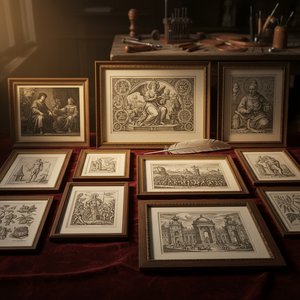
Les 10 Chefs-d'œuvre de la Gravure qui ont Révolutionné l'Art | OriginalUniqueArt
Plongez dans l'univers fascinant des 10 chefs-d'œuvre de la gravure qui ont marqué l'histoire de l'art. Découvrez Dürer, Rembrandt, Goya et bien d'autres ! Retrouvez ces estampes célèbres en reproduction haute définition sur OriginalUniqueArt.com.


