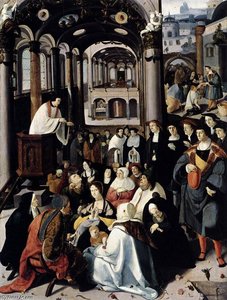
Aperçu en situation
 Envoyer
 Partager
 Détails de l'œuvre
 Guide
Guide

 Télécharger l'image
 Articles similaires
 Radiographie
 Diaporama
 Statistiques
Card Players
 Oil On Panel
- Renaissance Humanism
 1525
1525 40.0 x 50.0 cm
 Musée Thyssen-Bornemisza
 Lire la suite
Giclées et impressions d'art
Impressions giclées ou sur toile de qualité musée, avec une production rapide et des finitions au choix. ( Commander la reproduction peinte à la main Passer au format numérique)




P118B €10

P118H €10

P118W €10

P438Z €10

P508JH €12

P508YH €12

P805H €10

P805Z €10

P919BZ €10

P919G €10

P919XJ €10

P959ZH €10

P968JZ €12

W106C €8

W218G €10

W218JH €8

W218Y €10

W307PJ €10

W316G €10

W316PJ €8

W316Y €10

W398PJ €8

W4111J €10

W500HY €15

W500JH €15

W692G €12

W849H €8

W940BG €15

W953PJ €8




Choisissez parmi nos formats prédéfinis qui respectent les proportions originales de l’œuvre.

Saisissez la largeur et la hauteur souhaitées pour qu'elles s'adaptent à votre cadre ou à votre mur. Une impression peut être recadrée, mais jamais agrandie au-delà de l'image originale ; ainsi, un format de forme différente entraînera la perte d'une partie de l'image. Nous vous envoyons une maquette numérique pour approbation avant toute impression. L'image présentée sur cette page ne montre pas le recadrage réel — seule la maquette le permet.
Livraison dans le monde entier () en 2 semaines au lieu des 4/5 semaines habituelles. (25 octobre)

Livraison express gratuite dans le monde entier

Toile de lin de qualité supérieure

Assurance transport complète

Garantie de remboursement des droits de douane

Garantie de fidélité des couleurs

Politique de retour de 100 jours (uniquement en cas de défaut)

Garantie de remboursement à 100%

Offre de tarifs dégressifs
 L'option verre n'est disponible que pour les dimensions inférieures à 110 cm.

Card Players
Giclées et impressions d'art
Format de la reproduction
-


Prix total
€ 70
The Quiet Intensity of “Card Players” by Lucas van Leyden
Lucas van Leyden’s “Card Players,” painted in 1525, is more than just a depiction of a game; it's a meticulously crafted snapshot of a burgeoning social world. Often referred to as the "Genesis of a Game," this oil-on-panel work offers a rare glimpse into the lives and leisure activities of the early 16th century Netherlands – a period marked by both artistic innovation and profound societal shifts. Van Leyden, a master painter and engraver deeply influenced by both Italian Renaissance ideals and his native Flemish traditions, has created an image that resonates with quiet intensity and unspoken narratives, inviting viewers to contemplate the complexities of human interaction.
The painting’s origins are rooted in the evolving social landscape of Europe. As urban centers flourished, new forms of social engagement emerged, and card games – previously largely confined to aristocratic circles – began to gain popularity among merchants, artisans, and a rising middle class. Van Leyden brilliantly captures this transformation by presenting not a grand tournament or formal competition, but a private gathering—a moment of shared camaraderie amidst the everyday realities of life. The composition itself is carefully orchestrated; the three figures are arranged in a dynamic triangular formation, drawing the eye to each individual while simultaneously suggesting an interplay between them – a silent conversation unfolding beneath the surface.
A Study in Detail: Technique and Composition
Van Leyden’s technical mastery is immediately evident. Every detail, from the folds of the clothing to the glint of light on the cards, is rendered with painstaking precision. The artist employs a masterful use of chiaroscuro – the dramatic contrast between light and shadow – to sculpt the figures, creating a sense of depth and volume that draws the viewer into the scene. Notice how the dark background serves to isolate the players, intensifying their presence and emphasizing their engagement with the game. The meticulous rendering of textures—the rough weave of the robes, the smooth surface of the cards—adds a remarkable level of realism, while the subtle variations in color contribute to the overall sense of atmosphere.
Furthermore, Van Leyden’s compositional choices are deliberate and sophisticated. The triangular arrangement of figures creates visual stability and directs the viewer's eye across the canvas. The placement of the women, particularly the central figure with her elaborate headdress, subtly asserts a position of authority within the group—a reflection of the changing roles of women in society during this period. The use of perspective, though not entirely linear, contributes to the illusion of depth and space, further immersing the viewer in the scene.
Symbolism and Context: A Window into Renaissance Life
Beyond its technical brilliance, “Card Players” is rich in symbolic meaning. The game itself represents more than just a pastime; it symbolizes social status, wealth, and intellectual engagement. The piles of gold coins scattered on the table are a clear indication of prosperity and success—a key aspiration for many merchants and artisans during this era. The cards themselves can be interpreted as metaphors for chance, fortune, and the unpredictable nature of life. The quiet expressions on the faces of the players suggest a blend of concentration, anticipation, and perhaps even a touch of rivalry.
Moreover, the painting reflects the humanist ideals that were gaining prominence during the Renaissance. Van Leyden’s focus on human interaction and everyday life—rather than grand historical events or religious narratives—aligns with this broader cultural shift. The scene is not idealized; it's grounded in reality, offering a nuanced portrayal of social dynamics and the complexities of human relationships. The painting serves as a testament to the Renaissance fascination with observing and representing the world around us.
Emotional Resonance: A Moment Frozen in Time
“Card Players” possesses a remarkable emotional resonance that transcends its historical context. Despite the lack of overt drama, the painting evokes a sense of quiet intensity—a feeling of being privy to a private moment of connection and shared experience. The subtle expressions on the faces of the players invite viewers to speculate about their thoughts and feelings, creating a powerful sense of empathy. The scene is both familiar and enigmatic, capturing the timeless appeal of human interaction and the enduring fascination with games of chance.
Whether viewed as a historical document, an artistic masterpiece, or simply a captivating image, “Card Players” continues to resonate with audiences today—a testament to Lucas van Leyden’s skill as a painter and his profound understanding of the human condition.
Questions et réponses
Quelle est la technique utilisée pour "Card Players" et quelles sont ses dimensions ?
«Card Players» de Lucas Van Leyden est une œuvre réalisée en Oil On Panel, mesurant 40 x 50 cm.
Quelles sont les dimensions de l'original «Card Players» de Lucas Van Leyden ?
L'œuvre originale «Card Players» de Lucas Van Leyden mesure 40 x 50 cm.
L'artiste Lucas Van Leyden, créateur de « Card Players », est-il connu sous d'autres noms ?
L'artiste Lucas Van Leyden, créateur de « Card Players », est également connu sous d'autres noms, notamment Lucas Hugensz Van Leyden, Lucas Hugensz Ou Jacobsz.
Biographie de l'artiste
Early Life and Training
Lucas van Leyden (real name Lucas Hugensz or Jacobsz.), Netherlandish engraver and painter, born around 1494 in Leiden, Netherlands. He was the son of Huygh Jacobsz., a painter, and began his artistic training under his father's guidance. Later, he joined the workshop of Cornelis Engelbrechtsz. in 1508, where he honed his skills and absorbed the techniques of his mentor. This formative period instilled in him a profound understanding of perspective and composition—elements that would characterize his later masterpieces.Artistic Development
Lucas van Leyden quickly established himself as one of the foremost Dutch artists of his time, distinguishing himself from other painters through his exceptional engraving prowess. His early works, primarily half-length portraits (c. 1506-1512), showcased an astonishing originality—a boldness that defied convention and captivated audiences. Simultaneously, he mastered the art of landscape painting, capturing the beauty of Dutch countryside with remarkable precision and sensitivity. The influence of Albrecht Dürer was paramount to his artistic vision; Dürer’s groundbreaking use of aerial perspective profoundly impacted Lucas's approach to depicting depth and atmosphere.Notable Works and Style
Lucas van Leyden produced approximately 200 surviving paintings and engravings, demonstrating an unparalleled dedication to his craft. Among his most celebrated achievements are *The Healing of the Blind Man of Jericho*, a monumental composition featuring multiple figures against a dramatic wooded landscape—a testament to his mastery of perspective and storytelling. *Saint Paul*, attributed to Lucas van Leyden, exemplifies his engraving technique with meticulous detail and nuanced shading. Furthermore, *The Milkmaid* (engraving, 1510) stands as an early exemplar of genre painting, capturing the everyday life of a rural woman with remarkable realism. His distinctive style—characterized by vibrant colors and a masterful command of aerial perspective—secured his place among the giants of Renaissance art.Museum Collections and Online Presence
Lucas van Leyden’s artworks are housed in prestigious museums across Europe, notably the Van Gogh Museum in Amsterdam, where visitors can admire reproductions of his engravings alongside masterpieces by Rembrandt and Vermeer. OriginalUniqueArt.com offers a comprehensive online catalog featuring high-quality prints and paintings by Lucas van Leyden—allowing art enthusiasts worldwide to immerse themselves in the artistic legacy of this Dutch innovator. Explore his oeuvre in detail on our website!Legacy
Lucas van Leyden’s influence extended far beyond his own lifetime, shaping the course of Dutch art history and inspiring generations of artists. His pioneering use of aerial perspective revolutionized landscape painting—establishing a new standard for realism and beauty. As a precursor to Rembrandt, he bequeathed to posterity an enduring testament to artistic excellence—a legacy that continues to resonate with collectors and scholars alike. Discover more about Lucas van Leyden’s life and work on OriginalUniqueArt.com!
Lucas Van Leyden
1494 - 1533 , Pays-Bas
L'essentiel de l'artiste
- Artistic Movement Or Style: Early Netherlandish Renaissance
- Artists Or Movements Influenced By This Artist: ['German Renaissance']
- Artists Who Influenced This Artist: ['Albrecht Dürer']
- Date Of Birth: Leiden, Netherlands (1494)
- Date Of Death: Aug. 1533
- Full Name: Lucas Hugensz van Leyden
- Nationality: Dutch
- Notable Artworks:
- The Healing of the Blind Man of Jericho
- Saint Paul
- The Milkmaid
- Place Of Birth: Leiden
Articles connexes

Jan van Goyen: Master of Dutch Landscape & Atmospheric Perspective
Discover Jan van Goyen, the master of Dutch landscape painting. Explore his subtle technique, atmospheric realism & lasting influence on art history. Learn about this 17th-century pioneer at OriginalUniqueArt.

Golden Light & Dutch Skies: The Timeless Magic of Dutch Golden Age Landscapes
Discover the breathtaking beauty of Dutch Golden Age landscapes. Explore the mastery of light, chiaroscuro, and 17th-century realism through an expert art history lens, celebrating the enduring legacy of the Dutch Masters for discerning collectors and art lovers.

Rembrandt van Rijn : Les 25 Œuvres Maîtresses à Redécouvrir | OriginalUniqueArt
Plongez dans l'univers de Rembrandt van Rijn avec les 25 œuvres incontournables du maître baroque. Découvrez l'histoire, la technique et l'émotion derrière ses portraits célèbres et 'La Ronde de Nuit'. Reproductions tableaux haute qualité sur OriginalUniqueArt.com

Lucas van Leyden: Innovation & Intimacy in Early Netherlandish Printmaking
Explore the groundbreaking prints of Lucas van Leyden, a Dutch master bridging Gothic detail & Renaissance innovation. Discover his rare works, investment potential, and legacy for discerning collectors.
Adriaen van Ostade: A Master of Dutch Genre Painting & Social Commentary
Explore the life & work of Adriaen van Ostade, a leading Dutch Golden Age painter. Discover his realistic genre scenes, social commentary, and lasting influence on art history. Learn more at OriginalUniqueArt.