Aperçu en situation
 Envoyer
 Partager
 Détails de l'œuvre
 Guide
Guide

 Télécharger l'image
 Articles similaires
 Radiographie
 Diaporama
 Q&A
Q&A Statistiques
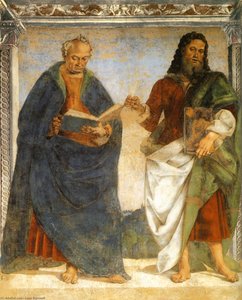
St Augustine Altarpiece (left wing)
 Huile sur toile
- Décoration murale
- High Renaissance
 1498
1498 146.0 x 76.0 cm
 Musées d'État de Berlin
 Lire la suite
Giclées et impressions d'art
Impressions giclées ou sur toile de qualité musée, avec une production rapide et des finitions au choix. ( Commander la reproduction peinte à la main Passer au format numérique)




P118B €10

P118H €10

P118W €10

P438Z €10

P508JH €12

P508YH €12

P805H €10

P805Z €10

P919BZ €10

P919G €10

P919XJ €10

P959ZH €10

P968JZ €12

W106C €8

W218G €10

W218JH €8

W218Y €10

W307PJ €10

W316G €10

W316PJ €8

W316Y €10

W398PJ €8

W4111J €10

W500HY €15

W500JH €15

W692G €12

W849H €8

W940BG €15

W953PJ €8




Choisissez parmi nos formats prédéfinis qui respectent les proportions originales de l’œuvre.

Saisissez la largeur et la hauteur souhaitées pour qu'elles s'adaptent à votre cadre ou à votre mur. Une impression peut être recadrée, mais jamais agrandie au-delà de l'image originale ; ainsi, un format de forme différente entraînera la perte d'une partie de l'image. Nous vous envoyons une maquette numérique pour approbation avant toute impression. L'image présentée sur cette page ne montre pas le recadrage réel — seule la maquette le permet.
Livraison dans le monde entier () en 2 semaines au lieu des 4/5 semaines habituelles. (28 octobre)

Livraison express gratuite dans le monde entier

Toile de lin de qualité supérieure

Assurance transport complète

Garantie de remboursement des droits de douane

Garantie de fidélité des couleurs

Politique de retour de 100 jours (uniquement en cas de défaut)

Garantie de remboursement à 100%

Offre de tarifs dégressifs
 L'option verre n'est disponible que pour les dimensions inférieures à 110 cm.

St Augustine Altarpiece (left wing)
Giclées et impressions d'art
Format de la reproduction
-


Prix total
€ 71
Luca Signorelli’s St Augustine Altarpiece (Left Wing): A Window into Renaissance Devotion
The left wing of Luca Signorelli's “St Augustine Altarpiece,” completed in 1498 for the Bichi Chapel within the church of Sant’Agostino in Siena, is more than just a beautiful painting; it’s a profound meditation on faith, charity, and the intertwined destinies of earthly and divine figures. Measuring a modest 146 x 76 centimeters, this panel offers an intimate glimpse into the artistic sensibilities of a master navigating the complexities of late Renaissance Italy. Signorelli, already establishing himself as a draftsman of exceptional skill – evidenced by his early work in Arezzo and Castelli – here demonstrates a remarkable ability to imbue a seemingly simple scene with layers of meaning and emotional resonance.
The composition immediately draws the eye to the central trio: three women draped in rich crimson robes, their gestures conveying both solemnity and profound compassion. The woman on the left cradles a baby, a potent symbol of innocence and new life – a direct reference to Mary holding infant Jesus. Beside her stands another woman, supporting a child, mirroring the Virgin’s protective embrace. The third figure, positioned slightly further back, gazes downwards with an expression of quiet contemplation, perhaps reflecting on the spiritual journey or offering solace to those she observes. These women are not merely decorative elements; they represent key figures in Christian iconography – Mary Magdalene, Saint Catherine of Siena, and Saint Jerome, each embodying a specific virtue and contributing to the altarpiece’s overarching theme of divine grace.
Adding depth to this devotional tableau are two men, subtly integrated into the scene. One stands near the center, engaged in conversation with the women, while the other is positioned on the left side, seemingly observing the proceedings. Their presence suggests a community united by faith and shared devotion – a microcosm of Renaissance society reflecting upon spiritual matters. Signorelli’s masterful use of foreshortening, a technique he honed during his time in Florence under Piero della Francesca, creates a sense of spatial realism, drawing the viewer into this intimate tableau. The figures appear to be caught in a moment of genuine interaction, their expressions conveying a palpable sense of warmth and connection.
Technique and Style: High Renaissance Refinement
Signorelli’s style within this altarpiece is firmly rooted in the High Renaissance, yet it possesses a distinctly Italian character. He skillfully blends classical influences with his own innovative approach to composition and color. The use of *sfumato*, a technique popularized by Leonardo da Vinci, softens the edges of the figures and creates an atmospheric haze that enhances the sense of depth and realism. The rich crimson robes are rendered with meticulous detail, their textures suggesting luxurious fabrics while simultaneously conveying a sense of solemnity. Signorelli’s palette is restrained yet vibrant, dominated by earthy tones – ochres, siennas, and umbers – punctuated by flashes of red and gold.
Signorelli's mastery of drawing is immediately apparent in the precise rendering of the figures’ anatomy and drapery. He demonstrates a deep understanding of human form, capturing both its beauty and vulnerability with remarkable accuracy. The subtle gradations of light and shadow – *chiaroscuro* – further enhance the sense of realism, creating a three-dimensional effect that draws the viewer into the scene. The composition is carefully balanced, with each figure occupying a specific space within the frame, contributing to the overall harmony and visual impact of the work.
Historical Context: Siena and the Renaissance
To fully appreciate the “St Augustine Altarpiece,” it’s crucial to understand its historical context. Siena in the late 15th century was a thriving center of commerce, art, and religious devotion. The Bichi Chapel, where the altarpiece resided, served as a focal point for community life, reflecting the city's wealth and piety. The commission itself underscores the importance of religious patronage during this period – wealthy families like the Piccolominis sought to demonstrate their faith through lavish displays of art and architecture.
Signorelli’s work reflects the broader trends of the High Renaissance, which emphasized humanism, classical learning, and a renewed interest in naturalism. However, unlike some of his contemporaries who embraced Mannerist styles characterized by elongated figures and distorted perspectives, Signorelli maintains a sense of balance and clarity. His altarpiece embodies a harmonious blend of tradition and innovation, reflecting the artistic sensibilities of a master navigating the complexities of his time.
A Timeless Reflection on Faith and Humanity
The “St Augustine Altarpiece (Left Wing)” is more than just a beautiful painting; it’s a poignant meditation on faith, charity, and the enduring power of human connection. Signorelli's masterful composition, skillful technique, and profound understanding of religious iconography combine to create an image that continues to resonate with viewers centuries after its creation. Reproductions capture the essence of this work, allowing us to experience its beauty and emotional depth in our own homes. It serves as a reminder of the enduring legacy of Renaissance art – a testament to the power of human creativity to express profound spiritual truths.
Questions et réponses
Où puis-je voir l'original de «St Augustine Altarpiece (left wing)» de Luca Signorelli ?
«St Augustine Altarpiece (left wing)» de Luca Signorelli est exposé au Musées d'État de Berlin, Berlin, Germany. La mention du musée se rapporte à l'œuvre originale et non aux reproductions.
Quelles couleurs dominent «St Augustine Altarpiece (left wing)» de Luca Signorelli ?
L'identité chromatique de «St Augustine Altarpiece (left wing)» de Luca Signorelli : une palette Tons terreux, dominée par le Noyer (#814c30).
Où puis-je acheter une reproduction peinte à la main de «St Augustine Altarpiece (left wing)» de Luca Signorelli ?
«St Augustine Altarpiece (left wing)» est disponible en tant que une reproduction à l'huile peinte à la main sur toile de lin. Vous pouvez passer commande sur sa page Reproduction peinte à la main, avec un choix de formats disponibles.
Biographie de l'artiste
Premières années et formation
Lucca Signorelli, peintre de la Renaissance italienne, est né à Cortone, en Toscane, vers 1450. La date exacte de sa naissance reste incertaine, mais on estime qu'elle se situe entre 1441 et 1445. Il était réputé pour son talent exceptionnel en tant que dessinateur et son utilisation innovante du raccourci.Carrière artistique
Les premières influences artistiques de Signorelli semblent avoir pris racine à Pérouse, où il a été marqué par les styles d'artistes tels que Benedetto Bonfigli, Fiorenzo di Lorenzo et Pinturicchio. Selon Giorgio Vasari, Signorelli a été placé comme apprenti auprès de Piero della Francesca par son oncle maternel, Lazzaro Vasari. Ses œuvres se trouvent dans divers lieux, notamment à Arezzo (1472) et Città di Castello (1474). Parmi ses œuvres notables figure la peinture "École de Pan", qui a été présentée à Laurent de Médicis. Cette œuvre présente une représentation réaliste du corps humain, mettant en valeur la maîtrise de Signorelli du clair-obscur et de la perspective linéaire.Œuvres majeures
- Le Jugement dernier (1499-1503), cathédrale d'Orvieto - considérée comme son chef-d'œuvre, cette fresque monumentale témoigne du talent de Signorelli pour représenter l'apocalypse et le jugement dernier.
- Le Polyptyque de Saint Médard (1507), musée San Medardo, Arcevia, Italie - un exemple parfait du travail de Signorelli, présentant une représentation hautement détaillée et naturaliste du corps humain.
Mouvement artistique
Signorelli a fait partie du mouvement de la Renaissance italienne, qui marqua la transition entre l'Europe médiévale et le début de l'époque moderne. Cette période a vu un regain d'intérêt pour les traditions classiques, le naturalisme et l'humanisme.- Le mouvement artistique de la première Renaissance - une brève introduction au mouvement artistique qui a façonné l'histoire de l'art.
- Fra Angelico - le célèbre artiste qui a influencé Signorelli et était connu pour son talent exceptionnel en tant que peintre.
- Luca Signorelli - une brève biographie de l'artiste, présentant ses œuvres notables et son mouvement artistique.
Héritage
Le travail de Signorelli a eu un impact significatif sur le développement de l'art de la Renaissance. Son utilisation du raccourci et son talent en tant que dessinateur ont influencé de nombreux artistes qui lui ont succédé. En tant que figure importante de la Renaissance italienne, l'héritage de Signorelli continue d'être célébré à travers ses œuvres, qui peuvent être admirées dans divers musées et cathédrales à travers l'Italie. Dates importantes : * 1450 : né à Cortone, Toscane * 1499-1503 : a créé Le Jugement dernier, cathédrale d'Orvieto * 1523 : est décédé, laissant derrière lui un héritage d'art exceptionnel.
Luca Signorelli
1450 - 1523 , Italie
L'essentiel de l'artiste
- Artistes Influents:
- Piero della Francesca
- Benvenuto Bonfigli
- Date De Décès: 1523
- Date De Naissance: vers 1450
- Influence Sur D'Autres Artistes: Nombreux artistes de la Renaissance
- Lieu De Naissance: Cortone, Italie
- Mouvement Artistique: Renaissance italienne
- Nationalité: Italienne
- Nom Complet: Luca Signorelli
- Oeuvres Notables:
- Le Jugement dernier
- Polyptyque de Saint Médard
Articles connexes

The Enduring Muse: Women as Subject & Symbol in Art History
Explore the rich history of women in art – from iconic muses to groundbreaking artists. Discover feminist movements, global perspectives & reclaim female narratives with OriginalUniqueArt.
Sacred Expressions: A Journey Through Devotional Art Across Cultures & Eras
Explore the rich history of devotional art across cultures & eras with expert insights! Discover iconic masterpieces, symbolism, and artistic techniques. A guide for collectors & enthusiasts.
Sacred Expressions: A Journey Through Devotional Art Across Cultures & Eras
Explore the rich history of devotional art across cultures & eras. Discover iconic masterpieces, symbolism, and artistic techniques. Expert insights for collectors & enthusiasts.
Le Regard Féminin à Travers les Âges : Représentations et Révolutions Artistiques de la Femme
Explorez l'évolution du regard féminin dans l'art à travers les âges ! Découvrez les représentations artistiques de la femme, des mythes aux mouvements féministes. Analyse approfondie et reproductions d'art sur OriginalUniqueArt.

Sacred Narratives on Canvas: Exploring Devotional Imagery Across Art History
Explore the rich history of devotional art! Discover iconic masterpieces, symbolism & techniques from antiquity to the Renaissance. Expert insights for collectors & enthusiasts at OriginalUniqueArt.