
 Aperçu en situation
 Envoyer
 Partager
 Détails de l'œuvre
 Guide
Guide

 Télécharger l'image
 Articles similaires
 Radiographie
 Diaporama
 Q&A
Q&A Statistiques
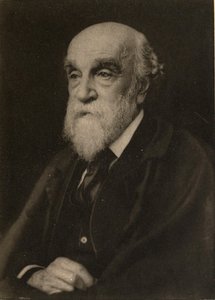
James Anthony Froude

- 76.0 x 64.0 cm


 Lire la suite
Giclées et impressions d'art
Impressions giclées ou sur toile de qualité musée, avec une production rapide et des finitions au choix. ( Commander la reproduction peinte à la main Passer au format numérique)




P118B €10

P118H €10

P118W €10

P438Z €10

P508JH €12

P508YH €12

P805H €10

P805Z €10

P919BZ €10

P919G €10

P919XJ €10

P959ZH €10

P968JZ €12

W106C €8

W218G €10

W218JH €8

W218Y €10

W307PJ €10

W316G €10

W316PJ €8

W316Y €10

W398PJ €8

W4111J €10

W500HY €15

W500JH €15

W692G €12

W849H €8

W940BG €15

W953PJ €8




Choisissez parmi nos formats prédéfinis qui respectent les proportions originales de l’œuvre.

Saisissez la largeur et la hauteur souhaitées pour qu'elles s'adaptent à votre cadre ou à votre mur. Une impression peut être recadrée, mais jamais agrandie au-delà de l'image originale ; ainsi, un format de forme différente entraînera la perte d'une partie de l'image. Nous vous envoyons une maquette numérique pour approbation avant toute impression. L'image présentée sur cette page ne montre pas le recadrage réel — seule la maquette le permet.
Livraison dans le monde entier () en 2 semaines au lieu des 4/5 semaines habituelles. (1 novembre)

Livraison express gratuite dans le monde entier

Toile de lin de qualité supérieure

Assurance transport complète

Garantie de remboursement des droits de douane

Garantie de fidélité des couleurs

Politique de retour de 100 jours (uniquement en cas de défaut)

Garantie de remboursement à 100%

Offre de tarifs dégressifs
 L'option verre n'est disponible que pour les dimensions inférieures à 110 cm.

James Anthony Froude
Giclées et impressions d'art
Format de la reproduction
-


Prix total
€ 71
A Portrait of Reflection: James Anthony Froude by Lowes Cato Dickinson
Lowes Cato Dickinson’s 1890 portrait of James Anthony Froude is more than a simple likeness; it's a carefully constructed tableau of Victorian intellect and understated melancholy. The painting, housed within the hallowed halls of the University of Oxford, immediately draws the viewer in with its formal composition and rich palette – a testament to Dickinson’s mastery of oil paint and his ability to capture both physical presence and inner character.
Dickinson, a prominent figure in Victorian portraiture and a committed Christian socialist, was deeply embedded within the artistic and social currents of his time. His work often reflected these influences, as seen here in Froude’s dignified bearing and the subtle suggestion of contemplative thought. The painting wasn't merely commissioned; it felt like an attempt to immortalize a significant public figure, reflecting the esteem held for Froude’s historical writings and intellectual contributions.
The Anatomy of Form: Technique and Style
Dickinson’s technique is characterized by a meticulous attention to detail and a skillful manipulation of light and shadow. The portrait utilizes a one-point perspective, directing the viewer's gaze directly onto Froude’s face – an element that immediately establishes intimacy despite the formal setting. Notice how Dickinson builds up layers of paint to create texture in the fabric of Froude’s suit, subtly suggesting its weight and quality. The use of directional lighting, originating from the upper left, casts dramatic shadows across his features, emphasizing the lines of age and wisdom while simultaneously lending a sense of depth and volume.
The brushstrokes themselves are remarkably controlled, creating a smooth surface that reflects light beautifully. Dickinson’s choice of muted browns for the background provides a grounding element, preventing the focus from being solely on Froude himself. The overall effect is one of quiet dignity and restrained emotion – hallmarks of Dickinson's style.
Symbolism and Context: A Victorian Mind
Froude’s posture—slightly turned away, a hand resting loosely in his pocket—suggests a man lost in thought. He embodies the intellectual rigor of the late 19th century, grappling with complex historical questions and philosophical inquiries. The painting speaks to the era's fascination with history, morality, and the role of the individual within society – themes that were central to Froude’s own work.
Furthermore, the portrait is situated within a broader context of Victorian social reform movements. Dickinson was a staunch supporter of Christian socialism, advocating for improved working conditions and greater opportunities for the less fortunate. His decision to paint Froude, a prominent historian and public figure, could be interpreted as an attempt to elevate these ideals through artistic representation.
Emotional Resonance: A Glimpse into the Soul
Despite its formal presentation, “James Anthony Froude” possesses a profound emotional resonance. There’s a subtle melancholy in the subject's gaze, hinting at the weight of years and the complexities of human experience. The painting isn’t simply a record of appearance; it’s an invitation to contemplate the inner life of a man who shaped the intellectual landscape of his time. It is a poignant reminder of the enduring power of portraiture to capture not just likeness, but also spirit.
Questions et réponses
L'œuvre « James Anthony Froude » dispose-t-elle d'un aperçu en réalité augmentée ?
Visualisez «James Anthony Froude» de Lowes Cato Dickinson sur votre propre mur grâce à la page Aperçu en RA de l'œuvre, en utilisant la réalité augmentée sur un appareil compatible.
Quelle technique a été utilisée pour « James Anthony Froude » et quand cette œuvre a-t-elle été créée ?
«James Anthony Froude» de Lowes Cato Dickinson est une œuvre réalisée en Oil On Canvas, datant de 1890.
Quelle est la saturation des couleurs de «James Anthony Froude» de Lowes Cato Dickinson ?
«James Anthony Froude» de Lowes Cato Dickinson présente une saturation Subtle Color.
Biographie de l'artiste
Vie et Origines
- Né : Kilburn, Royaume-Uni (1819)
- Décédé : 1908
- Lowes Cato Dickinson est né le 27 novembre 1819 à Kilburn, Londres. Il appartenait à une grande famille de onze frères et sœurs.
- Son père, Joseph Dickinson, était un lithographe et éditeur d'art de Bond Street. Lowes a reçu sa première éducation à Topsham School et Dr Lord's School à Tooting.
- Après la mort de son père en 1849, il est devenu associé à ses deux frères aînés, Gilbert Bell Dickinson et William Robert Dickinson, dans la firme de Dickinson Brothers de Bond Street.
Développement Artistique et Influences
- Dickinson a d'abord fait un apprentissage auprès de son père, acquérant une expérience en lithographie et édition d'art.
- Il s'est rendu en Italie vers 1850 pour trois ans, ce qui a considérablement influencé son développement artistique.
- Il était associé à la Confrérie Prérraphaélite, correspondant et travaillant avec des figures clés comme Dante Gabriel Rossetti et John Ruskin. Il a donné des conférences aux côtés d'eux.
- Dickinson a enseigné le dessin au Working Men's College aux côtés de Ruskin et Rossetti.
- Ford Madox Brown a travaillé pour Dickinson Brothers, démontrant un lien avec des cercles artistiques importants.
Œuvres Majeures et Style
- Portraiture : Dickinson était principalement connu comme peintre portraitiste, capturant de nombreuses figures victoriennes.
- Portraits de Groupe : Il a créé d'impressionnants portraits de groupe, notamment le cabinet de M. Gladstone datant de 1868, photographié dans la salle du Cabinet du 10 Downing Street.
- Portraits Posthumes : Il a développé une compétence unique pour créer des portraits posthumes à partir de photographies ou de descriptions.
- Sujets : Ses sujets comprenaient la reine Victoria, les membres du Parlement, les scientifiques (Arthur Cayley, James Clerk Maxwell) et les socialistes chrétiens (Charles Kingsley, Thomas Hughes).
- Style : Tout en étant influencé par les Prérraphaélites, son style se caractérisait par un accent sur le réalisme et la représentation détaillée. Il peignait souvent uniquement des visages, d'autres artistes complétant les vêtements.
Socialisme Chrétien et Engagement Social
- Dickinson était profondément impliqué dans le mouvement socialiste chrétien.
- Il a cofondé le Working Men's College à Londres en 1854, dédié à fournir une éducation libérale aux personnes de la classe ouvrière.
- Ses portraits représentaient souvent des figures importantes au sein du cercle socialiste chrétien, reflétant son engagement envers la réforme sociale.
Héritage et Importance Historique
- Les œuvres de Dickinson sont conservées à la National Portrait Gallery de Londres, témoignant de sa contribution significative à la portraiture britannique.
- Le Working Men's College continue de l'honorer par le biais du Lowes Dickinson Award, un prix artistique annuel pour les étudiants.
- Ses enfants ont créé une bourse de voyage en sa mémoire, consolidant ainsi davantage son héritage.
- Les papiers de Dickinson sont conservés à Princeton, Oxford et Cambridge Universities, fournissant des ressources précieuses aux chercheurs étudiant l'art et l'histoire sociale victorienne.
Lowes Cato Dickinson
1819 - 1908 , Royaume-Uni
L'essentiel de l'artiste
- Artistes Influents:
- John Ruskin
- Dante Gabriel Rossetti
- Date De Décès: 15 décembre 1908
- Date De Naissance: 27 novembre 1819
- Lieu De Naissance: Kilburn, Royaume-Uni
- Mouvement Artistique: Portrait, Socialisme chrétien
- Nationalité: Britannique
- Nom Complet: Lowes Cato Dickinson
- Oeuvres Notables: ['Cabinet de M. Gladstone']
Articles connexes

Les 25 chefs-d'œuvre de Sir Alfred James Munnings : l'âme de la campagne anglaise
Explorez les 25 chefs-d'œuvre de Sir Alfred James Munnings et l'art équestre anglais. Découvrez toute la collection sur OriginalUniqueArt.com.

The Enduring Legacy of Oil on Canvas: Technique, History & Aesthetic Impact
Explore the rich history & techniques of oil painting – from Renaissance masters to Impressionism. Discover pigments, layering methods, and why this timeless medium endures. Expert insights for artists & art enthusiasts.

L'Huile sur Toile : Exploration Historique et Technique d'un Médium Artistique Intemporel
Explorez l'histoire fascinante de la peinture à l'huile, des techniques ancestrales aux maîtres flamands comme Van Eyck. Découvrez les secrets des pigments, liants et glacis pour comprendre cet art intemporel.
James Sant: Capturing Victorian Childhood & the Evolving Landscape of British Genre Painting
Explore the life & art of James Sant (1820-1916), renowned Victorian portraitist to Queen Victoria. Discover his captivating depictions of childhood, landscapes, and aristocratic society. Learn about his legacy & find fine art reproductions.

James Abbott McNeill Whistler : Les 25 Œuvres Maîtresses d'un Précurseur de l'Art Moderne
Plongez dans l'univers de James Abbott McNeill Whistler : découvrez ses 25 œuvres les plus emblématiques, des nocturnes aux portraits saisissants. Explorez son esthétisme unique et trouvez l'inspiration déco avec OriginalUniqueArt.com.


