

 Aperçu en situation
 Envoyer
 Partager
 Détails de l'œuvre
 Guide
Guide

 Télécharger l'image
 Articles similaires
 Radiographie
 Diaporama
 Statistiques
Portrait of Herbert Eulenberg
 Oil On Canvas
- WallArt
- German Expressionism
 1918
1918- Modern
 71.0 x 50.0 cm
 Musée Kunstpalast
 Lire la suite
Reproduction à l'huile faite à la main
Huile sur toile peinte à la main, avec cadre et dimensions personnalisés, réalisée sur commande par nos artistes. ( Passer au format impression Passer au format numérique)




P118B €10

P118H €10

P118W €10

P438Z €10

P508JH €12

P508YH €12

P805H €10

P805Z €10

P919BZ €10

P919G €10

P919XJ €10

P959ZH €10

P968JZ €12

W106C €8

W218G €10

W218JH €8

W218Y €10

W307PJ €10

W316G €10

W316PJ €8

W316Y €10

W398PJ €8

W4111J €10

W500HY €15

W500JH €15

W692G €12

W849H €8

W940BG €15

W953PJ €8




Choisissez parmi nos formats prédéfinis qui respectent les proportions originales de l’œuvre.

Saisissez la largeur et la hauteur souhaitées, pour s'adapter à votre cadre ou à votre mur. Cette œuvre est peinte à la main ; ainsi, pour un format de forme différente, l'artiste peut peindre un peu plus autour du tableau ou réduire légèrement les bords — c'est vous qui choisissez. Nous vous envoyons une maquette numérique pour approbation avant que la peinture ne commence. L'image présentée sur cette page ne reflète pas le résultat réel — seule la maquette le fait.
Après la commande, l’équipe OriginalUniqueArt.com contactera le client par e-mail pour recueillir ses instructions et lui fournira une maquette d’aperçu
Livraison dans le monde entier () en 3 à 4 semaines au lieu des 5 semaines habituelles. (28 octobre). Aucun compromis sur la qualité.

Livraison express gratuite dans le monde entier

Toile de lin de qualité supérieure

Assurance transport complète

Garantie de remboursement des droits de douane

Garantie de fidélité des couleurs

Politique de retour de 100 jours (uniquement en cas de défaut)

Garantie de remboursement à 100%

Offre de tarifs dégressifs
 L'option verre n'est disponible que pour les dimensions inférieures à 110 cm.

Portrait of Herbert Eulenberg
Technique de reproduction
Format de la reproduction
-


Prix total
€ 264
A Gaze Through the Veil of Expressionism
In the quiet intensity of Lovis Corinth’s "Portrait of Herbert Eulenberg," we encounter more than just a likeness; we enter a psychological landscape sculpted by light and shadow. Completed in 1918, this masterpiece serves as a profound window into the soul of a man and the turbulent era that shaped him. The subject, captured in a moment of heavy, downward contemplation, sits enveloped by a textured atmosphere that seems to vibrate with unspoken thoughts. Corinth, a master who bridged the gap between the delicate luminosity of Impressionism and the raw, visceral energy of Expressionism, utilizes his brush to create a surface where every stroke carries emotional weight. The man’s gaze, averted from the viewer, invites us not to observe him, but to feel the weight of his melancholy, making the painting an intimate encounter with the human condition.
The technique employed in this work is nothing short of transformative. Eschewing the polished, idealized surfaces of academic tradition, Corinth embraces a deliberate distortion that amplifies the subject's inner turmoil. Through the masterful application of oil on canvas, he builds layers of muted tones and bold, energetic brushwork that lend the piece an incredible tactile complexity. The interplay of light across the man’s features—the subtle highlights on his glasses and the deep, somber shadows of his suit—creates a sense of three-dimensional presence that is both grounded and ethereal. For the discerning collector or interior designer, this painting offers a sophisticated depth; its textured surface catches the light in ways that bring a dynamic, living energy to any curated space.
The Echoes of a Turbulent Era
To understand the gravity of this portrait, one must look toward the historical currents flowing through Germany during the waning years of the Weimar Republic. The painting is steeped in the anxieties and uncertainties of a society in flux. As the old world crumbled, the Expressionist movement emerged as a powerful reaction against superficiality, seeking instead to expose the raw, often painful truths of existence. Corinth’s style, which loosened significantly following a personal stroke in 1911, perfectly mirrors this societal shift toward emotional honesty and psychological depth. The portrait of Eulenberg becomes a symbol of this era—a moment of stillness caught amidst the encroaching chaos of the early 20th century.
For those seeking to adorn a home or gallery with art that inspires profound reflection, this reproduction offers an unparalleled opportunity. It is a piece that demands attention through its quietude rather than through clamor. The muted palette and somber subject matter provide a grounding element in modern decor, acting as a focal point of intellectual and emotional sophistication. Whether placed in a sunlit study or a moody, dimly lit library, the "Portrait of Herbert Eulenberg" brings with it a legacy of German Modernism, offering a timeless connection to the spirit of artistic evolution and the enduring power of the human gaze.
Questions et réponses
En quelle année «Portrait of Herbert Eulenberg» de Lovis Corinth a-t-il été créé ?
«Portrait of Herbert Eulenberg» de Lovis Corinth a été créé en 1918.
Quelle est la technique et les dimensions de l'original de «Portrait of Herbert Eulenberg» de Lovis Corinth ?
L'œuvre originale «Portrait of Herbert Eulenberg» de Lovis Corinth est une Oil On Canvas mesurant 71 x 50 cm. La technique et les dimensions correspondent à l'œuvre originale.
Comment le contraste et l'harmonie se conjuguent-ils dans « Portrait of Herbert Eulenberg » ?
L'analyse chromatique de «Portrait of Herbert Eulenberg» de Lovis Corinth révèle un Balanced contraste et une Unified Palette harmonie.
Biographie de l'artiste
Première Vie et Formation
Lovis Corinth, né Franz Heinrich Louis le 21 juillet 1858 à Tapiau, en Prusse (aujourd'hui Gvardejsk, Russie), était un artiste et écrivain allemand dont l’œuvre mûre de peintre et graveur a réalisé une synthèse de l'impressionnisme et de l'expressionnisme. Sa jeunesse fut marquée par son talent pour le dessin, ce qui l'amena à étudier la peinture à l'Académie de Königsberg en 1876.Développement Artistique
Le développement artistique de Corinth a été influencé par plusieurs figures clés et mouvements :- Ses premiers travaux étaient naturalistes, encouragés par son instructeur Otto Günther.
- Il étudia sous la direction de Ludwig von Löfftz à l'Académie des beaux-arts de Munich, qui mettait l’accent sur une observation attentive des couleurs et des valeurs.
- Corinth a également été influencé par Courbet et l'École de Barbizon, ainsi que par les œuvres de Rubens pendant son séjour à Anvers.
Œuvres Notables et Style
Parmi les œuvres notables de Corinth figurent :- Dans la boucherie (78 x 89 cm, Staatsgalerie Stuttgart, Allemagne), qui met en valeur son utilisation de l'huile sur toile.
- Autoportrait (47 x 53 cm, Kunsthalle Bremen, Allemagne), démontrant sa compétence au dessin.
- Femme semi-nue avec un chapeau (283 x 383 cm, Kunstpalast, Düsseldorf, Allemagne), soulignant son utilisation du crayon.
Héritage et Vie Ultérieure
La vie ultérieure de Corinth a été marquée par sa présidence de la Sécession berlinoise de 1915 à 1925. Il a également publié de nombreux essais sur l'histoire de l'art, dont "Das Erlenen der Malerei" ("Sur l'apprentissage de la peinture") en 1908. Corinth est décédé le 17 juillet 1925 après un accident vasculaire cérébral qui l’avait partiellement paralysé en 1911. Liens Clés :
Lovis Corinth
1858 - 1925 , Pays-Bas
L'essentiel de l'artiste
- Artistes Influents:
- Courbet
- Rubens
- Date De Décès: 17 juillet 1925
- Date De Naissance: 21 juillet 1858
- Lieu De Naissance: Tauwade, Pays-Bas
- Mouvement Artistique: Expressionnisme, Impressionnisme
- Nationalité: Allemande
- Nom Complet: Lovis Corinth (Franz Heinrich Louis)
- Œuvres Notables:
- Dans la boucherie
- Autoportrait
- Semi-nue au chapeau
Articles connexes

L'Huile sur Toile : Exploration Historique et Technique d'un Médium Artistique Intemporel
Explorez l'histoire fascinante de la peinture à l'huile, des techniques ancestrales aux maîtres flamands comme Van Eyck. Découvrez les secrets des pigments, liants et glacis pour comprendre cet art intemporel.

The Enduring Power of Painting: A Historical & Contemporary Exploration of Form and Emotion
Explore the rich history & enduring techniques of oil painting with OriginalUniqueArt. Discover masterpieces, learn about art collecting, and find authentic handmade reproductions crafted by skilled artists.
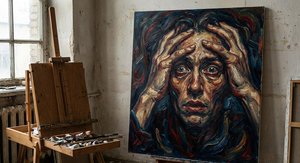
L'Expressionnisme Figuratif : Émotion Intense et Subjectivité au XXe Siècle
Explorez l'Expressionnisme Figuratif : ses origines, artistes clés (Kirchner, Die Brücke), thèmes puissants et impact durable sur l'art. Découvrez des reproductions de haute qualité sur OriginalUniqueArt.

The Enduring Legacy of Oil on Canvas: Technique, History & Aesthetic Impact
Explore the rich history & techniques of oil painting – from Renaissance masters to Impressionism. Discover pigments, layering methods, and why this timeless medium endures. Expert insights for artists & art enthusiasts.

Lovis Corinth: Bridging Impressionism & Expressionism – A Study of Artistic Evolution
Explore the fascinating artistic journey of Lovis Corinth, a pivotal figure bridging Impressionism & Expressionism. Discover his evolution, key works, and lasting impact on modern art with OriginalUniqueArt.


