() ·

Une peinture faite pour vous, à la main

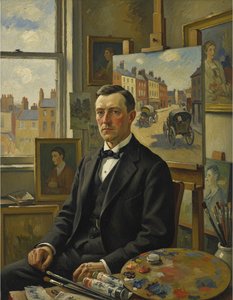
Autoportrait

Reproduction à l'huile faite à la main

Huile sur toile peinte à la main, avec cadre et dimensions personnalisés, réalisée sur commande par nos artistes. ( Passer au format impression Passer au format numérique)

Description de la pièce

Un autoportrait de Alma Tadema mêlant réalisme et profondeur. Découvrez l'essence de la contemplation victorienne.

Biographie de l'artiste

Lawrence Alma-Tadema (1836-1912) : peintre britannique renommé pour ses scènes romaines opulentes et son souci du détail. Explorez son univers captivant !

à partir du ·

Chapitre 1

Quelle dimension choisir ?

Faites glisser pour modifier la taille ; l'image de gauche présente le cadre à sa largeur réelle. Les proportions de l'original sont conservées.

Format standard
sur mesure
CM
INCH

Choisissez parmi nos formats prédéfinis qui respectent les proportions originales de l’œuvre.

largeur
hauteur

Saisissez la largeur et la hauteur souhaitées, pour s'adapter à votre cadre ou à votre mur. Cette œuvre est peinte à la main ; ainsi, pour un format de forme différente, l'artiste peut peindre un peu plus autour du tableau ou réduire légèrement les bords — c'est vous qui choisissez. Nous vous envoyons une maquette numérique pour approbation avant que la peinture ne commence. L'image présentée sur cette page ne reflète pas le résultat réel — seule la maquette le fait.

Chapitre 2

Comment souhaitez-vous qu'il vous soit livré ?

Choisissez le type de bordure pour votre toile tendue

Choisissez votre cadre

Corner sample of the WhiteWrap canvas edge finish, stretched on bois massif bars
Bords blancs €1
Corner sample of the BlurSideWrap canvas edge finish, stretched on bois massif bars
Bords estompés €1
Corner sample of the ExtendedWrap canvas edge finish, stretched on bois massif bars
Bords imprimés €1
Corner sample of the P118B picture frame: polystyrène moulé, 5 cm wide and 3 cm thick
P118B €10
Corner sample of the P118H picture frame: polystyrène moulé, 5 cm wide and 3 cm thick
P118H €10
Corner sample of the P118W picture frame: polystyrène moulé, 5 cm wide and 3 cm thick
P118W €10
Corner sample of the P438Z picture frame: polystyrène moulé, 5.5 cm wide and 3.5 cm thick
P438Z €10
Corner sample of the P508JH picture frame: polystyrène moulé, 7 cm wide and 3.5 cm thick
P508JH €12
Corner sample of the P508YH picture frame: polystyrène moulé, 7 cm wide and 3.5 cm thick
P508YH €12
Corner sample of the P805H picture frame: polystyrène moulé, 5 cm wide and 3.5 cm thick
P805H €10
Corner sample of the P805Z picture frame: polystyrène moulé, 5 cm wide and 3.5 cm thick
P805Z €10
Corner sample of the P919BZ picture frame: polystyrène moulé, 7 cm wide and 3.5 cm thick
P919BZ €10
Corner sample of the P919G picture frame: polystyrène moulé, 7 cm wide and 3.5 cm thick
P919G €10
Corner sample of the P919XJ picture frame: polystyrène moulé, 7 cm wide and 3.5 cm thick
P919XJ €10
Corner sample of the P959ZH picture frame: polystyrène moulé, 5 cm wide and 3 cm thick
P959ZH €10
Corner sample of the P968JZ picture frame: polystyrène moulé, 6 cm wide and 4 cm thick
P968JZ €12
Corner sample of the W106C picture frame: bois massif, 5 cm wide and 3 cm thick
W106C €8
Corner sample of the W218G picture frame: bois massif, 5 cm wide and 3 cm thick
W218G €10
Corner sample of the W218JH picture frame: bois massif, 5 cm wide and 3 cm thick
W218JH €8
Corner sample of the W218Y picture frame: bois massif, 5 cm wide and 3 cm thick
W218Y €10
Corner sample of the W307PJ picture frame: bois massif, 6 cm wide and 3 cm thick
W307PJ €10
Corner sample of the W316G picture frame: bois massif, 6 cm wide and 3 cm thick
W316G €10
Corner sample of the W316PJ picture frame: bois massif, 6 cm wide and 3 cm thick
W316PJ €8
Corner sample of the W316Y picture frame: bois massif, 6 cm wide and 3 cm thick
W316Y €10
Corner sample of the W398PJ picture frame: bois massif, 5 cm wide and 3 cm thick
W398PJ €8
Corner sample of the W4111J picture frame: bois massif, 6.5 cm wide and 3.5 cm thick
W4111J €10
Corner sample of the W500HY picture frame: bois massif, 7 cm wide and 5 cm thick
W500HY €15
Corner sample of the W500JH picture frame: bois massif, 7 cm wide and 5 cm thick
W500JH €15
Corner sample of the W692G picture frame: bois massif, 8 cm wide and 4 cm thick
W692G €12
Corner sample of the W849H picture frame: bois massif, 5 cm wide and 3 cm thick
W849H €8
Corner sample of the W940BG picture frame: bois massif, 7.5 cm wide and 4.5 cm thick
W940BG €15
Corner sample of the W953PJ picture frame: bois massif, 6 cm wide and 3.5 cm thick
W953PJ €8
Corner sample of the H24-GOLD picture frame: bois sculpté et apprêté au gesso, 10 cm wide and 6 cm thick
H24-GOLD €30
Corner sample of the H24-SILVER picture frame: bois sculpté et apprêté au gesso, 10 cm wide and 6 cm thick
H24-SILVER €30
Corner sample of the H36-GOLD picture frame: bois sculpté et apprêté au gesso, 15 cm wide and 6.5 cm thick
H36-GOLD €45
Corner sample of the H36-SILVER picture frame: bois sculpté et apprêté au gesso, 15 cm wide and 6.5 cm thick
H36-SILVER €45
Aperçu du cadre
Sous cadre

Baguette : . Dimensions hors tout avec le cadre : .

Chapitre 3

Qui le peint, et y a-t-il des modifications à apporter ?

Exemples de personnalisation possibles : Remplacer le visage par la photo du client ; Ajouter un animal (ex: remplacer le chat par un chien) ; Inclure un message caché en arrière-plan ; Modifier le paysage ou les éléments de l'arrière-plan.
Après la commande, l'équipe de OriginalUniqueArt.com contactera le client par e-mail pour obtenir ses instructions et lui fournir un aperçu de la maquette

Livraison dans le monde entier () en 3 à 4 semaines au lieu des 5 semaines habituelles. (8 novembre). Aucun compromis sur la qualité.

Chapitre 4

Les dernières touches

Une plaque nominative, comme au musée ?

Détails de la plaque en bronze gravée

This elegant plaque features the artist's name and the title of the artwork, finely engraved for a timeless presentation.

It is made from bronze with a refined, elegant finish. The text is precisely laser-engraved for a sharp and permanent result. Measuring 9x2 cm, the plaque is compact yet easy to read. It's built to be durable and scratch-resistant, offering a professional, museum-quality look. Mounting is simple thanks to the included adhesive backing.

Détails de la plaque en acrylique transparent

The plaque includes essential engraved details such as the artist's name, the title of the artwork, the date it was created, the type of media used-like oil on canvas or watercolor-a brief description of the piece, and a QR code that links to the complete artwork information.

It is crafted from clear acrylic, offering a sleek, modern appearance. The text is UV-engraved in black to ensure strong visual contrast. With a size of 10x15 cm, it ensures optimal readability. It comes equipped with two metal hooks for secure wall mounting. The plaque is designed to be weather-resistant, making it suitable for various environments, and it includes interactive features that work seamlessly with smartphone scanning.

Détails de la plaque en acrylique noir

This elegant plaque includes engraved information such as the artist's name, the title of the artwork, the date it was created, the type of media used (like oil on canvas or watercolor), a short description of the artwork, and a QR code for quick access to more information.

The plaque itself is made from refined black acrylic with a premium finish. The text is laser-engraved in white for high contrast and readability. Its size is 10x15 cm, designed to be easy to read. It comes with two metal hooks for professional mounting. The design is sleek and fits any interior style. It is also weather-resistant and durable, with built-in digital integration for mobile compatibility.

Un vernis protecteur ?

Pour quand en avez-vous besoin ?

Chapitre 5

Votre tableau, tel que vous l'avez commandé

Autoportrait

Technique de reproduction

Format de la reproduction

-

Artiste de prestige

Plus de détails, de finesse et un temps de production accru

-

Cadre de reproduction

-

-

Pour les œuvres ou reproductions dont un côté mesure plus de 105 cm (environ 41 pouces), le cadre sera expédié sous forme de kit démonté. Cette méthode garantit une livraison sécurisée et prévient tout dommage pendant le transport.

Assemblage professionnel requis - ce produit n'est pas destiné au bricolage (DIY).
Le kit doit être assemblé et la toile tendue par un encadreur professionnel expérimenté, en utilisant de la colle à bois (non fournie), une pince à tendre la toile et des serre-joints pour maintenir les traverses d'équerre pendant le séchage de la colle. Un assemblage incorrect ou une tension inégale de la toile peut endommager l'œuvre de manière irréversible et n'est pas couvert par notre garantie.

  • Toutes les baguettes en bois massif sont incluses, découpées avec précision à la taille requise.

  • À assembler avec les vis fournies, ainsi qu'avec de la colle à bois pour les assemblages d'angles (non fournie), à prévoir par votre encadreur.

  • L'utilisation d'outils professionnels est requise et non incluse : une pince à tendre la toile (tendeur) et des serre-joints pour maintenir les baguettes bien d'équerre pendant le séchage de la colle.

Important :
L'assemblage des angles nécessite de la colle à bois, les barres doivent être maintenues avec des serre-joints jusqu'au séchage complet de la colle, et le tendage de la toile sur le châssis assemblé nécessite une pince à tendre la toile. Aucun de ces éléments n'est inclus dans le kit. Veuillez consulter un encadreur professionnel expérimenté avant de commander ce format.

Cartel

-

-

Vernis de protection

Vernis brillant (intensifie les couleurs, protège de la lumière et de l'humidité)

-

Personnaliser mon œuvre

Exemples de personnalisation : remplacer le visage par une photo du client ; ajouter un animal de compagnie (par exemple, remplacer un chat par un chien) ; inclure un message caché en arrière-plan ; modifier le paysage ou les éléments d'arrière-plan.

-

Livraison urgente

Livraison dans le monde entier () en 3 à 4 semaines au lieu des 5 semaines habituelles. (8 novembre). Aucune concession sur la qualité.

-

Livraison express

Livraison dans le monde entier () sous 5 semaines. (15 novembre).

Inclus

Prix total

€ 268

Prix total € 268

L'option verre n'est disponible que pour les dimensions inférieures à 110 cm.

Inclus avec chaque commande

  • Livraison express gratuite dans le monde entier
  • Toile de lin de qualité supérieure
  • Assurance transport complète
  • Garantie de remboursement des droits de douane
  • Garantie de fidélité des couleurs
  • Politique de retour de 100 jours (uniquement en cas de défaut)
  • Garantie de remboursement à 100%
  • Offre de tarifs dégressifs

Une fenêtre sur l'intimité victorienne

Le tableau « Autoportrait », exécuté par Sir Lawrence Alma Tadema, s'érige comme un témoignage profond des sensibilités artistiques de l'époque victorienne, offrant une représentation méticuleusement élaborée d'un artiste aux prises avec sa propre fragilité physique et sa contemplation intellectuelle. À travers le prisme de l'impressionnisme académique, l'œuvre cherche à réconcilier la spontanéité des touches impressionnistes avec les conventions formelles de la peinture classique. Dans cette pièce, Tadema se concentre sur une scène d'intérieur soigneusement construite, baignée d'une lumière naturelle diffuse, reflétant ainsi la préoccupation victorienne pour la tranquillité domestique et la beauté idéalisée.

Techniquement magistral, l'artiste emploie le clair-obscur — ce jeu dramatique entre l'ombre et la lumière — pour sculpter les formes et transmettre l'émotion, créant une atmosphère d'introspection silencieuse. En superposant de fines couches de glacis à l'huile sur une toile préparée, Tadema parvient à une luminosité et une richesse texturale remarquables, capturant les nuances subtiles du teint de la peau et de la lumière réfléchie. L'inclusion d'un miroir sert de dispositif symbolique représentant la conscience de soi et la réflexion artistique, tandis que le regard de l'artiste se tourne vers l'intérieur, suggérant un engagement avec sa propre identité et son processus créatif au sein d'un paysage culturel en pleine mutation.

Éléments visuels du portrait

Le tableau dépeint l'artiste, Sir Lawrence Alma Tadema, dans un moment d'effort créateur. Les détails suivants sont perceptibles au sein de la composition :

  • L'homme porte un chapeau jaune et tient un pinceau.
  • Un miroir est situé sur le côté droit du tableau, dans lequel l'artiste semble se regarder.
  • Une autre personne est visible à l'arrière-plan, observant ou interagissant possiblement avec l'artiste.

Questions et réponses

Quelle intensité lumineuse les couleurs de "Autoportrait" semblent-elles refléter ?

La luminance enregistrée pour «Autoportrait» de Lourens Alma Tadema est de Sombre.

Quelle est la place historique de « Autoportrait » ?

«Autoportrait» de Lourens Alma Tadema appartient au mouvement Réalisme victorien, durant la période XIXe siècle.

Où puis-je voir un aperçu de « Autoportrait » ?

Un aperçu de «Autoportrait» de Lourens Alma Tadema est disponible sur la page Aperçu en situation de l'œuvre.

En savoir plus sur cette peinture

Aperçu en situation Visualiser en RA Passer au format impression Passer au format numérique Envoyer
Détails de l'œuvre Guide Ajouter aux favoris Télécharger l'image Articles similaires Radiographie Diaporama Questions et réponses Statistiques

En chiffres

  • 29cadres au choix
  • formats standards, dans leurs propres proportions
  • 5semaines de travail et de livraison
Lourens Alma Tadema

Lourens Alma Tadema

1836 - 1912, Pays-Bas

Informations clés sur Lourens Alma Tadema

  • Artistic Movement Or Style: Victorian Painting
  • Artists Or Movements Influenced By This Artist: ['Romanticism']
  • Artists Who Influenced This Artist: ['Louis Jan de Taeye']
  • Date Of Birth: 8 janvier 1836
  • Full Name: Lourens Alma Tadema
  • Nationality: Pays-Bas
  • Notable Artworks:
    • A Kiss
    • Ask Me No More
    • A Coign of Vantage
  • Place Of Birth: Dronryp, Pays-Bas

Biographie de l'artiste

Early Life and Artistic Training

Lourens Alma Tadema, later Lawrence Alma Tadema, was born in Dronryp, Friesland, Netherlands, on January 8, 1836. His father, Pieter Jiltes Tadema, a village notary, had three sons by his first marriage, and his mother, Hinke Dirks Brouwer, was the half sister of Pieter’s first wife. The Tadema family moved to Leeuwarden in 1838 where Pieter's position as a notary would be more lucrative. His father died when Laurens was four, leaving his mother with five children: Laurens, his sister, and three boys from his father’s first marriage. Hinke Brouwer had artistic leanings, and decided that drawing lessons should be incorporated into the children’s education. He received his first art training with a local drawing master hired to teach his older half-brothers. It was intended that Laurens would become a lawyer; but in 1851 he suffered a physical and mental breakdown. Diagnosed as consumptive; given only a short time to live, he was allowed to spend his remaining days at his leisure, drawing and painting. Left to his own devices he regained his health and decided to pursue a career as an artist. In 1852 he entered The Royal Academy of Antwerp where he studied early Dutch and Flemish masters, alongside absorbing the meticulous detail demanded by historical accuracy. During Laurens’ four years as a registered student at the Academy, he won several respectable awards. Before leaving school, towards the end of 1855, he became assistant to the painter Louis Jan de Taeye, whose courses in history and historical costume he had greatly enjoyed at the Academy. De Taeye introduced him to books that influenced his desire to portray Merovingian subjects early in his career. He was encouraged to depict historic accuracy in his paintings, a trait for which the artist became known. Laurens Tadema took this criticism very seriously, and it led him to improve his technique and to become the world’s foremost painter of marble and variegated granite.

Exploring Antiquity: Merovingian Mysteries and Egyptian Visions

Alma-Tadema’s artistic trajectory began with explorations of Merovingian themes—the Frankish dynasty that ruled after the fall of the Western Roman Empire. These early works, though demonstrating his burgeoning talent for historical detail and narrative composition, didn’t achieve the widespread acclaim he would later find. It is perhaps in this series that Laurens Tadema moved by the deepest feeling and the strongest spirit of romance. He was encouraged to depict historic accuracy in his paintings, a trait for which the artist became known. However Merovingian subjects did not have a wide international appeal, so he switched to themes of life in ancient Egypt, then to the classical world of Greece and Rome. This transition wasn’t arbitrary; it reflected a growing public appetite for romanticized visions of antiquity, fueled by archaeological discoveries and a Victorian fascination with moral lessons drawn from the past. He settled in London in 1870, quickly becoming a fixture in the British art scene.

The Architect of Atmosphere: Detail and Light

What truly set Alma Tadema apart was his unparalleled ability to create atmosphere. He wasn’t just painting objects; he was capturing the very *feeling* of sunlight on marble, the coolness of mosaic floors underfoot, the gentle murmur of fountains in a Roman atrium. This mastery stemmed from an obsessive attention to detail and a deep understanding of materials. He meticulously researched ancient architecture, furniture, and clothing, ensuring that every element within his compositions was historically plausible. But beyond accuracy, he possessed a remarkable talent for rendering light and texture. His marble gleamed with a lifelike luminosity, his fabrics flowed with graceful realism, and his water shimmered with captivating clarity. This dedication to verisimilitude wasn’t merely about technical skill; it was about creating an illusion of reality so convincing that viewers felt transported to another time and place. He even went as far as to build miniature models of the settings he intended to paint, ensuring perfect perspective and architectural accuracy.

Victorian Fame and Legacy

Alma Tadema enjoyed immense popularity during his lifetime, becoming a household name and receiving numerous accolades, including knighthood in 1899. However, following his death in 1912, his work fell into relative obscurity. The changing tastes of the early 20th century favored more modernist styles, and Alma Tadema’s meticulous realism seemed out of step with the prevailing artistic trends. It wasn’t until the 1960s that a renewed appreciation for his art began to emerge. Scholars and collectors rediscovered the beauty and technical brilliance of his paintings, recognizing him as a master of Victorian art and a significant figure in the history of classical representation. Today, his works are highly sought after by museums and private collectors worldwide, and his influence can be seen in contemporary artists who strive for similar levels of detail and atmospheric realism.

Informations clés

  • Notable elements or techniques: Réalisme détaillé ; Reflet dans un miroir
  • Location: Collection privée
  • Title: Autoportrait
  • Movement: Art victorien
  • Medium: Huile sur toile

Quiz d'art

Chaque question ne comporte qu'une seule bonne réponse.

Question 1:
Quel est le sujet principal de l'« Autoportrait » d'Alma-Tadema ?
Question 2:
En quelle année le tableau a-t-il été exposé lors de la présentation annuelle de la Royal Academy ?
Question 3:
L'artiste a inclus un chapeau de paille dans l'autoportrait. Que suggère ce détail sur la pratique artistique d'Alma-Tadema ?
Question 4:
Alma-Tadema a collaboré avec Frederic Leighton sur « The Golden Hour », qui est également conservé à la Royal Academy. Quel mouvement artistique les deux artistes représentaient-ils ?
Question 5:
Quelle caractéristique stylistique distingue l'« Autoportrait » d'Alma-Tadema des autres portraits de l'époque ?