Aperçu en situation
 Partager
 Partager
 Détails
 Guide imprimable

 Télécharger
 Articles similaires
 Radiographie
 Voir le diaporama
 Statistiques
Abraham
 Acrylic On Canvas
- WallArt
 1408
1408 66.0 x 43.0 cm
 Metropolitan Museum of Art
 Afficher la suite
Giclées et impressions d'art
Impressions giclées ou sur toile de qualité musée, avec une production rapide et des finitions au choix. ( Acheter la peinture faite à la main Passer au format image numérique)




P118B €10

P118H €10

P118W €10

P438Z €10

P508JH €12

P508YH €12

P805H €10

P805Z €10

P919BZ €10

P919G €10

P919XJ €10

P959ZH €10

P968JZ €12

W106C €8

W218G €10

W218JH €8

W218Y €10

W307PJ €10

W316G €10

W316PJ €8

W316Y €10

W398PJ €8

W4111J €10

W500HY €15

W500JH €15

W692G €12

W849H €8

W940BG €15

W953PJ €8




Choisissez parmi nos formats prédéfinis qui respectent les proportions originales de l’œuvre.

Saisissez la largeur et la hauteur souhaitées pour qu'elles s'adaptent à votre cadre ou à votre mur. Une impression ne peut être que découpée, elle ne peut jamais être agrandie au-delà de l'image originale ; ainsi, un format de forme différente entraînera la perte d'une partie de l'image. Nous vous envoyons une maquette numérique pour approbation avant toute impression. L'image présentée sur cette page ne montre pas le recadrage réel — seule la maquette le permet.
Livraison dans le monde entier () en 2 semaines au lieu des 4/5 semaines habituelles. (22 octobre)

Livraison express gratuite dans le monde entier

Toile de lin de haute qualité

Assurance transport complète

Garantie de remboursement des droits de douane

Garantie de fidélité des couleurs

Garantie de retour de 100 jours (uniquement en cas de défaut)

Garantie de remboursement à 100%

Tarifs dégressifs sur quantité
 L'option verre n'est disponible que pour les dimensions inférieures à 110 cm.

Abraham
Giclées et impressions d'art
Format de la reproduction
-


Prix total final
€ 70
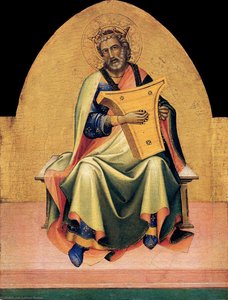
A Glimpse into Faith: Abraham by Lorenzo Monaco
Lorenzo Monaco’s “Abraham,” painted around 1408-10 in Florence, isn't merely a depiction of a biblical scene; it’s a profound meditation on faith, sacrifice, and the enduring promise of divine grace. This remarkable panel painting, now residing within the walls of The Metropolitan Museum of Art, offers a rare window into the artistic sensibilities of a pivotal figure bridging the late Gothic and burgeoning Renaissance periods. Monaco, known as “Lawrence the Monk” for his dedication to the Camaldolese order, imbued his work with an introspective quality rarely seen in contemporary Florentine painting, marking him as a distinct voice amidst the stylistic shifts of the time.
The composition is strikingly intimate, centering on Abraham seated upon a simple stone bench – a deliberate choice that elevates the scene beyond mere narrative illustration. He’s not presented as a heroic patriarch, but rather as a man wrestling with an agonizing decision. His posture, slightly hunched and contemplative, conveys a deep sense of sorrow mingled with resolute acceptance. Beside him kneels Isaac, his son, embodying innocence and vulnerability – a poignant counterpoint to the weighty burden borne by his father. The figures are rendered in a style characteristic of Monaco’s mature work: elongated forms, subtly defined features, and a restrained palette dominated by earthy tones—ochre, umber, and muted blues—all contributing to an atmosphere of solemn dignity.
The Symbolism of Sacrifice
At the heart of “Abraham” lies the powerful symbolism of sacrifice. The scene depicts Abraham preparing to offer Isaac as a burnt offering – a prefiguration of Christ’s crucifixion, a motif that would become increasingly prominent in Renaissance art. However, Monaco doesn't portray this act with overt drama or violence. Instead, he focuses on the emotional weight of the moment, capturing the quiet desperation and profound love between father and son. The knife resting at Abraham’s feet isn’t emphasized; it serves as a stark reminder of the impending tragedy without dominating the composition. The inclusion of the ram caught in the thicket – a last-minute substitution offered by God – subtly underscores the theme of divine intervention and the possibility of redemption.
Beyond the immediate narrative, the painting’s symbolism extends to the architectural setting. The simple stone bench suggests humility and earthly grounding, while the distant landscape hints at a connection to the divine realm. The careful arrangement of attributes – David holding his psaltery (a symbol of kingship and prophecy), Moses clutching the tablets of the Ten Commandments, Noah with his ark—further enriches the painting’s layered meaning, positioning Abraham within a lineage of faith and obedience.
Monaco's Artistic Legacy
Lorenzo Monaco’s artistic journey is particularly fascinating because he represents a transitional figure. Trained in the traditions of Giotto and his followers, he skillfully adapted these influences to develop a distinctly personal style. His work reflects the growing emphasis on psychological realism and emotional depth that would characterize the Renaissance, yet retains a lingering connection to the spiritual intensity of the late Gothic period. His dedication to monastic life profoundly shaped his artistic vision, imbuing his paintings with an introspective quality and a focus on themes of faith, piety, and human suffering.
The “Abraham” panel exemplifies Monaco’s mastery of tempera paint—a medium known for its luminous colors and rich textures. The gold ground, typical of devotional works of the time, adds to the painting's spiritual aura, while the meticulous detail in rendering fabrics and facial expressions reveals his exceptional technical skill. It is a testament to Monaco’s ability to synthesize artistic innovation with profound spiritual conviction, solidifying his place as one of Florence’s most important artists of the 15th century.
A Reproduction for Reflection
Today, reproductions of “Abraham” continue to resonate with viewers, offering an opportunity to contemplate timeless themes of faith, sacrifice, and the enduring power of love. Whether displayed in a private residence or a public gallery, this painting serves as a reminder of humanity’s capacity for both profound suffering and unwavering devotion. Consider commissioning a high-quality reproduction from 1st Art Gallery – a faithful recreation that captures the essence of Monaco's masterpiece, allowing you to bring its contemplative beauty into your own space.
Questions et réponses
Puis-je utiliser la réalité augmentée pour voir «Abraham» de Lorenzo Monaco dans ma pièce ?
« Abraham » dispose d'un aperçu en réalité augmentée : la page Aperçu RA de l'œuvre vous permet de la visualiser dans votre propre espace sur un appareil compatible.
Que représente «Abraham» de Lorenzo Monaco ?
Les thèmes présents dans «Abraham» de Lorenzo Monaco incluent abraham, prophets, sacrifice, faith, family, old testament, religion, medieval. Ensemble, ils résument le sujet de l'œuvre.
Quelle est la technique utilisée pour "Abraham" et quelles sont ses dimensions ?
La technique de «Abraham» de Lorenzo Monaco est Acrylic On Canvas, et ses dimensions sont de 66 x 43 cm.
Biographie de l'artiste
Première Vie et Formation
- Né: Sienne, Italie (c. 1370)
- Décédé: c. 1425
- On en sait peu sur la première vie de Lorenzo Monaco, à l'exception du fait qu'il a été apprenti à Florence.
- Il a été influencé par les œuvres de Giotto et de ses disciples, Spinello Aretino et Agnolo Gaddi. Cette exposition a façonné son développement artistique.
Carrière Artistique et Style
- En 1390, Lorenzo est entré au monastère camaldule de Santa Maria degli Angeli, devenant connu sous le nom de « Laurent l'ermite ».
- Ses premières œuvres (années 1390) montrent une forte influence du style gothique international, aux côtés d'influences provenant de Lorenzo Ghiberti et Gherardo Starnina.
- Le style de Monaco se caractérise par :
- Un linéaire tendu
- Une gamme chromatique froide initialement
- Plus tard, une adoption d'éléments gothiques internationaux
- Des figures allongées avec des draperies sinueuses
- Des bords nets et des couleurs vives (or et lapis-lazuli)
- Des gestes suggérés et un sentiment d'espace minimisé
- Il dépeint constamment des images avec une forte valeur spirituelle, souvent détachées du réalisme.
Œuvres Majeures
- Pietà : Exposée à la Galleria dell'Accademia, Florence – Démontre une ligne nerveuse et une tension émotionnelle.
- Coronation de la Vierge : Aujourd’hui à l’Uffizi – Présente un grand nombre de saints aux formes sinueuses et aux couleurs brillantes.
- Polyptyque de Monteoliveto : À la Galleria dell'Accademia – Expose une spiritualité qui préfigure Fra Angelico.
- Adoration des Mages (1420-1422) : Les raccourcis apparaissent surréalistes en raison de l’absence de perspective géométrique, mais maintiennent une grande qualité picturale.
- Histoires de la Vierge dans la chapelle Bartolini Salimbeni : L'une de ses rares fresques.
Influences et Héritage
- Le travail de Monaco a été influencé par Giotto, Spinello Aretino, Agnolo Gaddi, Lorenzo Ghiberti et Gherardo Starnina.
- Il est resté largement inaffecté par les innovations de Masaccio et Filippo Brunelleschi, maintenant son style distinctif.
- Giorgio Vasari a inclus une biographie de Monaco dans ses « Vies », notant sa mort d'une infection non identifiée.
- Malgré des informations biographiques limitées, les contributions de Lorenzo Monaco à l’art gothique tardif-renaissance précoce sont significatives. Son mélange unique de styles et son objectif spirituel ont laissé un impact durable sur les artistes ultérieurs.
Signification Historique
- Considéré comme le dernier important représentant du style Giotto avant la révolution de la Renaissance.
- A comblé le fossé entre les traditions gothiques tardives et les principes artistiques émergents de la Renaissance.
- Son insistance sur la spiritualité et les formes stylisées représentent une esthétique distincte dans la peinture florentine.

Lorenzo Monaco
1370 - 1425 , Italie
En bref
- Artistic Movement Or Style: Gothique tardif-Renaissance
- Artists Or Movements Influenced By This Artist:
- Masaccio
- Brunelleschi
- Artists Who Influenced This Artist:
- Giotto
- Spinello Aretino
- Agnolo Gaddi
- Date De Décès: c. 1425
- Date De Naissance: c. 1370
- Full Name: Lorenzo Monaco
- Lieu De Naissance: Sienne, Italie
- Nationalité: Italienne
- Notable Artworks:
- Pietà
- Coronation de la Vierge
- Adoration des Mages
Articles connexes

Gothic Vibes: From Dark Shadows to Bold Modern Edge | The Ultimate Trend Forecast
Explore the evolution of Gothic vibes, from historical shadows to bold modern edge. Discover how dark aesthetics, noir interiors, and contemporary subcultures are redefining modern design through a high-impact, trend-focused lens.
Shadows & Splendor: A Journey Through the Soul of Gothic Art and Architectural Grandeur
Embark on a profound journey through the spiritual intensity of Gothic art. Explore the architectural marvels, luminous stained glass, and sacred sculptures that define this era of grandeur and human devotion.
Late Gothic Art: The Divine Transition from Medieval Symbolism to Renaissance Naturalism
Explore the profound transition of Late Gothic art from medieval symbolism to Renaissance naturalism. Discover the elegance of International Gothic, the legacy of Master Theodoric, and the evolution of European courtly masterpieces through an expert art-historical lens.
Gothic Art Guide for Hotel Designers: Leveraging Dramatic Shadows and Architectural Grandeur in Luxury Interiors
Elevate hospitality interiors with our expert guide to Gothic art. Discover how to leverage dramatic shadows, architectural grandeur, and high-end reproductions to create sophisticated, atmospheric hotel spaces that captivate guests.

International Gothic Style: The Elegant Dawn of European Art History and the Transition to Renaissance Naturalism
Explore the elegance of International Gothic art. Discover how masters like Simone Martini bridged medieval symbolism and Renaissance naturalism through courtly grace, luminous gold, and intricate detail in this expert guide to European art history.