Aperçu en situation
 Partager
 Partager
 Détails
 Guide imprimable

 Télécharger
 Articles similaires
 Radiographie
 Voir le diaporama
 Statistiques
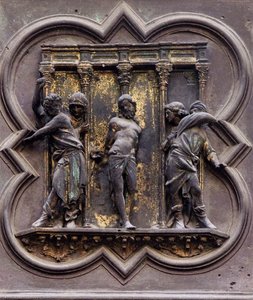
Last Supper
 Early Renaissance
 1403
1403 39.0 x 39.0 cm
 Baptistère
 Afficher la suite
Reproduction à l'huile faite à la main
Huile sur toile peinte à la main, avec cadre et dimensions personnalisés, réalisée sur commande par nos artistes. ( Passer au format impression Passer au format image numérique)




P118B €10

P118H €10

P118W €10

P438Z €10

P508JH €12

P508YH €12

P805H €10

P805Z €10

P919BZ €10

P919G €10

P919XJ €10

P959ZH €10

P968JZ €12

W106C €8

W218G €10

W218JH €8

W218Y €10

W307PJ €10

W316G €10

W316PJ €8

W316Y €10

W398PJ €8

W4111J €10

W500HY €15

W500JH €15

W692G €12

W849H €8

W940BG €15

W953PJ €8




Choisissez parmi nos formats prédéfinis qui respectent les proportions originales de l’œuvre.

Saisissez la largeur et la hauteur souhaitées, pour s'adapter à votre cadre ou à votre mur. Cette œuvre est peinte à la main ; ainsi, pour un format de forme différente, l'artiste peut peindre un peu plus autour du tableau ou réduire légèrement les bords — c'est vous qui choisissez. Nous vous envoyons une maquette numérique pour approbation avant que la peinture ne commence. L'image présentée sur cette page ne reflète pas le résultat réel — seule la maquette le fait.
Après la commande, l’équipe OriginalUniqueArt.com contactera le client par e-mail pour recueillir ses instructions et lui fournira une maquette d’aperçu
Livraison dans le monde entier () en 3 à 4 semaines au lieu des 5 semaines habituelles. (23 octobre). Aucun compromis sur la qualité.

Livraison express gratuite dans le monde entier

Toile de lin de haute qualité

Assurance transport complète

Garantie de remboursement des droits de douane

Garantie de fidélité des couleurs

Garantie de retour de 100 jours (uniquement en cas de défaut)

Garantie de remboursement à 100%

Tarifs dégressifs sur quantité
 L'option verre n'est disponible que pour les dimensions inférieures à 110 cm.

Last Supper
Technique de reproduction
Format de la reproduction
-


Prix total final
€ 263
The Last Supper: A Florentine Masterpiece of Emotion and Perspective
Lorenzo Ghiberti’s “Last Supper,” painted between 1403 and 1424 for the north doors of the Florence Baptistery, isn't merely a depiction of a biblical event; it’s a profound exploration of human emotion, a revolutionary leap in artistic perspective, and a testament to the burgeoning spirit of the Early Renaissance. Far from a static representation, Ghiberti captures the very moment of revelation – Jesus announcing his impending betrayal – imbuing the scene with an intensity rarely seen in religious art of its time. The painting’s enduring power lies not just in its technical brilliance but also in its ability to evoke a visceral response from the viewer, drawing us into the drama unfolding within the confines of the Florentine Baptistery.
Ghiberti's mastery is immediately evident in his innovative use of linear perspective. Unlike earlier depictions which often presented the scene as a flattened tableau, Ghiberti employs a sophisticated system to create an illusion of depth and space. The vanishing point, subtly placed within Jesus’s figure, draws our eye directly to him, while the receding lines of the table and the figures themselves converge towards that central focus. This technique, groundbreaking for its time, was not only visually compelling but also demonstrated Ghiberti's deep understanding of mathematical principles – a hallmark of Renaissance humanism. The careful attention to detail in rendering each apostle’s face, their gestures, and their clothing further enhances this sense of realism and immediacy.
The Symbolism of Gesture and Expression
Beyond the technical innovations, “The Last Supper” is rich with symbolic meaning. Ghiberti doesn't simply record the event; he captures the emotional responses of each apostle to Jesus’s shocking announcement. The expressions range from disbelief and confusion to anger, denial, and sorrow – a carefully orchestrated tableau of human reaction. Judas Iscariot, often depicted as isolated and shadowed, is rendered with a subtle but unmistakable air of treachery, his face partially obscured by darkness. Conversely, figures like Peter, consumed by anguish, and John, radiating concern, powerfully convey the weight of the impending tragedy. Ghiberti’s ability to translate complex theological concepts into tangible emotional states elevates the painting beyond a historical record and transforms it into a universal meditation on betrayal, faith, and human nature.
A Renaissance Vision: Bronze Doors and Artistic Legacy
“The Last Supper” was conceived as part of a larger commission for two pairs of bronze doors that adorned the Florence Baptistery. These doors, known as the “Gates of Paradise,” represented the pinnacle of Ghiberti’s career and established him as one of the leading sculptors of his generation. The bronze panels were designed to depict scenes from the Old Testament, offering a visual narrative of salvation and redemption. The choice of bronze itself was significant; it symbolized durability, permanence, and divine authority – qualities highly valued by the Florentine elite. Ghiberti’s work on these doors profoundly influenced subsequent generations of artists, shaping the course of Renaissance sculpture and solidifying Florence's reputation as a center of artistic innovation.
A Timeless Masterpiece: Reproduction and Artistic Inspiration
Today, “The Last Supper” remains one of the most celebrated works of art in history. Its influence can be seen in countless paintings, sculptures, and other artworks across centuries. Reproductions, such as this meticulously crafted hand-painted version, offer a remarkable opportunity to experience the power and beauty of Ghiberti’s masterpiece firsthand. The careful attention to detail, the masterful use of perspective, and the profound emotional depth of the scene are all faithfully recreated, allowing viewers to connect with this iconic work on a deeply personal level. Whether displayed in a grand salon or a smaller study, a reproduction of “The Last Supper” serves as a constant reminder of the enduring legacy of Lorenzo Ghiberti and the transformative power of Renaissance art.
Questions et réponses
Les couleurs de «Last Supper» de Lorenzo Ghiberti sont-elles vives ou feutrées ?
Les couleurs de «Last Supper» de Lorenzo Ghiberti présentent une saturation Muted avec une intensité Monochromatic.
Quelle est l'intensité des couleurs dans «Last Supper» de Lorenzo Ghiberti ?
Les couleurs de «Last Supper» de Lorenzo Ghiberti présentent une intensité Monochromatic.
Qui a créé « Last Supper » et en quelle année ?
Lorenzo Ghiberti a réalisé « Last Supper » en 1403.
Biographie de l'artiste
Lorenzo Ghiberti : Vie et Héritage
Jeunesse et Formation
- Né en 1378 à Pelago, près de Florence, en Italie, Lorenzo di Bartolo – plus tard connu sous le nom de Lorenzo Ghiberti – a commencé son parcours artistique sous la tutelle de son beau-père, Bartolo di Michele, un orfèvre.
- Il a reçu une formation formelle en peinture auprès de Gherardo Starnina, élargissant ses compétences au-delà du travail des métaux.
- L'épidémie de peste de 1400 l'a conduit à Rimini, où il a travaillé pour Carlo I Malatesta, assistant à la réalisation de fresques et développant ainsi davantage son sens artistique.
La Concours des Portails du Baptême et Premier Succès
- En 1401, Ghiberti est retourné à Florence et a participé à un concours renommé pour concevoir les portes en bronze du baptistère de Florence.
- Il a triomphé des concurrents tels que Filippo Brunelleschi avec son panneau représentant le *Sacrifice d'Isaac*, mettant en valeur une habileté et une innovation remarquables.
- Cette victoire a lancé sa carrière et lui a assuré la commande pour les portes nord du baptistère.
Les Portails Nord et Sud
- Ghiberti a passé plus de deux décennies à créer les portes nord (achevées en 1424), représentant des scènes de la vie de Jean-Baptiste.
- Son atelier est devenu un centre d'excellence artistique, nourrissant de futurs maîtres tels que Donatello, Masolino et Paolo Uccello.
- Suite au succès des portes nord, Ghiberti a été commandé pour créer une deuxième série – les portes orientales (achevées en 1452).
Les “Portes du Paradis”
- Les portes orientales, surnommées par Michel-Ange les “*Portes du Paradis*”, représentent le chef-d'œuvre de Ghiberti.
- Ces portes représentent des scènes de l’Ancien Testament avec un réalisme, une perspective et un détail artistique sans précédent.
- Chaque panneau témoigne de sa maîtrise de la coulée de bronze et de la sculpture en relief.
Style Artistique et Influences
- Le style de Ghiberti a combiné l'élégance gothique avec les principes émergents du humanisme de la Renaissance.
- Il s’est inspiré de l’antiquité classique, intégrant des éléments de l’art et de la sculpture romains dans son travail.
- Son souci méticuleux du détail, ses représentations naturalistes et son utilisation innovante de la perspective le distinguaient de ses contemporains.
Commentarii et Héritage
- Ghiberti a écrit *Commentarii*, un traité précieux sur l’histoire de l’art, la théorie et la technique – considéré comme l'un des premiers autobiographies d'un artiste.
- Il est décédé à Florence en 1455, laissant derrière lui un héritage durable en tant que l'un des sculpteurs les plus importants du début de la Renaissance.
- Son œuvre a profondément influencé les générations futures d’artistes, façonnant le cours de l’histoire de l’art occidental.
Signification Historique
- Les contributions de Ghiberti ont été déterminantes pour établir Florence comme un centre artistique majeur au cours de la Renaissance.
- Les “Portes du Paradis” sont devenues un symbole de fierté civique et d’accomplissement artistique florentins.
- Ses techniques innovantes et ses thèmes humanistes ont contribué à définir les idéaux esthétiques de l'époque, ouvrant la voie aux futurs maîtres tels que Léonard de Vinci et Michel-Ange.
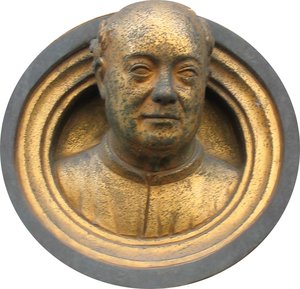
Lorenzo Ghiberti
1378 - 1455 , Italie
En bref
- Artistic Movement Or Style: Renaissance primitive / International Gothic
- Artists Or Movements Influenced By This Artist: ['Michelangelo']
- Artists Who Influenced This Artist:
- Gherardo Starnina
- Bartolo di Michele
- Date Of Birth: c. 1378
- Full Name: Lorenzo di Bartolo Ghiberti
- Nationality: Italien
- Notable Artworks:
- Portes du Paradis
- Sacrifice d'Isaac
- Découverte du chaudron doré
- Place Of Birth: Florence, Italie
Articles connexes

Les 10 Chefs-d'œuvre en Bronze qui ont Révolutionné l'Art : Collection OriginalUniqueArt
Plongez dans l'univers fascinant des 10 chefs-d'œuvre en bronze qui ont marqué l'histoire de l'art. Découvrez Rodin, Degas et les secrets de ces sculptures iconiques. Reproductions d'art exceptionnelles sur OriginalUniqueArt.com – Explorez la collection !

Timeless Strength: The Ultimate Guide to Bronze Art and Sculpture for the Discerning Collector
Discover the enduring elegance of bronze sculpture. Our expert guide explores lost-wax casting, patina mastery, and professional tips for collecting and commissioning museum-quality bronze art to create a lasting legacy in your private collection.

The Eternal Glow of Bronze: A Guide to Sculpting with Light, Strength, and Timeless Artistry
Explore the profound beauty of bronze sculpture. From the ancient lost-wax technique to the interplay of light and patina, discover how this enduring alloy captures human emotion and history through masterful artistry and strength.
The Enduring Legacy of Bronze: History, Technique & Artistic Expression for the Collector
Explore the rich history & enduring appeal of bronze sculpture with expert insights for collectors at OriginalUniqueArt. Learn about casting techniques, iconic artists, and collecting tips.
The Enduring Legacy of Bronze: A Historical & Artistic Exploration for the Collector
Explore the rich history & enduring appeal of bronze sculpture with expert insights for collectors at OriginalUniqueArt. Learn about casting techniques, iconic artists, collecting tips & contemporary interpretations.