

 Aperçu en situation
 Partager
 Partager
 Détails
 Guide imprimable

 Télécharger
 Articles similaires
 Radiographie
 Voir le diaporama
 Statistiques
Dove with squabs


 Afficher la suite
L’œuvre d'art présentée sur cette page est protégée par le droit d'auteur, ce qui signifie que nous ne pouvons légalement créer ou vendre de reproduction identique. Cette protection est appliquée en vertu d'accords internationaux tels que la Convention de Berne et par les lois nationales, notamment celles énoncées par le Loi américaine sur le droit d'auteur - Titre 17.
Cette méthode est pleinement conforme aux réglementations sur le droit d'auteur car elle ne repose pas sur la copie ou la duplication de l'œuvre protégée. Il s'agit plutôt d'une réinterprétation créative — une nouvelle peinture qui s'inspire de l'original sans pour autant lui être identique.
Giclées et impressions d'art
Impressions giclées ou sur toile de qualité musée, avec une production rapide et des finitions au choix. ( Acheter la peinture faite à la main Passer au format image numérique)




P118B €10

P118H €10

P118W €10

P438Z €10

P508JH €12

P508YH €12

P805H €10

P805Z €10

P919BZ €10

P919G €10

P919XJ €10

P959ZH €10

P968JZ €12

W106C €8

W218G €10

W218JH €8

W218Y €10

W307PJ €10

W316G €10

W316PJ €8

W316Y €10

W398PJ €8

W4111J €10

W500HY €15

W500JH €15

W692G €12

W849H €8

W940BG €15

W953PJ €8




Choisissez parmi nos formats prédéfinis qui respectent les proportions originales de l’œuvre.

Saisissez la largeur et la hauteur souhaitées pour qu'elles s'adaptent à votre cadre ou à votre mur. Une impression ne peut être que découpée, elle ne peut jamais être agrandie au-delà de l'image originale ; ainsi, un format de forme différente entraînera la perte d'une partie de l'image. Nous vous envoyons une maquette numérique pour approbation avant toute impression. L'image présentée sur cette page ne montre pas le recadrage réel — seule la maquette le permet.
Livraison dans le monde entier () en 2 semaines au lieu des 4/5 semaines habituelles. (24 octobre)

Livraison express gratuite dans le monde entier

Toile de lin de haute qualité

Assurance transport complète

Garantie de remboursement des droits de douane

Garantie de fidélité des couleurs

Garantie de retour de 100 jours (uniquement en cas de défaut)

Garantie de remboursement à 100%

Tarifs dégressifs sur quantité
 L'option verre n'est disponible que pour les dimensions inférieures à 110 cm.

Dove with squabs
Giclées et impressions d'art
Format de la reproduction
-


Prix total final
€ 70
A Symphony of Rhythm and Spirit
In the vibrant tapestry of Haitian contemporary art, few works capture the rhythmic pulse of life as enchantingly as Levoy Exil’s Dove with Squabs. Created in 1985, this masterpiece serves as a window into a world where nature and spirituality dance in a seamless, stylized embrace. At first glance, the viewer is greeted by a lush, tropical tableau that feels both intimately familiar and dreamily surreal. A central vessel, overflowing with verdant foliage, acts as the heart of the composition, flanked by two majestic, columnar trees that frame the scene like sentinante guardians of a sacred grove. The painting does not merely depict a moment in nature; it orchestrates a visual melody through the use of bold, repetitive patterns and a mesmerizing flow of lines that guide the eye across the canvas in a continuous, hypnotic loop.
The technique employed by Exil is a testament to his mastery of the Saint Soleil movement, a pivotal era in Haitian art history. Eschewing traditional Western realism, Exil embraces a more naive, decorative approach that prioritizes emotional resonance and symbolic depth over anatomical precision. The artist utilizes rhythmic, almost pointillist-inspired linework to build texture and volume, creating a sense of movement that suggests the rustling of leaves and the soft fluttering of wings. This layered application of paint creates a rich, tactile quality, where every stroke contributes to a larger, unified pattern. The flattened perspective and even, diffused lighting strip away the distractions of shadow and depth, allowing the pure, vibrant colors and geometric simplicity to command the viewer's full attention.
Symbolism and the Soul of Haiti
Beyond its striking aesthetic appeal, Dove with Squabs is deeply imbued with the spiritual heritage of Haiti. As a prominent figure shaped by the workshops of the Saint Soleil movement, Exil’s work often serves as a bridge to the mystical realms of Vodou. The central figures—the doves and their young squabs—are far more than mere ornithological subjects; they are potent symbols of peace, fertility, and the enduring hope of a people. Nestled within the abundance of the overflowing pot, these birds represent the nurturing power of life and the continuity of generations. The lush greenery and the structured, rhythmic trees evoke a sense of cosmic order and the fertile vitality of the Haitian landscape, suggesting that even within abstraction, there is a profound connection to the ancestral earth.
For the discerning collector or interior designer, this artwork offers much more than a splash of color. It provides an emotional anchor for a space, evoking a sense of tranquility, whimsy, and profound peace. The piece possesses a unique ability to transform a room, acting as a conversation starter that invites contemplation on themes of growth and harmony. Whether placed in a contemporary gallery setting or a curated residential collection, Dove with Squabs radiates an aura of warmth and spiritual resilience. Owning a high-quality reproduction of this work allows one to bring a fragment of the Saint Soleil legacy into their own environment, celebrating the enduring beauty of Haitian folk art and the timeless dance between the natural and the divine.
Questions et réponses
Quelle ambiance "Dove with squabs" apporterait-elle à une pièce ?
Avec son atmosphère Mystical, « Dove with squabs » est suggéré pour une Children's Room.
Existe-t-il un guide pour «Dove with squabs» de Levoy Exil ?
La page Guide de «Dove with squabs» de Levoy Exil propose une fiche pédagogique imprimable en deux volets : l'œuvre accompagnée de sa fiche d'identité, une frise chronologique la situant dans la vie de l'artiste, d'autres œuvres de l'artiste, la palette de couleurs mesurée, ainsi que des citations prêtes à être copiées en quatre styles différents.
Où puis-je acheter une image numérique de «Dove with squabs» de Levoy Exil ?
« Dove with squabs » est disponible en tant que un téléchargement d'image numérique haute résolution, à acheter directement sur sa page Image numérique.
Biographie de l'artiste
Un Visionnaire de l'Art Vodou Haïtien
Levoy Exil s'impose comme l'une des voix artistiques les plus singulières d'Haïti, une figure pivot du mouvement Saint Soleil, célébré pour ses représentations envoûtantes de la spiritualité Vodou. Né en 1944 à Soisson-la-Montagne, en Haïti, il incarne l'essence même de l'art populaire haïtien — une expression brute et émotive, ancrée dans les traditions ancestrales et imprégnée d'un symbolisme profond. Son voyage vers la peinture débute en 1972, coïncidant avec son immersion dans les ateliers Saint Soleil cofondés par Tiga et Maude Robart, une aventure collaborative qui a profondément façonné sa vision artistique. Avant de trouver sa vocation sur la toile, Exil a travaillé comme maçon, un passé qui nourrit peut-être la précision structurelle que l'on retrouve dans ses compositions vibrantes et superposées.
Les années de formation d'Exil ont été marquées par une exposition profonde à la culture haïtienne et aux croyances Vodou — une religion caractérisée par des rituels élaborés, la vénération des ancêtres et la communion avec les esprits connus sous le nom de Loas. Ces influences imprègnent son œuvre, dictant ses choix stylistiques et ses préoccupations thématiques. Notamment, il cite Prosper Pierre Louis, un autre artiste du Saint Soleil, comme une source d'inspiration majeure, reconnaissant la maîtrise de Pierre Louis dans le portrait des Loas Vodou et son usage évocateur de la couleur et de la forme. L'influence des traditions artistiques africaines est palpable dans l'approche d'Exil — un retour délibéré vers des langages visuels primordiaux qui privilégient l'intuition sur la représentation rationnelle. Fait intéressant, Exil a également exprimé le fait d'être davantage hanté par le souvenir des Indiens Arawaks, les premiers habitants de l'Hispaniola, que par son ascendance africaine, ce qui se manifeste souvent par des figures aux membres allongés et aux yeux en amande.
L'Esprit de Saint Soleil
Le mouvement Saint Soleil, établi dans les montagnes surplombant LaBoule, a servi de creuset pour l'expérimentation artistique et l'exploration spirituelle. Les participants recevaient du matériel d'art sans expérience préalable, favorisant ainsi la spontanéité et libérant un potentiel créatif latent. Cet environnement a nourri le style distinctif d'Exil — caractérisé par le Pointillisme, où de minuscules points méticuleusement superposés sur la toile révèlent une image par diffusion chromatique. Ses toiles présentent rarement des parties de surface inutilisées, témoignant d'un engagement envers un impact visuel maximal. Le mouvement a acquis une renommée internationale suite à la visite du romancier et historien de l'art français André Malraux en 1975. Malraux fut si profondément ému par les œuvres issues de cette communauté qu'il consacra un chapitre de son dernier livre, L'Intemporel, au Saint Soleil, le décrivant avec éclat comme l'expérience la plus frappante de peinture magique du XXe siècle.
À mesure que la technique d'Exil s'est affinée, son travail est devenu une danse rythmique de couleurs et de formes. Ses peintures mettent souvent en scène :
- Une Nature Symbolique : Des éléments tels que le soleil, les colombes et des motifs floraux qui évoquent à la fois la tranquillité et l'énergie cosmique.
- Une Géométrie Spirituelle : Un réseau complexe de lignes quadrillées et de motifs intenses qui emprisonnent des formes solaires au sein d'un espace structuré et mystique.
- Une Diffusion Chromatique : L'utilisation de teintes vibrantes et saturées, appliquées par de délicats points pour créer une sensation de lumière scintillante.
Héritage et Importance Artistique
Au-delà de ses premières contributions au groupe original Saint Soleil, Exil est demeuré une force vitale de l'art haïtien, devenant plus tard l'un des cinq membres de Cinq Soleil, un groupe d'artistes reformé à la fin des années 1980. Son œuvre continue de servir de pont entre le terrestre et le divin, traduisant le monde complexe et souvent invisible du Vodou en un langage visuel accessible à la scène mondiale. Grâce à sa maîtrise des textures pointillistes et à sa capacité à tisser ensemble les histoires des peuples Arawak et africain, Levoy Exil a assuré sa place de maître de l'expressionnisme caribéen. Ses peintures ne sont pas de simples images, mais des fenêtres ouvertes sur un paysage spirituel où chaque point de couleur agit comme une invocation du sacré.
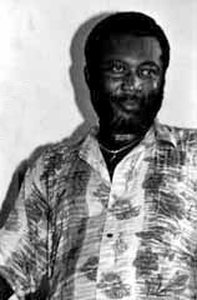
Levoy Exil
1944 - , Haiti
En bref
- Artistic Movement Or Style: Saint Soleil
- Artists Who Influenced This Artist: ['Prosper Pierre Louis']
- Date Of Birth: 1944
- Full Name: Levoy Exil
- Nationality: Haitian
- Notable Artworks:
- Dove with Squabs
- Country Wedding
- Place Of Birth: Soisson-la-Montagne, Haiti
Articles connexes

Abstraction Géométrique : Les 10 Chefs-d'œuvre qui ont Marqué l'Histoire de l'Art
Plongez au cœur de l'abstraction géométrique avec OriginalUniqueArt.com ! Découvrez les 10 œuvres majeures de Mondrian, Malevitch et Kandinsky qui ont révolutionné l'art moderne. Inspirez votre décoration intérieure avec des reproductions de tableaux exceptionnelles. Explorez la collection en ligne !
Beyond the Lines: Mastering the High-Impact World of Contemporary Abstraction
Master the high-impact world of contemporary abstraction. Discover how bold colors, textures, and modern movements like Abstract Expressionism can transform your space with premium, high-energy art curated for the design-conscious professional.

Arthur Dove: Pioneering American Abstraction & the Poetic Language of Modernism
Explore the groundbreaking work of Arthur Dove, a pioneer of American abstraction. Discover his artistic evolution, influences, and investment potential with OriginalUniqueArt's expert guide.

Expressionnisme Abstrait : Les 10 Chefs-d'Œuvre Incontournables pour Décorer avec Art et Histoire
Plongez au cœur de l'Expressionnisme Abstrait avec ! Découvrez les 10 œuvres majeures de Pollock, Rothko et De Kooning. Histoire, techniques & inspiration déco. Explorez la collection complète en ligne.

Kandinsky : Les 25 Œuvres Maîtresses d'un Pionnier de l'Art Abstrait | OriginalUniqueArt
Plongez dans l'univers vibrant de Kandinsky ! Découvrez les 25 œuvres majeures du pionnier de l'art abstrait. Explorez son expressionnisme, ses couleurs audacieuses et l'histoire fascinante derrière chaque tableau. Reproductions d'exception sur OriginalUniqueArt.com.